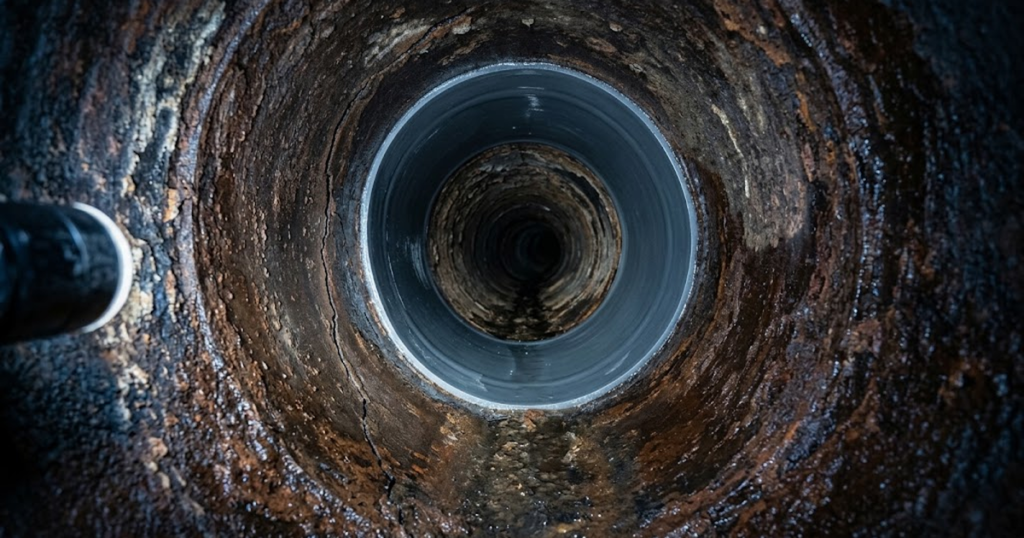
CIPP point repair fixes one damaged section of a Dallas-Fort Worth sewer line, usually a single crack, open joint, or root entry, without lining the full run. A short resin liner cures in place inside the old pipe. It suits lines that are sound elsewhere. A line failing along its length needs full lining instead.
This guide is for DFW homeowners holding camera footage that shows one bad spot and a quote to replace the whole line. One Nuflow DFW customer faced exactly that: a fractured sewer pipe, a quote for traditional excavation, and a repair our crew finished within a day, with camera pictures taken after the work.
Nuflow DFW (RMP# 46694) runs a camera through the full line before quoting any sewer repair. That habit is the whole reason point repairs work: the price of fixing one spot only makes sense once you know the rest of the pipe is healthy.
What is CIPP point repair?
CIPP point repair is a trenchless method that rebuilds a short damaged section of sewer pipe from the inside and leaves the rest of the line untouched. Cured-in-place pipe (CIPP) is a resin-saturated liner that hardens inside an old pipe to form a new pipe wall. A full lining runs that liner the length of the line. A point repair places a short sleeve over the defect only.
The sleeve travels into the pipe wrapped on an inflatable packer. A camera guides it to the defect, the packer inflates and presses the liner against the pipe wall, and the resin cures while the packer holds it there. NASSCO, the trade association that sets sewer inspection standards, describes this same packer method in its overview of sewer point repairs.
Other names for the same job: spot repair, sectional repair, and trenchless point repair.
Have camera footage that shows one defect? Call Nuflow DFW at (469) 701-0597 and ask for a second look before you approve a full replacement.
Which sewer problems can a point repair fix?
A point repair fits a single, localized defect in a line that is otherwise in good shape. The defect has to be short, and the pipe on both sides of it has to be round, solid, and clean enough for resin to bond.
- A crack or fracture in one section of pipe.
- An open or slightly separated joint, where two pipe sections have pulled apart a small amount.
- A root entry point at one joint, once the roots are cut out.
- A hole or broken spot in a clay or cast iron section.
- A poor connection left over from original construction.
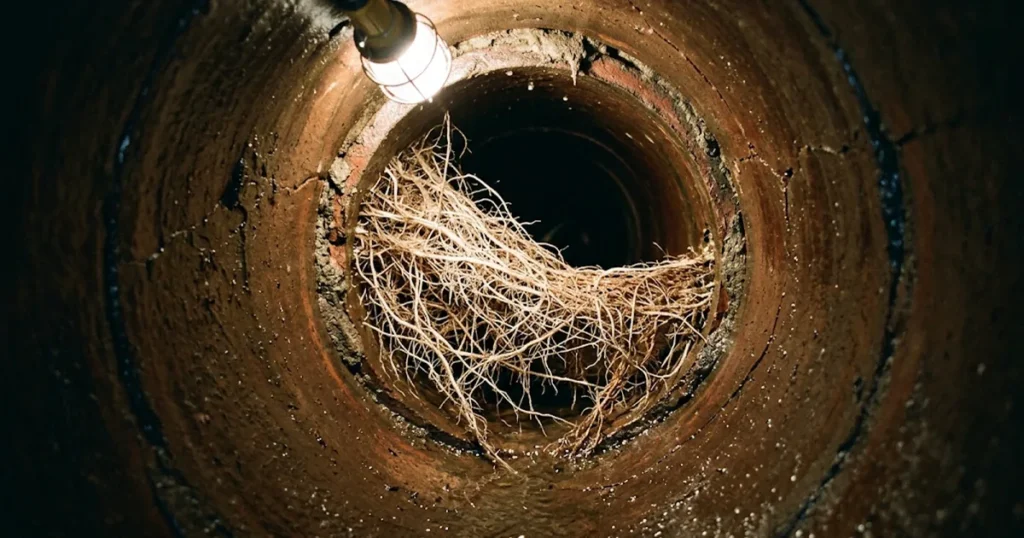
Roots are the most common reason DFW homeowners ask about point repairs. Roots do not break into sound pipe; they follow moisture into an opening that already exists, so sealing that opening stops them at that spot. Our crew clears the roots first with cutting or high-pressure hydro jetting, because a liner cannot bond over root mass.
If roots are coming in at several joints rather than one, read how full lining stops root intrusion along the entire run.
When is a point repair the wrong choice?
A point repair is the wrong choice when the pipe is failing along its length rather than at one spot. Sealing one joint on a deteriorating line leaves the next weak joint to fail, and the homeowner pays for a second repair within a few years.
These conditions rule a point repair out:
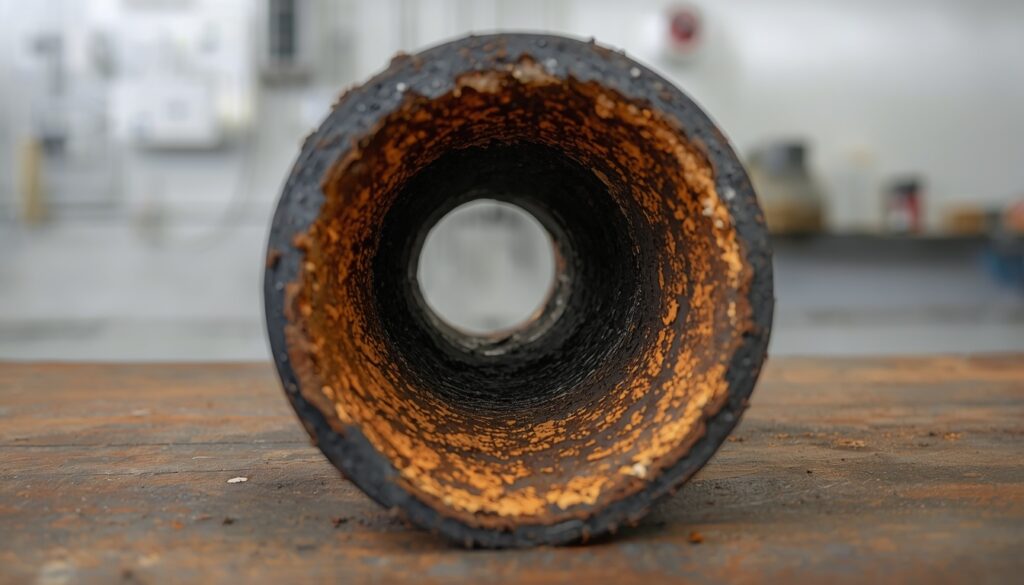
- Corrosion or heavy scale along the whole run. This is common in cast iron in older DFW homes; see how long cast iron sewer pipe lasts.
- Several defects spread across the line. Past a certain number of spot repairs, one full liner costs less.
- A belly. A sagging section holds standing water, and a liner follows the shape of the pipe it sits in, so it cannot restore slope.
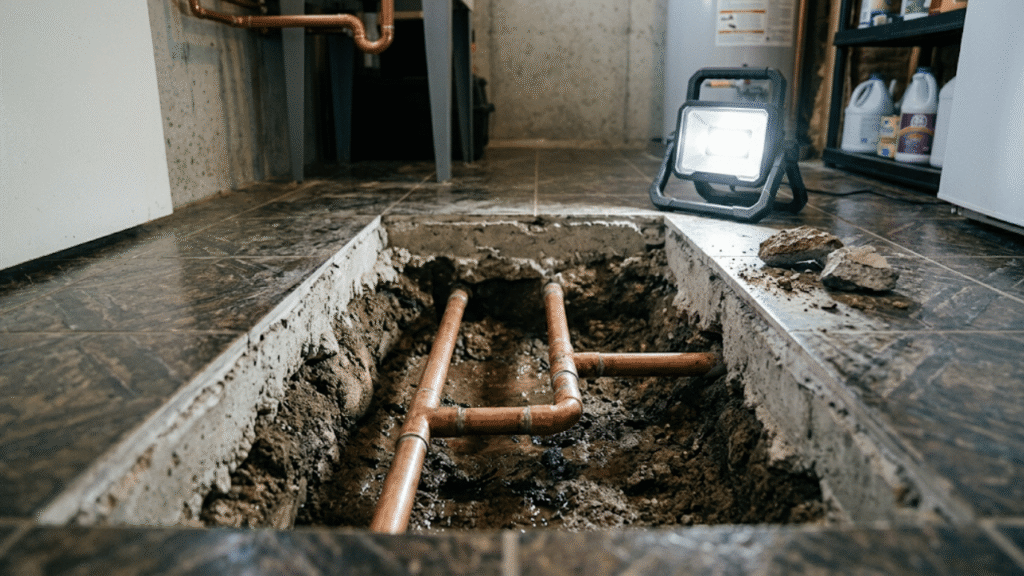
- A collapsed section. A liner needs a pipe shape to form against. A collapse needs trenchless replacement or excavation.
North Texas clay soil adds a second risk. It swells when wet and shrinks in drought, shifting buried joints every year. A joint that has pulled apart once usually sits beside joints under the same stress, so the footage of the rest of the line matters as much as the defect itself.
How does Nuflow DFW decide between a point repair and full lining?
The camera footage decides. Nuflow DFW runs a sewer camera inspection through the whole line before quoting, and the question is never only where the break sits. It is what the pipe looks like on both sides of it.
Our crew works through five checks on the footage:
- Locate the defect. The camera’s distance counter measures how far the defect sits from the cleanout, which sets where the packer goes.
- Read the pipe wall beyond it. Clean, round pipe on both sides supports a point repair. Flaking scale, pitting, or thin spots do not.
- Count the defects. One or two isolated problems favor point repair. A pattern across the run favors a full sewer pipe lining.
- Look for standing water. Water that stays in the pipe after a flush shows a belly, which rules out any liner at that spot.
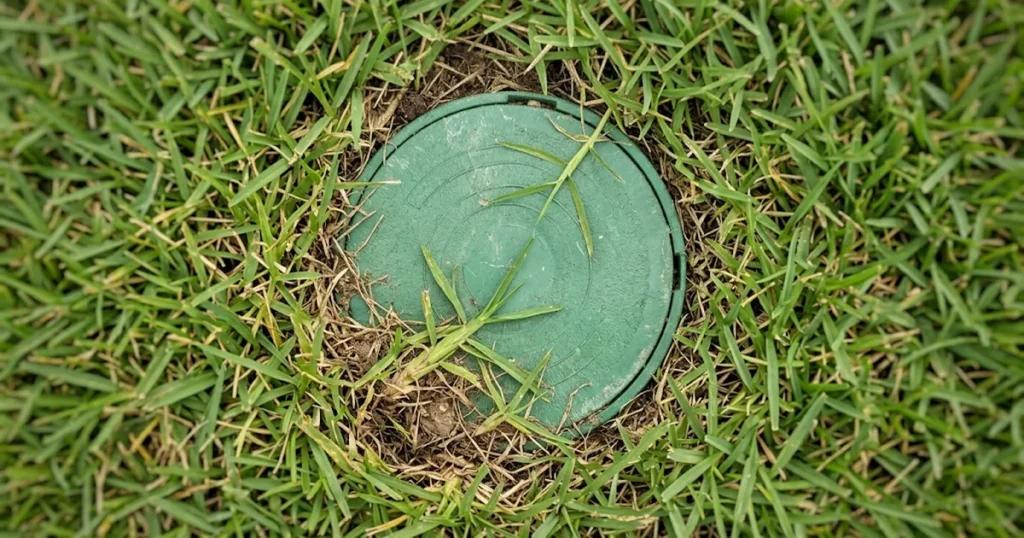
- Confirm access. The liner goes in through a cleanout, so a line without a usable cleanout needs one before any trenchless work starts.
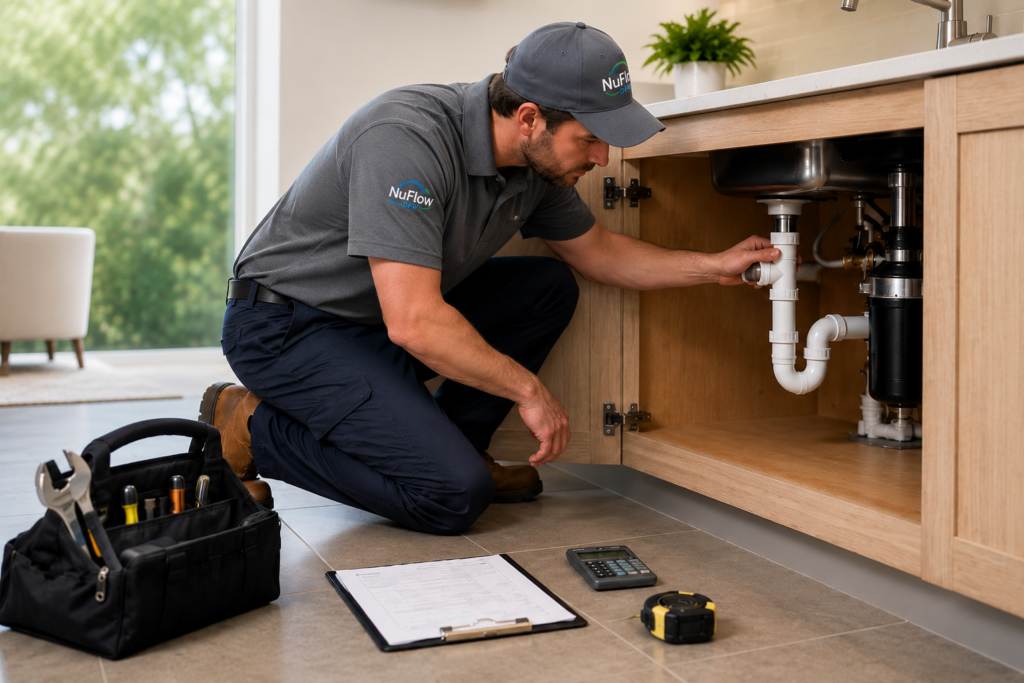
Ryan King, owner of Nuflow DFW, reviews the footage with the homeowner before anyone talks price. You keep the footage, so a second contractor can judge the same video.
Sometimes a point repair would work today and the next joint would fail soon after. When the footage shows that, we say so and quote both options side by side.
How is a CIPP point repair installed?
Most residential CIPP point repairs are finished in a single visit. The steps mirror how CIPP pipe lining works on a shorter section.
- Clean the line. Roots, grease, and scale come out so the liner bonds to bare pipe wall.
- Cut the liner to cover the defect with overlap on each side.
- Saturate the liner with resin and wrap it on the packer.
- Push the packer to the defect under camera guidance and inflate it.
- Hold pressure while the resin cures, then deflate the packer and pull it out.
- Run the camera again to confirm the repair and record the finished section.
Every Nuflow DFW job gets a camera pass before and after. Keep the second video; it proves the liner covers the defect, which helps with an insurance claim or a home sale.
Not sure your line qualifies? Request a camera inspection from Nuflow DFW at (469) 701-0597. Camera inspection starts at $250+ (as of Q3 2026).
How much does a CIPP point repair cost in DFW?
A CIPP point repair usually costs less than lining the full line, because it uses a fraction of the liner and resin and less time on site. Nuflow DFW’s starting price for a point repair is (as of Q3 2026). Full trenchless pipe lining starts at $3,500+ (as of Q3 2026).
What moves the price of a CIPP point repair?
- Pipe diameter. Most residential laterals are 4-inch or 6-inch, and larger pipe takes more material.
- Distance from the cleanout. A defect far down the line takes longer to reach and set.
- Number of repairs. Each additional point repair adds liner, resin, and cure time.
- Cleaning needed first. Heavy roots or scale add time before the liner can go in.
- Access. A home without a usable cleanout needs one installed first.
Final cost depends on inspection findings. Free estimates are provided after on-site inspection, and written quotes include all parts, labor, and applicable taxes. Nuflow DFW is licensed by the Texas State Board of Plumbing Examiners (RMP# 46694). If the camera shows a larger job than expected, financing is available.
Point repair, full lining, or excavation: how do they compare?
Point repair costs the least when one spot is failing. Full lining costs less over time when the whole line is aging. Excavation is the honest answer for a belly or a collapse, because neither liner can change the shape of the pipe it sits in.
| Factor | CIPP point repair | Full CIPP lining | Excavation |
|---|---|---|---|
| Best for | One isolated defect | Line failing along its length | Collapse or belly |
| Digging | None with a usable cleanout | None with a usable cleanout | Trench to the pipe |
| Time on site | 1 day typically | 3-7 days | |
| Cost (Q3 2026) | $3,500-$15,000 | $5,000-$25,000 | |
| Fixes slope problems | No | No | Yes |
| Protects the rest of the line | No | Yes | Replaced section only |
For the other no-dig methods and where each one fits, see our overview of trenchless technology types.
Frequently Asked Questions About CIPP Point Repair
What is a sewer line point repair?
How much does a sewer line point repair cost?
Will roots come back after a point repair?
Is a point repair cheaper than lining the whole sewer line?
Does homeowners insurance pay for a CIPP point repair?
Can you repair just one section of a sewer line?
Get the whole line on camera before you choose a repair
A CIPP point repair is the lowest-cost correct fix only when the camera shows one problem and healthy pipe around it. Ask any contractor for the full-line footage before you sign, and ask what the pipe looks like ten feet on either side of the defect.
Nuflow DFW is a licensed trenchless sewer contractor (RMP# 46694) serving the 25 cities in our service area. If the footage points past a point repair, our trenchless pipe repair service covers full lining and replacement.
Ready for a camera inspection? Contact Nuflow DFW or call (469) 701-0597. Service is scheduled Monday to Friday, 9:00 a.m. to 6:00 p.m., and you can read what DFW homeowners say in our customer reviews.