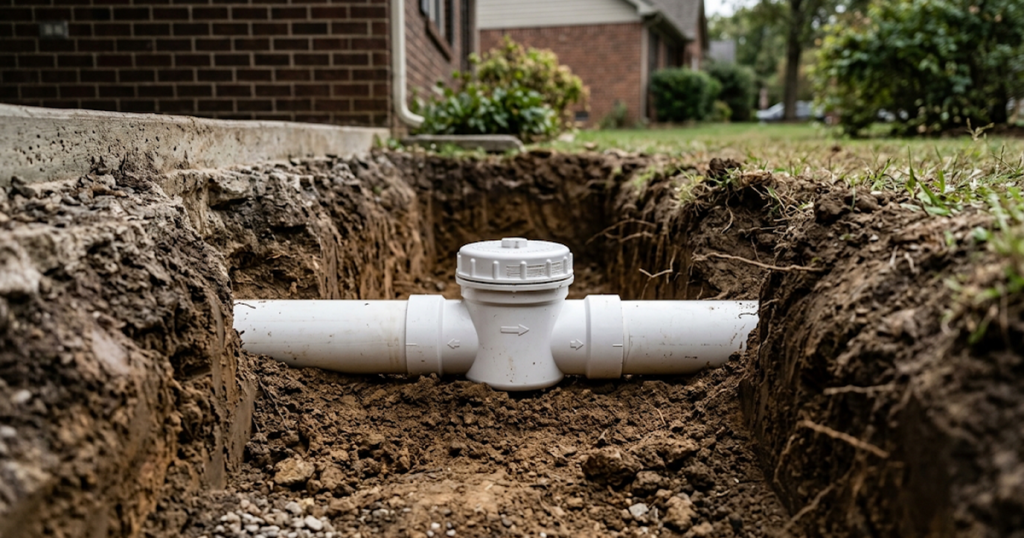
Replacing the water line from the meter to the house usually costs $2,000 to $5,000, or about $50 to $200 per foot when the line is dug up and replaced. In Dallas-Fort Worth, that bill is the homeowner’s. The city owns the meter and the pipe on the street side. Everything past the meter belongs to you.
Who pays for the water line from the meter to the house?
The homeowner pays. In DFW cities, the water utility owns the main in the street and the meter itself, and the property owner owns the service line that runs from the meter to the house. Frisco puts it plainly: “A leak on the customer’s side of the meter is considered the responsibility of the property owner or tenant to repair, including all costs associated with the repair.”
The meter box is the dividing line. A leak at the meter or on the street side is the city’s job, so report it to your water utility. A leak between the meter and your foundation is yours.
This matters right now. On September 10, 2026, Dallas Water Utilities reported a jump in breaks caused by heat, heavy demand and dry, shifting clay soil. Crews repaired 377 service line leaks in three months. When clay dries out and moves, it strains every buried pipe in the yard, including yours.
| City | Who fixes a leak between the meter and the house | Water bill credit after you fix it |
|---|---|---|
| Dallas | Homeowner. “Customers are responsible for all water consumption, even in the event of a leak.” | Yes. Once per 12 months, up to 3 months of bills, excess water recalculated at the lowest rate (Dallas leak adjustments) |
| Fort Worth | Homeowner | Yes. Apply within 60 days of the repair with a paid invoice; up to 2 billing periods, 50% of the use above your average; then none for 12 months (Fort Worth leak adjustments) |
| Frisco | Homeowner, “including all costs” | Yes. Repair within 90 days of finding the leak, apply within 90 days of the repair, invoice required, once every 12 months (Frisco partial leak credit) |
| Garland | Homeowner. The customer is responsible for all water through the meter. | Yes, if the city’s criteria are met (Garland leak adjustments) |
Other DFW cities follow the same meter-line rule, but credit terms differ. Check your own city’s utility billing page before you pay the plumber, because most programs need the repair invoice.
How much does it cost to replace or repair the water line?
Most full replacements land between $2,000 and $5,000, and a single leak can often be repaired for $400 to $1,500. National ranges from HomeGuide:
| Job | Typical cost |
|---|---|
| Repair one leak or short section | $400 to $1,500 |
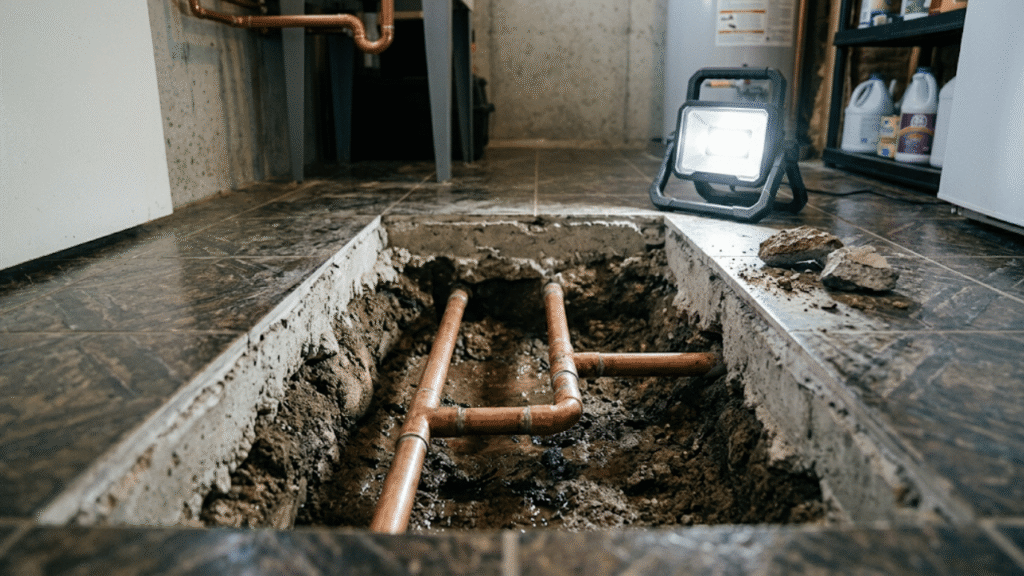
| Replace the line, dug in a trench | $50 to $200 per foot |
| Replace the line, trenchless | $70 to $250 per foot |
| Full meter-to-house replacement | $2,000 to $5,000 |
Four things move the price: how long the run is, how deep it sits, what is on top of it (lawn, driveway, trees), and whether the plumber can pull a new pipe through without digging a full trench. A 30-foot run under grass costs far less than a 90-foot run under a driveway. Budget separately for a permit and for fixing the lawn or concrete afterward.
These are national ranges, not quotes. Get a written price for your yard, and ask whether it includes the permit, the digging and the cleanup.
Is the leak on my side of the meter?
You can check in about 15 minutes with the meter itself:
- Turn off every faucet, appliance, ice maker and sprinkler zone in the house.
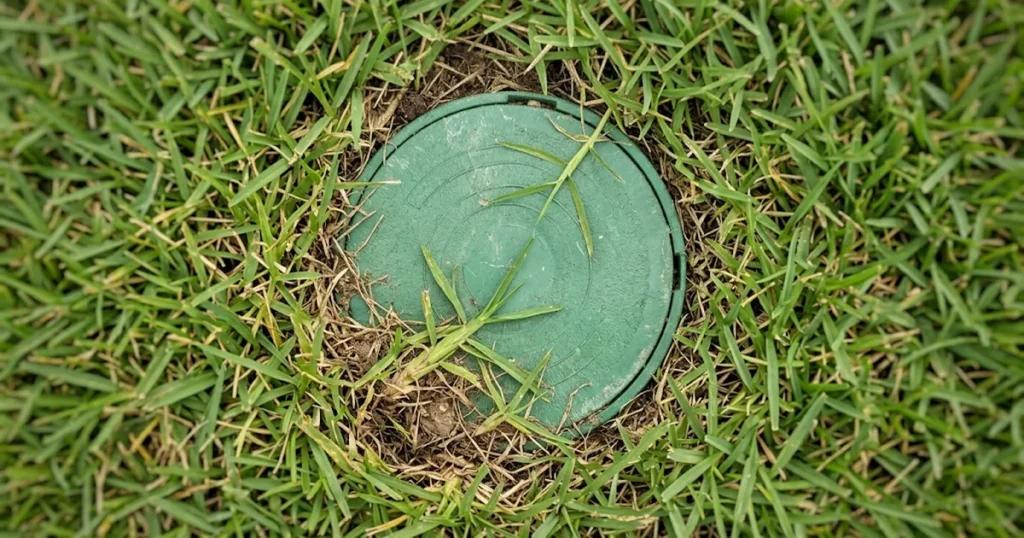
- Open the meter box lid, usually near the curb, and find the small leak indicator (a triangle or small dial).
- If the indicator spins with everything off, water is leaving the system somewhere.
- Close the main shutoff valve where the line enters the house, then look at the meter again.
- If it still moves with the house shut off, the leak is between the meter and the house. That section is yours.
- If it stops, the leak is inside the house, such as a toilet, water heater or slab line.
Run it twice on different days. A running toilet or an irrigation valve that did not close fully will fake a leak. Our guide to finding a water leak underground covers more tests, and water standing in the meter box is often the first clue.
Should I repair the line or replace the whole thing?
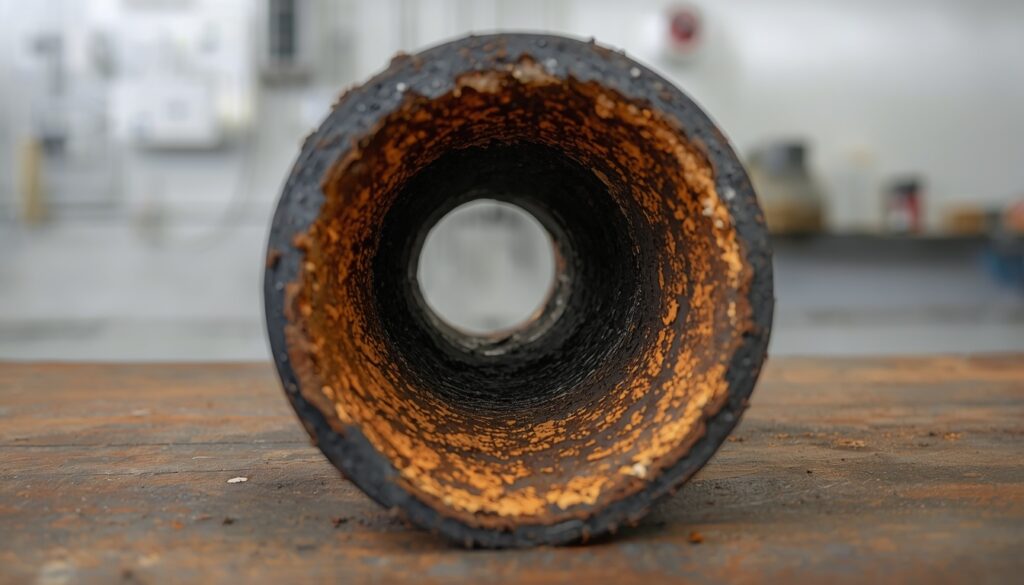
Repair it if the pipe is otherwise sound and this is the first leak. Replace it if the line is old galvanized steel, has leaked more than once, or the water comes out rusty or weak at every tap. Weak flow at every tap has other causes too, covered in why the water pressure is low in a whole house.
| Option | Use it when | Where it falls short |
|---|---|---|
| Spot repair | One leak on a pipe in good shape | The next weak spot may leak soon on an old line |
| Trench and replace | Line is failing along its length, or you want new pipe | Digs up the yard; most expensive to restore |
| Trenchless pull (new pipe pulled through) | Driveway, trees or landscaping sit over the line | Not every yard or soil suits it; ask your plumber |
| Lining the old pipe | Some older lines with sharp bends | Narrows the pipe slightly; less common on water lines |
A leak that is only a few months old rarely justifies a full replacement on its own. Find the exact spot first, then decide.
What size is the water line from the meter to the house?
Most homes have a 3/4-inch or 1-inch service line from the meter to the house. A 1-inch line keeps better pressure in larger homes, on long runs, and where a sprinkler system draws from the same line. If you are replacing the line anyway, ask whether upsizing makes sense for your home.
How deep is the water line from the meter to the house?
Service lines are usually buried shallow, about one to three feet deep, according to Today’s Homeowner. In most yards the line runs close to a straight path from the meter box to where the pipe enters the house. Call 811 before you dig, even with a shovel, so gas and electric lines get marked first.
Which pipe should I use for a new water line: PEX, copper or poly?
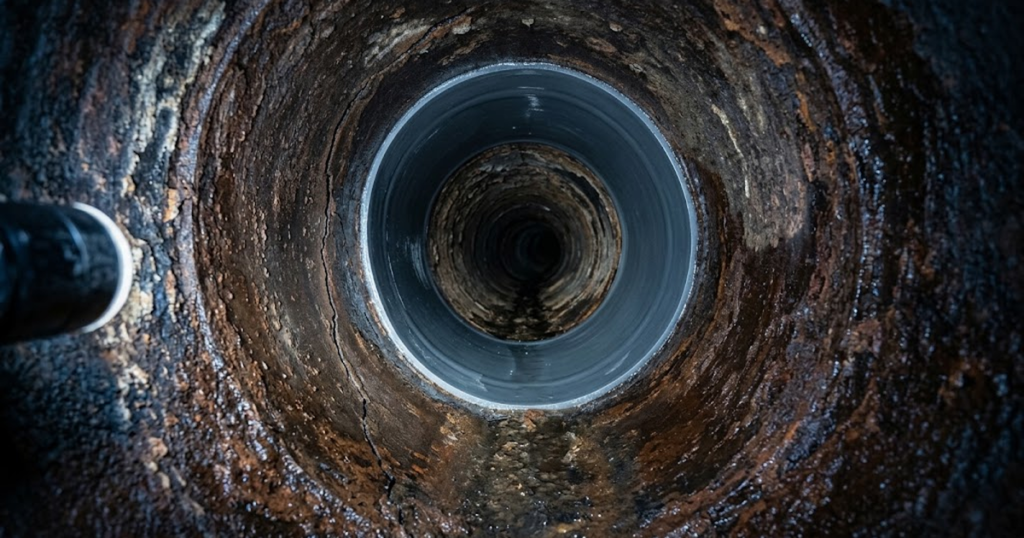
For most North Texas yards, flexible plastic pipe (PEX or polyethylene) is the common choice for a new service line. It is lower in cost and handles some ground movement, which matters in clay soil that swells when wet and shrinks when dry. Copper lasts a long time but costs more and can crack at joints when the soil shifts. Old galvanized steel should be replaced rather than patched, since it rusts from the inside.
How do I get a leak credit from the city after the repair?
Keep the plumber’s paid invoice and apply to your water utility after the leak is fixed. Most DFW programs follow the same pattern:
- Fix it fast. Frisco wants the repair within 90 days of finding the leak.
- Apply within the deadline. 60 days in Fort Worth, 90 days in Frisco.
- Send the paperwork: the invoice, repair date, a short description of the fix, your account number and the address.
- Expect a partial credit, not a refund. Dallas recalculates the extra water at its lowest rate, and none of the programs pay for the repair itself.
- One per year. Each city limits credits to one in 12 months.
Can Nuflow DFW help with a leak between the meter and the house?
We find it. Our water leak detection uses acoustic listening, thermal imaging and pressure testing to pinpoint underground leaks without digging up the yard to look. That tells you which side of the meter the leak is on and exactly where to dig, so you only pay to open the ground once. Leak detection starts at $750.
We are not the right call for replacing the service line itself. Nuflow DFW’s lining work is for sewer and drain pipes, not water supply lines. We will tell you that up front rather than take the job.
Call (469) 701-0597, Monday to Friday, 9 to 6, or schedule online.
FAQ
Does homeowners insurance cover the water line from the meter to the house?
Usually not for wear and tear. Most standard policies exclude a service line that fails from age, corrosion or ground movement. Some cover water damage inside the home from a sudden break, and some insurers sell a separate service line add-on. Read your policy or ask your agent.
Can the city fix the water line on my side of the meter?
No. City crews work up to and including the meter. A leak on your side needs a licensed plumber, and in most cities that plumber pulls a permit for the repair.
How long does it take to replace the water line?
Most replacements take one day, sometimes two if the line runs under concrete or the yard is hard to reach. Your water is off while the new pipe is connected.
How do I find where my water line runs?
Start at the meter box and look for where the pipe enters the house, usually near an outdoor faucet or the main shutoff. The line normally runs between those two points. A plumber with locating equipment can trace it exactly.
What are the signs the water line is leaking?
A water bill that jumps with no change in use, a soggy or unusually green patch between the meter and the house, low pressure at every tap, or a meter that spins with everything off. Our guide to wet spots in the yard helps tell a leak from a drainage problem.