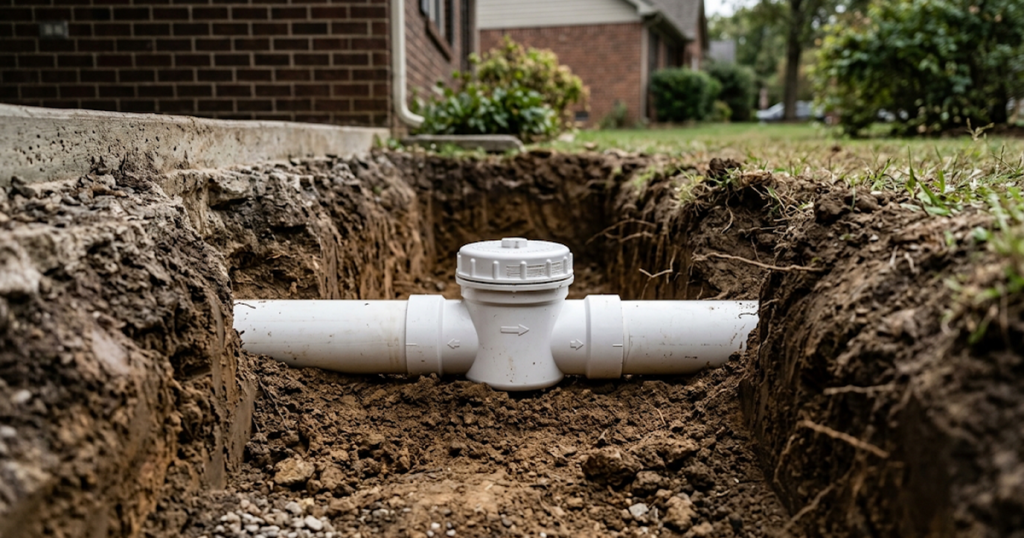
Your sewer cleanout is a 3 to 4 inch pipe, usually white PVC or cast iron, capped with a threaded plug that has a square knob or a recessed square indentation on top. In DFW’s slab-built homes it is almost always outdoors, within 12 to 18 inches of the foundation, and it is frequently buried under mulch, grass or a flowerbed. It is the access point every plumber needs to reach your main sewer line.
Most homeowners have never looked for theirs, and plenty of them cannot find it when they need it. Here is how to locate it, how to track down a buried one, and how to get the cap off without snapping it.
What does a sewer cleanout look like?
A short vertical pipe rising a few inches out of the ground, sealed with a screw-on cleanout cap. Usually 3 or 4 inches in diameter on a main line, occasionally 6 inches on older or larger properties. Smaller 2 inch cleanouts serve individual branch lines.
The pipe is white PVC or black ABS on anything built since the 1970s, and cast iron or brass on older homes. The sewer cap itself has one of three looks: a square knob standing proud of the surface, a hexagonal head, or a flat plastic plug with a recessed square you fit a wrench into. Some sit inside a round or rectangular ground box with a removable lid set flush with the soil.
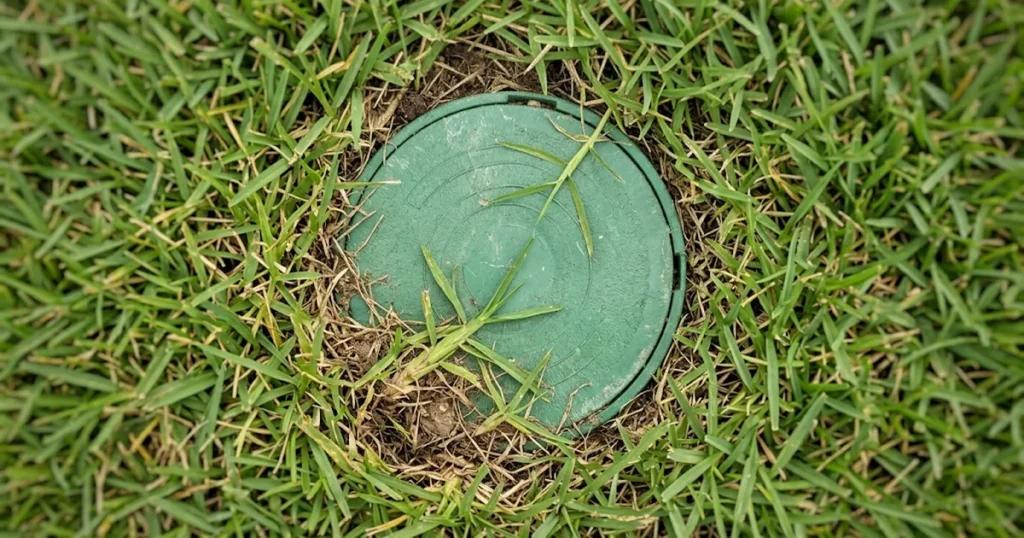
What it is not: an irrigation valve box, a gas meter riser, or a utility marker. Two quick tells. A drain cap threads into a fitting rather than clipping on, and the plumbing cleanout sits directly over a sewage pipe running down and then horizontally toward the house or the street.
How do I know if I have one?
Most homes do. If your house was plumbed in PVC, code almost certainly required at least one. Houses without an accessible cleanout tend to be older, often pre-1980, and often cast iron.
Where to look outside
Most DFW housing is slab-on-grade, and in the 25 Dallas-Fort Worth cities Nuflow DFW serves that puts the cleanout outdoors in the overwhelming majority of cases. Guides that send you to the basement were written for other parts of the country.
Work through these in order:
- The foundation perimeter, 12 to 18 inches out. Walk the full exterior wall slowly, looking down. It is usually near where a main bathroom or kitchen drain line exits.
- Flowerbeds, mulch and shrubs. The single most common reason a cleanout goes missing is landscaping grown over it.
- The straight line between house and street. If it is not against the foundation, look along the path from where the plumbing exits toward the municipal main.
- The alley side, if your property has one. Many older Dallas and Garland neighbourhoods run their sewer that way.
- The side opposite your main water shut-off valve. Water comes in one side, waste leaves the other, so the cleanout is often on the opposite face of the house from your meter and shut-off.
- Side yard on a corner lot, since the lateral exits toward whichever street it connects to.
Can a sewer cleanout be inside the house?
Yes, though it is less common here than in basement country. In DFW, look in the garage near the water heater or washer, in a utility room, or at a floor drain. You may also find smaller 2 inch cleanouts on interior walls serving a specific bathroom or the kitchen.
Those branch cleanouts are useful for one fixture line but not for the main sewer, so finding one does not mean you have found your main access.
Can a sewer cleanout be buried?
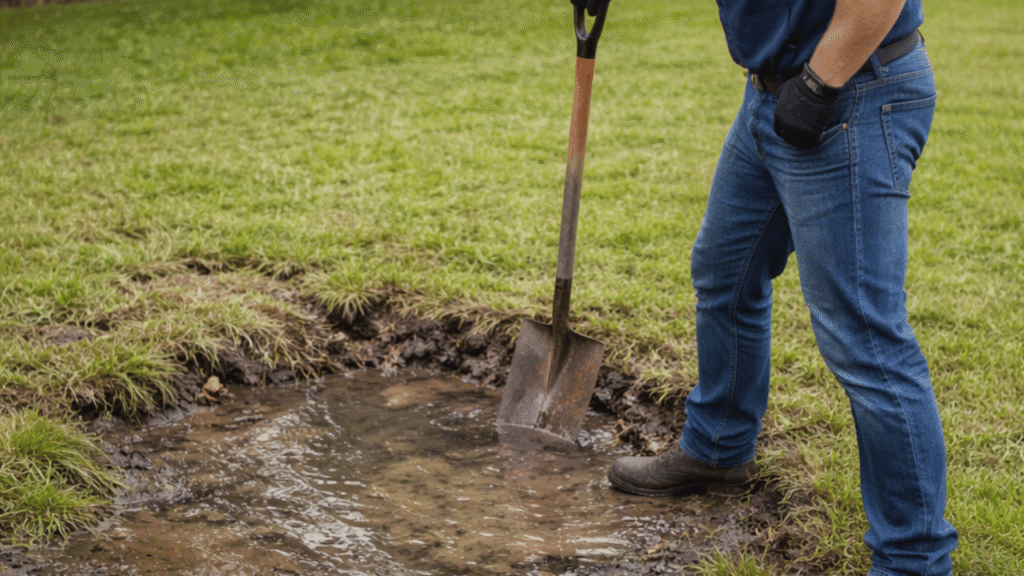
Constantly. This is the situation people actually find themselves in, and it is why plumbers occasionally arrive, look, and still cannot locate it.
Grass grows over the cap. Mulch gets topped up year after year. Sod is laid over it. Patio extensions, new driveways and walkways pave right across it, usually because the person doing the work never knew it was there.
Five ways to track down a buried one, roughly in order of effort:
Probe the likely area
Push a long screwdriver or a thin steel rod into the soil every few inches along the foundation line. A buried cap gives a hard, flat stop two to four inches down that feels completely different from rock or root. This finds most of them.
Check the curb for an “S”
Walk out to the street and look at the concrete curb or the sidewalk edge. Many municipalities stamp a letter S into the concrete marking where your property’s lateral connects to the city sewer. Stand at that mark, face your house, and walk back in a straight line. Your cleanout usually sits somewhere along that path, most often near the foundation end of it.
This is the most useful trick on the list and almost nobody knows it.
Trace the main stack from the roof
Find the thickest vent pipe coming out of your roof. That is your main plumbing stack, and everything drains into it. Follow its vertical line down through the house mentally, and the main line cleanout is usually at or near its base, either just inside or just outside the wall it runs down.
Use a metal detector on older homes
If your house is pre-1980 and likely on cast iron, a metal detector swept along the foundation line will pick up a buried iron or brass plug. It will not help on PVC.
Pull the plans
Contact your city’s building department or check your closing documents for the plot plan, site survey, or plumbing permit. Many DFW municipalities hold these, and they often mark the lateral run and access points precisely.
When none of that works
A plumber can push a sewer camera down through a roof vent or a pulled toilet, then use a radio-frequency locator wand on the surface to pinpoint exactly where the camera head sits underground. That finds both the line and the cleanout, and it is what a camera inspection is actually for.
Is it yours or the city’s?
Not every capped pipe on your property is the one a plumber needs. Three different things look similar.
| What you found | How to recognise it | Whose is it |
|---|---|---|
| Property cleanout | 3 to 4 inch pipe, threaded cap with a square knob, 12 to 18 inches from the foundation | Yours. This is the one plumbers use |
| City cleanout | Oval or rectangular metal lid, often bolted, near the sidewalk or curb | The city’s. Do not open it |
| Branch or wall cleanout | Smaller 2 inch pipe on a wall or inside the garage | Yours, but serves one fixture line, not the main |
Opening a city cleanout is not your job, and in some municipalities it is not permitted. If the only access you can find is at the curb, that changes who you should be calling.
What is the difference between a cleanout and a sewer line?
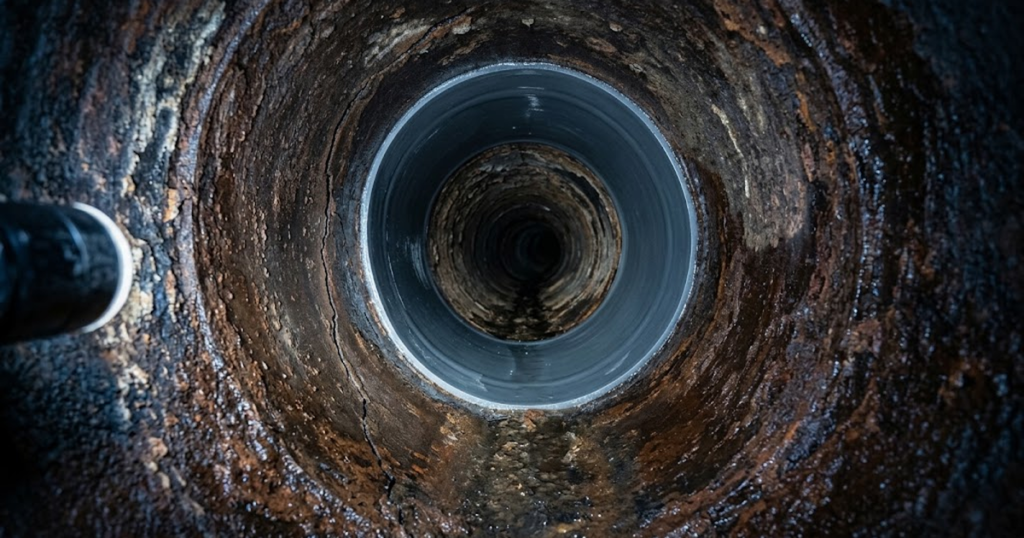
The sewer line, or lateral, is the buried pipe carrying waste from your house to the city main. The cleanout is a capped branch off that line that comes to the surface. The line does the work; the cleanout is the door into it.
How to open the cap without breaking it
This is where most people create a problem they did not have. Cleanout caps seize. Brass rounds off, plastic cracks, and a broken cap turns a free look into a repair.
- Clear the area first. Dig soil and debris out of the threads so grit does not grind in as the cap turns.
- Use a proper wrench on the nut, not pliers. A large adjustable or pipe wrench spreads load across the flats. Pliers round them off.
- Apply penetrating oil and wait. Fifteen minutes minimum on anything stubborn. Repeat rather than force it.
- Turn counterclockwise, slowly, with steady pressure. Sudden force snaps plastic and shears brass.
- Stand to one side as it loosens. If the line is backed up there may be pressure behind the cap, and it will not wait politely.
If it will not move, stop. A seized cap on a line that is currently backing up is not the moment for a hacksaw. Breaking it leaves you needing the fitting replaced before anyone can work.
Never leave the cap off. An open cleanout vents sewer gas into your yard and lets soil, debris and rainwater into the line. Replacements cost a few dollars and it is the cheapest plumbing fix there is.
Should you see water in your sewer cleanout?
No. A healthy cleanout should be dry inside, with waste flowing past below it rather than backing up into it.
Standing water in the cleanout means the line is blocked downstream, somewhere between the cleanout and the city main. Fixtures backing up inside the house while the cleanout sits dry means the blockage is upstream, between the house and the cleanout.
That single observation narrows the diagnosis before anyone brings equipment out, and it changes which end of the line gets worked on first. It can also change who pays, which the next section covers.
Who is responsible for the sewer line, you or the city?
You own and pay for the lateral running from your house to the connection point, which in most DFW municipalities is the property line or the city main. The city owns the main itself. Your cleanout sits on your side of that boundary, which is precisely why it exists.
So a blockage between your house and the street is your cost, and one in the main is the city’s. Rules vary between the 25 cities Nuflow DFW serves, so confirm with your municipality rather than assuming.
How far from the house can a cleanout be, and how deep is the line?
Most residential cleanouts sit within a few feet of the foundation, and code generally requires access at intervals along a long run and at significant changes of direction. On a large lot you may have more than one.
Sewer lines themselves typically run 2 to 6 feet deep in North Texas, deeper as they approach the street to maintain fall toward the main. Depth matters because it drives the cost of any work that requires digging, including adding a cleanout where none exists.
What if your house has no sewer cleanout?
Some do not have one, and there is a pattern to which houses those are.
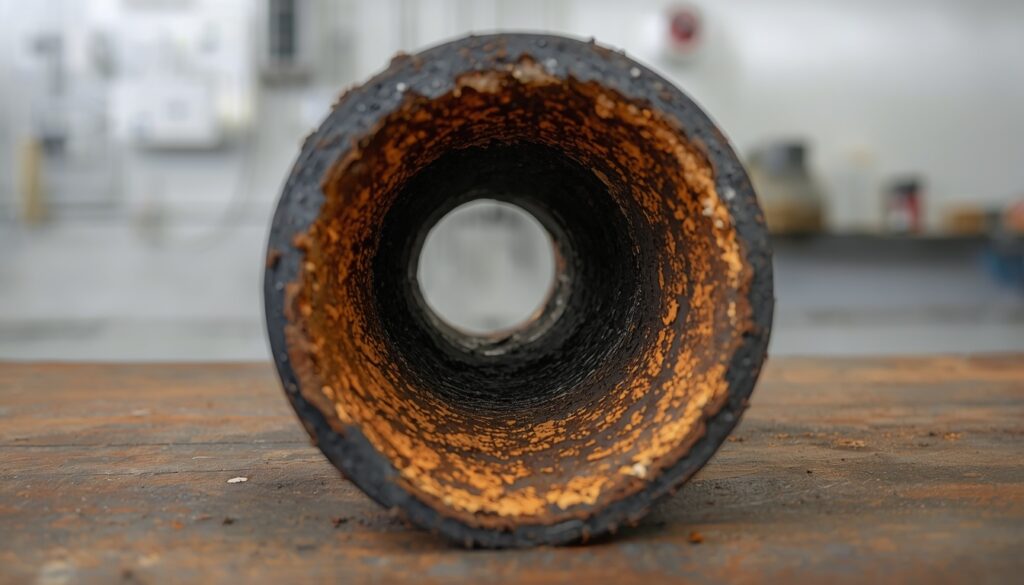
Homes plumbed in PVC almost always got them. Houses without tend to be older and tend to be cast iron, from a period when installation practice was less consistent. So no cleanout is often a clue about what your drain line is made of, and cast iron drain lines bring their own problems.
What it costs you not to have one
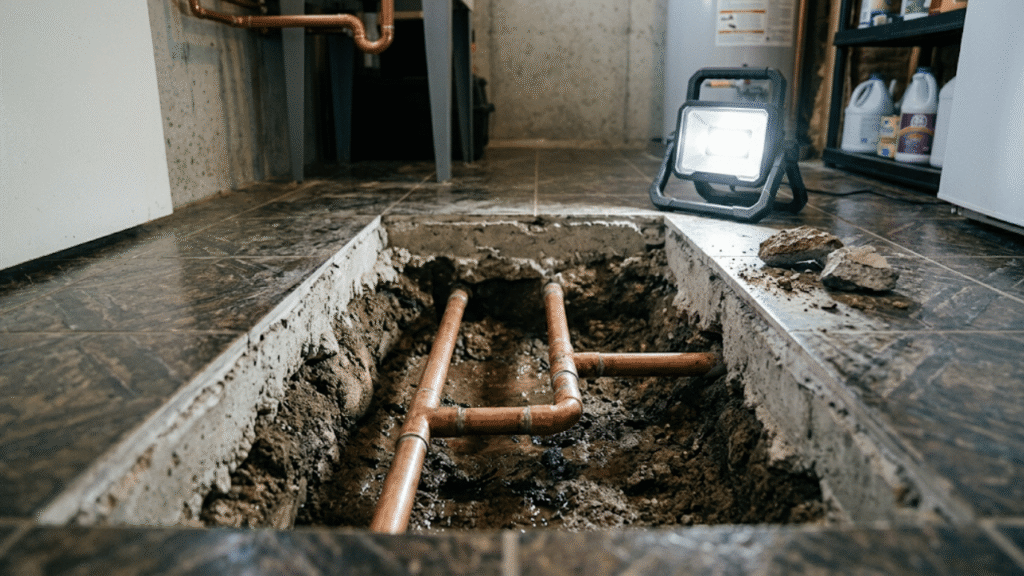
Without a cleanout, a plumber has to reach the line another way: pulling a toilet, working through a roof vent, or excavating. Clearing a main line blockage without exterior access takes considerably longer, and you pay for that time on every single visit.
Installing one runs roughly $500 to $3,500. The bottom of that range is a shallow line with soft ground and easy access. The top is a deep line, a two-way cleanout, or breaking through concrete. Depth and surface material drive almost all of the variation, which is why Nuflow DFW (RMP# 46694) quotes it after seeing the site rather than over the phone.
On a house that has needed its line cleared more than once, it usually pays for itself on the second visit.
Why the cleanout matters more than most people realise
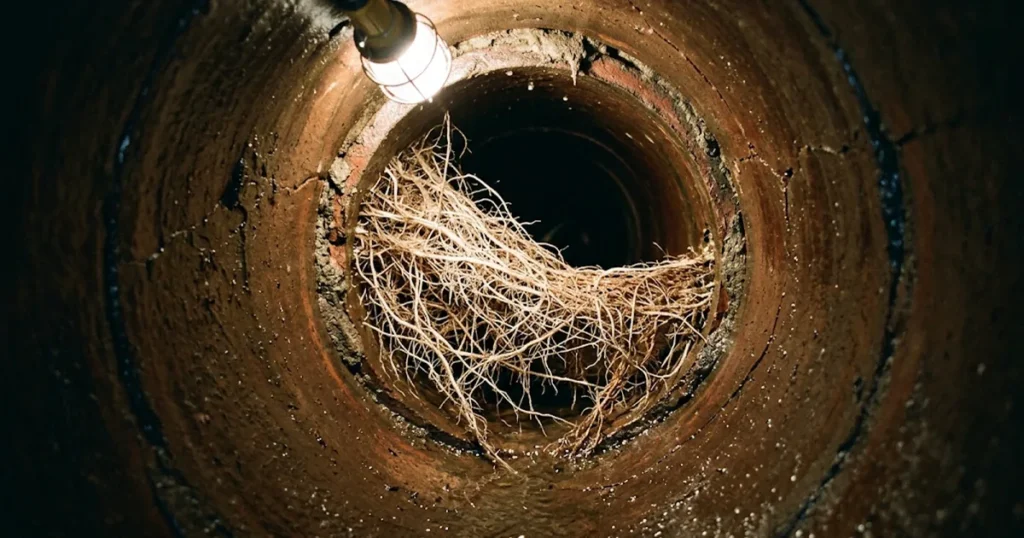
Every service that touches your sewer line goes through it. Camera inspection feeds the camera down it. Drain cleaning and hydro jetting run equipment through it. Trenchless lining pulls the liner into position through it with no digging. Root treatment reaches the line the same way.
Without accessible access, every one of those jobs gets harder and more expensive.
Can you unclog it yourself through the cleanout?
Sometimes. A rented auger fed through the cleanout will punch through a soft clog of paper or grease, and on a newer PVC line the risk is low.
Two cautions from the other side of that job. In an older cast iron line a rented cable can wedge in the scale and become genuinely stuck, and retrieving it costs more than the clearing would have. And on a line that is already cracked or has an offset joint, a cable can push through the defect rather than past it, turning a clearing job into an excavation.
If the line is pre-1980 cast iron, or it has blocked more than once, a camera is the cheaper first move.
How often should a sewer line be cleaned out?
Most homes never need scheduled cleaning and should have the line cleared when it slows down. A schedule earns its place in three situations: mature trees over the run, cast iron drain lines where scale narrows the bore, and any line that has blocked twice, because twice is a pattern.
The more useful checkpoint is an inspection rather than a cleaning. Our drain cleaning cost breakdown covers what clearing actually runs in DFW.
What to do this weekend
Go and find it. Walk the foundation line, check the flowerbeds, look at the curb for an S, check the alley if you have one. When you find it, clear the soil and mulch back, confirm the cap is present and not cracked, and take a photo with something identifiable in frame.
That photo is worth more than it sounds. Handing a plumber a picture of your cleanout saves the first twenty minutes of any sewer call, and if you have a backup at 11pm you will not be hunting through a flowerbed with a torch.
Nuflow DFW is licensed by the Texas State Board of Plumbing Examiners (RMP# 46694) and runs 24/7 service across the Dallas-Fort Worth Metroplex. Call (469) 701-0597.
Frequently Asked Questions
How do I locate a sewer cleanout?
Walk your foundation line looking for a capped 3 to 4 inch pipe within 12 to 18 inches of the wall. Check flowerbeds and mulch first, since landscaping hides most of them. Also check the side opposite your main water shut-off, and the alley if your property has one.
What does my sewer cleanout look like?
A short pipe rising a few inches from the ground with a threaded cap on top, typically white PVC, black ABS, or cast iron on older homes. The cap has a square knob, a hexagonal head, or a flat plug with a recessed square. Some sit in a ground box with a flush lid.
Can a sewer cleanout be buried?
Yes, and it commonly is. Grass grows over it, mulch gets topped up, sod is laid across it, and patios or driveways pave over it entirely. Probe the soil with a long screwdriver every few inches along the foundation line, or look for an S stamped in the curb and walk back from it.
Can a sewer cleanout be inside the house?
Yes, though in DFW’s slab homes it is usually outdoors. Indoors, check the garage near the water heater or washer, a utility room, or near a floor drain. Smaller 2 inch cleanouts on interior walls serve individual bathrooms or the kitchen rather than the main line.
Does every house have a sewer cleanout?
Most do, but not all. Homes plumbed in PVC almost always have one because code required it. Houses without tend to be older with cast iron drain lines. No cleanout means a plumber must reach the line another way, which makes every sewer job slower and more expensive.
Should you see water in your sewer cleanout?
No. A healthy cleanout is dry inside. Standing water means the blockage is downstream between the cleanout and the city main. Fixtures backing up while the cleanout stays dry means the blockage is upstream between the house and the cleanout.
What happens if you don’t have a sewer cleanout?
A plumber has to reach the line by pulling a toilet, working through a roof vent, or excavating. Each of those adds time and cost to every visit, and some methods restrict which equipment can be used. Installing one typically runs $500 to $3,500 depending on depth and access.
How deep are most sewer lines buried?
Residential sewer lines in North Texas typically run 2 to 6 feet deep, getting deeper toward the street to maintain fall toward the city main. Depth is the main driver of cost for any work requiring excavation, including installing a cleanout where none exists.
How do you locate a sewer line without a camera?
Start at the curb and look for an S stamped in the concrete marking your lateral connection, then walk back toward the house in a straight line. Check city building records for the plot plan. On pre-1980 cast iron, a metal detector along the foundation can find a buried plug.
How much does it cost to install a sewer cleanout?
Installing one runs roughly $500 to $3,500 depending on line depth, access, whether concrete has to be broken, and whether it is a single or two-way cleanout. It often pays for itself on the second service call, since without access every sewer job takes longer.