Black stuff coming out of a shower drain is usually one of two things: biofilm, a slimy layer of bacteria and soap that breaks loose from the pipe wall, or sewage pushed back up from a clogged main sewer line. If dark water rises in the shower when a toilet flushes, it is the sewer line.
What is the black stuff coming out of my shower drain?
It is most often biofilm that has broken loose, and less often waste coming up from the sewer line. The two look alike in the drain but mean very different things.
| What you see | What it usually is | What it means |
|---|---|---|
| Black slime on the strainer or drain opening | Biofilm: bacteria feeding on soap and hair | A dirty drain that needs cleaning |
| Black sludge that rises with water when a toilet flushes or the washer drains | Waste backing up from the main sewer line | The main line is blocked |
| Dark water in the tub with a sewage smell | Sewage backup | Stop using water in the house |
| Black flakes or grit | Manganese in the water, or scale from old pipe | A water or pipe-age question, not a clog |
Biofilm is the same growth that lines a sink drain. Our answer on whether the black stuff in a sink drain is mold explains why it is bacteria rather than household mold.
Did it come up from the sewer or grow in the drain?
Run this 30-second test before you clean anything:
- Flush a toilet while you watch the shower or tub drain.
- Run the washing machine or a nearby sink and watch again.
- Check the other drains in the house for the same black water.
- Smell it. Sewage smells like sewage. Biofilm smells musty or sour.
- Touch it with a gloved finger. Slime that stretches is biofilm. Grit or flakes are mineral or pipe scale.
If dark water rises when something else drains, or more than one drain is affected, the problem is the main sewer line. If it only sits in or around this one drain, it grew there.
Why does it show up in the shower or tub first?
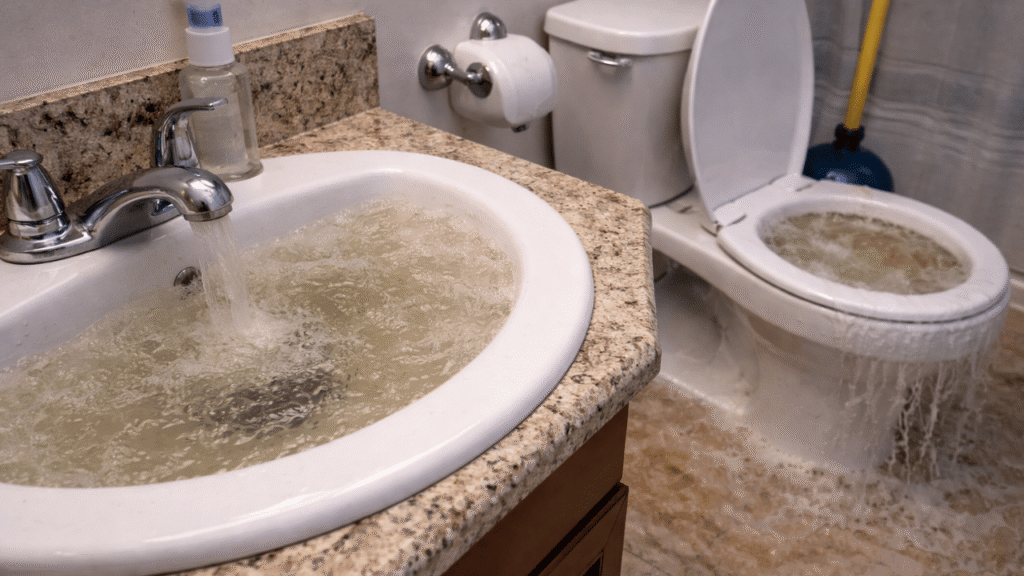
The shower or tub is usually the lowest drain in the house, so it is where a blocked line overflows first. Every fixture drains into the same main line. When that line is blocked further down, water from a flush or a washing machine has nowhere to go and rises out of the lowest opening, carrying whatever is in the pipe.
That is why black water in the tub after someone flushes is a main line warning, not a shower problem. If that is what you are seeing, go straight to our guide on sewage backing up into a bathtub, which covers what to do right now.
Is black slime in a shower drain dangerous?
Biofilm is not usually a health risk, but sewage is. The CDC describes biofilm, in guidance written for hospitals, as microorganisms that “adhere to surfaces in moist environments” and says it “can last in drains for long periods of time” (CDC). In a home shower that means it comes back, so wear gloves to clean it and wash your hands afterward.
Sewage is different. A public health fact sheet on sewage backups warns that sewage “contains bacteria, viruses, and other germs that can cause disease,” and says “do not flush the toilets” and “never touch raw sewage with bare hands” (sewage backup fact sheet). Keep children and pets out of the bathroom until it is cleared.
What if it is black flakes or grit, not slime?
Flakes or grit usually come from the water or the pipe, not from a clog. The University of Georgia Extension says “manganese sediment is dark gray or black” and can leave a black film on fixtures (UGA Extension). If you see it at the faucet as well as the drain, a water test is the place to start, not a plumber.
Dark, rusty flakes that only appear in the drain can be scale from old cast iron. Cast iron drains in DFW homes built before the 1980s scale from the inside as they age. Here is how to tell if you have cast iron plumbing.
What about brown, gray or white stuff?
Other colors point to the same few causes:
| Color | Usually | Next step |
|---|---|---|
| Brown or gray water that smells like sewage | Main line backup | Stop using water; see the bathtub backup guide above |
| Brown water with no smell | Rust or sediment | Check whether it comes from the faucet too |
| White, waxy clumps | Grease and soap | See what the white clumpy stuff in a drain is |
How do you get rid of the black stuff in a shower drain?
For biofilm, clean the drain itself. Pull the strainer or stopper, scrub the opening and as far down as you can reach with a drain brush, and flush with hot water. Do not mix cleaners: the same fact sheet warns to “never mix bleach with ammonia” because “it makes a deadly gas!”
Skip chemical drain openers. They sit on top of the slime rather than clearing the pipe wall, as covered in whether chemical drain cleaners damage pipes.
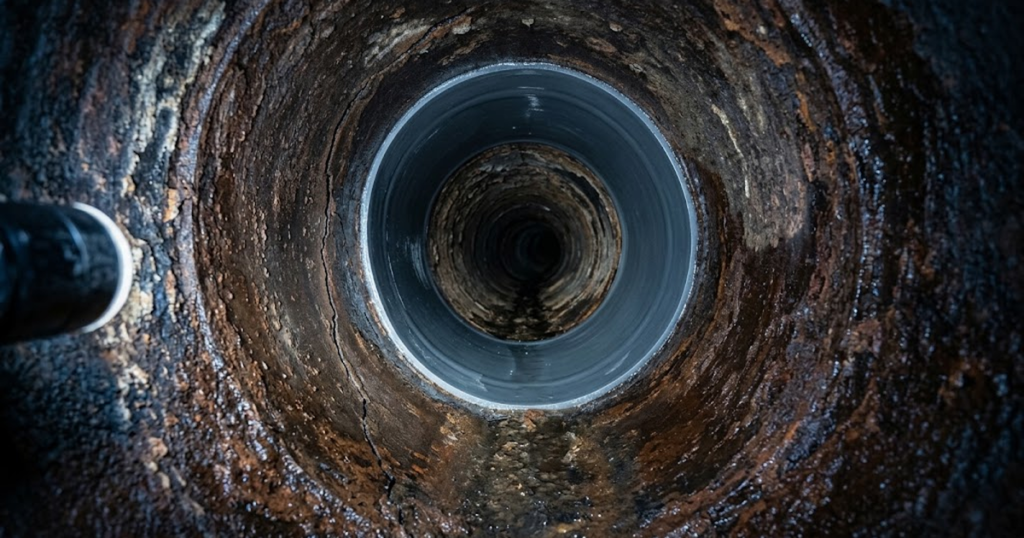
Expect it to come back. A North Carolina utility’s water quality flyer says “once established, black slime usually cannot be eliminated entirely” (Greenville Utilities). Regular cleaning keeps it in check. If it returns within a few weeks and the drain is also slow, the film runs further down the pipe than a brush can reach, and the line needs drain cleaning.
When should you call a plumber about black stuff in the drain?
Call when it comes up with water from another fixture, when more than one drain is affected, or when it keeps coming back with a slow drain. Those point to the main sewer line or buildup deep in the pipe, which a brush cannot reach.
We are not the right call for a little slime on the strainer that scrubs off and stays off. That is routine cleaning. For anything that rises, smells like sewage or keeps returning, a sewer camera inspection shows what is in the line. Nuflow DFW drain cleaning starts at $150, and a camera inspection starts at $250.
Call (469) 701-0597 or schedule online.
FAQ
Why does black stuff come out of my shower drain when I flush the toilet?
The main sewer line is partly blocked. The flush has nowhere to go, so it pushes water and debris up through the lowest drain, which is usually the shower or tub. Stop flushing and have the main line cleared.
Is the black stuff in my shower drain mold?
Usually not. The slimy black layer inside a drain is biofilm, a bacterial film. Black growth on the tile, grout or caulk around the drain is more likely mold.
Why does the black stuff keep coming back?
Because biofilm rebuilds from whatever is left in the pipe. Scrubbing the opening removes what you can see, but the film further down regrows. Cleaning the whole pipe wall slows it down.
Can black stuff come out of a bathtub or sink drain for the same reasons?
Yes. The same test applies to a bathtub, sink or floor drain: if it rises when another fixture drains, it is the sewer line; if it sits in one drain, it grew there.