Cast iron plumbing is the dark grey drain and sewer pipe installed in most American homes built before roughly 1980. It does not rust from the outside in. It corrodes from the inside, along the bottom of the pipe, until the wall thins into a trough and the pipe loses its structure. The important part for a homeowner: there is a window where a corroded cast iron line can be relined from the inside, and once that window closes the only remaining option is excavation.
Knowing where your pipe sits in that timeline is worth more than any list of warning signs.
Do you have cast iron plumbing?
If your home was built before 1980, the odds are high. Cast iron was the standard for drain, waste and vent piping across DFW for decades, and it was phased out through the 1970s and early 1980s as PVC took over. Homes across East Dallas, Oak Cliff, older Garland, and much of Irving were plumbed with it.
Note the distinction that trips people up: cast iron in a house is almost always drain pipe, not supply pipe. It carries waste away. It is not the pipe your drinking water arrives through, which matters because plenty of articles blame brown tap water on cast iron when the actual culprit is usually galvanized supply pipe or a water heater.
How to identify it in five minutes
Find exposed pipe. Garage, attic, under a sink, or where a stack runs through a closet.
- Colour and texture. Cast iron is dark grey to black, dull, and slightly rough. PVC is white or cream plastic. Copper is unmistakable.
- The magnet test. Cast iron and galvanized steel are magnetic. Copper, PVC and ABS are not. A fridge magnet settles it.
- The joints. Cast iron uses either bell-and-spigot joints packed with lead and oakum, or stainless no-hub bands clamped over rubber sleeves. Galvanized pipe is threaded.
- Tap it. Cast iron gives a dull, heavy thud. PVC sounds hollow and plasticky.
- Weight. If you can move a section, cast iron is dramatically heavier than anything else.
Why does cast iron fail from the inside out?
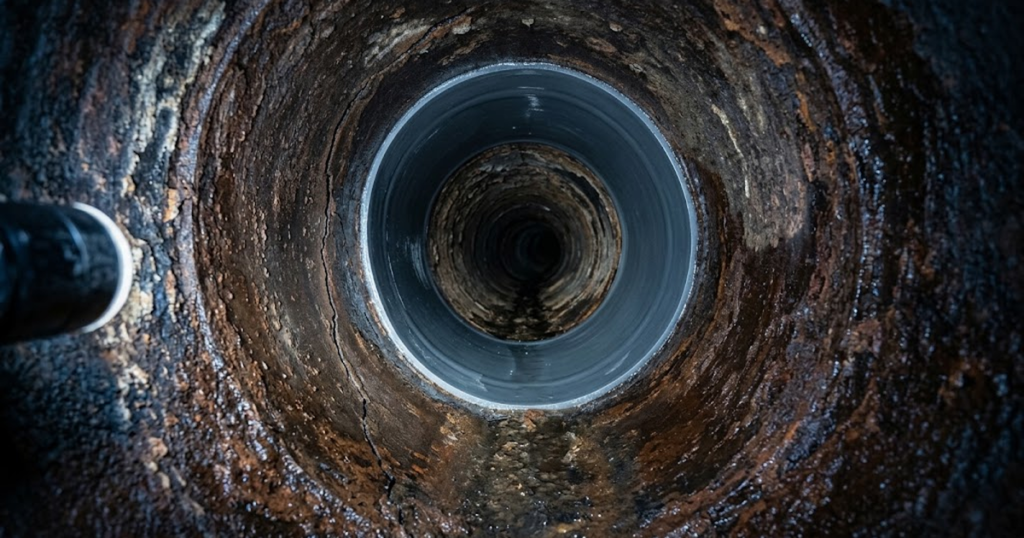
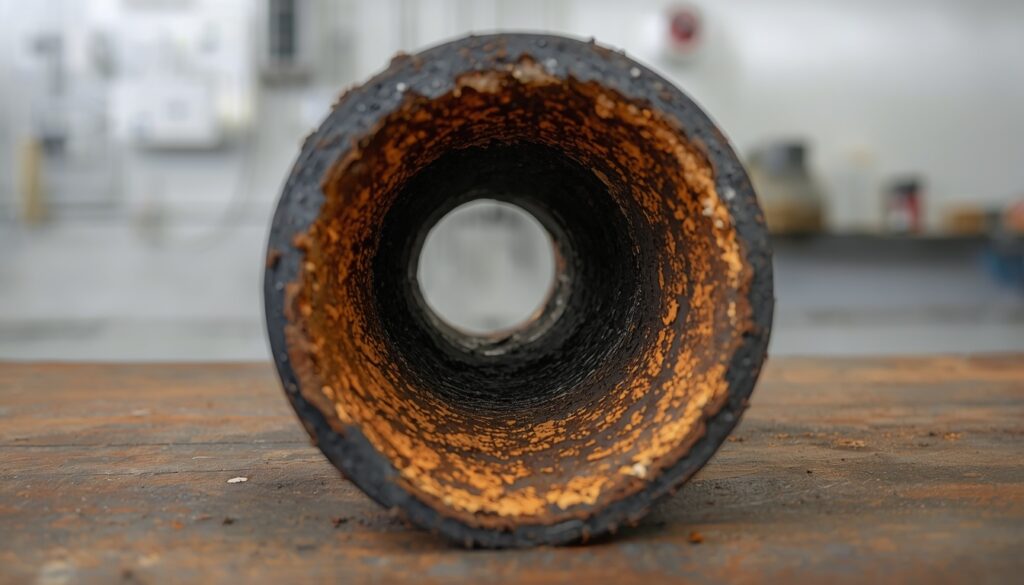
Waste sitting in the bottom of a drain line generates hydrogen sulfide gas. That gas oxidises into sulfuric acid, and the acid eats iron. The result is corrosion working outward from the inside of the pipe, concentrated along the bottom where waste actually flows.
What channel rot is
Plumbers call the result channel rot. The bottom of the pipe erodes into a trough while the top half still looks solid. Cut a failing section out and you can see straight through the floor of it.
That single fact explains most of what confuses homeowners about cast iron:
- Why failure seems sudden. It took thirty years. It was just invisible.
- Why a camera can look reassuring. From certain angles the pipe wall appears intact while the invert is gone.
- Why a pipe can be half destroyed and still drain. Water finds its way out either way. It just stops staying inside the pipe.
The North Texas complication
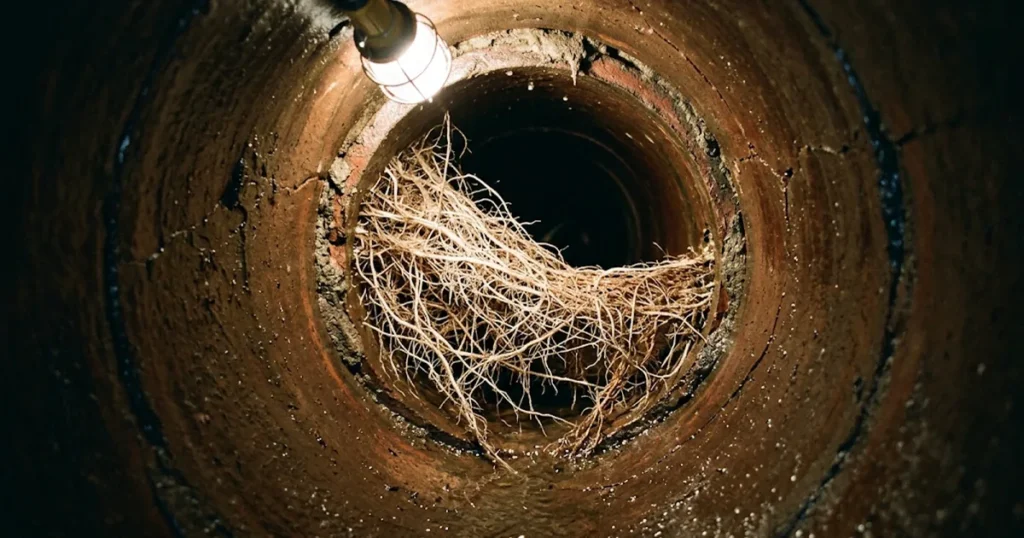
North Texas adds a second force. Expansive clay swells and shrinks with the seasons, and that movement works cast iron joints apart mechanically on top of the chemical corrosion happening inside. Two different attacks on one pipe.
Why cleaning a badly corroded line can destroy it
This is the part that surprises people, and it is the reason we will sometimes talk a customer out of a service we sell.
In a heavily corroded cast iron line, the scale and buildup are partly doing the job the pipe wall used to do. Grind that out aggressively and sections can come away in pieces, because there is no structural iron left behind it. Clean a pipe in that condition and it does not get better, it cracks further.
Which means the honest answer to “can hydro jetting damage cast iron pipes” is: it depends entirely on how far gone the pipe already is. On a sound cast iron line with scale buildup, jetting is the right tool. On a channeled line with no bottom left, it can finish the job. The only way to know which one you have is to look inside first with a camera inspection rather than sending equipment down blind.
What not to put down a cast iron drain
The same logic applies to chemicals, and the rule is simpler than most people expect.
Avoid acid-based and caustic drain cleaners entirely. Sulfuric acid drain openers, and to a lesser degree the common caustic products, attack iron directly. On a pipe already thinned to a fraction of its original wall, a bottle of drain cleaner does measurable damage while barely touching the clog. Bleach in ordinary household quantities is not the main threat, but it is not helping either.
Enzyme cleaners are safe. Hot water and a plunger are safe. Anything that lists sulfuric acid, hydrochloric acid, or lye should not go into a cast iron drain.
What does cast iron failure look like in a DFW home?
Most DFW housing is slab-on-grade, which changes how failure presents compared to houses with crawlspaces or basements.
In a crawlspace home, a failed cast iron line eventually pours sewage under the house, and it can run for years before anyone finds it. Drains appear to work perfectly. The water simply never reaches the sewer.
What to watch for in a slab home
Under a slab there is no space to pool, so the signs are different and easier to miss:
- Sewer odor with no dry trap to explain it
- Recurring clogs in the same line after clearing
- Slow drains across multiple fixtures at once
- Damp or discoloured flooring over a drain run
- Foundation movement in one area, as saturated clay swells unevenly
- Roaches or other pests appearing without a food source, because a broken drain under a slab is a direct route in
The health angle is worth stating plainly. In the worst cases people notice the family getting sick before they notice a plumbing problem, and the plumbing turns out to be the cause. Remediating sewage contamination under or beneath a house runs into the tens of thousands of dollars, entirely separate from any pipe repair.
Can cast iron pipes be lined, or do they need replacing?
This is the decision that matters, and it is time-limited in a way most homeowners do not realise.
A corroded but structurally intact cast iron line can be relined. The pipe gets cleaned, then a resin-saturated liner is pulled through and cured, forming a new jointless pipe inside the old one. It is done through existing access points with no excavation. That is how cast iron pipe lining works and it starts at $3,500+ (as of Q3 2026).
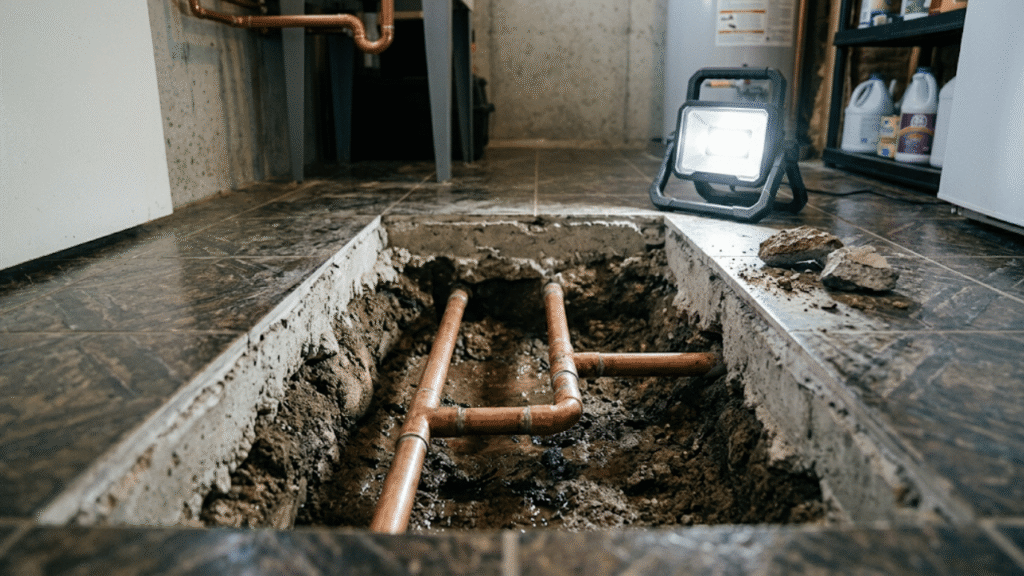
A channeled line cannot be lined. A liner needs a host pipe to press against and cure inside. If the bottom of the pipe is gone, there is nothing to line against. At that point the only option is excavation and replacement, which means opening the slab or the yard, and it costs considerably more.
So the window is real. A pipe that is lineable today may not be lineable in five years, and the difference between those two moments is the difference between a no-dig repair and a demolition project. That is not a sales argument, it is the physical constraint of the method.
The only way to know which side of that line your pipe sits on is a camera inspection at $250+. If it comes back sound, you have time and we will tell you so. Our page on how long cast iron pipes last covers the lifespan side in more detail.
Does homeowners insurance cover cast iron pipes?
Usually not the pipe, and often yes to the damage.
Most policies treat pipe failure from age and corrosion as wear and tear, which is excluded. What they typically do cover is damage caused by a sudden and accidental discharge of water, meaning flooring, drywall, and sometimes the cost of accessing the pipe.
Cast iron failure is gradual by nature, which is exactly the wording insurers use to deny claims. Two things improve your position: documenting the failure when it is found rather than after the damage spreads, and keeping the camera inspection report showing where and when the problem was identified. Read your own policy language on wear and tear and on tear-out coverage before you file.
Should you buy a house with cast iron pipes?
Yes, with a sewer scope inspection first and the result priced into your offer.
Cast iron is not a reason to walk away from a house. It is a reason to know what you are buying. A standard home inspection does not put a camera in the sewer line, so a house can pass inspection with a drain line that is 80% gone.
What a sewer scope tells you before closing
Order a sewer scope separately. If the line is sound, you have bought peace on a known unknown, or If it is corroded but lineable, you know the number and can negotiate. If it is channeled, you have found out before closing rather than eighteen months after, which is the entire point.
Nuflow DFW is licensed by the Texas State Board of Plumbing Examiners (RMP# 46694) and runs 24/7 service across the Dallas-Fort Worth Metroplex. Call (469) 701-0597.
Frequently Asked Questions
When did they stop using cast iron pipes in homes?
Cast iron was phased out for residential drain and sewer lines through the 1970s and early 1980s as PVC became standard. A DFW home built before 1980 very likely has cast iron drain piping, while a home built after the mid-1980s almost certainly has PVC.
Can cast iron pipes be lined instead of replaced?
Yes, if the pipe still has structure. A corroded but intact line can be cleaned and relined from the inside with no excavation. A pipe that has channeled through the bottom cannot be lined, because a liner needs a host pipe to cure against. A camera inspection determines which you have.
Can hydro jetting damage cast iron pipes?
It depends on the pipe’s condition. On sound cast iron with scale buildup, jetting is the correct tool. On a heavily corroded line, aggressive cleaning can break away sections because the buildup is partly holding the pipe together. Always inspect with a camera before choosing a cleaning method.
Does homeowners insurance cover cast iron pipe replacement?
Usually not. Most policies exclude pipe failure caused by age and corrosion as wear and tear, while covering damage from sudden water discharge, including flooring and often the cost of accessing the pipe. Since cast iron failure is gradual, the pipe itself is typically the homeowner’s cost.
What drain cleaner is safe for cast iron pipes?
Enzyme-based cleaners are safe. Avoid anything containing sulfuric acid, hydrochloric acid, or lye, because those attack iron directly and do real damage to a pipe wall already thinned by corrosion. Hot water and a plunger handle most household clogs without touching the pipe.
Should I buy a house with cast iron pipes?
Yes, provided you get a sewer scope inspection first and factor the result into your offer. A standard home inspection does not camera the sewer line, so a house can pass while its drain line is nearly gone. The scope tells you whether you are looking at nothing, a lining job, or a replacement.
How do I know if my pipes are cast iron?
Find exposed pipe in a garage, attic, or under a sink. Cast iron is dark grey, dull, heavy, and magnetic, with bell-and-spigot joints or stainless no-hub bands. PVC is white plastic and not magnetic. Copper is unmistakable. A fridge magnet answers it in seconds.
The question worth answering now
If your home is pre-1980 and nobody has ever put a camera in the drain line, you do not know which side of the lining window you are on. That is the only fact that changes the cost of this by an order of magnitude.
An inspection either buys you years of not thinking about it, or it catches the pipe while relining is still possible. Both outcomes are better than finding out when the floor gets wet.
Nuflow DFW. Licensed Master Plumber, RMP# 46694. Call (469) 701-0597.