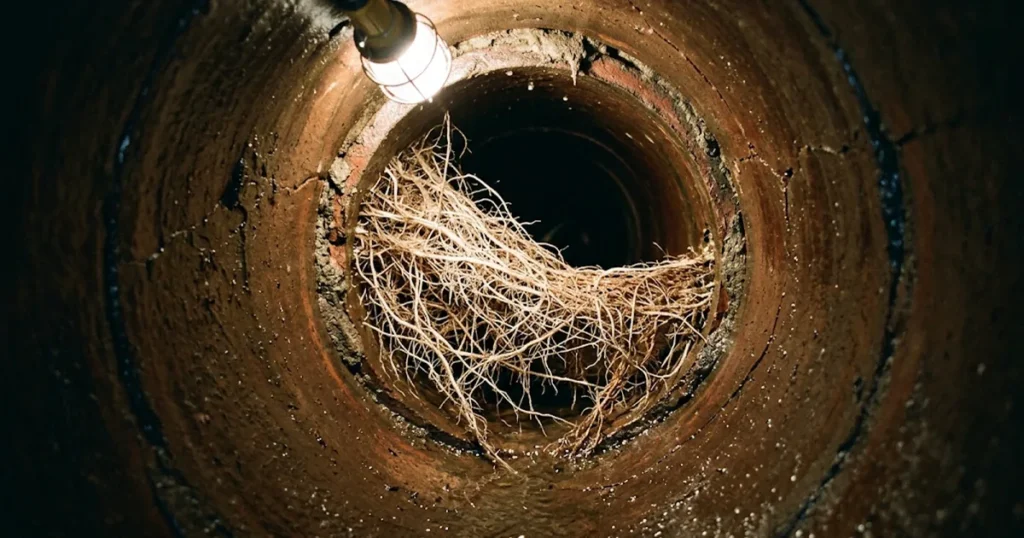
Tree roots get into a sewer line through a crack or a loose joint that was already there. The pipe is the wettest thing in the soil, and roots find it. Chemicals kill the roots inside the pipe but not the tree and not the crack, which is why they grow back to the same spot. Cutting clears the blockage. Only sealing the pipe ends the cycle.
That distinction is the whole article, and it is the reason some homeowners get their line rootered every eighteen months for a decade.
How do you know if tree roots are in your sewer line?
Six signs, and the pattern matters more than any single one.
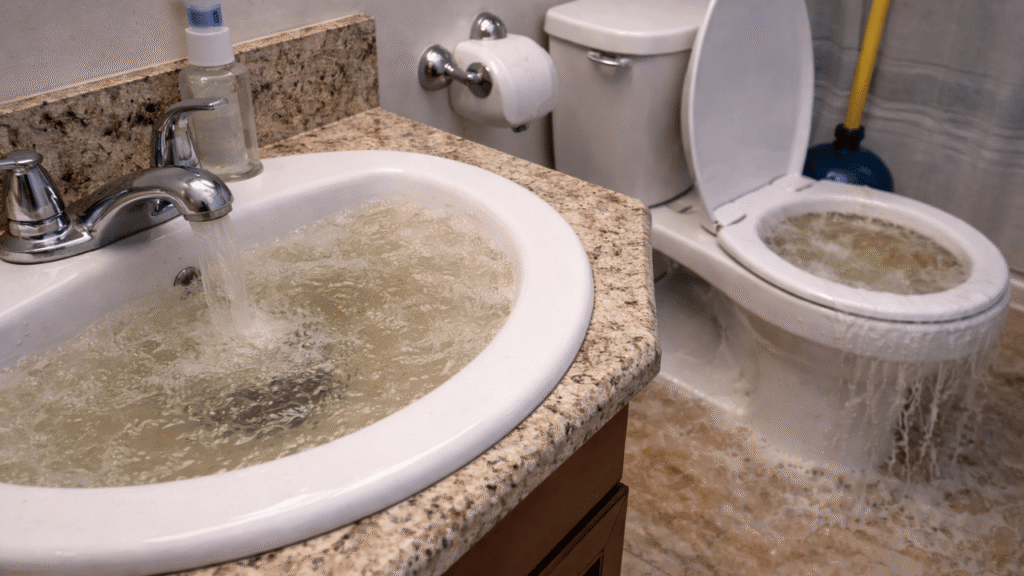
- Slow drains at every fixture, not just one. A single slow drain is a local clog. Multiple fixtures slowing together points at the main line.
- Gurgling toilets when a tub or washing machine drains.
- Recurring clogs in the same line. If you are calling someone every few months for the same blockage, that is the signature.
- Sewer odor indoors or in the yard.
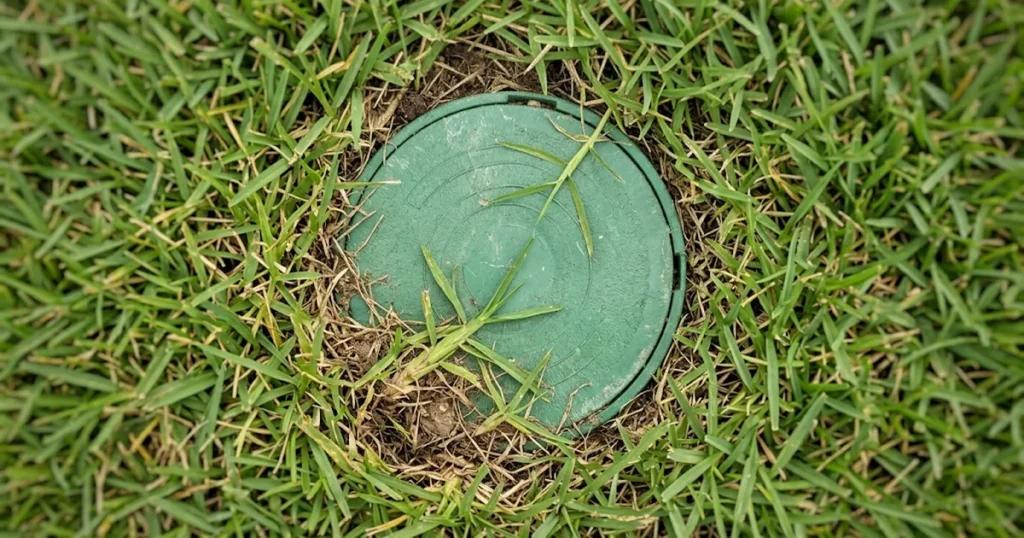
- A patch of grass that is greener and thicker than the rest, following a line across your yard. Leaking wastewater is fertiliser.
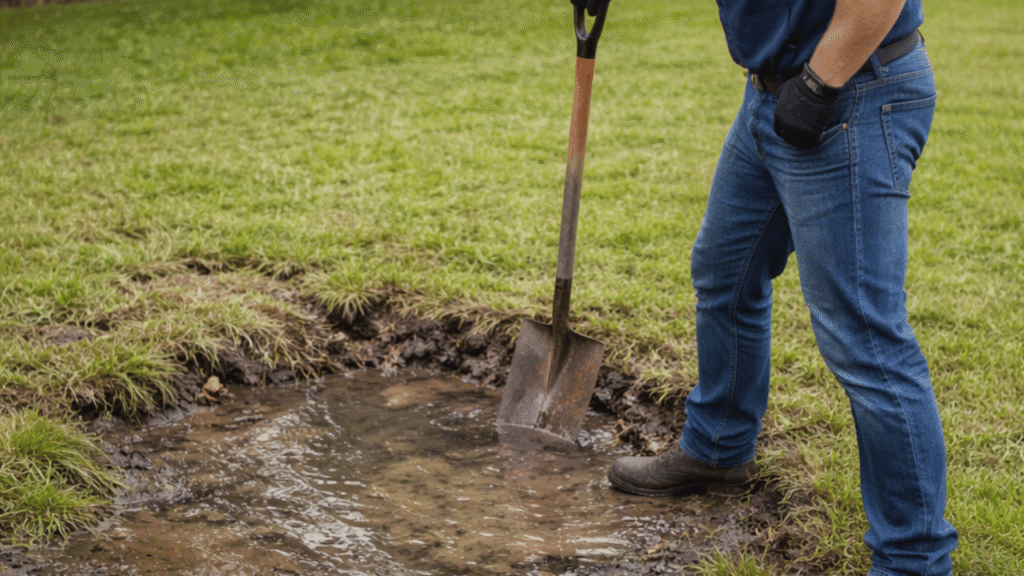
- Soft or soggy ground over the sewer run, even in dry weather. In DFW in September, a wet spot with no rain in weeks is worth investigating.
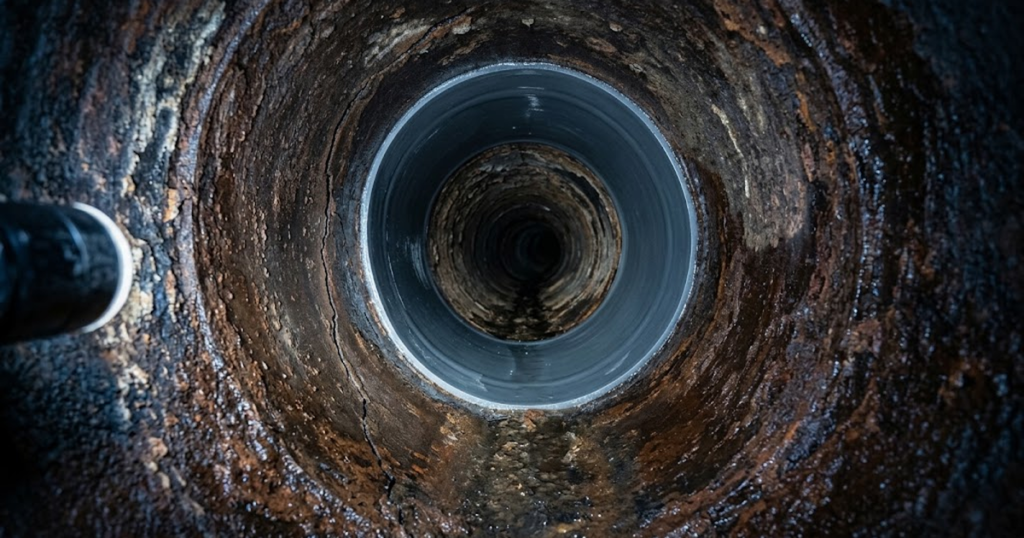
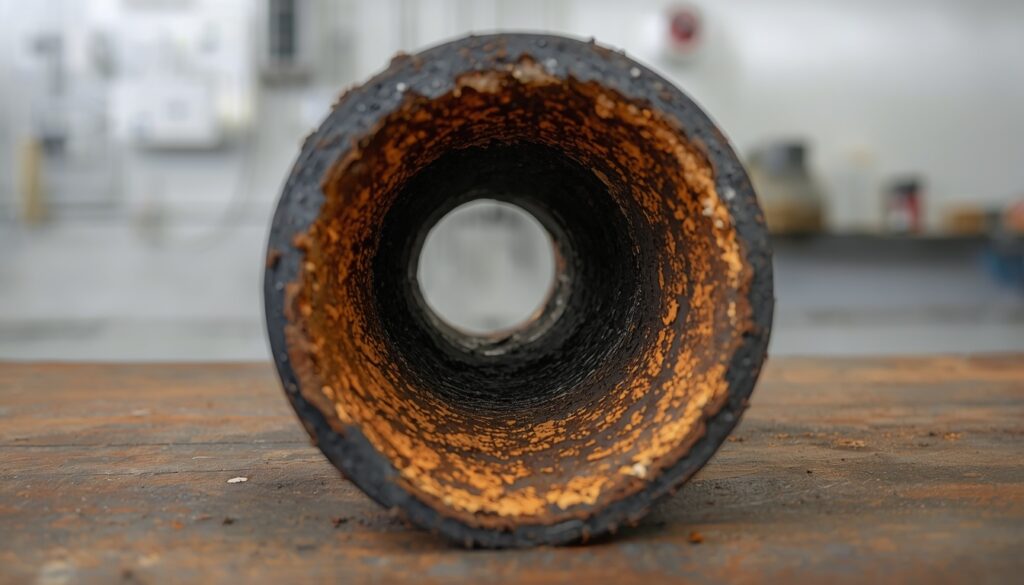
Worth knowing how far this goes before anyone notices. A sewer line can be almost completely packed with root mass and compacted debris and the house will still appear to drain, slowly, right up until it stops entirely. By the time a backup happens, the pipe is usually far worse than the symptoms suggested.
The recurring-clog pattern is the one people miss. Roots get cleared, everything works for a year, the clog returns, and each visit gets treated as a new problem rather than the same one.
Why did roots get into my line in the first place?
Roots do not drill through sound pipe. They find an opening that already exists and follow the moisture through it.
On older DFW lines that opening is usually not a crack at all. Clay tile sewer is built from short sections butted together, and each joint has a bell where the next section seats into it. That lip was never sealed the way modern pipe is. A hair-thin root reaches the bell, follows it inside, and then thickens where water and nutrients are constant, prising the joint wider as it grows.
Roots travel toward the house, not away from it
This is the part homeowners find counterintuitive. The break-in happens outside, in the clay run under the yard. The roots then follow the pipe inward, reach the cast iron under or near the house, and the mass builds up from there.
Which is why the symptoms appear inside while the cause sits thirty or fifty feet out in the yard, and why clearing the fixture end never holds.
Offsets make it worse, and they travel with roots
Roots are rarely the only defect. The same seasonal ground movement that opens a bell joint also shifts sections out of alignment, leaving a lip inside the pipe where one length no longer lines up with the next. That is an offset.
An offset catches what roots do not. Toilet paper, wipes, and solids hang on the lip and build against it, so a line with both problems blocks far faster than either alone. It also matters for the repair, because clearing roots does nothing to a misaligned joint.
Why North Texas makes it worse
Two local conditions stack on top of each other.
Expansive clay swells and shrinks with the seasons, and that movement works pipe joints apart mechanically. Older DFW lines in clay tile or cast iron have joints every few feet, each one a potential entry point.
Then there is the drought cycle. After a hot dry North Texas summer, root systems are actively hunting for water, and a leaking sewer line is the reliable source. The first autumn rains then swell the clay again and shift the joints the roots have spent the summer probing. That is why root calls cluster in the fall rather than spreading evenly through the year.
What dissolves tree roots in sewer lines?
Three product categories get recommended constantly, and they are not equivalent. The difference comes down to whether the treatment can reach the roots at the top of the pipe.
Foaming root killers
The most effective option a homeowner can use. Foam expands to coat the full inside circumference of the pipe, so it contacts roots at the crown as well as the ones sitting in the flow. Most contain a herbicide such as dichlobenil or metam sodium. Used on a schedule, typically every twelve to eighteen months, they meaningfully slow regrowth.
Copper sulfate and rock salt
Both kill root tissue they touch. Both have the same limitation: they dissolve in the water at the bottom of the pipe and never reach the roots hanging in the upper half. That is why people report partial results.
Two cautions that most articles leave out. On a septic system, avoid rock salt entirely, because sodium chloride in quantity damages the drain field and disrupts the bacteria the tank depends on. And some municipalities restrict copper sulfate discharge into sanitary sewers, so check locally before pouring it.
What does not work
Vinegar has no meaningful effect on established woody roots. Epsom salt and baking soda combinations are widely recommended online and do essentially nothing to a root mass. If a clog cleared after one of these, the flushing water did the work.
None of these treatments repair the pipe. They manage a symptom on a schedule.
Why do the roots keep coming back?
Because nothing you pour down the drain touches the two things that caused the problem: the crack, and the tree.
The chemical kills the root mass inside the pipe. The tree is unharmed, it is still growing, and the opening in your pipe is still the wettest point in the surrounding soil. Within months, new roots follow the same gradient to the same crack.
Cutting has the same problem
Mechanical cutting has the same limitation and adds one of its own. A rooter blade or a jetter clears the blockage properly, which is the right first step when your line is backing up. But cutting roots against the inside of an already cracked pipe can widen the damage, particularly in old clay tile or corroded cast iron. Our page on tree root removal covers when cutting is the right call.
So the honest sequence is: clear the blockage now, then decide whether you want to keep clearing it every year or fix the opening.
What actually stops it
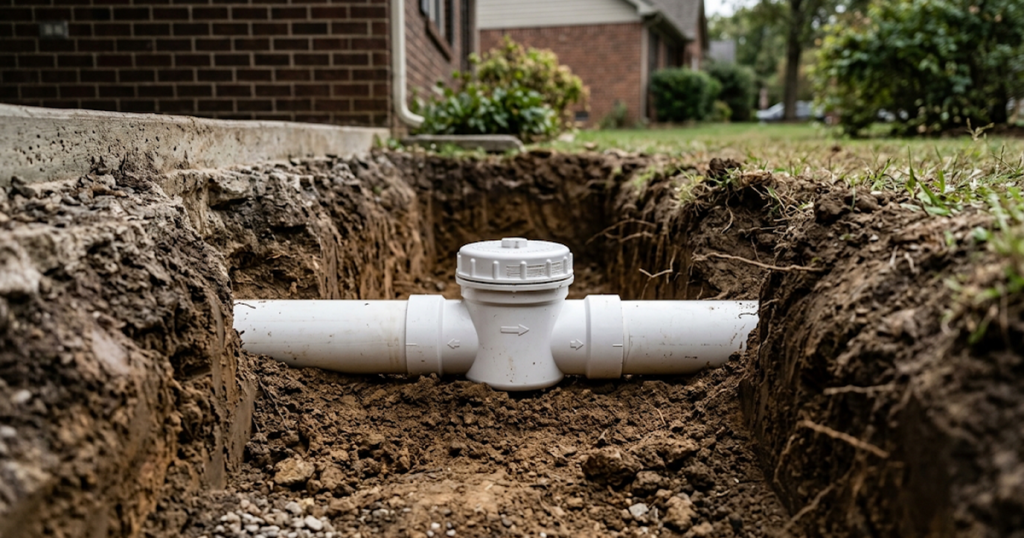
Sealing the pipe. Trenchless pipe lining pulls a resin liner through the existing line and cures it into a new jointless pipe inside the old one. No joints means no entry points, and roots have nothing to grow into.
Tight access is not a dealbreaker
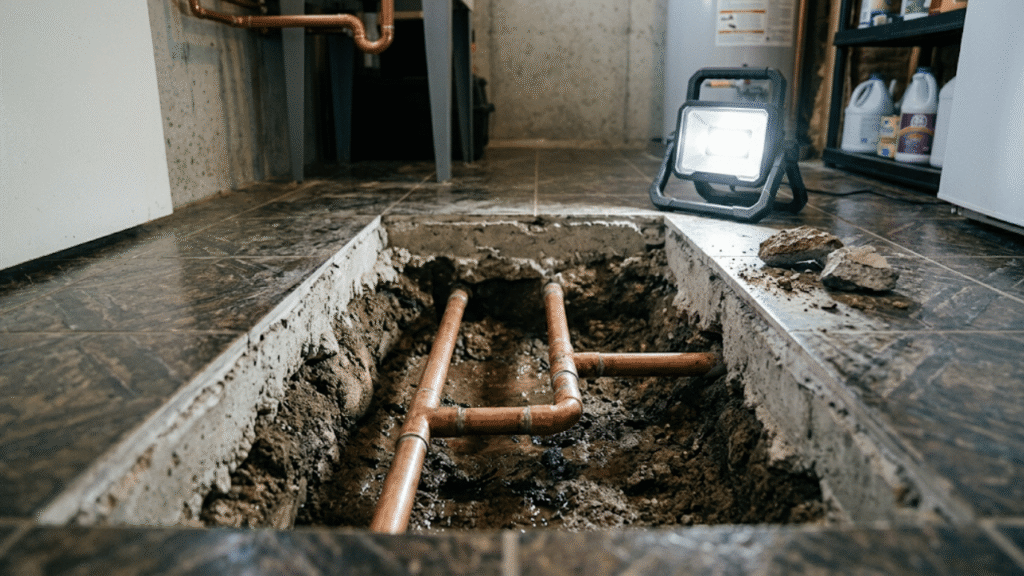
Access is less of an obstacle than people expect. Where a cleanout sits in a cramped utility room or closet with no space for equipment, a guide pipe can be run from an accessible point outside and the liner shot through it into the sewer, so the machinery never has to fit in the tight space. A typical residential run of 80 to 100 feet is routine.
Being straight about the limits. Lining is not always the answer:
- A collapsed section cannot be lined. There has to be a host pipe for the liner to cure against.
- It costs more upfront than another rootering visit. The case for it is arithmetic over years, not a single job.
- If your line has one small intrusion and is otherwise sound, chemical maintenance on a schedule is a legitimate choice, and we will tell you so.
The decision only makes sense once someone has seen inside the pipe. A camera inspection shows how far the roots extend, how many entry points there are, and whether the pipe still has structure. Choosing a treatment without that is guessing.
Which trees cause the most trouble in DFW?
Aggressive, fast-growing, water-seeking species are the usual culprits. In North Texas that means willow, silver maple, hackberry, sycamore, cottonwood, and Bradford pear. Live oak and cedar elm are slower but extremely common here and cause plenty of intrusion simply because there are so many of them in older neighbourhoods.
Distance matters less than people assume. The simplest way to picture the reach is to imagine the tree turned upside down: the root system spreads roughly the way the canopy does, and often further. A mature tree whose branches reach out forty feet is not safely clear of a sewer line forty feet away.
What you can control: do not plant new aggressive species over or near a known sewer run, and if you already have mature trees over the line, treat inspection as maintenance rather than waiting for a backup. Removing an established tree to protect a pipe is almost never the economical answer, since lining the pipe costs less than removing a large tree and keeps the tree.
What does it cost to deal with tree roots?
| Approach | Cost (as of Q3 2026) | What it does |
|---|---|---|
| Foaming root killer, DIY | $20 to $50 per treatment | Slows regrowth, repeat annually |
| Drain cleaning or rootering | $150+ | Clears the current blockage |
| Camera inspection | $250+ | Shows what you are actually dealing with |
| Hydro jetting | $350+ | Clears heavy root mass and scale |
| Trenchless pipe lining | $3,500+ | Removes the entry points permanently |
The comparison worth doing is not one visit against one lining job. It is a decade of visits against one lining job. If your line needs clearing annually and the pipe is otherwise sound, the arithmetic usually favours lining somewhere between year four and year seven, and sooner if a backup ever damages flooring.
Pricing depends on access, pipe condition, and length of the affected run. Free estimates after on-site inspection.
Does homeowners insurance cover tree roots in a sewer line?
Usually not the pipe repair, and sometimes the resulting damage.
Most policies exclude root intrusion as a gradual, preventable maintenance issue rather than a sudden accidental event. What some policies do cover is water damage inside the home from a resulting backup, and many carriers sell a separate sewer and water backup endorsement that covers exactly this scenario for a modest annual premium.
The endorsement worth buying
Worth checking your policy before you need it. If you have mature trees over an older sewer line, that endorsement is one of the cheaper pieces of insurance available to you.
Nuflow DFW is licensed by the Texas State Board of Plumbing Examiners (RMP# 46694) and runs 24/7 service across the Dallas-Fort Worth Metroplex. Call (469) 701-0597.
Frequently Asked Questions
What dissolves tree roots in sewer lines?
Foaming root killers containing dichlobenil or metam sodium work best, because the foam coats the full inside of the pipe and reaches roots at the top. Copper sulfate and rock salt kill only what they touch in the water at the bottom. Vinegar and Epsom salt do essentially nothing to established roots.
Will tree roots grow back after treatment?
Yes, unless the crack they entered through is sealed. Chemicals kill the root mass inside the pipe but not the tree, and the opening is still the wettest point in the soil, so new roots follow the same path within months. Only lining or replacing the pipe removes the entry point.
What are the symptoms of tree roots in a sewer line?
Slow drains at multiple fixtures, gurgling toilets, sewer odor, and clogs that keep returning to the same line. Outside, look for a strip of grass that is greener than the rest or soft ground over the sewer run, especially during dry weather when nothing else explains the moisture.
Is rock salt safe for sewer lines?
It is safe for the pipe but not for a septic system. Sodium chloride in quantity damages the drain field and kills the bacteria a septic tank relies on. On municipal sewer it is harmless to the pipe, but it only reaches roots sitting in the water at the bottom, so results are partial.
Should I remove the tree?
Rarely. Removing a mature tree usually costs more than lining the sewer line, and it does not repair the crack the roots already made. Sealing the pipe protects it while keeping the tree. Removal makes sense only when the tree is failing for other reasons or is directly over the line.
Does insurance cover tree roots in a sewer line?
Most policies exclude root intrusion as gradual wear rather than sudden damage, so the pipe repair is typically the homeowner’s cost. Resulting water damage inside the home may be covered, and many carriers offer a separate sewer backup endorsement that covers this scenario. Check your policy wording.
How often do sewer lines need root treatment?
Chemical maintenance is usually recommended every twelve to eighteen months, and mechanical clearing whenever drainage slows. If you are on that schedule permanently, that is the signal that the pipe has an opening worth sealing rather than a problem worth managing.
The question to answer before you buy anything
If roots have blocked your line once, you already know they can get in. The useful question is not which chemical to buy. It is how many entry points there are and whether the pipe still has structure, because that decides whether you are managing this for the next ten years or finishing it.
A camera answers that in an afternoon. Everything else is guesswork with a bottle of root killer.
Nuflow DFW. Licensed Master Plumber, RMP# 46694. Call (469) 701-0597.