The choice between sewer line replacement and pipe lining is usually decided by your pipe’s condition, not your budget. Lining works when the existing pipe still holds its shape, which covers cracks, corrosion, and root intrusion. Replacement is required when the pipe has collapsed, sagged into a belly, or lost structural integrity. A camera inspection settles it, and until someone has looked inside your line, any recommendation is a guess.
Two things get repeated about this decision that are not reliably true: that lining is always cheaper, and that replacement always means destroying your yard. Homeowners who have been through it report lining and replacement quotes coming in comparable, and modern replacement can be trenchless too. Here is the honest version.
The Real Question: Are You Even a Lining Candidate?
Most comparison articles present this as a menu you choose from. It is closer to a qualification test.
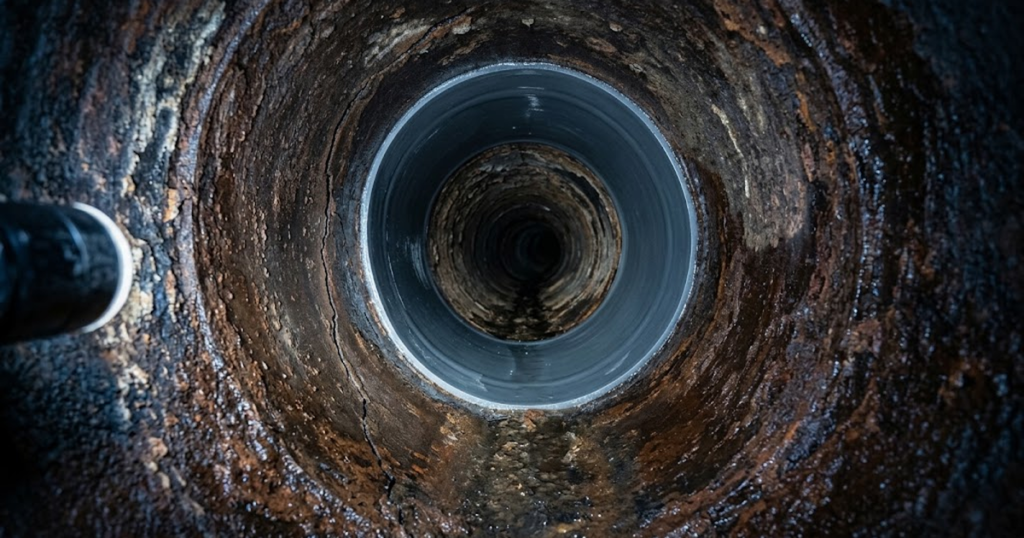
Lining installs a resin-saturated liner inside your existing pipe and cures it in place, creating a new pipe within the old one. That only works if the old pipe can act as a host, meaning it still holds its shape well enough to line against. So the first question is not which method you prefer. It is whether your line qualifies.
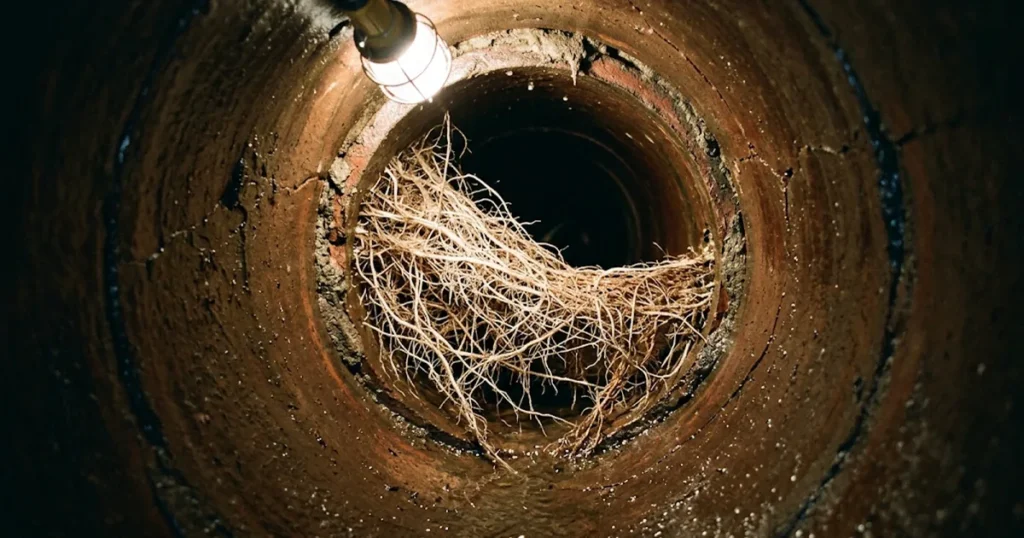
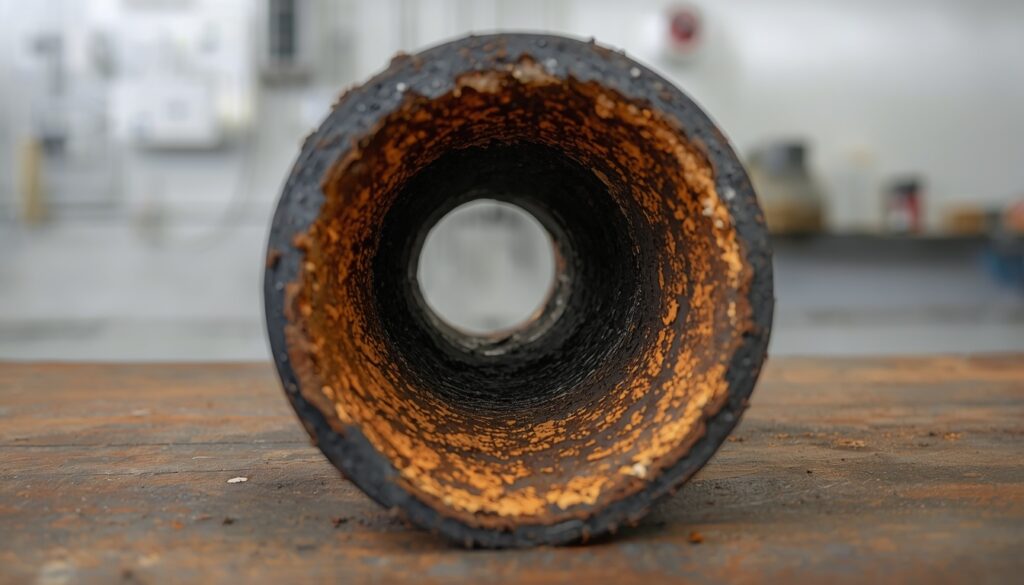
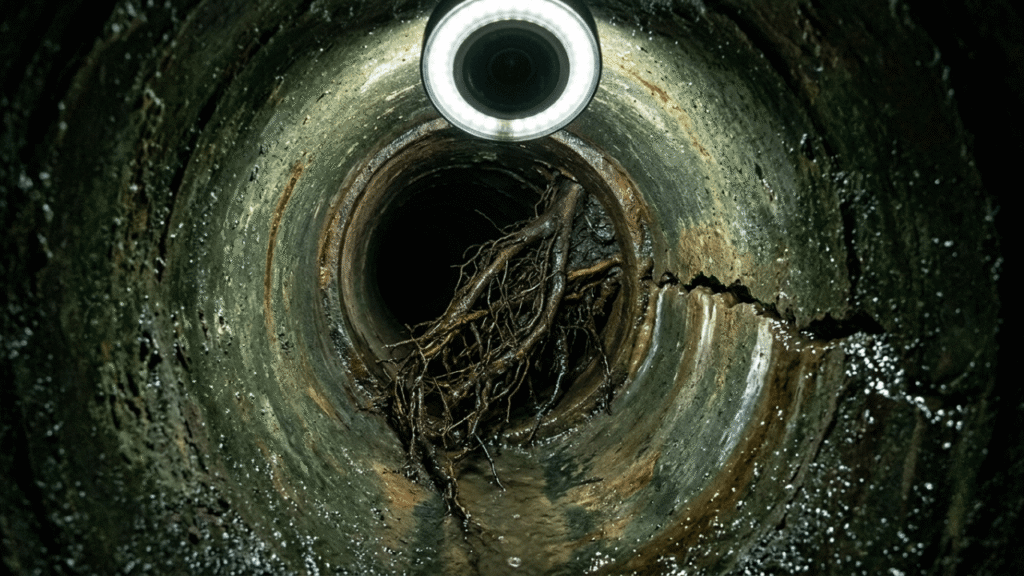
Your line is likely a lining candidate if: it has cracks or fractures but intact alignment, root intrusion at joints, corrosion or scaling narrowing the interior, or leaking joints. These are the common failures, and they line well.
Lining is ruled out if: the pipe has fully collapsed, has a belly, meaning a sagged section holding standing water, is badly offset or misaligned at a joint, or is so deteriorated there is no structural material left to line against.
That belly point deserves emphasis because it is the one people miss. As one plumber put it plainly: if there is a belly in the line, it will still be there after you line it. A liner follows the shape of the host pipe. It cannot correct grade, and a low spot that collects water and solids will keep collecting them under a new liner.
It Is Not Actually Two Options, It Is Three
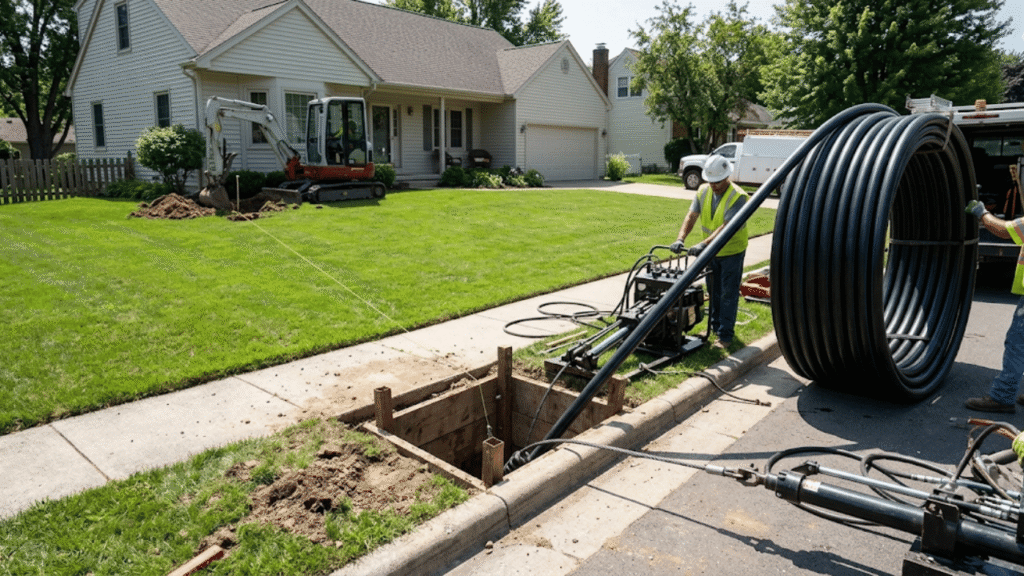
Framing this as lining versus replacement hides the middle option, which is often the right answer.
Pipe lining (CIPP)
A liner cured inside the existing pipe. Two small access points, typically one to two days, and no trench. Requires a structurally sound host pipe. The method follows the ASTM F1216 standard and quality systems are designed for a 50-year service life.
Pipe bursting
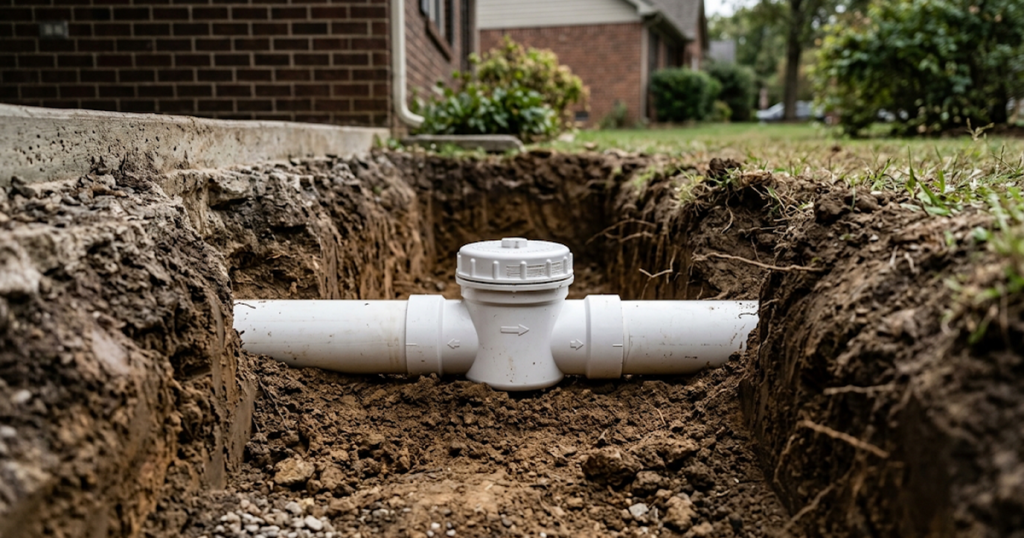
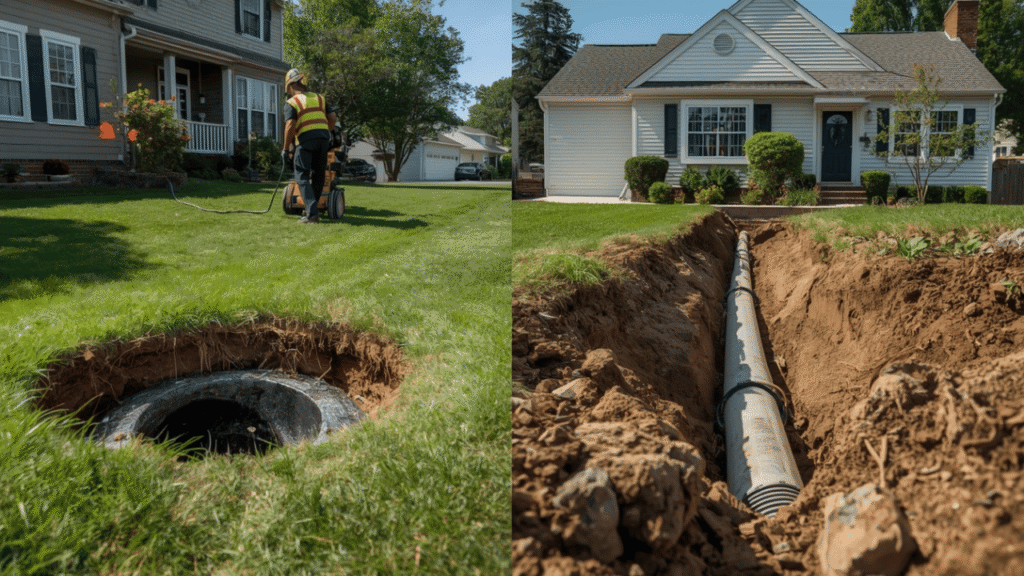
This is replacement without a trench. A bursting head is pulled through the old pipe, fracturing it outward while simultaneously pulling new pipe into place. You get a genuinely new pipe, not a liner, and it handles lines that lining cannot: collapsed sections, severe deterioration, and cases where you want a larger diameter. It needs access pits at both ends but not a trench along the run.
Open-cut replacement
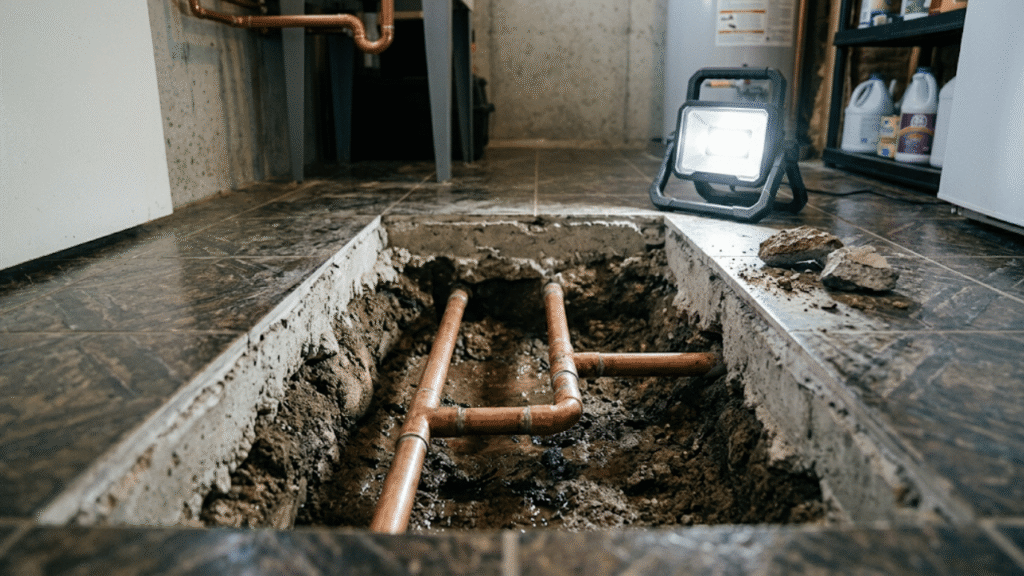
Excavating the line and laying new pipe. It is the only option when the line is badly misaligned, has a grade problem that must be corrected, or has to be rerouted entirely. It is also sometimes the practical choice when the line is shallow and the ground above it is plain lawn. Across the industry, trenchless methods typically cut total project cost by 30 to 50 percent against open-cut once restoration is counted, though that gap narrows when there is nothing expensive above the pipe.
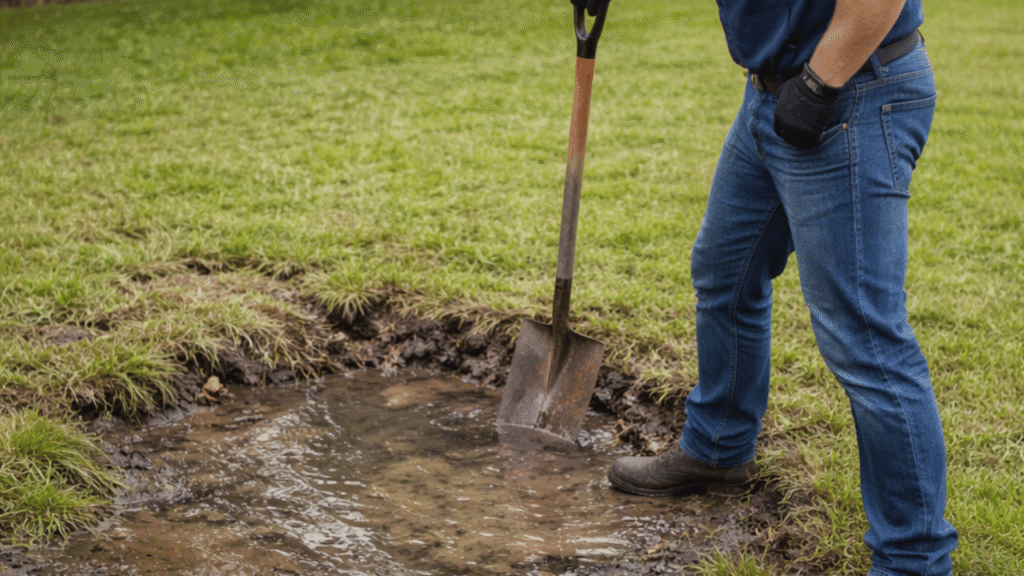
That middle option is why “replacement means your yard gets destroyed” is outdated. Homeowners describe replacement crews digging a small hole at the house and another at the street, pulling the old pipe out horizontally, and leaving the yard largely undisturbed.
What Each Option Costs
| Pipe lining (CIPP) | Pipe bursting | Open-cut replacement | |
|---|---|---|---|
| Cost per foot | $80 to $250 | $150 to $250 | $150 to $450 |
| Typical project | $5,000 to $15,000 | $6,000 to $18,000 | $7,000 to $30,000+ |
| Time on site | 1 to 2 days | 1 to 3 days | 3 to 7 days |
| Yard impact | Two access points | Two access pits | Full trench |
| Fixes a belly? | No | Yes | Yes |
| Increases diameter? | No, slightly reduces | Yes, can upsize | Yes |
2026 ranges. Nuflow DFW pipe lining starts at $3,500+ (as of Q2 2026). Final cost depends on inspection findings, length, depth, and access. Call (469) 701-0597 for a free on-site estimate.
For per-foot detail on the lining side specifically, our pipe lining cost guide breaks the math down further.
Why Lining Is Not Always Cheaper
This is where most content oversells, so it is worth being direct.
Lining wins clearly on total cost when there is something expensive sitting on top of the pipe. One homeowner with six crushed sections and heavy root intrusion in a clay main line paid roughly $11,500 to line 65 feet, and estimated saving around $10,000 against conventional replacement specifically because their concrete driveway never had to be touched. That is the real mechanism: you are not saving on pipe work, you are avoiding restoration.
But when the line runs under open lawn with nothing above it, that restoration savings shrinks, and the two quotes can land close together. Homeowners regularly report relining and replacement coming in comparable, and some find lining quoted higher. If a contractor tells you lining is automatically the cheaper option without knowing what is above your pipe, that is a sales position rather than an assessment.
Two other cost factors people discover late: how deep the line sits, and how much cleaning the pipe needs before a liner will bond. Heavy root cutting or descaling is real labor billed before the lining even starts.
The Diameter Question
Lining creates a new pipe inside the old one, which means the interior diameter shrinks slightly. Modern CIPP liners are thin and the smoother interior surface partly offsets the loss, so flow capacity in a properly sized residential line is generally fine.
It matters in two situations: if your line was already undersized for the home, or if it has significant existing scaling that will not be fully removed. In those cases pipe bursting is the better answer, because it can install the same size or larger. Ask about wall thickness and expected diameter after lining if the line already runs marginal.
Cast Iron and Clay Fail Differently, and It Changes the Answer
A distinction that gets flattened in most articles: cast iron and clay tile do not fail the same way, and the difference points to different solutions.
Clay tile comes in short sections with many joints, and those joints separate as soil moves. That makes clay the more root-prone material by a wide margin. Root intrusion at joints lines well, so clay lines are often good lining candidates, provided alignment is still intact.
Cast iron fails primarily by corroding from the inside. Scale builds up, the channel narrows, the walls thin, and eventually sections crack or crumble. Roots are a smaller factor here than most people assume. Cast iron that is corroded but still holding its shape lines well. Cast iron that has thinned to the point of crumbling has nothing left to line against, and that is a bursting or replacement job.
In DFW this matters because expansive clay soil moves seasonally, stressing joints in clay tile and accelerating both failure modes across the older housing stock built through the 1970s. Our trenchless sewer repair cost breakdown for Richardson walks through how that plays out in one of the Metroplex’s oldest suburbs.
Sometimes the Right Answer Is Neither
Worth saying because it will not come from anyone selling the work. If your line has root intrusion but is otherwise structurally sound and you are not experiencing backups, scheduled maintenance can be a legitimate strategy. Annual mechanical cleaning to cut roots costs a fraction of a repair, and for some homeowners that is the right call for years before committing to a full solution.
The situation flips when backups recur despite cleaning, when the camera shows structural damage rather than just roots, or when you are planning to stay in the home long term. Preemptively replacing a line that is not causing problems is money spent early rather than money saved.
How to Compare Two Quotes Properly
Homeowners who have been through this consistently give the same advice: get at least two or three quotes, and insist on camera footage you can keep and review yourself.
Ask each contractor these five things:
What did the camera actually show?
Ask them to point out the specific defects on the footage. A recommendation without visual evidence is not a diagnosis.
Is my line a lining candidate, and why or why not?
If they say no, the reason should be specific: a belly at a given distance, an offset joint, a collapsed section.
What is the measured length, and what is the per-foot rate?
Totals are not comparable across quotes until you know the length.
What is included, and what is extra?
Root cutting, descaling, permits, and restoration are commonly separate line items. Two similar totals can diverge by thousands here.
What happens to the surface above the line?
Driveway, patio, mature trees, and landscaping are where the real cost difference between methods appears.
A sewer camera inspection is the step that makes all of these questions answerable, which is why it comes before a quote rather than after.
Frequently Asked Questions
Is pipe lining better than replacement?
Neither is universally better. Lining is the less disruptive and often less expensive option when the existing pipe still holds its shape. Replacement, whether by pipe bursting or excavation, is required when the line has collapsed, sagged into a belly, or lost structural integrity. Pipe condition decides, not preference.
Is pipe relining cheaper than replacement?
Often, but not always. Lining’s savings come mostly from avoiding restoration, so it wins clearly when a driveway, patio, or mature landscaping sits above the line. When the pipe runs under open lawn, quotes for the two methods frequently come in comparable, and lining is sometimes higher.
When can a sewer line not be lined?
Lining is ruled out when the pipe has fully collapsed, has a belly holding standing water, is badly offset at a joint, or has deteriorated to the point that no structural material remains to line against. Grade problems in particular cannot be fixed by lining, since a liner follows the existing pipe’s shape.
What is the difference between pipe bursting and pipe lining?
Lining installs a resin liner inside the existing pipe, keeping the old pipe in place as a host. Pipe bursting fractures the old pipe outward while pulling an entirely new pipe through, so you end up with new pipe rather than a liner. Bursting handles collapsed lines and can increase diameter; lining cannot.
Does pipe lining reduce the diameter of my sewer line?
Slightly, since the liner adds a layer inside the existing pipe. For a properly sized residential line the smoother interior surface largely offsets it, and flow is generally unaffected. If your line was already undersized or heavily scaled, pipe bursting is the better choice because it can match or increase the original diameter.
Why is sewer line replacement so expensive?
Most of the cost is not the pipe. It is excavation labor, depth and access difficulty, permits and inspection, and restoring whatever sat above the line, including driveway concrete, patios, sod, and landscaping. Longer runs and deeper lines multiply all of it, which is why quotes vary so widely between properties.
How long does each option take?
Lining a residential line is typically completed in one to two days, and straightforward jobs can finish in a single visit of a few hours, with a significant portion of that spent cleaning and prepping the pipe before the liner goes in. Pipe bursting usually runs one to three days, and open-cut replacement three to seven.
The Bottom Line
Start with what is wrong with your pipe rather than which method sounds better. Cracks, corrosion, and roots with intact alignment point to lining. A belly, a collapse, or a grade problem points to bursting or replacement. That single distinction determines both the method and most of the cost.
And treat the cheaper quote carefully. A lower lining number is not the better deal if it does not address what the camera actually found, and a replacement quote is not automatically the yard-destroying option it used to be.
Nuflow DFW is licensed by the Texas State Board of Plumbing Examiners (RMP# 46694) and diagnoses lines by camera before recommending a method, across the Dallas-Fort Worth Metroplex. Call (469) 701-0597 for a free on-site estimate and footage you can keep.