Trenchless sewer repair in Richardson costs $80 to $250 per linear foot in 2026, which works out to about $5,000 to $15,000 for a full residential sewer line. Sectional repairs on a shorter run start lower, and Nuflow DFW trenchless pipe lining starts at $3,500+ (as of Q2 2026). The number that decides your quote is line length, and Richardson’s older neighborhoods tend to have longer runs than newer suburbs.
Most Richardson pages on this topic will tell you they do trenchless work and leave the pricing to a phone call. This one gives you the actual math: what the per-foot rate covers, what a full project runs, how lining compares to replacement, and the situations where the cheaper option is genuinely the right one.
Trenchless Sewer Repair Cost in Richardson: The Numbers
Trenchless work, also called no dig sewer repair, is priced two ways, and quotes get confusing when contractors mix them.
Per linear foot is how the work is actually priced, and the published 2026 per-foot ranges from NuFlow Technologies, the manufacturer behind many of the lining systems in use, line up with what the Dallas market sees:
| Method | 2026 cost per linear foot |
|---|---|
| CIPP lining (4 to 6 inch residential) | $80 to $250 |
| Pipe bursting (full replacement, no trench) | $150 to $250 |
| Traditional excavation | $150 to $450 |
Per project is what you actually pay, and it depends on how many feet you are lining:
| Scope | Typical 2026 total in Richardson |
|---|---|
| Sectional or spot repair | $2,500 to $5,000 |
| Full residential lateral (30 to 75 ft) | $5,000 to $15,000 |
| Longer runs in older neighborhoods (75 to 100+ ft) | $15,000+ |
| Camera inspection (before any quote) | $250+ |
| City permits and inspection | $500 to $2,000 |
2026 ranges for the Dallas market. Nuflow DFW pipe lining starts at $3,500+ (as of Q2 2026). Final cost depends on inspection findings, depth, and access. Call (469) 701-0597 for a free on-site estimate.
One detail that explains a lot of quote confusion: shorter jobs cost more per foot. Setup, cleaning, and equipment are fixed costs spread across however many feet get lined, so a 20-foot repair might land near $250 per foot while a 60-foot run drops closer to $150. A per-foot rate on its own tells you almost nothing until you know the length.
Why Line Length Matters So Much in Richardson
Sewer laterals in the Dallas area typically run 30 to 75 feet from the house to the city connection. In older established neighborhoods, they run longer, sometimes up to 100 feet, because of how those subdivisions were platted with deeper setbacks from the street.
That matters directly to your bill. At $150 per foot, the difference between a 40-foot run and an 80-foot run is roughly $6,000. It is the single largest variable in a trenchless quote, and it is why two neighbors can get very different numbers for what sounds like the same job.
This is also why any quote given without a camera inspection is a guess. The camera establishes the length, the depth, the pipe material, and the actual condition, and all four feed the price.
The 5 Factors That Move Your Quote
Line length and diameter
Covered above, and it is the big one. Most residential laterals are 4 inches; a 6-inch line uses more liner material and costs more per foot.
Depth
A shallow line reached through an existing cleanout is straightforward. Richardson residential mains commonly sit several feet down, and deeper lines mean more work at the access points.
Access
An existing exterior cleanout at both ends is ideal. No cleanout means creating an access point, and if that point sits under a driveway, patio, or mature landscaping, restoration cost follows.
Pipe condition
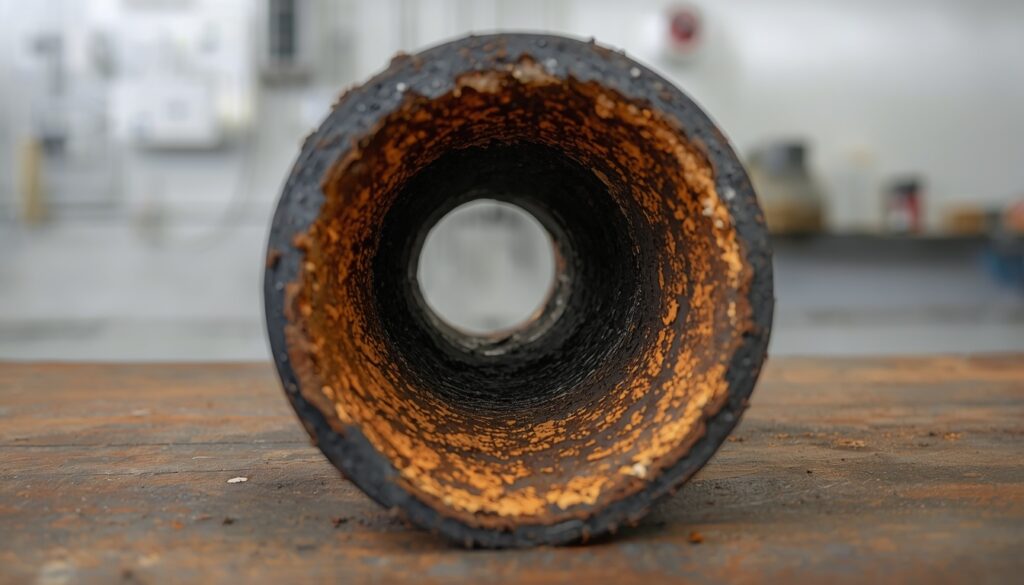
A line with cracks and light scale lines cleanly. One packed with roots or heavy cast iron scale needs aggressive cleaning first, often hydro jetting, before a liner will bond. That prep is real labor.
Pipe material
This is where Richardson differs from newer DFW suburbs, and it deserves its own section.
Why Richardson Homes Hit This Sooner Than Newer Suburbs
Richardson has some of the oldest suburban housing stock in the Metroplex, and that shapes both the frequency and the cost of this work.
The Reservation and Highland Terrace hold Richardson’s oldest homes, built in the 1950s and 1960s, and those homes were plumbed with cast iron and clay tile. Both materials are now well past their service life. Cast iron corrodes from the inside until the channel narrows and cracks open; clay tile joints separate and invite roots. Heights Park and Richardson Heights share the same 1950s to 1970s profile, and Historic Downtown Richardson goes back further still, to pre-1950s clay lines.
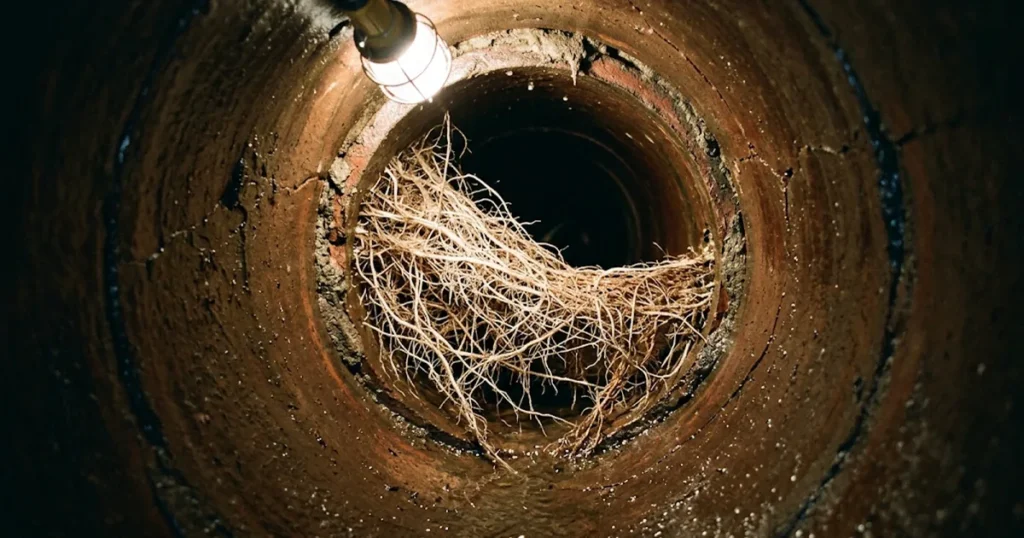
Canyon Creek and Greenwood Hills are 1960s to 1980s, and their aging cast iron sits under large lots with mature tree canopies, which is the exact combination that produces root intrusion. Owens Park, Sherrill Park, and Cottonwood Heights follow the same pattern across 75080.
Two local conditions accelerate all of it. North Texas expansive clay swells when wet and shrinks in drought, and that seasonal movement stresses pipe joints until they separate. And Richardson’s mature oaks and elms send roots looking for moisture, finding it at exactly those separated joints.
The cost implication is worth being direct about: in a 1950s or 1960s Richardson home, a sewer problem is more often a pipe condition problem than a one-time clog. That is what makes trenchless relevant here rather than repeated clearing.
Trenchless vs Traditional Excavation in Richardson
| Factor | Trenchless (CIPP or bursting) | Traditional excavation |
|---|---|---|
| Cost per foot | $80 to $250 | $150 to $450 |
| Typical project | $5,000 to $15,000 | $7,000 to $30,000+ |
| Timeline | 1 to 2 days | 3 to 7 days |
| Yard impact | Two small access points | Full trench across the yard |
| Restoration | Minimal | Sod, driveway, patio, landscaping |
| Service life | 50+ years | 50 to 100 years |
Pricing as of Q2 2026. Actual cost depends on inspection findings.
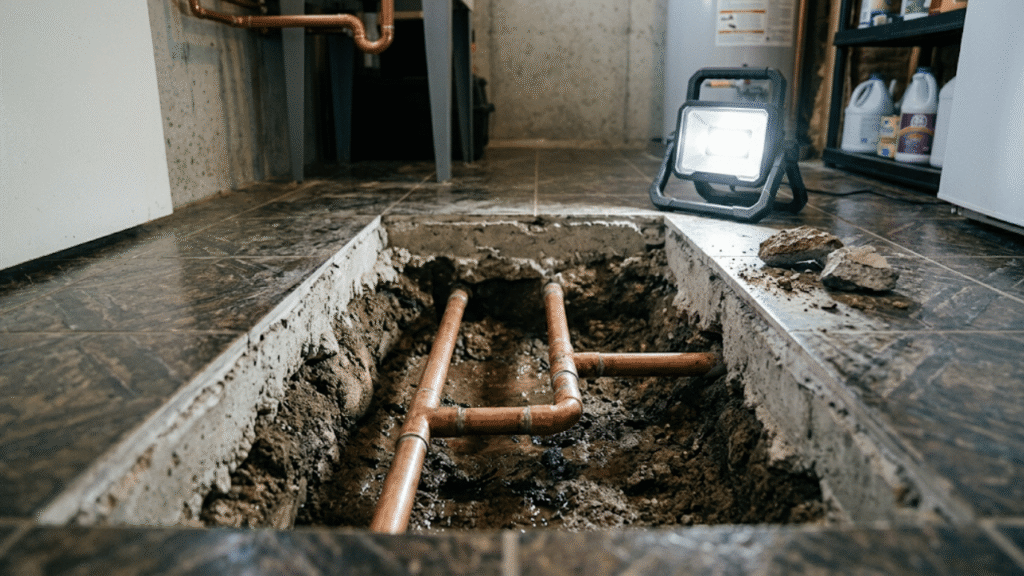
Excavation shows a lower base labor rate in some quotes, and that is where people get caught. The restoration afterward is where the money hides: replacing sod, re-pouring driveway concrete, resetting patio pavers, and repairing landscaping. Across the industry, trenchless typically runs 30 to 50 percent below dig-and-replace once restoration is counted. On a Canyon Creek lot with mature trees and established landscaping, that gap widens considerably.
Lining vs Replacement: The Honest Answer
Here is the distinction that most affects what you pay, and it is worth knowing before anyone quotes you.
Lining (CIPP) restores a pipe from the inside. It requires a structurally sound host pipe, meaning the pipe is cracked, corroded, leaking, or root-invaded but still holds its shape. Nothing is dug up, and it costs less. The industry has standardized around ASTM F1216 for this method.
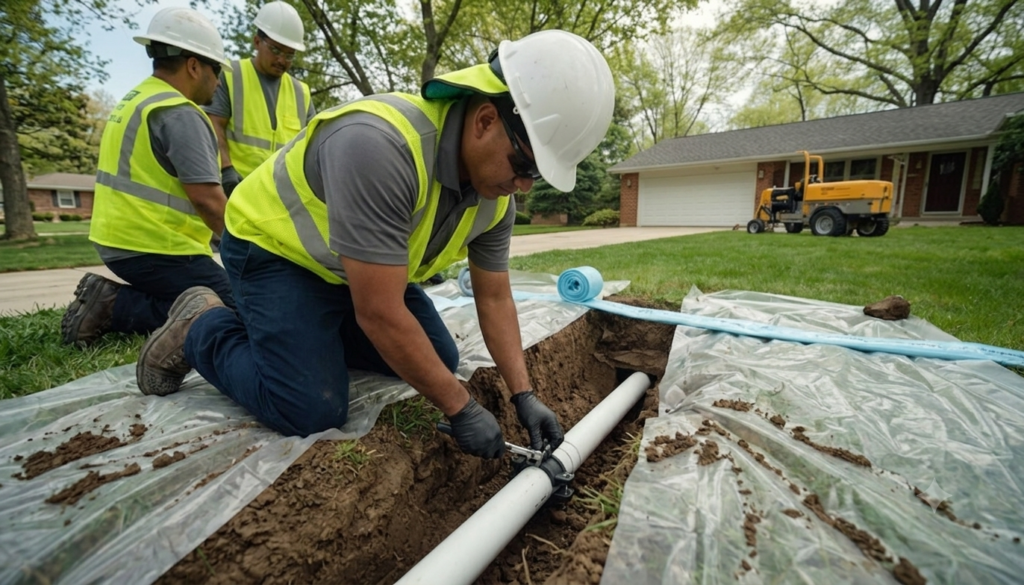
Pipe bursting is the no dig sewer line replacement option: it pulls new pipe through as it breaks the old one apart, using two small access points instead of a trench. It handles pipe that lining cannot, including fully collapsed sections, badly corroded cast iron with no structural integrity left, or lines that need a diameter increase. It costs more than lining.
Full excavation is for pipe that has sagged into a belly holding standing water, shifted badly out of alignment, or failed in ways a liner cannot bridge. A liner follows the shape of the host pipe, so it cannot correct a grade problem.
You will occasionally hear that all old cast iron simply must be replaced. That is not always true, and the difference is thousands of dollars. Plenty of aged cast iron in Richardson is corroded and root-invaded but structurally intact enough to line successfully. The only way to tell is to look inside, which is why a sewer camera inspection comes before the quote rather than after.
What Is Included, and What Is Not
Quotes with similar headline numbers can differ by thousands once scope is added, so ask what a bid covers.
Usually included: camera inspection, basic line cleaning, liner material and installation, curing, and a post-installation camera pass to verify the work.
Often separate: heavy root cutting or descaling on a badly obstructed line, city permits and inspection fees, restoration if an access pit is needed under hardscape, and any repair to branch connections.
Nuflow DFW provides a free on-site estimate and a written quote before any work begins, and financing through Wisetack is available for larger jobs. For a broader look at pricing across methods, our pipe lining cost guide breaks down the per-foot math in more detail.
Frequently Asked Questions
How much does trenchless sewer repair cost in Richardson?
Trenchless sewer repair in Richardson costs $80 to $250 per linear foot in 2026, or roughly $5,000 to $15,000 for a full residential lateral. Nuflow DFW pipe lining starts at $3,500+ (as of Q2 2026). Line length, depth, pipe condition, and access determine the final figure, confirmed by a camera inspection.
Is trenchless cheaper than digging up the sewer line in Richardson?
Usually yes, once restoration is counted. Excavation runs $150 to $450 per foot before you replace sod, driveway concrete, or landscaping. Trenchless runs $80 to $250 per foot with only two small access points, and typically comes in 30 to 50 percent below dig-and-replace on total project cost.
Can my old cast iron sewer line be lined, or does it need replacing?
It depends on structural condition, not age alone. Cast iron that is corroded, cracked, or root-invaded but still holds its shape can often be lined, which costs less than replacement. Pipe that has collapsed, sagged into a belly, or lost its shape needs pipe bursting or excavation. A camera inspection settles it.
Why is my Richardson sewer quote higher than my neighbor’s?
Line length is usually the reason. Dallas-area laterals run 30 to 75 feet, and older Richardson neighborhoods often run longer, up to 100 feet. At $150 per foot, a 40-foot difference is roughly $6,000. Depth, access, and how much cleaning the pipe needs first also shift the number.
How long does trenchless sewer repair take?
Most residential trenchless jobs in Richardson are completed in one to two days, compared with three to seven days for traditional excavation. The camera inspection and diagnosis typically happen first and take one to three hours, and the liner needs curing time before the final verification pass.
Do I need a permit for sewer line work in Richardson?
Sewer line repair and replacement generally requires a permit from the City of Richardson, and permitted work is inspected. Permit and inspection fees commonly add $500 to $2,000 depending on scope. A licensed plumber pulls the permit as part of the job, which is one practical reason to hire licensed rather than cheap.
Which Richardson neighborhoods see the most sewer line failures?
The oldest housing stock sees the most, including The Reservation, Highland Terrace, Heights Park, and Richardson Heights, where 1950s to 1970s homes still have original cast iron and clay tile lines. Canyon Creek and Greenwood Hills follow, where 1960s to 1980s cast iron sits under mature tree canopies that drive root intrusion.
The Bottom Line
Budget $80 to $250 per linear foot and $5,000 to $15,000 for a full lateral, and judge quotes on three things rather than the total: the per-foot rate, the measured line length, and what the bid actually includes.
The decision that saves the most money is not which contractor is cheapest. It is whether your pipe genuinely needs replacing or can be lined, because that gap runs into thousands. In a 1950s or 1960s Richardson home, that question deserves a camera and a look inside before anyone quotes a method.
Nuflow DFW is licensed by the Texas State Board of Plumbing Examiners (RMP# 46694) and provides trenchless sewer service across Richardson and Dallas County, covering 75080, 75081, 75082, and 75083. Call (469) 701-0597 for a camera inspection and a written estimate before any work begins.