Pipe lining installs a resin-saturated liner that cures into a structural new pipe inside the old one. Pipe coating sprays a thin epoxy layer onto the pipe wall, which protects the surface but adds no structure. Lining handles cracks, breaks, and root damage. Coating handles corrosion and pinhole leaks on a pipe that is otherwise sound.
The difference that matters is structural. A lined pipe carries load on its own, so the condition of the host pipe stops mattering. A coated pipe is still the old pipe with a protective skin on it. That single distinction decides which method your line can take, and a camera inspection is what settles it.
What is pipe lining?
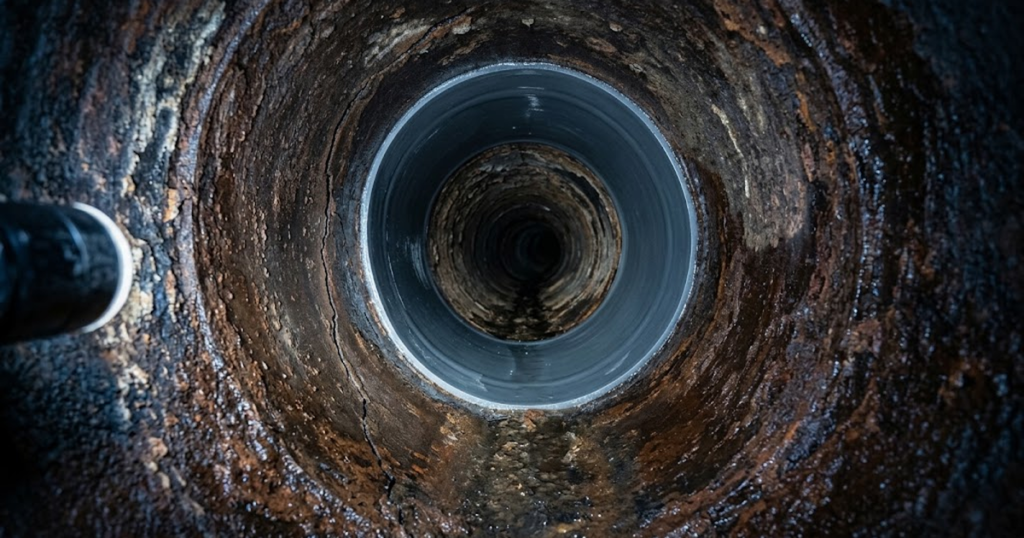
Pipe lining, usually called cured-in-place pipe or CIPP, rebuilds a damaged pipe from the inside. A flexible liner saturated with epoxy resin is pushed into the cleaned pipe, inflated against the walls, and cured into a hard, jointless inner pipe.
The finished liner is a pipe in its own right. It bridges cracks, seals separated joints, and closes the openings roots grow through. Because the cured surface has no joints anywhere along the run, the failure mode that kills old cast iron and clay has nowhere to start again.
Lining suits pipe that is damaged but still holds its shape: cracks, fractures, root intrusion at joints, corroded cast iron, and any line running under a slab or driveway where digging means breaking concrete. More on the method in our CIPP pipe lining guide.
What is pipe coating?
Pipe coating applies liquid epoxy directly to the inside wall of an existing pipe, where it cures into a thin protective layer in minutes. The pipe is cleaned and descaled first, then the epoxy is spread by compressed air or a rotating brush and left to set.
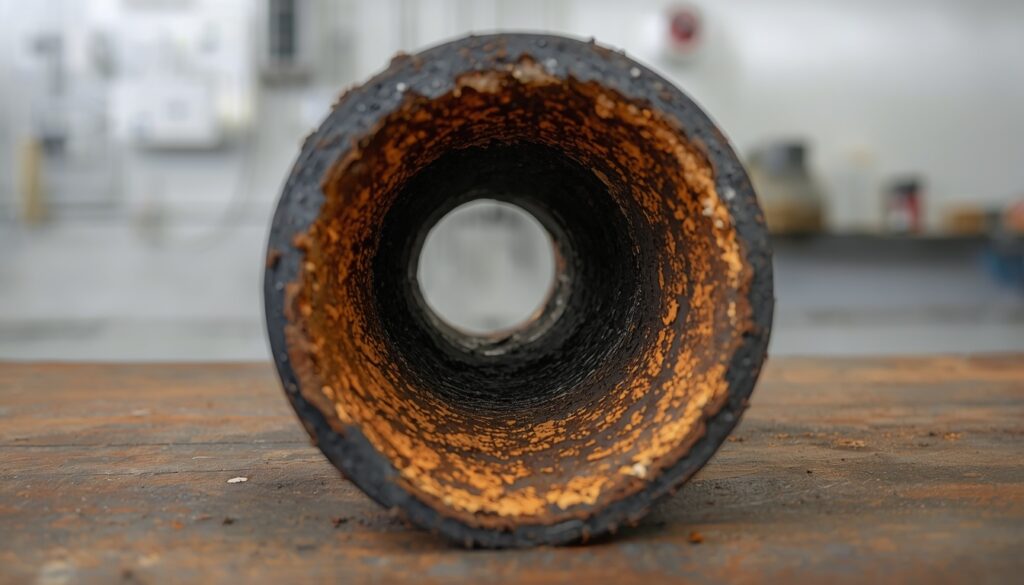
The coating seals pinholes, slows further corrosion, and smooths a rough interior. What it does not do is add structure. There is no fiberglass or felt carrier, so the layer depends entirely on the pipe underneath it staying intact.
Coating also demands a completely dry pipe. Any moisture compromises the bond, which is a real constraint on a line that is leaking, since a leak is usually why someone is calling in the first place.
Pipe lining vs pipe coating: the differences that decide it
| Feature | Pipe lining (CIPP) | Pipe coating |
|---|---|---|
| How it works | Resin-saturated liner cured into a new inner pipe | Thin epoxy layer applied to the existing pipe wall |
| Structural? | Yes, the liner carries load independently | No, it protects the host pipe only |
| Damage it handles | Cracks, breaks, root intrusion, heavy corrosion | Surface corrosion, rust, pinhole leaks |
| Bridges gaps and holes | Yes | Limited, and unreliable on anything sizeable |
| Pipe must be dry | No, UV systems tolerate moisture | Yes, completely |
| Expected lifespan | 50+ years | 10-30 years depending on conditions |
| Cure time | Under 1 hour (UV) to 12 hours (epoxy) | 5-10 minutes |
| Flow improvement | Smooth jointless interior | Smoother, less uniform than a liner |
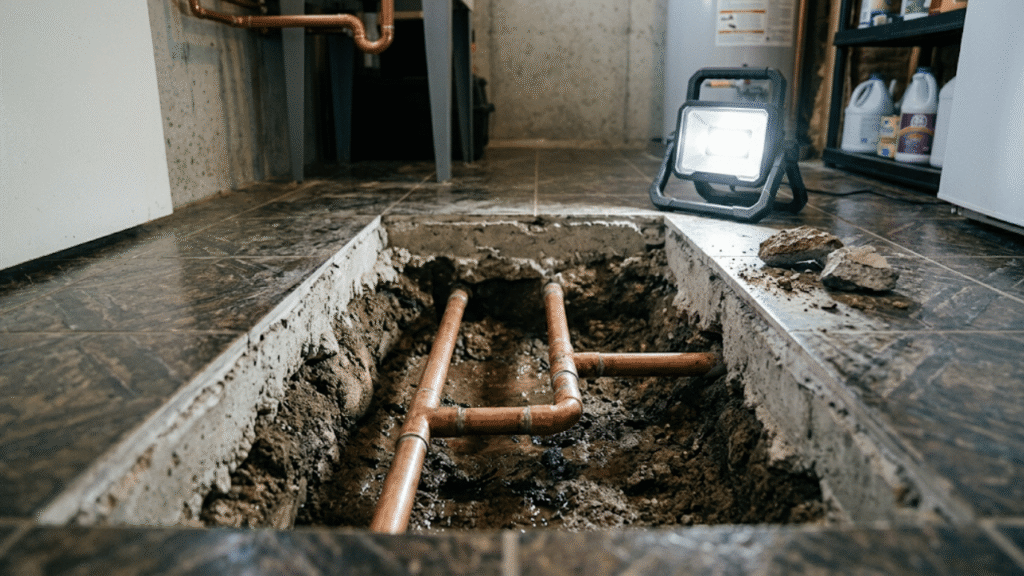
| Digging | Access points only | Access points only |
| Cost | Higher, materials and equipment | Lower |
Note the lifespan row. Coating is cheaper up front and lasts a third to half as long, which is the actual trade-off rather than a detail.
Which one does your pipe need?
The pipe’s condition decides, not your budget. Coating a cracked pipe is money spent on a repair that will fail, because the coating has nothing sound to bond to and nothing to bridge the crack with.
Lining is the answer when the line has cracks, fractures, separated joints, root intrusion, or corrosion deep enough that the pipe wall has lost thickness. Coating is a legitimate choice on small-diameter lines with surface corrosion and pinholes, on galvanized water lines in older buildings, and on short cast iron spot repairs where only a section needs treatment.
Why DFW pipes usually need lining rather than coating
Most Dallas-Fort Worth sewer failures are structural, which rules coating out before cost enters the conversation.
North Texas expansive clay swells after rain and shrinks through a dry summer, and that seasonal movement pulls rigid cast iron and clay joints apart. The result is a separated or offset joint, which is a gap. Coating cannot bridge a gap. A liner can, because it forms a continuous surface across it.
Across 200+ trenchless jobs in the DFW Metroplex, Nuflow DFW has found cast iron in pre-1975 homes failing at an average of 58 years.
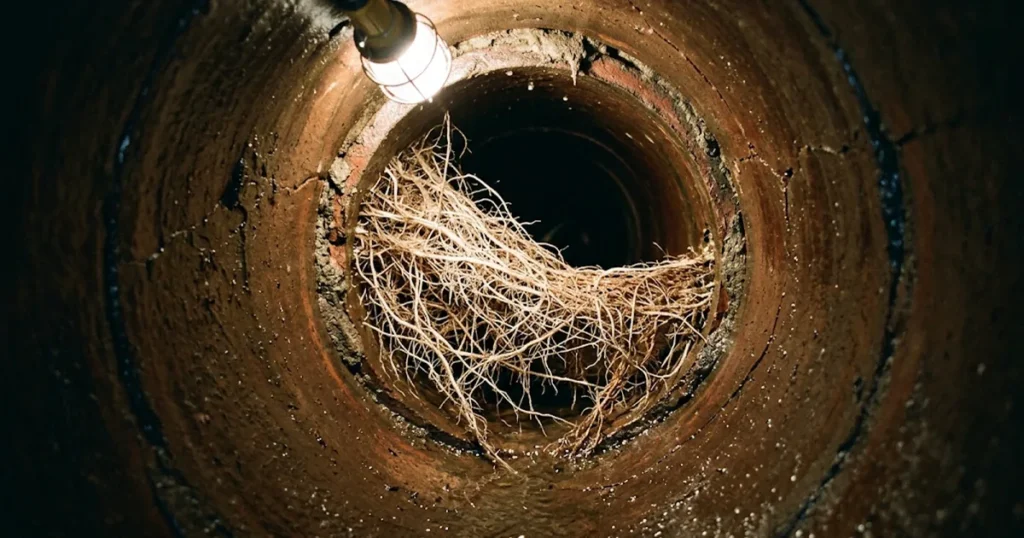
Root intrusion follows the same pattern. Roots enter at an opened joint and widen it over years, and by the time a homeowner notices slow drainage the opening is well past what a surface layer can seal. Our guide on how pipe lining resolves root intrusion covers what that looks like on camera.
Where coating still earns its place in DFW is on interior water lines rather than buried sewer: galvanized supply lines in older commercial buildings, and small-diameter runs that liner equipment cannot reach.
When neither method works
Both are rehabilitation methods, and both need something left to rehabilitate.
A fully collapsed pipe has no bore for a liner to expand against and no wall for a coating to bond to. A section that has bellied into a low spot holds standing water, and a liner follows the sag rather than correcting it, so grade problems need excavation and regrading regardless of budget. Heavily offset joints can block the equipment entirely.
Any contractor who tells you lining fixes everything is selling rather than diagnosing. Roughly the same is true of anyone recommending a method before running a camera.
How a camera inspection decides
The inspection is what tells you whether you are looking at a structural failure or a surface one, and those are not distinguishable from the symptoms.
A camera inspection shows pipe material, wall condition, joint alignment, the location and depth of any damage, and whether roots are present. Deep cracks, broken sections, or separated joints point to lining. A pipe with intact walls and surface corrosion is where coating becomes worth discussing.
It also prevents the expensive version of this decision, which is paying for the cheaper method twice.
Call Nuflow DFW at (469) 701-0597 to book a camera inspection. We quote the method after we see the line, not before. Service is scheduled Monday to Friday, 9:00 a.m. to 6:00 p.m.
What does each method cost in DFW?
Camera inspection starts at $250+ and trenchless pipe lining starts at $3,500+ (as of Q3 2026). Most residential lining jobs land between $3,500 and $15,000, set by footage, depth, access, and how much scale and root has to come out before the liner will bond.
| Service | Starting price (Q3 2026) |
|---|---|
| Camera inspection | $250+ |
| Trenchless pipe lining (CIPP) | $3,500+ |
| Pipe coating | Quoted after inspection |
Actual cost depends on inspection findings, and Nuflow DFW gives a written price before any work starts. Our epoxy pipe lining cost guide breaks down what moves the number.
Coating costs less per foot. On a structurally damaged pipe that gap closes fast, because a coating that fails at year twelve on a pipe that needed lining means paying for both.
Frequently asked questions
What is the main difference between pipe lining and pipe coating?
Structure. Pipe lining cures a liner into a new pipe that carries load on its own, so the old pipe’s condition stops mattering. Pipe coating applies a protective epoxy layer to the existing pipe wall without adding structural strength. Lining handles cracks and breaks; coating handles surface corrosion.
Which lasts longer, lining or coating?
Lining, by a wide margin. A properly installed CIPP liner is rated for 50 years or more because it is a complete new pipe with no joints. Epoxy coating typically lasts 10 to 30 years depending on water chemistry, pipe condition, and how well the surface was prepared before application.
Can pipe coating fix a cracked pipe?
No, and this is the most common mistake. Coating needs a sound pipe wall to bond to and cannot reliably bridge a crack, hole, or separated joint. Applying it to structurally damaged pipe produces a repair that fails. A camera inspection identifies which situation you have.
Is pipe coating cheaper than lining?
Per foot, yes. Over the life of the repair it depends entirely on whether the pipe was a coating candidate. Coating a pipe that needed lining means paying for the coating, watching it fail, and then paying for the lining anyway. Match the method to the damage.
Do either of these require digging up my yard?
Neither needs a full trench. Both work through access points, often an existing cleanout, which is why they suit lines running under slabs, driveways, and mature landscaping. Some access excavation is usually still needed at one or both ends of the run.
How do I know which one my pipe needs?
A camera inspection, and nothing else. Slow drains, backups, and odour look identical whether the cause is surface corrosion or a separated joint. Camera inspection starts at $250+ (as of Q3 2026) and gives you pipe material, wall condition, and the exact location of the damage.
What to do next
Get footage before you accept a quote for either method. The difference between a $250+ inspection and the wrong repair is usually several thousand dollars, and no one can tell which method your pipe needs from a description of the symptoms.
Call Nuflow DFW at (469) 701-0597 or use the contact page to schedule.
Ryan King holds a Texas Responsible Master Plumber license, RMP# 46694. CIPP installations should meet ASTM F1216, and under Texas Occupations Code Chapter 1301 this is licensed work in Texas.