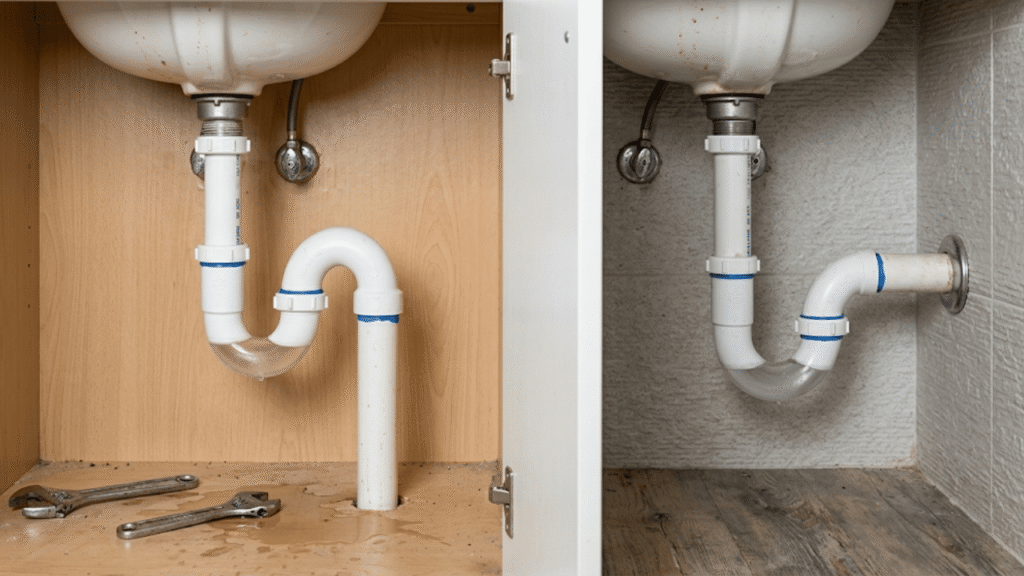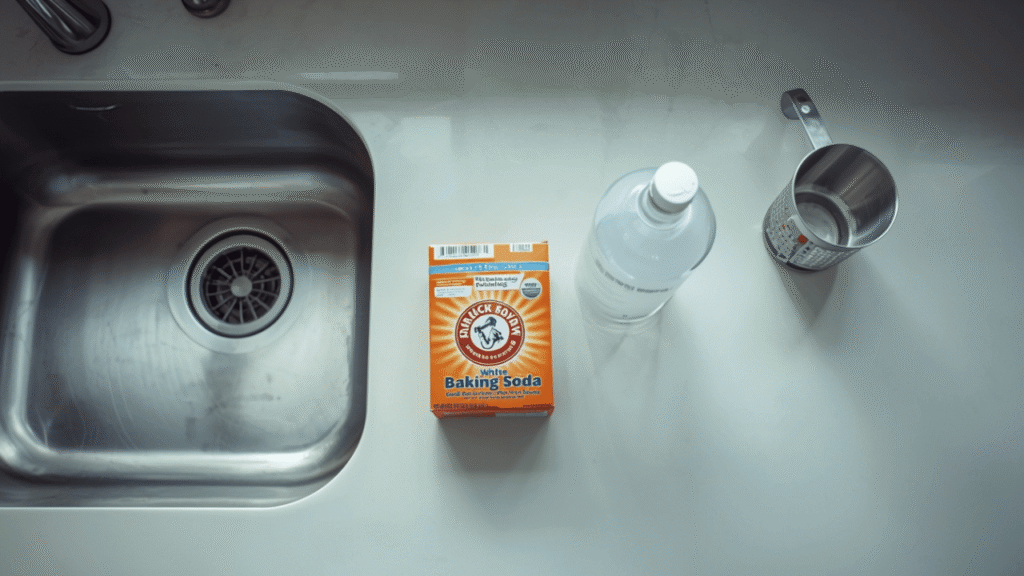
A baking soda and vinegar drain cleaner works on light organic buildup and drain odor, not on real clogs. Pour half a cup of baking soda into the drain, follow with one cup of white vinegar, cover it for 10 to 15 minutes, then flush with hot water. It helps a sluggish drain and a smelly one. It will not clear a fully blocked line, a hair mass, or hardened grease, and no amount of repeating it will change that.
That is a more useful answer than most pages give you, because the honest version tells you when to stop trying and do something that actually works. Below is the correct ratio, the steps for each fixture, what the reaction is really doing, and the point where this method stops being worth your time.
Does Baking Soda and Vinegar Actually Unclog a Drain?
Sometimes, on the mildest clogs. Here is the part almost nobody explains.
Baking soda is sodium bicarbonate, a base. White vinegar is diluted acetic acid. Combine them and they neutralize each other in an acid-base reaction, producing carbon dioxide gas, water, and sodium acetate. That is the fizzing you see. Once the fizzing stops, what is sitting in your pipe is essentially salty water. It is not a powerful degreaser, and it is not eating through anything.
So what is doing the work? Two things, and neither is the mixture itself:
The gas.
The CO2 bubbles create a brief physical push. In a small pipe with a light obstruction, that agitation can loosen soft gunk enough to move it along. It is a nudge, not a punch.
The hot water flush
This is the real hero of the method, and it is the step people rush. Hot water softens and carries away grease and soap scum that the fizzing loosened. If baking soda and vinegar work for you, hot water deserves most of the credit.
One more thing worth knowing: the reaction is over in about 30 seconds. Waiting 20 minutes does not extend it. The wait matters only because it gives the hot liquid time to sit against the buildup.
The Right Ratio and Method
Most recipes online differ, which is confusing. This is the ratio that gives you the most reaction inside the pipe rather than foaming up out of the drain.
What you need: 1/2 cup baking soda, 1 cup white vinegar, a kettle of hot water, and a drain stopper or a rag.
- Run hot water down the drain for about 30 seconds. This softens grease before you start. Use hot tap water rather than boiling if your pipes are PVC, since repeated boiling water can soften plastic joints.
- Pour in the 1/2 cup of baking soda dry. Do not pre-mix it with water. A funnel helps get it past the drain opening instead of leaving half of it in the sink basin.
- Pour in 1 cup of white vinegar.
- Cover the drain immediately with the stopper or a wet rag. This is the step most people skip, and it matters: covering forces the foam downward against the clog instead of letting it escape upward.
- Wait 10 to 15 minutes.
- Flush with hot water for a full minute.
If the drain is better but not clear, one repeat is reasonable. If two rounds change nothing, the method has told you what you need to know, and round three will not be different.
How Much Baking Soda and Vinegar to Use by Fixture
The ratio scales with the drain, and the technique varies more than most guides admit.
Bathroom sink
Standard 1/2 cup baking soda to 1 cup vinegar. The catch specific to bathroom sinks: block the overflow hole with a wet rag first, the small opening near the top of the basin. Otherwise the pressure escapes there instead of pushing at the clog.
Shower drain
Pop off the drain cover first so the mixture goes into the pipe rather than sitting on a strainer. Use the same ratio, cover the opening, and expect this one to work less often than a sink, because shower clogs are usually hair.
Kitchen sink
Kitchen clogs are grease, so the hot water steps matter more here. Run hot water first, use the standard ratio, then flush with hot water for a full two minutes. If you have a double basin, plug the other drain with a wet rag or the pressure vents through it.
Bathtub
Same as a shower, plus stuff a wet rag into the overflow plate opening below the faucet, for the same reason as the bathroom sink.
Toilet
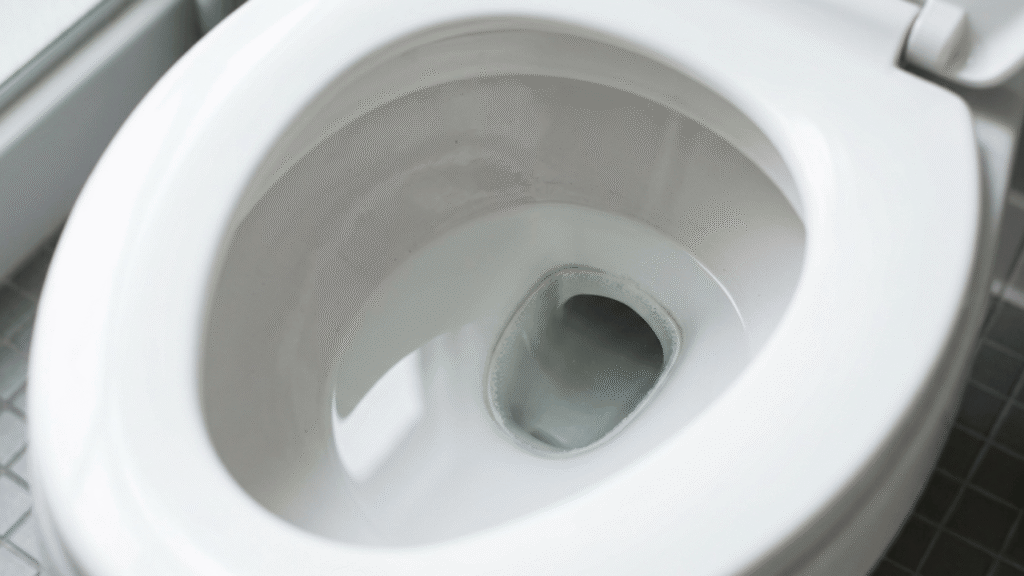
Different approach entirely. Do not fill a toilet bowl with fizzing foam. If the bowl is full, bail some water out first, then add the baking soda, then the vinegar slowly, and let it sit before flushing. Honestly, a plunger is the better tool for a toilet nearly every time.
Garbage disposal
This is where the method genuinely shines, because you are usually treating odor rather than a blockage. Baking soda and vinegar deodorize the chamber well. Run cold water and the disposal afterward.
Will It Clear a Hair Clog?
Usually not, and this is worth being direct about because hair is the most common bathroom clog there is.
Hair does not dissolve in a mild acid-base reaction. What happens in a shower or bathroom sink is that hair knots into a mat and soap scum binds it together. Baking soda and vinegar can dissolve some of the soap scum around the edges, which sometimes gets you a temporary improvement in flow. The hair mass itself stays.
For hair, physical removal is what works: a plastic drain claw or hair snake costs a few dollars and pulls the mat out directly. Pulling the stopper assembly and cleaning it manually clears many bathroom sink clogs completely, and there is a full walkthrough in our guide to using a plunger effectively for what to do when a simple pull is not enough.
The Salt Variation, and Whether It Helps
You will see recipes calling for baking soda, salt, and vinegar, or baking soda and salt with boiling water. The theory is that salt adds abrasion.
In practice, the salt is doing very little in a pipe. Abrasion requires scrubbing contact, and loose salt washed through a drain does not scrub anything. It will not hurt your pipes, so there is no harm in trying it, but do not expect the salt to be the difference between a cleared drain and a blocked one. If a recipe with salt worked for you, the hot water flush is again the likelier explanation.
When This Method Is Actually the Right Choice
Two situations where reaching for baking soda and vinegar is genuinely the correct call.
Drain odor
A smelly but freely draining sink usually has a film of bacteria and organic residue on the pipe walls. This method deodorizes that well, and it is cheaper and gentler than anything else you would use. For a stinky kitchen or bathroom drain that still flows, this is a good first move.
Monthly maintenance
Running this through kitchen and bathroom drains once a month keeps light buildup from accumulating into a clog. Prevention is where the method earns its reputation, more than emergency clog clearing.
For both of those, it beats chemical drain cleaner comfortably. Caustic and acidic cleaners sit against pipe walls and degrade them over time, and on older lines they cause damage that costs far more than the clog would have.
When to Stop and Call Someone
Some symptoms mean the problem is not in reach of anything you pour down a drain.
Two failed attempts
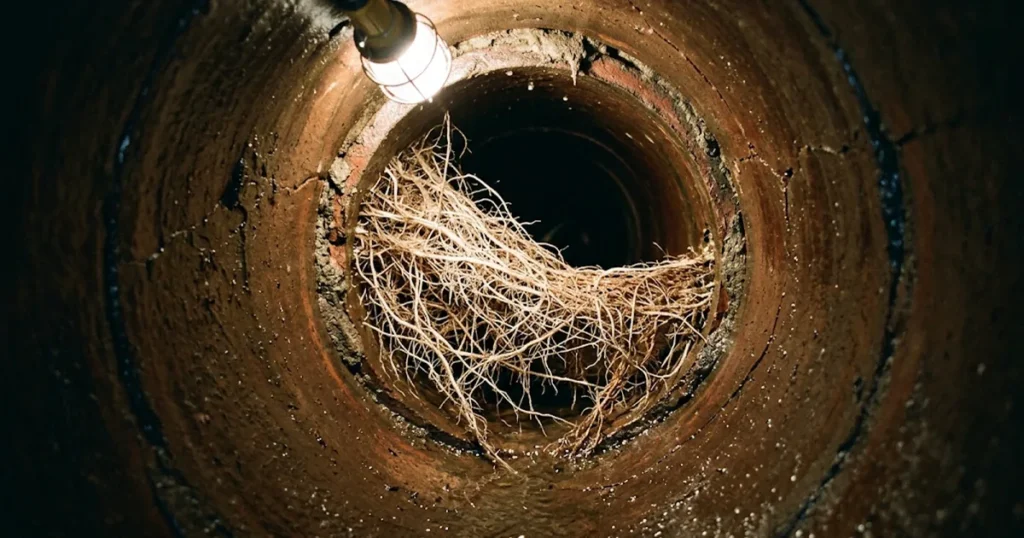
If two proper rounds have not fixed it, the blockage is either physical (hair, an object, roots) or too far down the line. More rounds waste time while the clog compacts.
Multiple fixtures backing up together
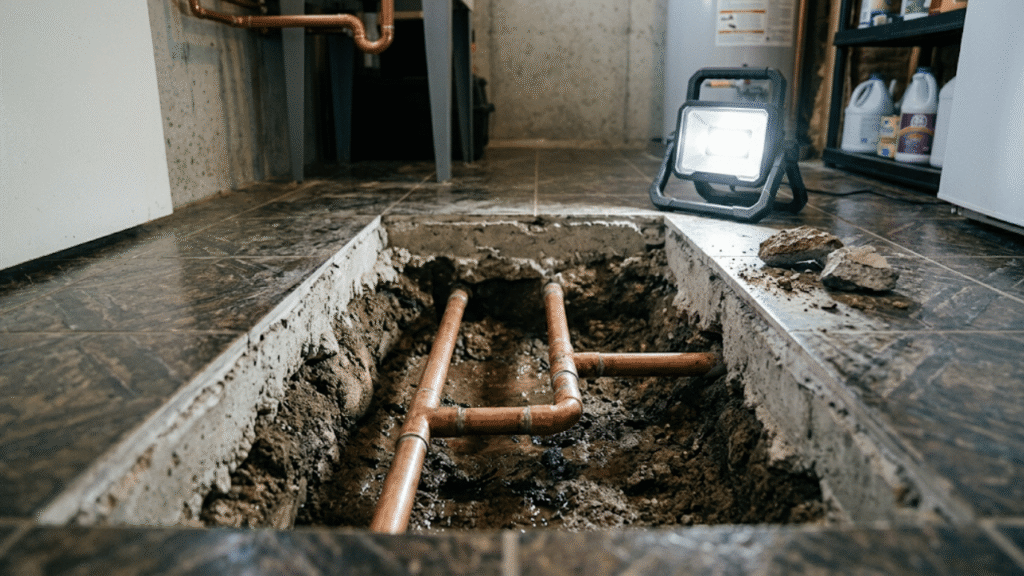
One slow drain is a branch line. A sink, tub, and toilet misbehaving at once points to the main line, and nothing poured into one fixture reaches that. This one warrants professional drain cleaning rather than another home remedy.
The same drain clogging repeatedly
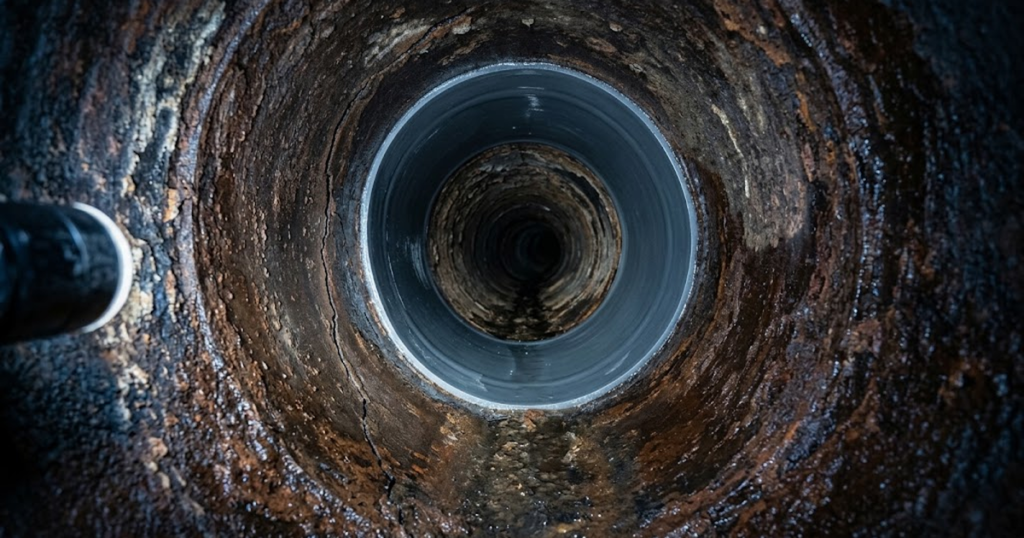
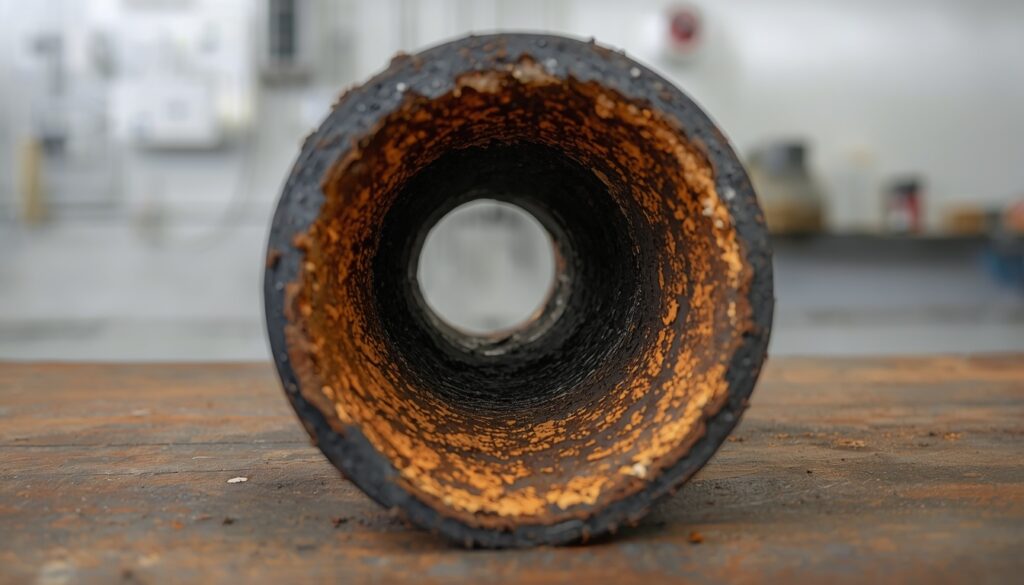
A drain you clear every few weeks has an underlying cause: grease buildup coating the pipe, a sagging section holding water, root intrusion, or in older DFW homes, corroded cast iron with a rough interior that catches everything. A sewer camera inspection shows which one it is, and it is the difference between fixing the problem and managing it forever.
Water backing up or sewage odor with a blockage
That is a main line issue and a health concern, not a DIY situation.
One safety note on older homes. In a fully blocked pipe, the CO2 from repeated attempts has nowhere to vent, and on deteriorated cast iron that pressure is not something to keep adding to. If you know your home has original cast iron drain lines, which is common in houses built through the 1970s across older Dallas and Garland neighborhoods, treat a full blockage as a call rather than a chemistry project. And keep grease out of the drain in the first place, since the EPA identifies fats, oils, and grease as a leading cause of sewer blockages.
Frequently Asked Questions
Is baking soda and vinegar a good drain cleaner?
It is good for drain odor and light maintenance, and unreliable for actual clogs. The two neutralize each other into mostly salty water, so the cleaning comes from brief CO2 agitation and the hot water flush. Use it monthly to prevent buildup, but do not expect it to clear a blocked drain.
How much baking soda and vinegar do you use to unclog a drain?
Use 1/2 cup baking soda followed by 1 cup white vinegar for a standard household drain. Cover the drain for 10 to 15 minutes, then flush with hot water for a full minute. Doubling the amounts does not make it stronger, since the reaction finishes in about 30 seconds regardless.
Will baking soda and vinegar unclog a hair clog?
Rarely. Hair does not dissolve in this reaction. It may loosen the soap scum binding the hair together, which can briefly improve flow, but the hair mat itself remains. A plastic drain claw or removing and cleaning the stopper assembly is what actually clears hair clogs.
Do you use hot or boiling water with baking soda and vinegar?
Hot water is safer than boiling. Boiling water can soften PVC pipe joints over time and can crack porcelain if poured into a toilet. Very hot tap water or kettle water cooled for a minute gives you the grease-softening benefit without that risk.
How do you clean a shower drain with baking soda and vinegar?
Remove the drain cover first so the mixture enters the pipe rather than sitting on the strainer. Add 1/2 cup baking soda, then 1 cup vinegar, cover the opening, wait 10 to 15 minutes, and flush with hot water. Since most shower clogs are hair, expect this to help odor more than flow.
How often should you use baking soda and vinegar in drains?
Once a month is a reasonable maintenance rhythm for kitchen and bathroom drains, and it is where this method genuinely helps. Using it more often on an already-slow drain is not more effective, since a drain that keeps slowing has a cause that maintenance alone will not resolve.
Does adding salt make baking soda and vinegar work better?
Not meaningfully. Salt is included for abrasion, but loose salt flushed through a pipe does not scrub the walls. It will not damage your plumbing, so there is no harm in trying it, though any success is more likely from the hot water flush than from the salt.
The Bottom Line
Baking soda and vinegar is a decent maintenance and deodorizing routine and a weak clog remover. Use half a cup of baking soda to one cup of vinegar, cover the drain, wait 15 minutes, and flush with hot water, and know that the hot water is doing most of the work.
The most valuable thing this method gives you is information. If two proper attempts do not fix the drain, you have learned that the problem is physical or deeper in the line, which is worth knowing before you spend another week pouring things down it.
Nuflow DFW is licensed by the Texas State Board of Plumbing Examiners (RMP# 46694) and clears the drains a home remedy cannot reach across the Dallas-Fort Worth Metroplex, with a free on-site estimate before any work begins. Call (469) 701-0597 if the same drain keeps backing up.