A sewer main is the large city-owned pipe running under your street that collects wastewater from every property on the block and carries it to treatment. Your house is not connected to it directly. It connects through a smaller pipe called a lateral, and that lateral is yours. The city maintains the main; you own and pay for the lateral, usually all the way to the connection point, even where it runs under public ground.
That last part is where people lose money. Most homeowners assume anything past the sidewalk belongs to the city. In most jurisdictions it does not, and finding that out during a backup is an expensive way to learn it. Here is how the system is actually laid out, where the ownership line falls, and how to tell whose problem you are looking at.
What a Sewer Main Actually Is
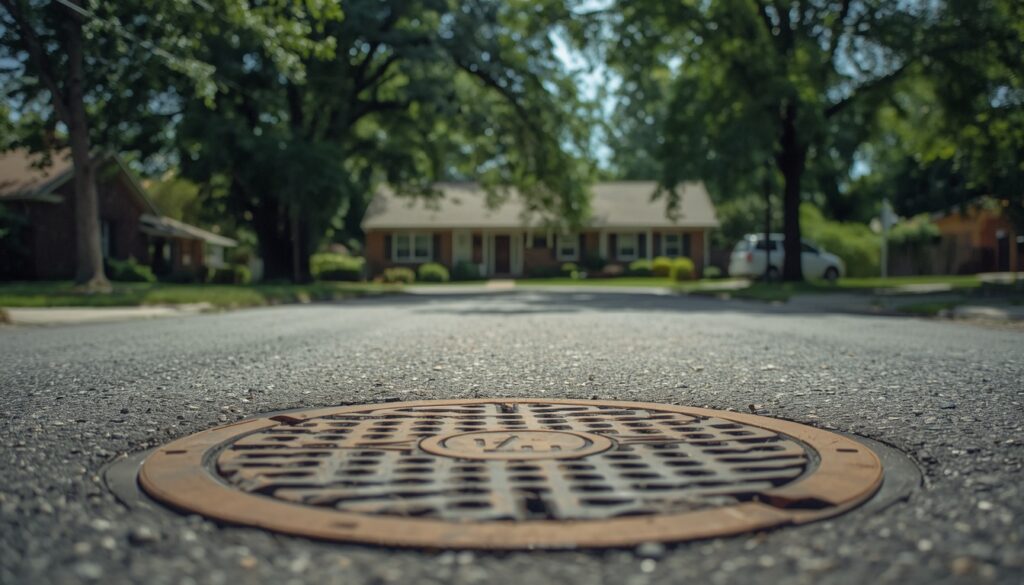
Picture the manhole cover in the middle of your street. Directly beneath it runs the sewer main, sometimes called the main sewer or, in plural, the sewer mains that make up a city’s collection network.
It is public infrastructure. It gathers wastewater from every lateral on the block, then feeds into progressively larger trunk lines on the way to a treatment plant. Because it carries the output of an entire neighborhood rather than one house, it is built bigger, buried deeper, and engineered for continuous heavy flow. The sanitary sewer system as a whole is designed around gravity wherever possible, which is why mains sit deeper as they collect more.
The city or the local sewer district owns it, inspects it, and repairs it. You do not pay for that work directly, and you cannot hire a plumber to work on it.
What a Sewer Lateral Is, and Why It Is the One That Matters to You
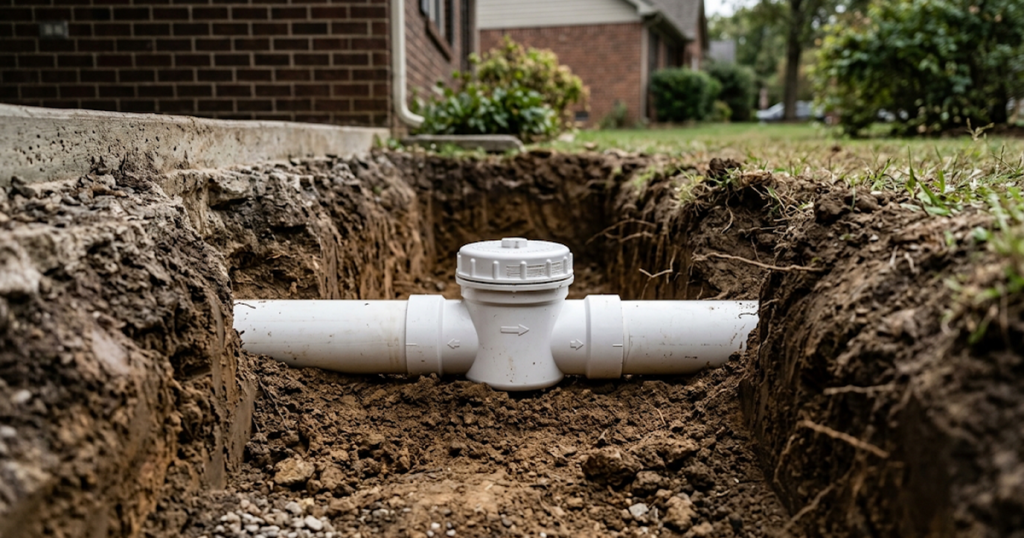
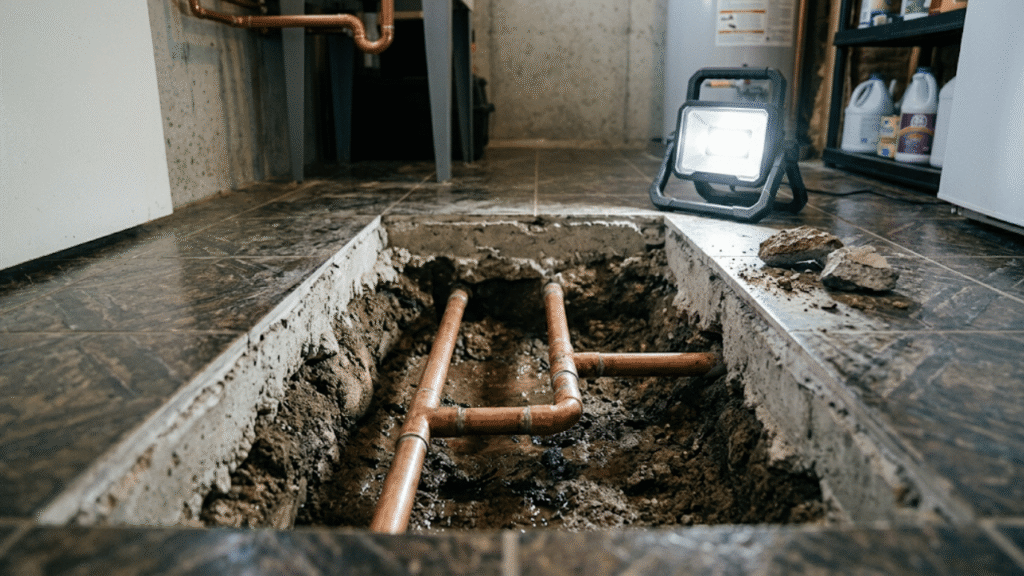
The lateral is the pipe running from your house, under your yard, out to the main in the street. Everything that leaves your home, every sink, toilet, shower, and washing machine, travels through this one pipe.
It is smaller than the main, shallower, and it serves one property: yours. It is also the pipe that actually fails. Roots find its joints, it corrodes, it shifts with the soil, and it clogs. Nearly every sewer problem a homeowner experiences is a lateral problem, not a main problem.
Plumbers and city documents often split it into two parts, and the distinction is the expensive one:
Upper lateral: from your house to the property line, typically at the curb or sidewalk.
Lower lateral: from the property line out to where it ties into the main under the street.
The Costly Misconception About the Lower Lateral
Here is the part worth reading twice. Most people assume that once the pipe crosses the property line into public ground, it becomes the city’s problem.
In the large majority of jurisdictions, it does not. The homeowner is responsible for the entire lateral, from the foundation wall to the connection at the main, including the section buried under the sidewalk or street. Some cities do accept responsibility for the lower lateral, and a few run cost-share programs, but those are the exception rather than the rule.
The practical consequence: a root intrusion or collapse eight feet under the street, in front of your house, is usually yours to repair. That repair is more expensive than one in your yard, because it may involve street cuts, traffic control, and municipal permits.
Two things are worth doing before you ever need this information. Call your city’s utility or public works department and ask specifically where their responsibility begins for your address. And if you are in an HOA, check the CC&Rs, because some associations take on shared lines while others leave every lateral to the homeowner.
Sewer Main vs Lateral: The Practical Differences
| Sewer main | Sewer lateral | |
|---|---|---|
| Who owns it | City or sewer district | Homeowner |
| Who pays for repair | The city | You |
| What it serves | An entire neighborhood | One property |
| Typical diameter | 8 inches minimum, up to several feet | 4 inches for most homes, 6 inches commercial |
| Depth | Deeper, increasing as it collects | Shallower, minimum around 36 inches at the curb |
| Who can work on it | City crews and their contractors | A licensed plumber you hire |
Municipal standards commonly set a minimum of 8 inches for any gravity sewer the city maintains, while residential laterals are specified at a 4-inch minimum, with 6 inches required for commercial buildings. Laterals are also installed on a deliberate slope, usually about a quarter inch of fall per foot, because sewage moves by gravity and a line that is too flat, or that later sags into a belly, stops carrying solids properly.
How to Tell Whose Problem It Is
When something backs up, this is the diagnostic that saves you a wasted phone call.
Signs the problem is your lateral: only your house is affected, multiple fixtures in your home back up at once while neighbors are fine, the backup recurs in the same house, or you have mature trees between the house and the street.
Signs the problem may be the main: several homes on the block are experiencing backups simultaneously, sewage is surfacing in the street or at a manhole, or the city has crews working nearby.
If it is only you, call a plumber, since a blockage in your own lateral is the most common version of this and there is a main sewer line clog repair cost breakdown for what clearing one runs. If the whole block is affected, call the city first, because a plumber cannot work on the main and you would be paying for a service call to be told exactly that.
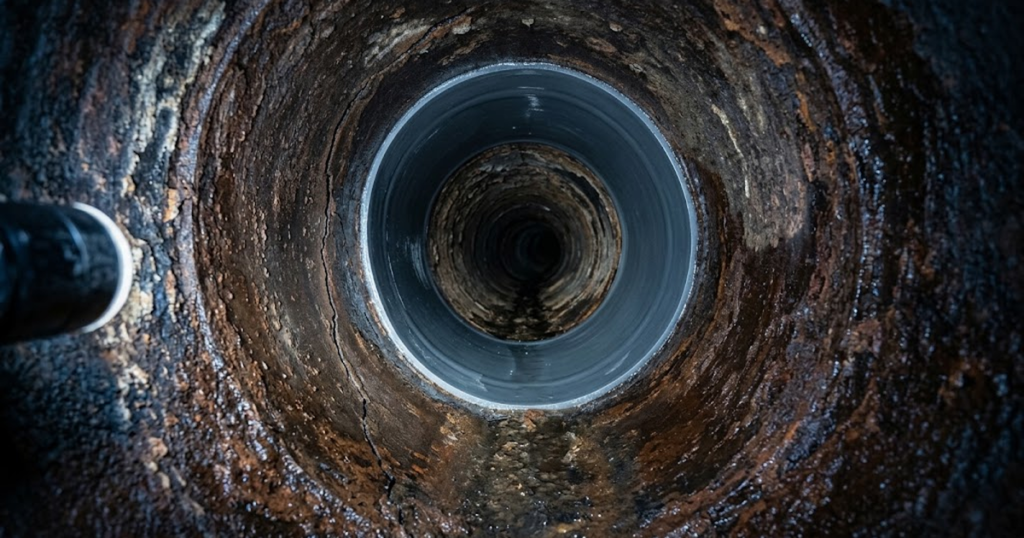
The definitive answer comes from looking inside the pipe. A sewer camera inspection shows where the blockage or damage sits and how far down the line it is, which establishes both the cause and, often, whose side of the connection it falls on.
Why Laterals Fail, Especially in DFW
Three things drive most lateral failures in North Texas, and they compound each other.
Expansive clay soil
The region’s clay swells when wet and shrinks in drought, and that seasonal movement stresses pipe joints until they separate or crack. It is the background cause behind a large share of local sewer work.
Tree roots
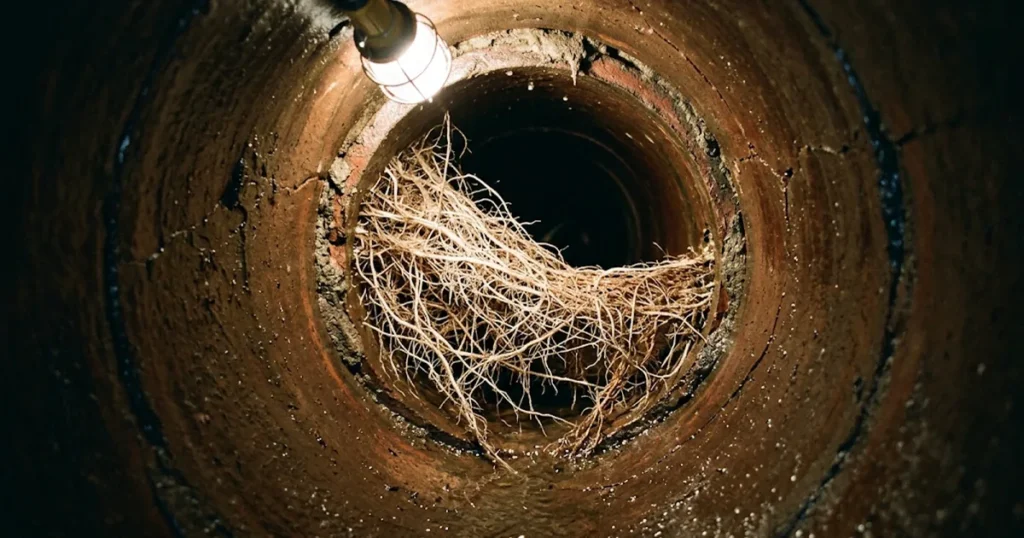
Mature oaks and elms send roots toward moisture, and a slightly separated joint is exactly what they find. Once inside, roots expand and catch everything passing through.
Aging pipe material
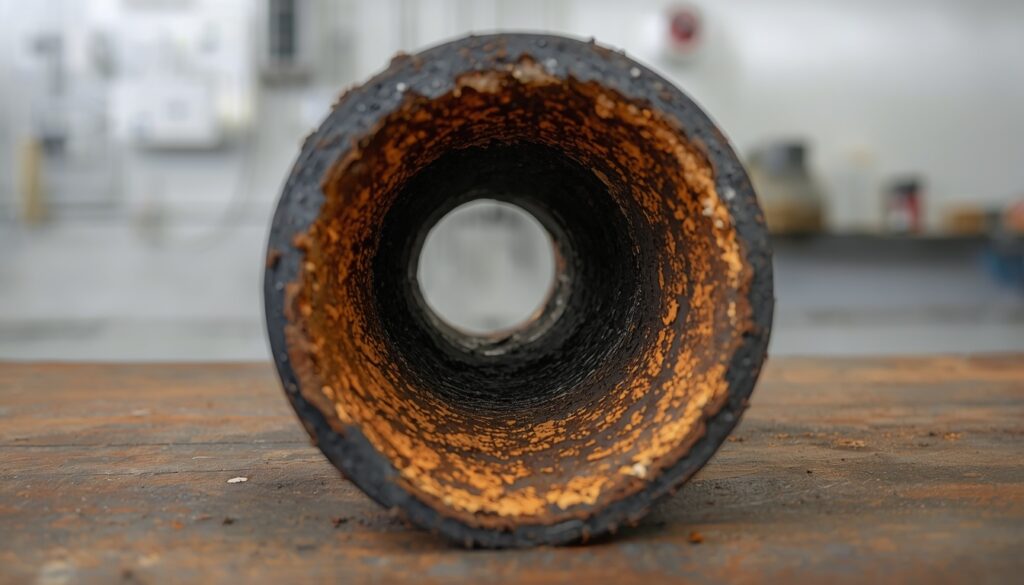
Homes built through the 1970s across older DFW neighborhoods were plumbed with cast iron or clay tile. Cast iron corrodes from the inside until the channel narrows and cracks; clay tile joints separate. Both are now past their service life in those neighborhoods.
Because the lateral is yours, so is the repair bill. Costs vary widely by method and length, and our pipe lining cost guide breaks down what trenchless repair runs per foot versus full replacement.
What You Can Do About the Part You Own
You cannot maintain the main, but the lateral responds well to attention.
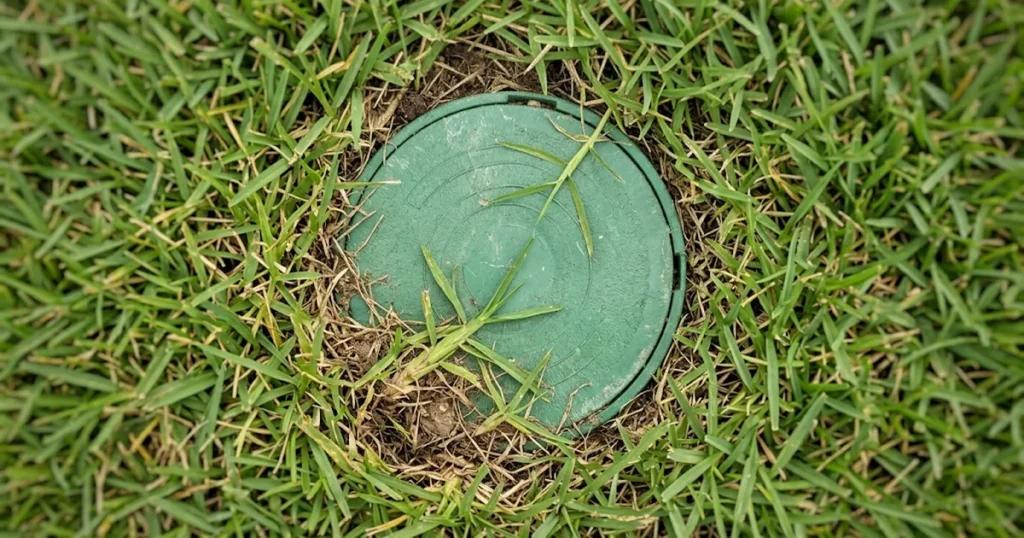
Know where your cleanout is, the capped pipe near your foundation or at the property line, because it is the access point every plumber will use and finding it in an emergency wastes time. Keep wipes and grease out of the drain entirely, since the EPA identifies fats, oils, and grease as a leading cause of sewer blockages. If you have mature trees and an older home, a camera inspection every couple of years catches root intrusion while it is still cheap to clear. And if you are buying a house, get the lateral scoped before closing, because you are buying that pipe along with the property.
Frequently Asked Questions
What is a sewer main?
A sewer main is the large city-owned pipe running beneath a street that collects wastewater from all the properties on that block and carries it toward treatment. It is public infrastructure, maintained and repaired by the municipality or sewer district. Homes connect to it through a smaller privately owned pipe called a lateral.
What is the main sewer line in a house called?
The pipe carrying wastewater from a house out to the city’s sewer is called the sewer lateral, or the main sewer line of the house. It is distinct from the public sewer main under the street. Homeowners own and maintain the lateral; the city owns the main.
What size is the main sewer line?
Municipal sewer mains are typically a minimum of 8 inches in diameter and can be much larger, up to several feet on trunk lines. The lateral serving a single-family home is usually 4 inches, with 6 inches required for commercial buildings. Local code sets the exact requirement.
Who is responsible for the sewer line, the homeowner or the city?
In most jurisdictions the homeowner is responsible for the entire lateral, from the house to where it connects to the main, including the portion under the sidewalk or street. The city is responsible for the main itself. Rules vary, so confirm with your city’s utility department for your address.
How do I know if the problem is my lateral or the city’s main?
If only your home is backing up, it is almost certainly your lateral. If several homes on the block back up at once, or sewage surfaces in the street or at a manhole, the main may be involved and the city should be called first. A camera inspection confirms where the blockage actually sits.
How deep is a sewer main compared to my lateral?
Mains sit deeper because they run on a continuous gravity slope while collecting from many properties, often several feet down and deeper further along the run. Residential laterals are shallower, with municipal standards commonly setting a minimum of about 36 inches of cover at the curb line.
Can a plumber repair the city’s sewer main?
No. The main is public infrastructure, and only the city or its authorized contractors work on it. A licensed plumber handles everything on your side of the connection, which is the lateral, and that is where the overwhelming majority of homeowner sewer problems occur.
The Bottom Line
The main is the city’s; the lateral is yours. That single line decides who pays, and it usually falls at the connection to the main rather than at your property line, which is the opposite of what most homeowners assume.
Practically, it means nearly every sewer problem you will ever deal with is on the pipe you own, and it means finding out early, through a camera rather than a backup, is what keeps it a manageable repair.
Nuflow DFW is licensed by the Texas State Board of Plumbing Examiners (RMP# 46694) and diagnoses and repairs sewer laterals across the Dallas-Fort Worth Metroplex, with a free on-site estimate before any work begins. Call (469) 701-0597 if you are not sure what you are dealing with.