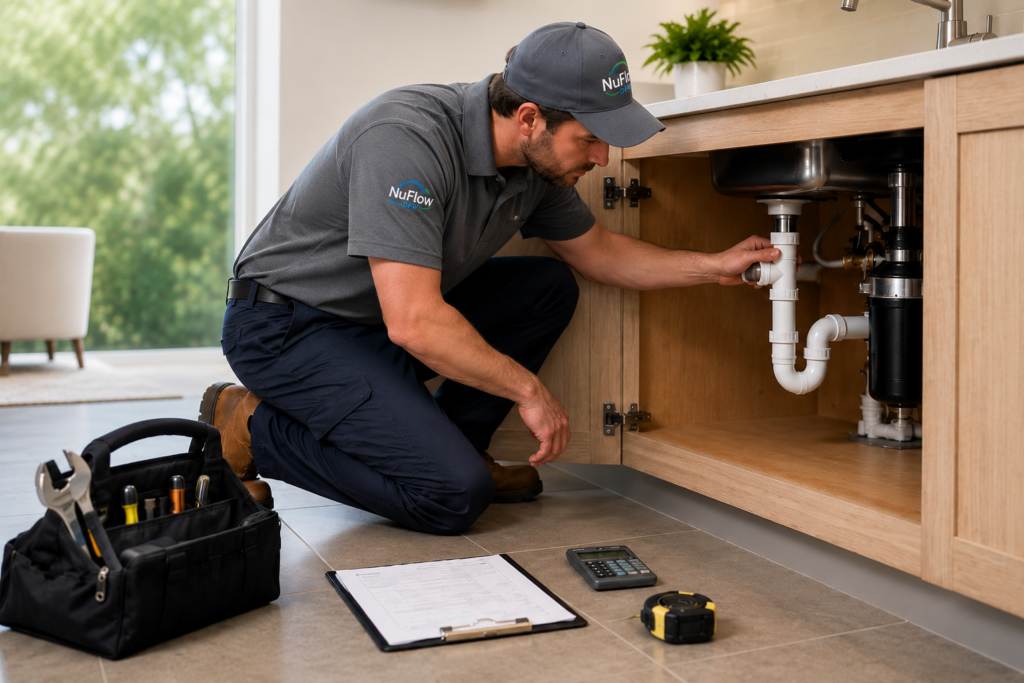
Water softener installation costs $1,200 to $3,800 in 2026 for a typical whole house system, including the unit and labor. The unit itself runs $300 to $7,000 depending on type and capacity, and professional installation labor runs $150 to $1,000, with most standard installs landing at $500 to $700. Labor is generally 20 to 30 percent of the total project.
A note before the numbers: we do not sell or install water softeners. We are a plumbing company that repairs what hard water damages, which means we have no reason to talk you into a system or out of one. What follows is what these actually cost, how to size one without overbuying, what the ongoing expenses look like, and the cases where you probably do not need one.
How much does a water softener cost by itself?
The unit alone runs $400 to $1,200 for a standard salt-based single tank, which is what most homes end up with. Budget units start near $300 and high-capacity or dual-tank systems reach $3,000. Whole-house reverse osmosis with softening sits in a different category entirely at $2,000 to $7,000 for equipment.
That is the equipment only, with nothing connected. Two numbers get quoted interchangeably and they are not the same thing, which is why price comparisons between companies so often fail to line up.
| What you are asking | Typical 2026 figure |
|---|---|
| Water softener cost, unit only | $300 to $3,000 |
| Water softener installation cost, unit plus labor | $1,200 to $3,800 |
| Labor alone | $150 to $1,000 |
If a quote sounds low, check whether it includes installation. If it sounds high, check whether it includes a unit you did not ask for. The whole house water softener cost most DFW homeowners actually pay lands between $1,200 and $3,800 all in.
Water Softener Installation Cost by System Type
| System type | Unit only | Installed total |
|---|---|---|
| Salt-based, single tank (most common) | $400 to $1,200 | $1,200 to $3,800 |
| Salt-free conditioner | $500 to $3,000 | $1,500 to $4,500 |
| Dual tank, salt-based | $800 to $3,000 | $1,000 to $5,000 |
| Whole-house RO with softening | $2,000 to $7,000 | $5,000 to $10,000+ |
2026 national ranges. Actual cost depends on capacity, water hardness, plumbing layout, and local labor rates.
The salt-based single tank is what most homes end up with, and $1,200 to $3,800 installed is the figure to plan around. Budget systems start near $800. Anything quoted above roughly $4,000 for a standard single-family home deserves an itemized explanation of what you are getting.
What the Labor Actually Costs
Labor is where quotes diverge most, and it comes down to one question: how ready is your house for the system?
| Installation scenario | Labor cost |
|---|---|
| Swapping an existing unit, connections in place | $150 to $400 |
| Standard install with a pre-plumbed loop | $400 to $700 |
| New install requiring supply lines and a brine drain | $700 to $1,000+ |
| Dedicated electrical circuit, if needed | $250 to $900 |
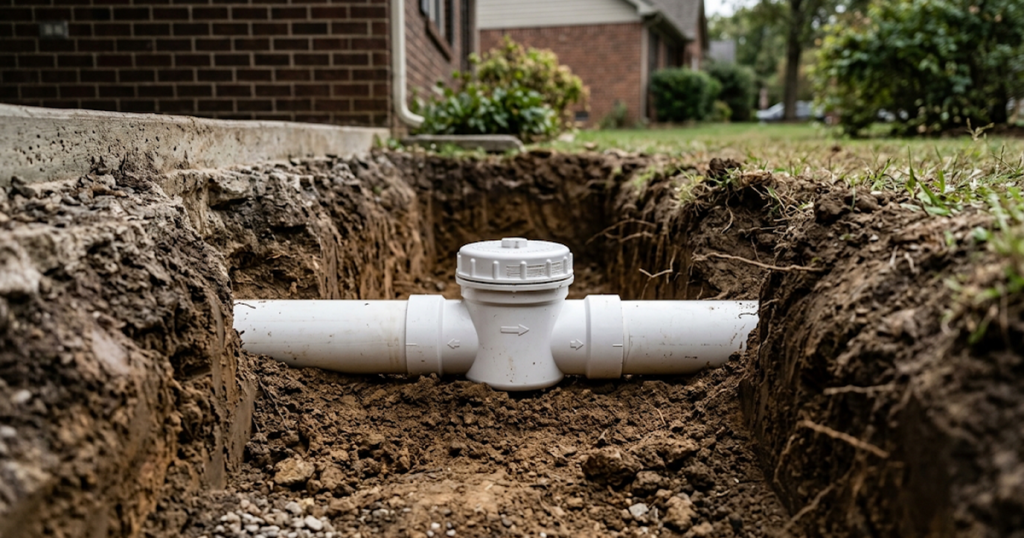
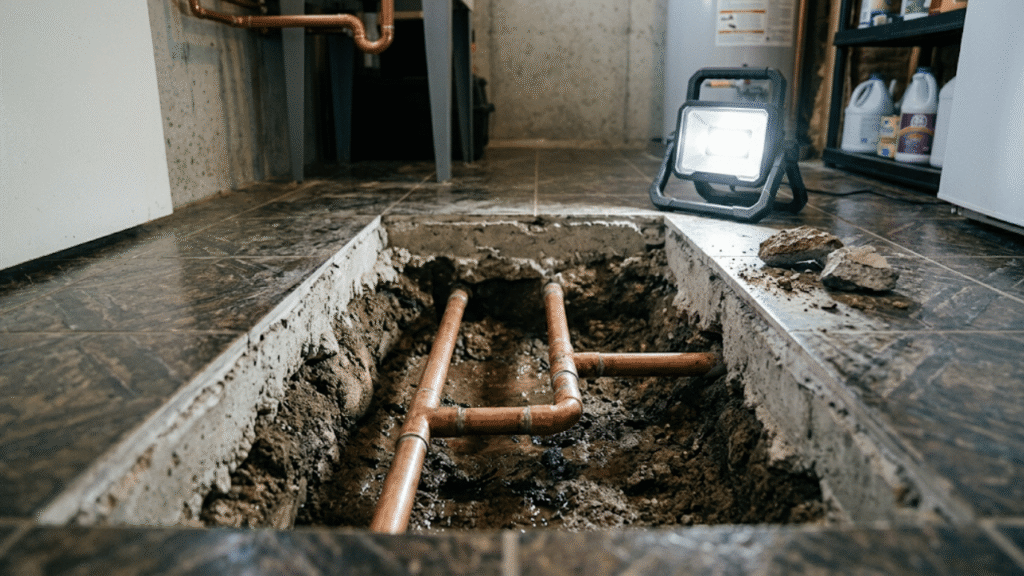
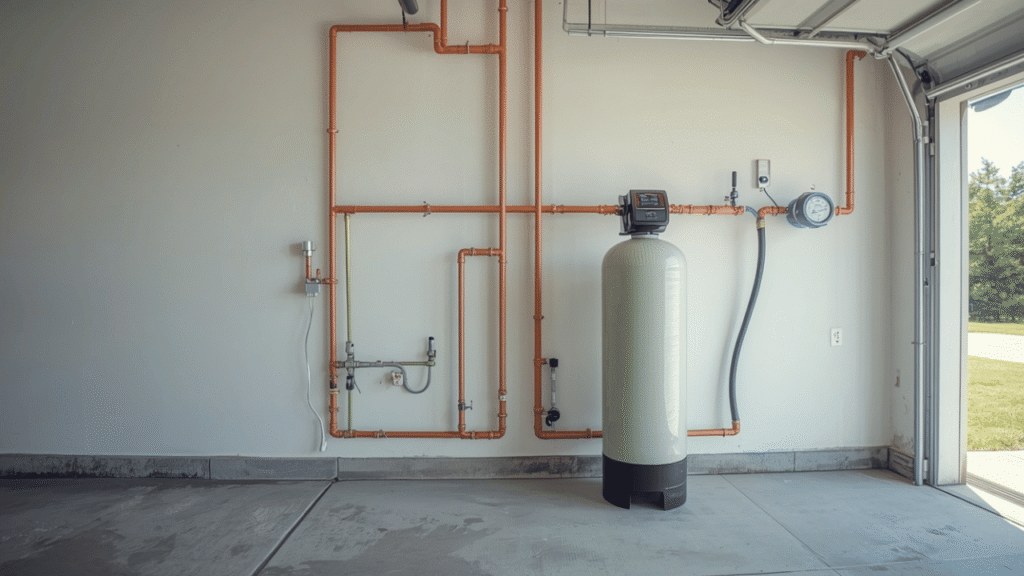
Many newer DFW homes were built with a water softener loop in the garage, a pair of capped stubs waiting for a unit. If you have one, your install is at the cheap end. If you do not, the plumber has to run supply lines, add a bypass valve, and create a drain for the brine discharge, which is where labor climbs.
What pushes the labor cost to install a water softener higher
Two things push a quote up unexpectedly: no nearby floor drain or standpipe for brine discharge, and a tight or awkward location like a crawl space or a packed utility closet. Neither is visible from a phone call, which is why fixed quotes given sight-unseen tend to become change orders on the day.
What does it cost to replace an existing water softener?
Replacing a water softener costs less than a first-time installation, because the plumbing is already there. Expect $800 to $2,500 installed for a like-for-like swap, with labor at the $150 to $400 end since the plumber is connecting to existing lines rather than running new ones.
When replacement makes sense
A softener that has stopped producing soft water is not automatically finished. Resin beds last roughly 10 to 15 years and can sometimes be replaced on their own for a few hundred dollars, which is worth pricing before you replace the whole unit. A control valve failure is likewise often repairable.
Replace rather than repair when the unit is past 12 to 15 years old, when the tank itself is leaking, or when repair quotes reach half the cost of a new system. At that point you are paying to extend something that is going to need doing again.
What changes on a swap
Capacity is worth rechecking rather than matching. Household size changes over a decade, and a unit sized for four people is oversized for two. Check your current hardness number too, since source water changes and NTMWD figures move seasonally.
Do You Actually Need One in DFW?
Do You Actually Need One in DFW?
This is the question a company selling softeners cannot answer neutrally, so here is the straight version.
The Water Quality Association classifies water at 7 to 10.5 grains per gallon as hard, and anything above 10.5 GPG as very hard. Most of DFW clears that bar comfortably.
The North Texas Municipal Water District, which supplies Plano, Frisco, Allen, Richardson, Garland, and McKinney, reported roughly 202 ppm in its 2024 water quality report, which works out to about 11.8 GPG, or very hard. Dallas Water Utilities runs somewhat lower at roughly 140 to 160 mg/L, about 8 to 9 GPG, which is still solidly hard. Hardness fluctuates seasonally with source water, so your exact number moves around.
So yes, hard water is real here, and the effects are real: scale inside water heaters, mineral buildup on fixtures and glassware, soap that does not lather, and rubber parts in toilets and faucets degrading faster than they should. Mineral sediment is also part of why some homes see discolored water at the tap, though that has its own separate causes.
When it is worth it and when to skip it
Where a softener is genuinely worth it: you are replacing water heaters or fixtures faster than you should be, you have visible scale on everything, or you simply want the daily quality-of-life difference in showers and laundry.
Where it is easier to skip: you rent, you are not staying in the home long, or the effects are cosmetic and not bothering you. A softener is a comfort and appliance-protection purchase, not a plumbing necessity. Nobody’s pipes are going to fail next year because they skipped one.
How to Size It Without Overbuying
Oversizing is the most common way people overspend here, and sizing is straightforward arithmetic.
Multiply the number of people in your home by about 75 gallons of daily use, then multiply by your hardness in GPG. That gives you grains removed per day.
For a family of four in Plano at roughly 11.8 GPG: 4 people times 75 gallons is 300 gallons a day, times 11.8 GPG is about 3,540 grains per day, or roughly 24,800 grains a week. A 32,000-grain system regenerating about weekly handles that, and a 48,000-grain unit gives comfortable headroom.
General guidance
32,000 grains suits one to two people, 48,000 grains handles most families of four, and 64,000 grains or a dual-tank setup makes sense for large households or very hard water. Going bigger than you need means paying more upfront and using more salt per cycle for no benefit. That applies to a whole home system as much as a smaller one: capacity should match consumption, not house size.
Get your hardness number before you shop. Your city publishes an annual water quality report, and inexpensive test strips confirm it at the tap. The USGS explains water hardness and how it is measured if you want the background.
Big box installation versus an independent plumber
Home improvement chains sell softeners with installation bundled, usually through a subcontracted local plumber rather than their own staff. The install price is typically fixed and quoted before anyone sees your house.
That is the trade-off. A fixed price protects you if the job turns awkward, and it is often competitive on a straightforward swap. What it does not do is account for the things that change a real install: no nearby drain for brine discharge, a tight crawl space, an electrical circuit that needs adding, or a house with no softener loop at all. Those get handled as change orders or occasionally as reasons the installer declines the job on arrival.
What to confirm either way
An independent plumber quotes after seeing the space, which means a slower quote and a more accurate one. On a pre-plumbed loop the two routes land close together. On a house without one, the independent quote is usually the honest number.
Either way, confirm three things in writing before agreeing: that a bypass valve is included, that the brine drain has a proper air gap, and who is responsible if the install reveals work not covered by the quote.
The Ongoing Costs Nobody Quotes
The install price is not the whole cost, and this rarely appears in a sales conversation.
Salt: $50 to $200 per year, depending on hardness and efficiency. In very hard water like NTMWD’s, expect the upper half of that range.
Maintenance: $100 to $300 per year for servicing, depending on system type and complexity.
Resin replacement: the resin bed lasts roughly 10 to 15 years, and replacing it is a meaningful expense when the time comes.
Water and sewer usage: regeneration cycles use water, which shows up modestly on your bill.
Over ten years, a $2,500 system with $150 a year in salt and periodic servicing realistically becomes a $5,000 to $6,000 commitment. That is not an argument against buying one; it is an argument for knowing the real number.
One 2026 detail worth knowing: standalone water softeners do not qualify for federal tax credits.
Salt-Based vs Salt-Free: The Honest Comparison
Salt-free systems are marketed hard, and the distinction gets blurred, so here it is plainly.
Salt-based ion exchange actually removes calcium and magnesium, swapping them for sodium. It is the only method that genuinely softens water, and it is what works reliably in very hard water.
Salt-free conditioners do not remove hardness minerals. They alter the mineral structure so it is less likely to stick as scale. That reduces scale buildup, which is a real benefit, but your water is not soft: you will still see spotting, and soap will still behave the way it does in hard water.
For DFW’s hardness levels, salt-free systems are the weaker choice if softness is what you actually want. They make more sense if your only goal is scale reduction and you dislike the sodium or maintenance of salt.
What We See on the Plumbing Side
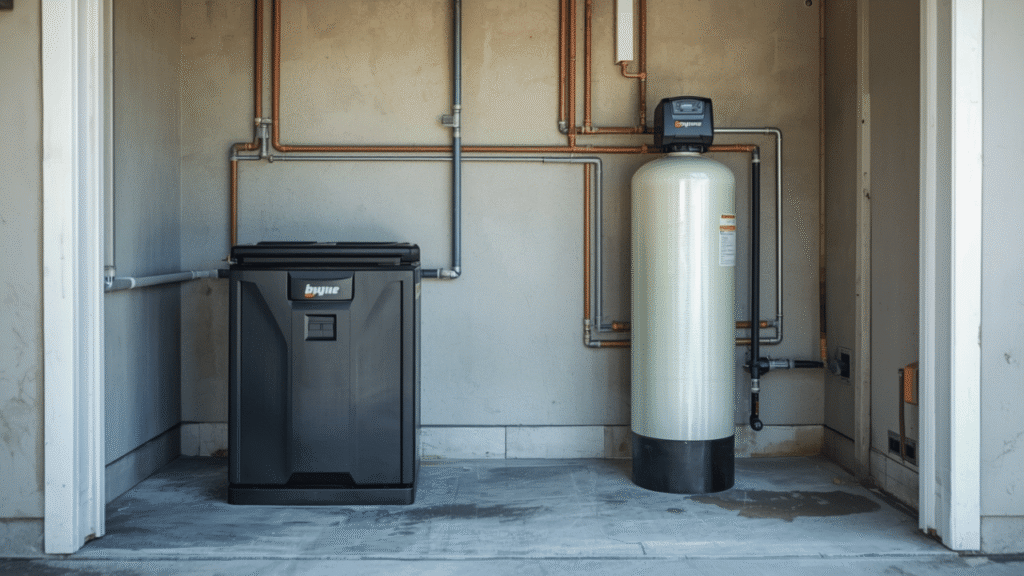
Since we get called after the fact rather than to sell you a system, a few patterns worth knowing.
Skipping the bypass valve
A bypass lets you isolate the softener for service or send unsoftened water to an outdoor spigot. It costs little during install and is a genuine hassle to add afterward. Confirm it is in the quote.
Brine drain done poorly
The discharge line needs a proper air gap to prevent backflow into your softener. This is a code issue, not a preference.
No pre-filter on sediment-heavy supply
Sediment shortens resin life. If your water carries grit, a sediment pre-filter protects the investment.
Softened water on the wrong lines
Outdoor irrigation and, in many setups, the kitchen cold tap are commonly left on unsoftened water. Decide this before installation, not after.
And a note on your existing plumbing: hard water is why water heaters in this area accumulate scale and lose efficiency, and why toilet flappers and fill valves wear out faster, which we covered in our guide on stopping a running toilet. A softener slows all of that down. It does not undo damage already done.
Frequently Asked Questions
How much does water softener installation cost?
Water softener installation costs $1,200 to $3,800 in 2026 for a typical whole house system including the unit and labor. The unit alone runs $300 to $7,000 by type and capacity, and labor runs $150 to $1,000, with most standard installs at $500 to $700. Labor is usually 20 to 30 percent of the total.
How much does a water softener cost by itself?
The unit alone typically costs $400 to $1,200 for a standard salt-based single-tank system, $500 to $3,000 for salt-free conditioners, and $800 to $3,000 for dual-tank models. Whole-house reverse osmosis systems with softening run $2,000 to $7,000 for equipment before installation.
How much does a whole house water softener cost?
A whole house water softener costs $1,200 to $3,800 installed in 2026 for a standard salt-based system covering the entire home. The unit alone is $400 to $1,200, with labor making up the rest. Dual-tank and reverse osmosis systems run considerably higher.
How much does it cost to replace a water softener?
Replacing an existing water softener costs $800 to $2,500 installed, less than a first-time installation because the plumbing connections are already in place. Labor typically runs $150 to $400 for a like-for-like swap. Check whether the resin bed alone can be replaced first, since that is often a few hundred dollars.
What is the cost to install a water softener if I already have a loop?
If your home has a pre-plumbed softener loop with connections in place, installation labor is usually $150 to $400, since the plumber is connecting to existing stubs rather than running new lines. Many newer DFW homes have this loop in the garage. Without one, labor typically runs $700 to $1,000 or more.
What size water softener do I need?
Multiply household occupants by 75 gallons of daily use, then by your water hardness in GPG, to get grains removed per day. A family of four at DFW’s roughly 11.8 GPG needs about 3,500 grains daily. A 32,000-grain unit covers that with weekly regeneration; 48,000 grains adds headroom. Oversizing wastes money and salt.
How hard is DFW water?
Most of the Metroplex has hard to very hard water. The North Texas Municipal Water District, serving Plano, Frisco, Allen, Richardson, Garland, and McKinney, reported roughly 202 ppm, about 11.8 grains per gallon, in its 2024 report, which is classified as very hard. Dallas Water Utilities runs closer to 8 to 9 GPG.
Are salt-free water softeners worth it?
Salt-free systems do not remove hardness minerals; they alter them so they scale less. That helps with buildup but your water stays hard, so spotting and poor lathering continue. In DFW’s hardness range, salt-based ion exchange is the effective choice if you want genuinely soft water.
What does a water softener cost to run each year?
Budget $50 to $200 a year for salt and $100 to $300 for maintenance, plus a modest increase in water use from regeneration cycles. The resin bed lasts about 10 to 15 years before replacement. Over a decade, ownership typically doubles the original purchase price.
The Bottom Line
Plan on $1,200 to $3,800 installed for a standard whole house system, and check whether your home already has a softener loop, because that single detail swings labor by several hundred dollars. The cost of a home water softener splits roughly 70 to 30 between equipment and labor on a typical job.
Then size it with arithmetic rather than a salesperson’s recommendation, and factor in the decade of salt and servicing before deciding. DFW water is genuinely hard enough to justify a softener for most homeowners who plan to stay put. It is still a comfort and appliance-protection purchase, not an emergency.
Nuflow DFW is licensed by the Texas State Board of Plumbing Examiners (RMP# 46694). We do not sell water softeners, but we do repair the water heaters, fixtures, and lines that hard water wears out across the Dallas-Fort Worth Metroplex. Call (469) 701-0597 if hard water has already cost you something.