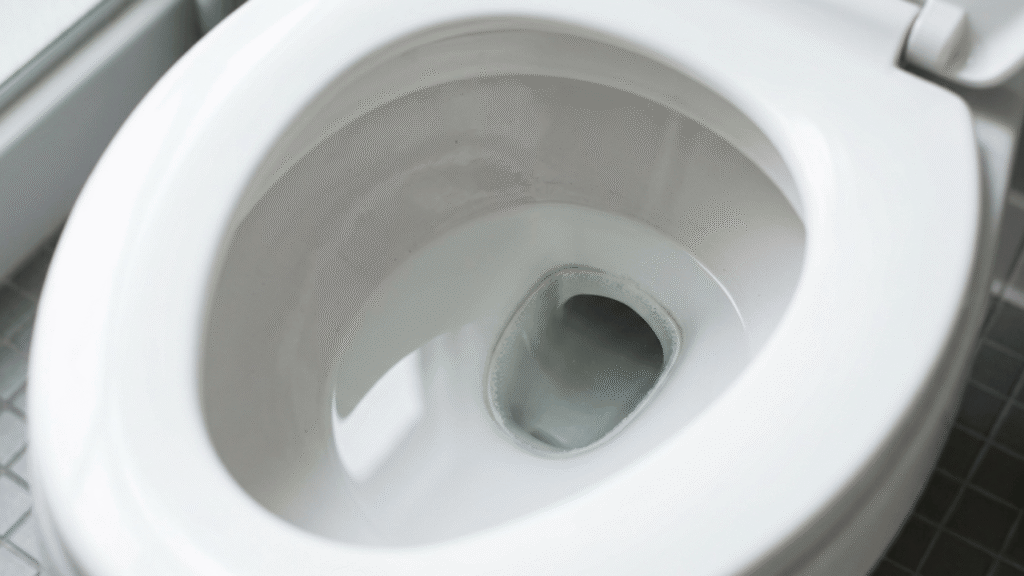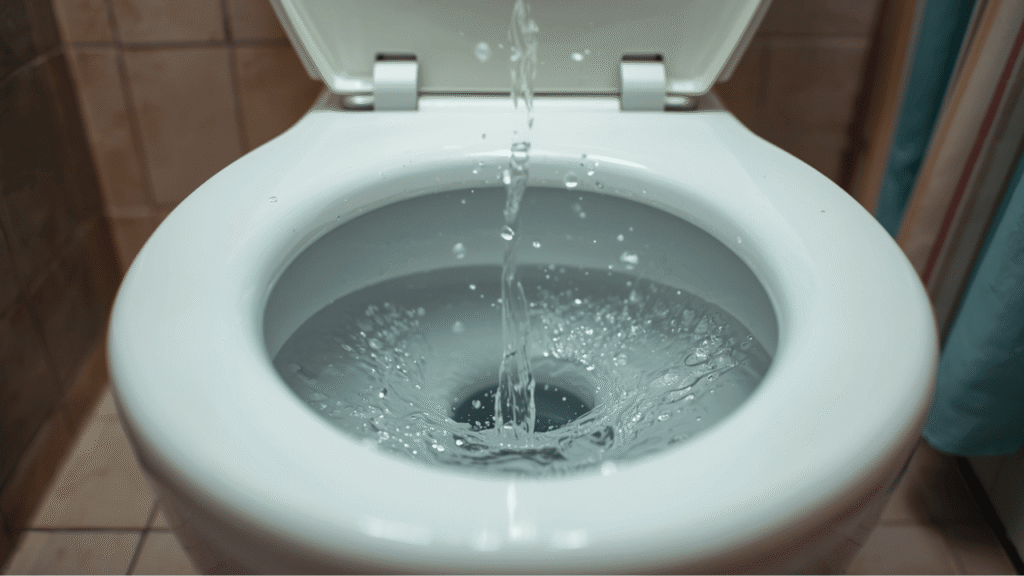
To stop a toilet from running, take the tank lid off and check three things in order: is the flapper sealing, is the water level too high, and is the fill valve shutting off. Most running toilets are fixed in about 10 minutes with no parts or a part that costs a few dollars. If you need to stop the water waste right now, turn the shut-off valve behind the toilet clockwise until it stops.
That constant hiss of a toilet running at 2 a.m. is more than annoying, it wastes water and money. According to USGS water-use data, a leaking toilet is one of the largest sources of household water waste, and it shows up fast on your bill. The good news is that nearly all of these are easy do-it-yourself fixes. This walks through a quick test to find the cause, then the exact steps to fix each one, with how long it takes and what it costs.
First: Stop the Water Waste
Before anything, if the toilet is running hard, turn off its water. Look for the small shut-off valve on the wall or floor behind the toilet and turn it clockwise until it stops. This halts the waste immediately while you work, and you turn it back on when you are ready to test. This one step is the difference between a fixed toilet and a water bill that climbs while you figure things out.
Now take the lid off the tank and set it somewhere safe. The lid is heavy and fragile, and replacements are hard to find for older toilets, so treat it carefully. One reassurance: the water in the tank is clean. It never touches the bowl, so you can work in there without worry.
The 30-Second Test to Find the Cause
Before you replace anything, this quick test tells you which part is the problem, so you fix the right thing the first time.
With the tank full, turn the shut-off valve behind the toilet off, then watch the water level in the tank. If the water slowly drains down on its own, the problem is the flapper not sealing, since water is leaking past it into the bowl. If the water level holds steady with the valve off, the flapper is fine, and the problem is the fill valve not shutting off properly. That single observation points you straight to the fix.
You can also read the symptom. A toilet that runs constantly with water visibly trickling into the bowl is usually a flapper. A toilet that fills and refills at random, or where water is running into the overflow tube, is usually the fill valve or water level. And if you find yourself jiggling the handle to make it stop, that points to a flapper or chain problem.
Fix 1: The Flapper (Most Common, 5 Minutes)
The flapper is the rubber seal at the bottom center of the tank, attached to a chain. It lifts when you flush and drops to seal the flush valve it sits on. It is the number one cause of a running toilet, because rubber degrades over time. In North Texas especially, hard water leaves mineral deposits that stop the flapper from sealing and stiffen the rubber faster than in soft-water areas.
First, inspect it. Look for cracks, warping, or a filmy mineral buildup on the flapper or the seat it rests on. If it is just dirty, wipe the flapper and the seat clean with a paper towel, which sometimes restores the seal on its own. If the flapper is cracked, warped, or brittle, replace it. Flush and hold the handle down to drain the tank, unclip the old flapper, take it to the hardware store to match, and clip the new one on. A universal flapper costs a few dollars. Turn the water back on and test flush.
Fix 2: The Flapper Chain (2 Minutes)
Sometimes the flapper is fine but the chain is the trouble. If the chain is too long, it can slip under the flapper and hold it open, or bunch up so the flapper never seats. If it is too short, it holds the flapper slightly open all the time.
The chain should have just a tiny bit of slack when the flapper is closed, no more. If it is too long, unhook it and move it up a link, or trim the excess with wire snips. If the chain is tangled or caught on something, which is common, free it and let the flapper drop fully. This is often the entire fix, and it takes two minutes with no parts.
Fix 3: The Water Level (2 Minutes)
If water is trickling into the overflow tube, the tall open pipe in the middle of the tank, the water level is set too high. The tank keeps filling past where it should, and the excess spills down the overflow, which reads as a constantly running toilet.
The water should sit about half an inch to an inch below the top of the overflow tube. You adjust it at the fill valve. On modern fill valves there is an adjustment screw or a clip on a float cup: turning the screw counterclockwise lowers the water level, and clockwise raises it. Make a small adjustment, then flush to let it refill and check where it stops. Many newer fill valves have a water-level line marked on the side as a target. A slight turn is usually all it takes.
Fix 4: Adjust the Fill Valve (5 Minutes)
Here is the cause people overlook. Even with a good flapper and correct water level, a fill valve that will not fully shut off keeps the toilet running. Before replacing it, try adjusting it, since that is often the whole fix. Lift up gently on the float or float cup while the toilet is running; if the water stops, the valve works and only needs its level adjusted down with the adjustment screw. Also check for debris: sediment and minerals, common with DFW’s hard water, can lodge inside the valve and stop it sealing. Many fill valves can be cleaned by turning off the water, removing the cap, holding a cup over the top, and briefly running the water to flush debris out. If adjusting and cleaning do not work, the valve needs replacing.
Fix 5: Replace the Fill Valve (20 to 30 Minutes)
If the fill valve is cracked, worn, or will not shut off after adjusting and cleaning, replace it. This is still a beginner-friendly job and the part costs around $10 to $20. Turn off the water, flush and hold the handle to empty the tank, then sponge out the rest. Disconnect the supply line underneath, unscrew the locknut holding the valve to the tank, and lift the old valve out. Set the new valve to the right height per its instructions, drop it in, hand-tighten the locknut, reconnect the supply line, and attach the fill tube to the overflow. Turn the water back on, check for leaks, and adjust the level. A full repair kit with the flapper, fill valve, and flush valve seal is worth it if more than one part is worn.
When to Call a Plumber
Most running toilets are genuine do-it-yourself jobs, but a few situations call for a pro. If water is leaking onto the floor from the base or the tank bolts, if the tank or bowl is cracked, if you have replaced the parts and it still runs, or if the shut-off valve itself is stuck or leaking, it is time to call a plumber. These point to a worn tank-to-bowl gasket, a failing shut-off, or a fixture problem beyond a simple part swap. A professional bathroom plumbing service handles rebuilds and the leaks a parts swap will not fix. Running toilets are especially common in established Plano homes, where years of hard water wear out flappers and fill-valve seals faster.
How to Keep It From Happening Again
A little upkeep prevents most repeat problems. Because DFW’s hard water is hard on rubber, expect to replace a flapper every few years rather than waiting for it to fail. Keep the flush handle and chain adjusted so nothing binds or hangs the flapper open. If your home has a water softener, it eases the mineral wear on every rubber part in the tank. And if you catch a faint hiss or the sound of water topping up when no one has flushed, check it early, since the EPA notes household leaks like a running toilet waste huge volumes of water over time. A running toilet that hides its leak can also mask a bigger one, which is where professional leak detection helps.
Frequently Asked Questions About a Running Toilet
How do I stop a toilet from running without a plumber?
Take off the tank lid and check three things: is the flapper sealing, is the water level below the overflow tube, and does the fill valve shut off. Clean or replace a bad flapper, lower the water level at the fill valve, and adjust the chain. Most fixes take under 10 minutes.
Why does my toilet keep running?
The most common cause is a worn or dirty flapper that no longer seals, letting water leak into the bowl so the tank keeps refilling. Other causes are a water level set too high, a tangled flapper chain, or a fill valve that will not shut off. Hard water speeds up all of these.
How do I know if it’s the flapper or the fill valve?
Turn off the shut-off valve behind the toilet with the tank full and watch the water. If the level slowly drops on its own, the flapper is leaking. If the level holds steady, the flapper is fine and the fill valve is the problem. This simple test tells you which part to fix.
How much does it cost to fix a running toilet?
As a DIY fix, very little. A universal flapper costs a few dollars, and a fill valve is about $10 to $20. A full repair kit runs around $20 to $30. If you call a plumber for a rebuild or a leak a parts swap won’t fix, professional toilet repair starts at $250+ (as of Q2 2026).
Can a running toilet raise my water bill?
Yes, significantly. The EPA estimates a running toilet can waste up to 200 gallons of water a day, which adds up quickly on a monthly bill. Because the leak is often silent, many people do not notice until the bill spikes. Fixing it promptly usually pays for itself fast.
Why does jiggling the handle stop my toilet from running?
Jiggling the handle temporarily reseats a flapper that is not sealing or frees a tangled chain. It is a sign the flapper or chain needs attention, not a real fix. Clean or replace the flapper and adjust the chain so it seats on its own, and you will not need to jiggle it.
The Bottom Line
A running toilet is one of the most satisfying quick fixes in a home, because it is usually the flapper, the water level, or the fill valve, and all three are cheap and beginner-friendly. Start by turning off the water to stop the waste, use the shut-off-valve test to find the cause, then fix the right part. Ten minutes and a few dollars usually does it.
Nuflow DFW is licensed by the Texas State Board of Plumbing Examiners (RMP# 46694) and handles toilet repairs and rebuilds across the Dallas-Fort Worth Metroplex. Call (469) 701-0597 if the toilet still runs after replacing the parts, or if you find a leak that a part swap won’t fix.