Sewer line installation defects are the built-in mistakes that show up on a camera years after the trench was filled: a hard 90 at a direction change, a flat run with no fall, joints that were buried before anyone water tested them. Nuflow DFW (RMP# 46694) finds these across the Dallas-Fort Worth Metroplex on lines from 1958 builds and from 2019 builds alike.
That last part surprises people. A homeowner in Central Plano with a 1965 cast iron main expects trouble. A homeowner in a 2019 Frisco build does not, and that is exactly who calls us with a line that clogs every eight months.
Ryan King has run camera inspections in DFW for 15+ years. What follows is the short list of what he actually sees on the monitor, why each defect happens on site, what it does to the line over time, and what it takes to fix once the yard is already grass.
What counts as a sewer line installation defect?
An installation defect is damage the pipe was born with. Nothing wore out and nothing shifted. The line was assembled or buried wrong, and it has been slowly collecting the consequences ever since. Roots, grease, and corrosion are the usual suspects in a backup. Installation defects sit underneath them and explain why the same section keeps failing.
The distinction matters for one practical reason. A worn out pipe gets lined or replaced. A defective installation has to be corrected at the defect, or you line a mistake and keep the mistake for another 50 years.
Call Nuflow DFW at (469) 701-0597 for a camera inspection if the same drain keeps backing up after a cleaning.
Defect 1: A hard 90 where the line changes direction
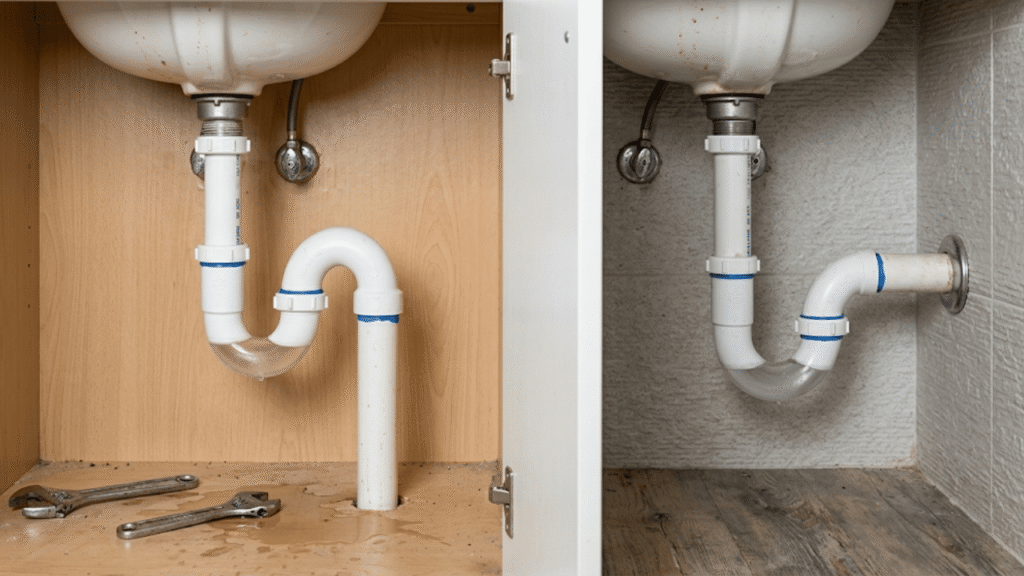
The most common shortcut we find is a short-turn 90 degree elbow used to swing a horizontal run around a corner. It is fast. One fitting, one glue joint, done. The correct assembly is two 45 degree bends or a long-sweep fitting, which the International Plumbing Code requires for horizontal-to-horizontal direction changes. Texas adopts the IPC, and Dallas, Plano, and Fort Worth all enforce it.
Here is why the shortcut costs money. Waste hits the inside wall of a short 90 and stops. Water keeps going, solids do not. Six months later that elbow is a shelf, and every wipe and grease slug coming down the line catches on it.
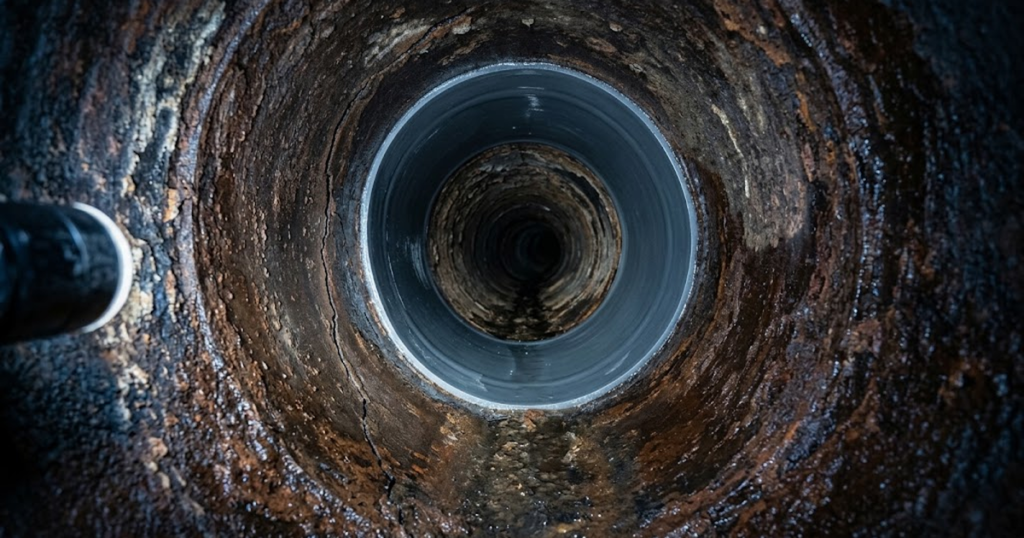
On camera the tell is obvious once you know it. The picture goes dark at the turn, the head fights to push through, and there is a debris shelf sitting on the outside radius. On a long sweep you see straight through the bend.
Willow Bend, Plano. 1979 home, recurring kitchen line clogs every 7 to 9 months. Camera found a short 90 at 31 feet where the line turned toward the street, with a 2 inch debris shelf built on the outside wall. Two 45s and 6 feet of new pipe. Final cost $2,400. Job time: one day.
We see this same fitting on brand new construction. A crew running behind on a Friday reaches for the fitting that closes the trench fastest. It passes a visual inspection because it is buried within the hour.
Defect 2: Flat runs, back pitch, and bellies
Slope is where most installation defects live, because the human eye cannot read it. A 4 inch line at the code minimum drops one eighth of an inch per foot. Across 40 feet that is 5 inches of total fall. Look into that trench and it reads as flat.
Three separate problems get grouped here, and they are not the same thing:
- Flat run. The pipe has slope below minimum. Solids settle instead of scouring.
- Back pitch. A section runs uphill. Water sits in it permanently.
- Belly. The line was laid right, then the trench bottom settled and the pipe sagged into the void.
A belly is the one that fools people, because the installer may have done the grade correctly and the bedding failed underneath it later. That is Defect 4 arriving wearing a different hat.
Camera evidence is direct. Standing water shows on the lens in a section that should be dry between flushes, and the water line does not move when we run the hose upstream.
Honest limitation: a belly cannot be lined out of existence. Cured-in-place pipe lining rebuilds the wall of the pipe, and it holds the pipe in exactly the shape it is in. A liner in a bellied section gives you a smooth, watertight belly. If the sag is deep enough to hold water, that section gets excavated and re-graded, and we say so before quoting. Compare both routes on sewer replacement vs trenchless.
Defect 3: Joints buried before anyone water tested them
A water test is not optional and it is not slow. You plug the downstream end, fill the line, and watch the joints. If a joint weeps, you see it in minutes.
The failure mode is not technical, it is scheduling. Testing happens late in the afternoon, the joint is still green, the crew wants to close the trench, and the soil goes in. Every joint that was going to leak now leaks under three feet of clay.
We have watched a test fail four times in a row on a single run before the joints held. That is normal. Cement and solvent welds get redone on real jobs. What is not normal is soil going over an untested joint, and it is the single easiest defect for a homeowner to catch, because it is the only one on this list that is visible from the driveway.
Sewage leaking into the soil beside a pipe does two more things people miss. It feeds roots straight to the defect, and it saturates the clay around the line. In DFW that saturation moves the ground, which brings us to a problem the installer cannot blame on anyone else.
Request a camera inspection before your builder’s warranty window closes. Nuflow DFW, (469) 701-0597.
Defect 4: Bedding and backfill that never supported the pipe
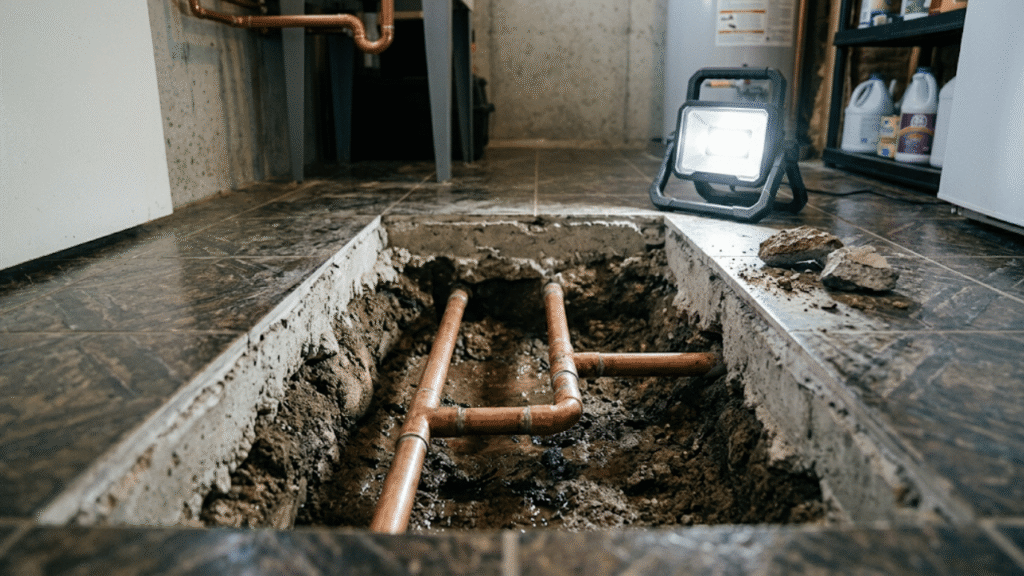
Pipe does not float. It sits on whatever the crew put under it, and it carries whatever load is above it through that bedding.
Correct practice is a granular bed under the pipe, the same granular material worked in by hand under the haunches (the lower curve on each side), and continued cover above the crown before native soil goes back. Compaction happens in lifts, hand tamped near the pipe.
Two shortcuts cause most of the damage. Native clay spoil goes straight back in the trench instead of granular bedding, so the pipe sits on lumps and voids. Or a mechanical compactor runs over the pipe before there is enough cover, which cracks the crown on the spot.
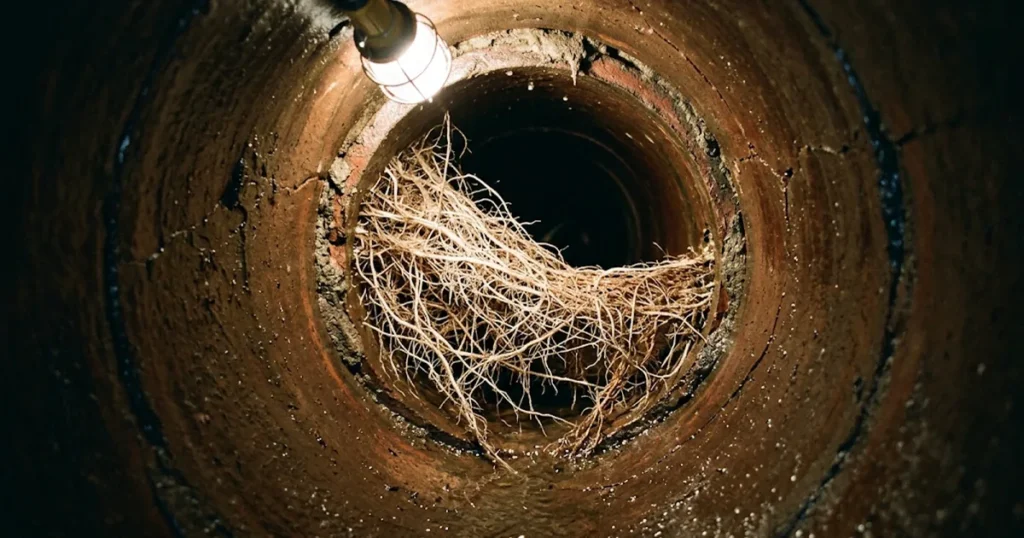
The result years later is a sag over the soft spot, a hairline crack that opens up, or a joint pulled slightly apart. Roots find every one of those.
This is the defect with the longest delay between cause and symptom, often 5 to 15 years, which is why nobody connects the backup to the install.
Defect 5: Missing cleanouts and vents put in the wrong place
Two support components get skipped when a job runs late.
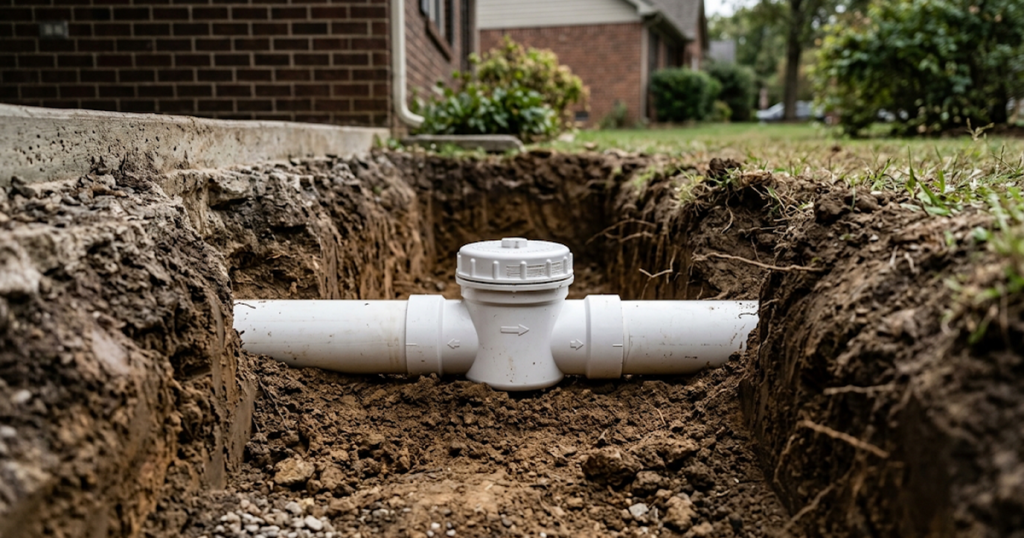
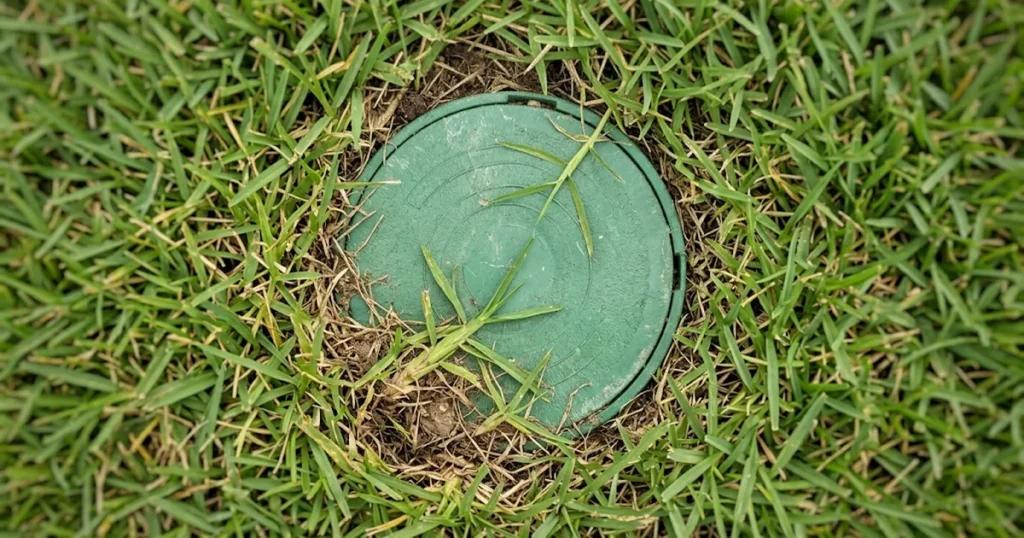
Cleanouts: A line without an accessible cleanout means the next plumber pulls a toilet or digs to access the pipe. That is a real cost added to every future service call, and it is often the reason a previous owner ignored a slow drain for years.
Vents: A drain system needs air. When a vent is undersized, blocked, or terminated in the wrong spot, the trap seals in the house get pulled dry and sewer odor comes indoors through the fixtures. Homeowners then chase the smell at the sink, which is the wrong end of the problem.
Odor at a wall or along a fence line usually means the termination point is too low or too close to the structure. Odor inside the house with no visible leak usually means a vent or trap seal issue, not a broken pipe.
Defect 6: Bad transitions between old pipe and new pipe
Most DFW repairs are partial. A section gets replaced and the new PVC meets 60 year old cast iron or clay somewhere in the yard. That meeting point is a defect factory.
What goes wrong: the wrong coupling for the two materials, a coupling with no shear ring under load, an offset where the two pipe diameters do not line up, or an old pipe cut so the new piece has to be forced into alignment.
On camera an offset transition shows as a visible lip. The head has to climb over it. Anything with texture, and that includes toilet paper, catches on the lip.
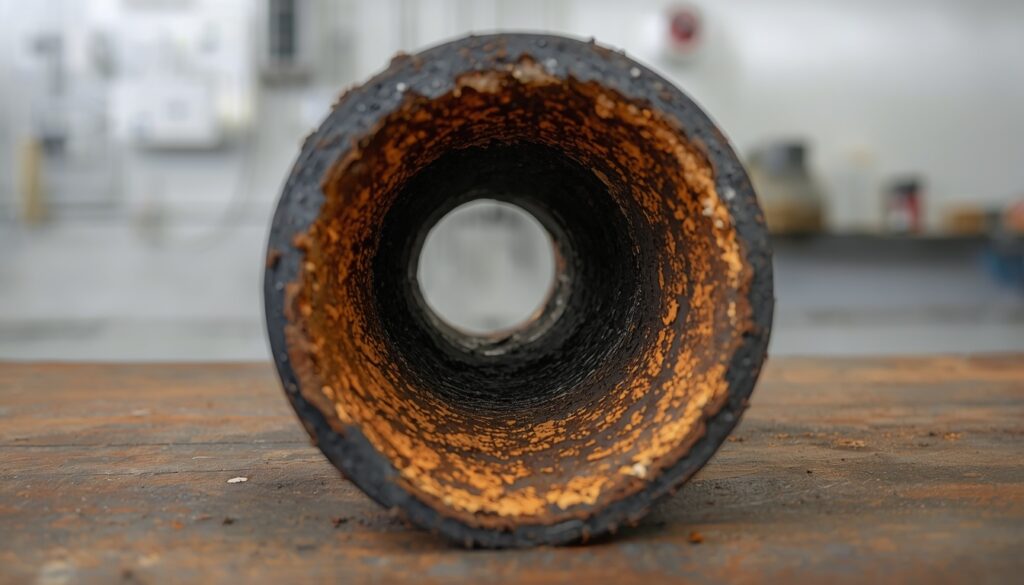
Cast iron adds a wrinkle. Across 200+ trenchless jobs in DFW, Nuflow DFW finds cast iron sewer lines in pre-1975 Dallas homes failing at an average of 58 years, with root intrusion present in 70% of those lines. Tying new PVC into cast iron that is already at year 55 buys you a few years, not decades. Sometimes the honest recommendation is to line or replace the full run instead of the section.
Why North Texas clay makes all of this worse
Every defect above exists nationwide. DFW accelerates them.
The Blackland Prairie clay under most of this metro is highly expansive. It swells when it takes on water and contracts hard in a drought. That cycle moves the ground around a buried pipe every single year, and the movement is uneven, so one section of your line is being lifted while another is being dropped.
A properly bedded pipe with correct slope has margin to absorb that. A pipe laid at bare minimum slope on clay spoil does not. The 2011 and 2022 droughts followed by wet years are why service calls for sewer line problems cluster in the seasons they do.
Texas A&M AgriLife Extension publishes the research on how these soils behave. Read it at Texas A&M AgriLife Extension if you want the soil science behind what your foundation and your sewer line are both sitting in. The same clay movement is behind most of the slab leak detection work we do in Plano and Frisco.
How do you find out if your line has one of these?
Two tools, and they answer different questions.
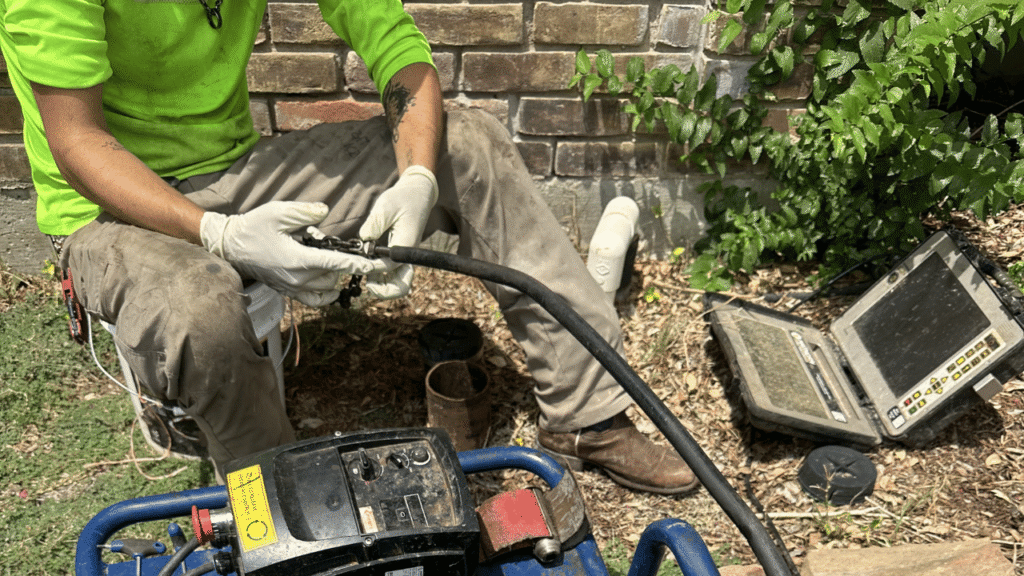
A camera inspection shows condition and defect location. We record the distance from the cleanout, the depth, the defect type, and the pipe material. Sewer camera inspection starts at $250+ (as of Q2 2026) and we credit it toward the repair. You keep the footage either way.
A water test shows whether the joints hold. It is the right tool during a new install or a repair, before backfill. It is not a diagnostic for a line that has been in the ground 40 years.
One honest limitation on the camera: it reads the inside of the pipe. It shows a belly, an offset, a crack, a root ball, a bad fitting. It does not tell you the condition of the bedding six inches outside the pipe wall. Anyone promising that from a camera pass alone is overselling the tool.
If the line is packed with grease or scale, the camera cannot see wall condition at all. That run gets hydro jetting first, from $350+ (as of Q2 2026), then a second camera pass. Jetting clears the buildup. It does not repair a structural defect, and it will not fix a fitting.
What does it cost to correct an installation defect?
| Defect found | Typical correction | Starting cost |
|---|---|---|
| Debris shelf at a bad fitting | Excavate the fitting, install 45s or a long sweep | Quoted per job |
| Cracked or offset section, pipe holds shape | Trenchless CIPP lining | $3,500+ |
| Belly or back pitch | Excavate and re-grade the section | $5,000+ |
| Failed joint on a new install | Redo the joint, retest before backfill | Quoted per job |
| Missing cleanout | Add an accessible cleanout | Quoted per job |
Pricing as of Q2 2026. Actual cost depends on inspection findings, depth, access, and pipe condition. Full ranges are on the plumbing services page.
The tradeoff worth stating plainly: trenchless sewer repair is the better answer for most defects because the yard stays closed and the job finishes in a day. It is the wrong answer for a collapsed section, a deep belly, or a fitting that has to physically change shape. Those need excavation. A liner cannot re-grade a pipe or turn a 90 into a 45.
If you are mid-build right now, check these before the trench closes
For anyone with an open trench in the yard this week, the list is short:
- Ask which fittings are at each direction change. You want 45s or long sweeps on horizontal turns, not short 90s.
- Ask for the slope in inches per foot, and ask them to show you the string line or laser.
- Watch the water test yourself. Every joint, both boxes, before anything gets covered.
- Look at what is going back in the trench. Granular bedding under and around the pipe, not clay spoil straight off the pile.
- Confirm the cleanout locations and that you can reach them after landscaping.
- Get the camera footage and the test on video. Ten minutes of phone video is worth more than a warranty conversation two years later.
Number three is where most arguments start, because a crew that has already backfilled has to dig it back up to prove the joint holds. Standing there for the test costs you twenty minutes.
Frequently asked questions about sewer line installation defects
How do I know if my sewer line was installed wrong?
Recurring clogs in the same spot, several fixtures draining slow at once, and gurgling after a flush point to a defect rather than a one-time blockage. A camera inspection confirms it by showing the defect, its distance from the cleanout, and its depth. Nuflow DFW inspections start at $250+.
Can a bad sewer line installation be fixed without digging?
Sometimes. Cracked or corroded sections that still hold their shape can be repaired with cured-in-place pipe lining, starting at $3,500+. Bellies, back pitch, and wrong fittings cannot be corrected with a liner, because lining rebuilds the pipe wall without changing the pipe’s grade or shape.
What slope does a sewer line need in Texas?
Texas follows the International Plumbing Code. Drain pipes 3 inches and larger require a minimum of one eighth inch of fall per foot, and pipes 2.5 inches and smaller require one quarter inch per foot. Across a 40 foot run at minimum slope, that is 5 inches of total drop.
Why does my new house have sewer line problems already?
New construction defects are usually assembly and burial shortcuts rather than wear. Wrong fittings at direction changes, minimum or negative slope, untested joints, and clay backfill instead of granular bedding all produce backups within a few years. Camera footage from inside the line shows which one you have.
Is a sewer line installation defect covered by a builder warranty?
Coverage depends on your specific warranty and its time limits, so read the document and ask the builder directly. Camera footage with distance and depth readings gives you documentation either way. Nuflow DFW provides the recorded inspection video to the homeowner regardless of who pays for the repair.
Do you serve my city?
Nuflow DFW covers 25 cities and 154 neighborhoods across Dallas, Tarrant, Collin, and Denton counties, including Dallas, Plano, Frisco, Fort Worth, McKinney, and Arlington. Call (469) 701-0597 to confirm your ZIP code, or see the full service area.
Who is allowed to do this work in Texas?
Texas Occupations Code Section 1301 restricts sewer line repair and replacement to licensed plumbers. Nuflow DFW holds Master Plumber license RMP# 46694 through the Texas State Board of Plumbing Examiners. Ask any contractor for their RMP number before work begins.
What to do with this
If your line backs up in the same place on a schedule, stop paying to clear it. A cleaning removes the symptom and leaves the defect, and the interval between clogs gets shorter every time. One camera pass tells you which of the six defects above you are dealing with, at what distance, and whether it can be lined or has to be dug.
Nuflow DFW answers 24/7 at (469) 701-0597. Licensed Master Plumber, RMP# 46694, insured and bonded. Free estimates are provided after an on-site inspection, and written quotes include parts, labor, and applicable taxes. Lining products and specifications come from NuFlow Technologies, and current code language is published by the International Code Council.
If you are the one standing over an open trench today, go back and read the six point list. Point three is the one that saves the money.