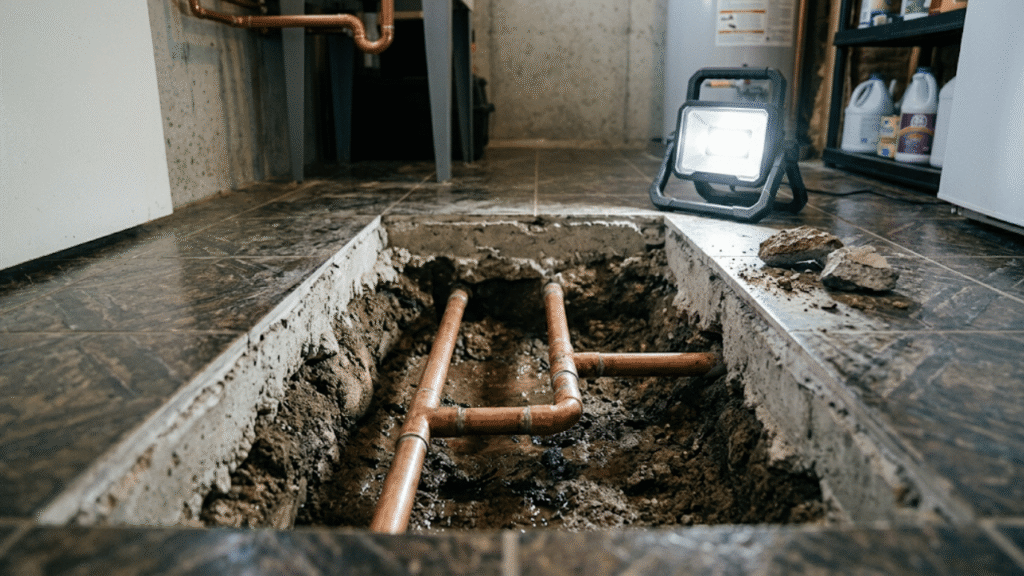
Texas heat does not damage sewer lines directly. It damages them through the soil. North Texas expansive clay shrinks as it dries through a long summer, the ground settles unevenly, and rigid cast iron and clay pipe joints get pulled apart. The damage shows up as separated joints, not melted pipe.
That distinction matters, because it tells you where to look and what to fix. A sewer line does not fail from heat the way an air conditioner does. It fails because the ground it sits in moved several inches while the pipe stayed the same length.
Why does clay soil damage sewer lines?
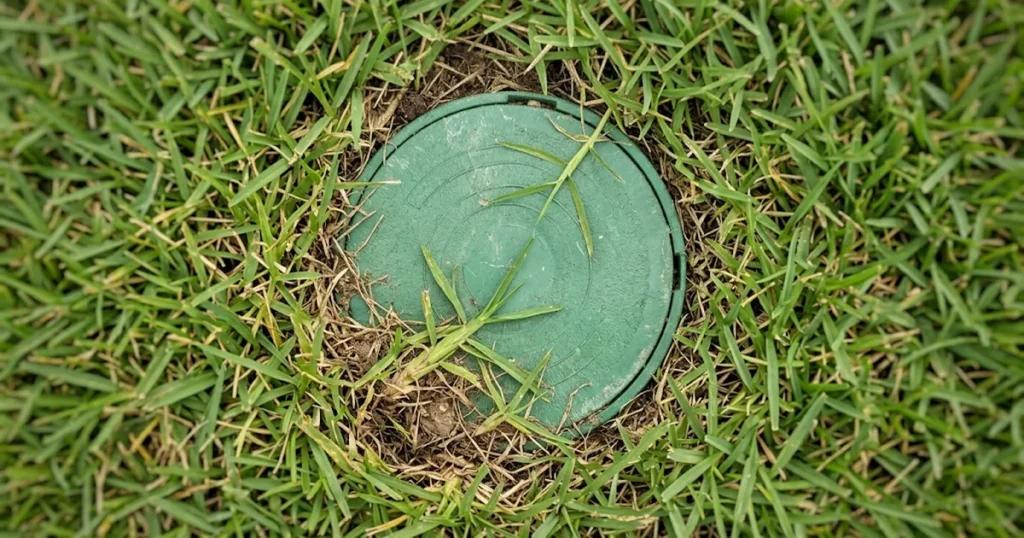
Expansive clay changes volume with moisture. It swells after rain and shrinks during drought, and in North Texas that cycle runs hard every year: wet spring, then months with very little rain and high evaporation. The soil pulls away from itself, cracks open at the surface, and settles unevenly across a yard.
A sewer line buried in that soil does not move as one piece. One section sits on soil that has dropped, the next sits on soil that has not, and the joint between them takes the difference. Cast iron and vitrified clay pipe have almost no give, so the joint is where the movement goes.
This is the same mechanism behind foundation movement in DFW, which is why the two problems often appear in the same summer on the same property. If you have seen slab leak symptoms and sewer symptoms together, the soil is usually the common cause rather than a coincidence.
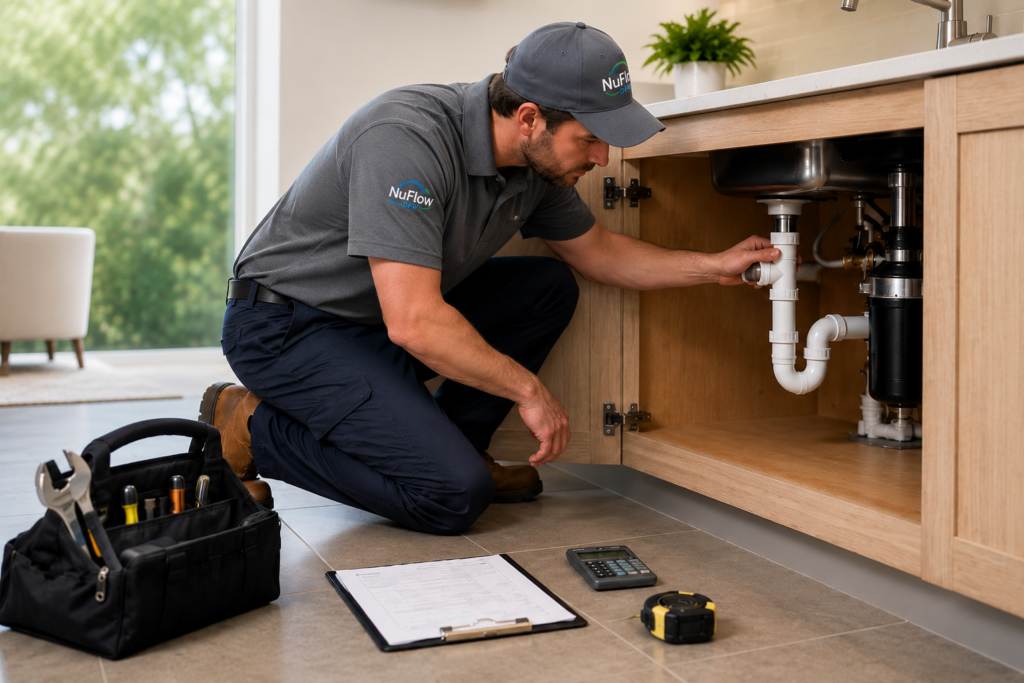
Book a camera inspection with Nuflow DFW at (469) 701-0597. Service is scheduled Monday to Friday, 9:00 a.m. to 6:00 p.m.
What does soil movement look like on a camera?
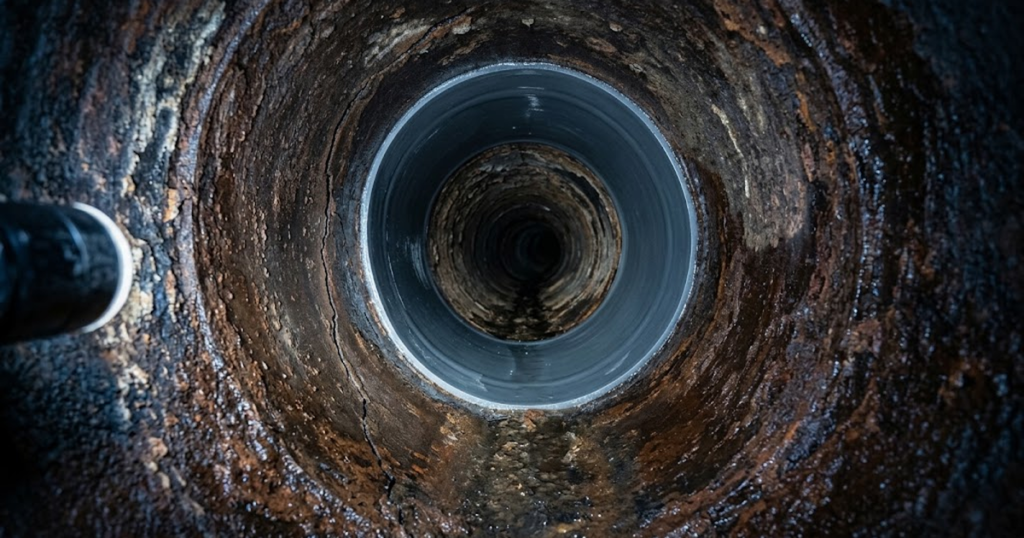
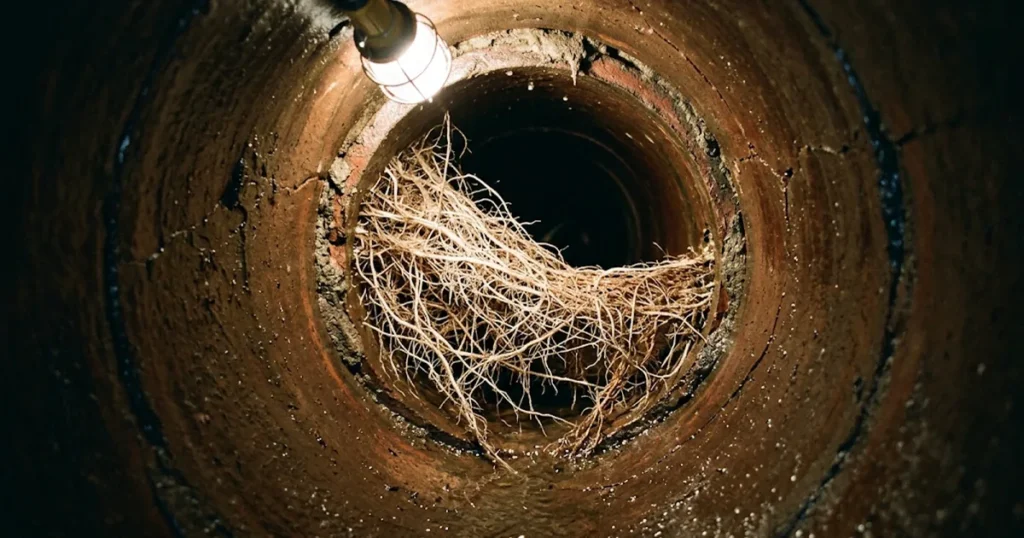
Joint separation is the signature. On camera it appears as a visible gap or a step where two sections of pipe no longer line up, often with soil or root mass visible through the opening.
Three related patterns come from the same cause:
- Offset joints. The two pipe sections have shifted laterally so the bores no longer align. Waste catches on the lip, which is why the line clogs in the same spot repeatedly.
- Bellies. A section has settled into a low spot that holds standing water instead of draining. A belly does not clear with cleaning, and it is one of the cases where lining is the wrong answer.
- Root intrusion at the gap. Once a joint opens, roots find the moisture and widen it. Our root intrusion guide covers what that looks like and what stops it.
The reason a camera settles this and a plunger does not: a blockage caused by a separated joint clears temporarily and returns, because clearing removes the debris without closing the gap that caught it. A blockage caused by grease or hair clears and stays cleared. Same symptom, different cause, very different repair.
Which DFW homes are most exposed?
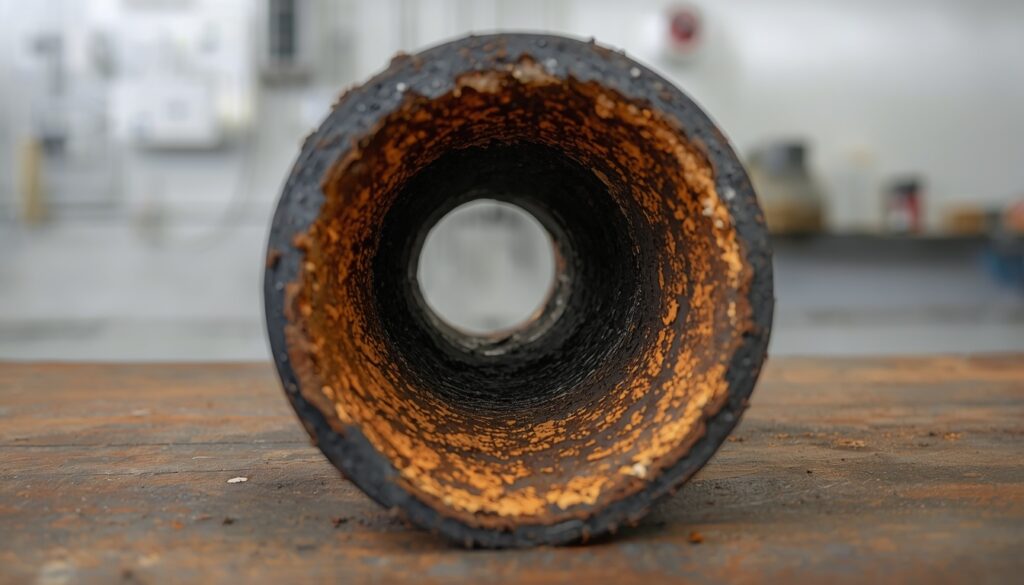
Age of pipe matters more than age of house, though the two usually track together. Homes plumbed before roughly 1980 have cast iron or vitrified clay sewer lines, and both are rigid enough that soil movement goes straight into the joints.
The factors that raise exposure, in rough order of how often we see them:
| Factor | Why it matters |
|---|---|
| Cast iron or clay sewer line | Rigid material, jointed construction, no tolerance for ground shift |
| Mature trees near the run | Roots follow moisture to any opened joint and widen it |
| Slab foundation | Repair access under the slab is expensive, which changes the method choice |
| Long lateral to the main | More joints across more soil, more places to separate |
| Documented foundation movement | The same soil moved both, so check the sewer line when the slab moves |
Newer construction on PVC is not immune, since PVC still has joints, but the material flexes more and the runs are usually younger. Our guides on cast iron plumbing and how long cast iron pipes last explain how to work out what you have.
Across 200+ trenchless jobs in the DFW Metroplex, Nuflow DFW has found cast iron in pre-1975 homes failing at an average of 58 years.
What can you do before the line fails?
Water the foundation perimeter through a dry summer, and get footage of the line before you need it rather than during a backup.
Consistent soil moisture is the one preventive measure that actually addresses the cause. Soaker hoses run at the drip line of the foundation on a regular schedule keep the clay from going through its full shrink cycle. This is standard practice for foundation care in North Texas and it protects the sewer line for the same reason.
The second thing is diagnostic rather than preventive. A camera inspection run when nothing is wrong gives you a baseline: pipe material, depth, joint condition, and any early separation. That footage is worth more than a description of symptoms when something does go wrong, and it puts you in a position to line a cracked pipe before it becomes a collapsed one.
What does not help: chemical drain cleaners and repeated aggressive snaking. Both make a compromised joint worse, and a line that gets snaked every few months is telling you the problem is structural.
When heat and soil are not the cause
Blaming the soil for every sewer failure is as lazy as blaming tree roots for every one, and the repair changes depending on which it actually is.
Soil movement is not the cause when:
- A single fixture is slow and everything else drains normally, which points to that branch rather than the main
- The line is newer PVC on a short run with no mature trees
- The blockage clears completely and stays cleared, which points to grease, wipes, or hair
- The property sits on sandy or rocky soil rather than clay, which varies across the Metroplex
There is also a limit on what lining fixes. A cracked or root-invaded pipe that still holds its shape lines well. A pipe that has bellied into a low spot does not, because a liner follows the sag rather than correcting the grade. Restoring grade needs excavation, and any contractor telling you otherwise is selling rather than diagnosing.
What does it cost to check and repair?
An inspection is the cheap part. The repair depends entirely on what the footage shows (all figures as of Q3 2026).
| Service | Starting price |
|---|---|
| Camera inspection | $250+ |
| Drain cleaning | $150+ |
| Hydro jetting | $350+ |
| Trenchless pipe lining | $3,500+ |
Most residential lining jobs land between $3,500 and $15,000, set by footage, depth, access, and pipe condition. Actual cost depends on inspection findings, and Nuflow DFW gives a written price before any work starts. Our sewer scope inspection cost guide covers why inspection quotes vary so widely between companies.
Two repair paths follow from the footage. Intact bore with cracks or separated joints gets sewer pipe lining, which seals the joints into one continuous surface so the same soil movement has nothing to pull apart. Collapse, severe belly, or reversed grade gets trenchless or open replacement.
Frequently asked questions
Does hot weather actually break sewer pipes?
Not directly. Heat dries expansive clay soil, the soil shrinks and settles unevenly, and that movement pulls rigid pipe joints apart. The failure is mechanical rather than thermal, which is why it shows up as separated or offset joints on a camera rather than as damage to the pipe wall itself.
Why does my sewer line clog in the same place every year?
A blockage that returns to the same spot is usually catching on something structural: a separated joint, an offset, or root mass growing through an opening. Clearing removes the debris without closing the gap. A camera inspection identifies what the debris is catching on.
Can watering my foundation protect my sewer line?
It helps, for the same reason it helps the foundation. Keeping soil moisture consistent through a dry summer limits how much the clay shrinks, which limits ground movement around the pipe. It does not repair a joint that has already separated, and it is not a substitute for an inspection.
Should I get my sewer line inspected before it backs up?
Yes, particularly on a pre-1980 home with cast iron or clay pipe. Camera inspection starts at $250+ (as of Q3 2026) and gives you pipe material, depth, and joint condition. Finding a cracked line before it collapses is the difference between lining it and excavating it.
Do foundation problems and sewer problems happen together?
Often, because the same soil movement causes both. If a slab has shifted enough to crack drywall or stick doors, the sewer line under or beside it went through the same ground movement. Checking the line when the foundation moves is worth doing.
Can a separated sewer joint be fixed without digging?
Usually. A cured liner bridges separated joints and forms one continuous pipe with no joints for future soil movement to pull apart. Lining needs enough original pipe left to bond against, so a collapsed or severely bellied section still requires excavation.
What to do next
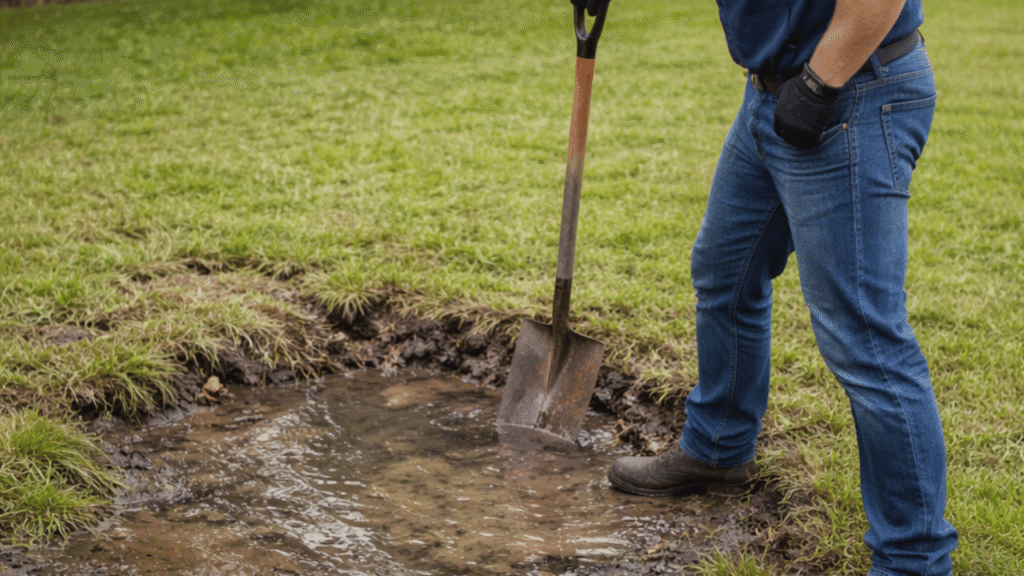
If your home predates 1980 and you have seen recurring blockages, sewer odour, or wet patches in the yard, get footage before you get a quote. The inspection is what tells you whether you are looking at a cleaning job or a lining job, and nobody can tell you that from a description over the phone.
Call Nuflow DFW at (469) 701-0597 or use the contact page to schedule.
Ryan King holds a Texas Responsible Master Plumber license, RMP# 46694. Under Texas Occupations Code Chapter 1301, sewer line repair is licensed work in this state, so verify the RMP number of anyone you hire.
We cover Dallas and Fort Worth plus 23 other cities across the Metroplex.