A toilet that flushes weakly but is not clogged has usually lost the water pressure that starts the siphon, and in hard-water areas the cause is mineral scale closing up the jets inside the bowl. Before you buy anything, pour a bucket of water into the bowl. If it flushes properly, your drain is clear and the problem is inside the toilet. If it backs up, the toilet was never the issue.
That one test takes thirty seconds and cuts the list of possible causes in half.
Start with the bucket test
Fill a bucket with about two gallons and pour it into the bowl in one fast motion, not a trickle. Aim for the middle of the bowl.
If it flushes cleanly, the drain line is open and everything downstream is fine. The tank is failing to deliver water to the bowl fast enough. Keep reading.
If the water rises and drains slowly, or backs up, stop working on the toilet. You have a restriction in the drain, the branch line, or the main sewer line, and no amount of cleaning inside the bowl will change that.
This works because a fast bucket pour does exactly what the toilet is supposed to do on its own. Which is worth understanding, because it explains everything else on this page.
How a toilet actually flushes
A toilet does not push waste down with water pressure. It creates a siphon, and it does it with nothing but gravity. Understanding that is what makes every fix on this page make sense.
The short leg and the long leg
Inside the china, past the trap, there are two legs. The short leg rises from the bowl to a crest. The long leg runs down from that crest to the drain, and because of the curves it is roughly twice the length of the short one. Normal standing water sits partway up the short leg.
When you flush, water leaves the tank through two paths. Some goes into the rim channel. The rest drops through a passage to a single opening at the bottom front of the bowl called the siphon jet, which fires water straight up the short leg.
Once the long leg fills, the weight of water in it pulls the bowl empty on its own, and it keeps pulling until air breaks the seal. No pump, no electricity, just a longer column of water outrunning a shorter one.
Why rate matters more than volume
The whole flush depends on that jet moving enough water fast enough to crest the short leg before the moment passes.
Which means a weak flush is almost never about the amount of water in the tank. Scale narrows the jet, water enters too slowly to crest the short leg, the siphon never primes, and you get a swirl that drains instead of a flush. Same volume of water, no flush.
Rim jets and the siphon jet do different jobs
Most articles treat these as the same part. They are not, and telling them apart is a diagnosis.
Rim jets, sometimes called weeps, are the small holes under the lip of the bowl. They wash the sides and create the swirl. They do not start the siphon.
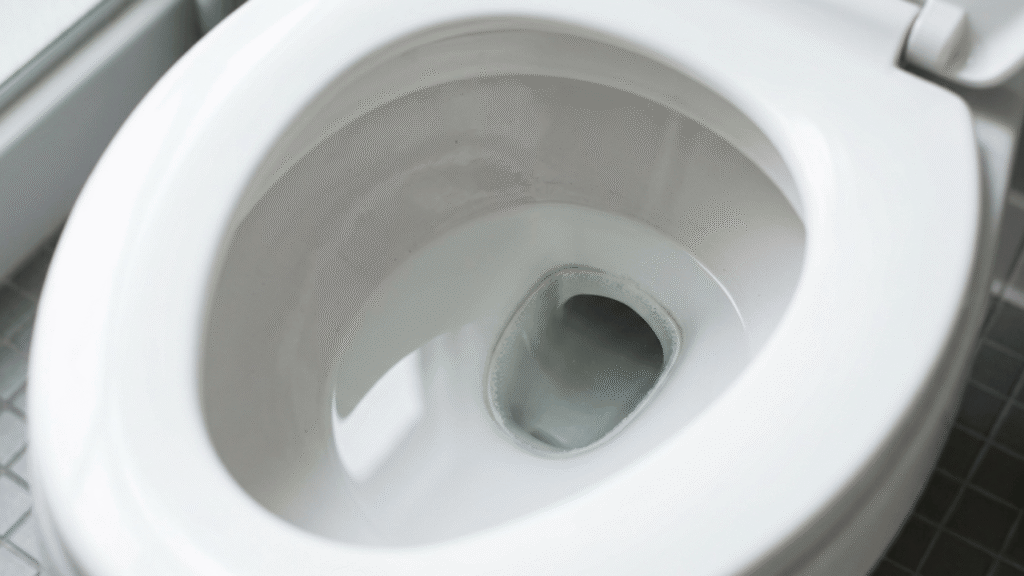
The siphon jet is the single larger opening at the bottom front of the bowl. It fires directly up the short leg. It is the part that actually flushes.
| What you see | Which part |
|---|---|
| Bowl washes clean, but the flush is weak or slow | Siphon jet |
| Flush works, but a ring or streaks are left behind | Rim jets |
| Both weak | Both, and the toilet is well scaled |
Check the rim jets with a mirror
Nobody cleans the rim jets. Take a small mirror, hold it under the lip of the bowl, and look at the holes. In a DFW home on city water you will usually find white crust narrowing every one of them.
That is the hard water. Dallas Water Utilities reports average hardness around 8.9 grains per gallon, and several DFW suburbs test higher, which is well past the point where scale builds inside fixtures.
The descaling method that actually works
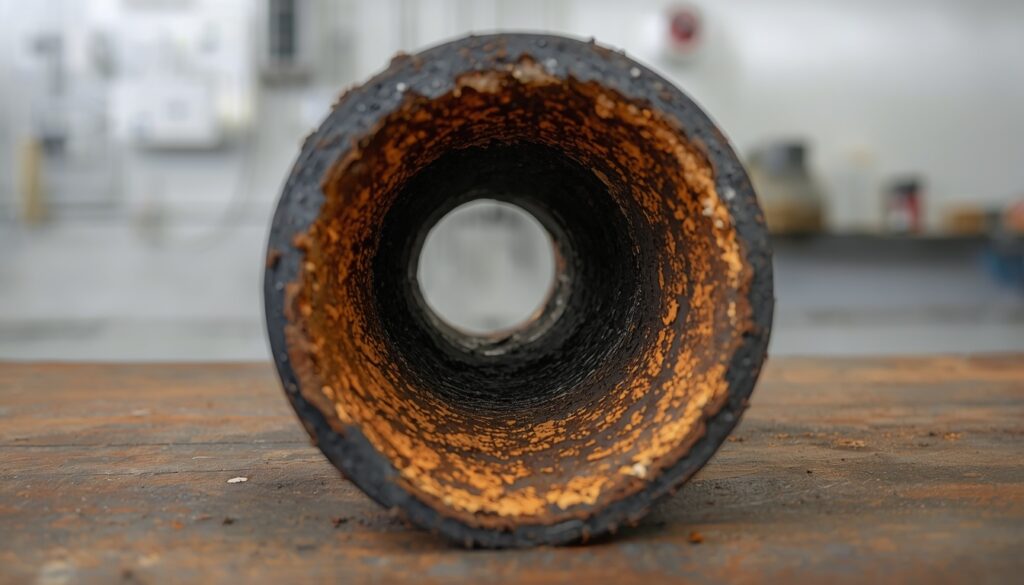
Scrubbing the openings with a brush does almost nothing, because the scale is in the internal passages where a brush cannot reach. The cleaner has to travel the same route the water does.
- Shut off the water at the valve behind the toilet and flush to empty the tank.
- Loosen visible deposits. Work a zip tie or a nylon bottle brush into each rim jet and into the siphon jet. Do not use a wire coat hanger. Metal scratches the glaze, and scratched glaze scales faster than smooth glaze, so it makes next year worse.
- Pour the descaler down the overflow tube, the open vertical pipe inside the tank. Use a funnel. About 16 ounces of white vinegar or CLR. Pour it slowly, over a minute or more.
- Leave it 6 to 12 hours. Overnight is ideal. This is the step most people skip, and it is the one that does the work.
- Turn the water back on and flush several times to clear the residue.
Two safety points
Never add CLR or vinegar to a bowl that already has bleach or a bowl cleaner in it, because acid plus chlorine releases chlorine gas. And acid sitting overnight against the rubber flapper shortens its life, so if you descale on a schedule, expect to replace flappers more often. That is a fair trade, but you should know it is happening.
Why it did not work when you tried this before
The single most common reason: you poured too fast.
Pour quickly into the overflow tube and the liquid takes the path of least resistance straight down to the big siphon jet, bypassing the small rim jets entirely. You descale one part and none of the others, see little improvement, and conclude the toilet is finished.
Slowly is the whole instruction. If the rim jets are badly blocked, a full descale can take two or three overnight rounds, not one.
When the bowl is badly scaled
On a toilet twenty years old or more that has never been descaled, expect real work rather than an overnight soak. Decades of buildup can narrow the passages by half, and clearing that means graduated bottle brushes worked through each opening across a couple of hours.
There is also a tool worth knowing about. A flexible drain-cleaning wand, the type sold for hair clogs, can be fed into the siphon jet to break up sediment from the inside where a brush cannot bend. On a jet that is packed rather than merely coated, it does in seconds what scrubbing does not do at all.
Honest limit: at some point the arithmetic stops working. If a bowl needs hours of labour and still flushes poorly, replacement beats restoration.
When it is not scale at all
Check the date stamp
Lift the tank lid and look for a stamp inside the tank or under the lid. Federal law dropped the maximum flush to 1.6 gallons in 1994, and the first generation of toilets built to that standard, roughly 1994 through the early 2000s, were poor designs that flushed badly when new. If your toilet is from that window and has never flushed well, this is not scale and no cleaning will fix it. That matters in DFW, where a lot of housing stock dates from exactly that period.
Check the tank water level
It should sit about half an inch to an inch below the top of the overflow tube. Lower than that and there is simply not enough volume to prime the siphon, regardless of how clean the jets are. Fluidmaster publishes the adjustment method for their valves.
Listen to the rest of the house
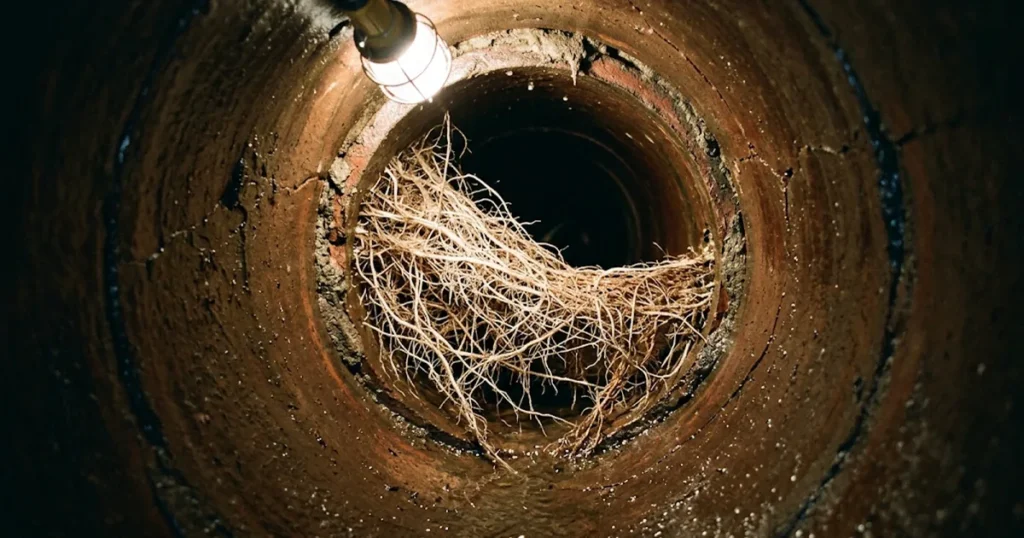
If a nearby tub or sink gurgles when you flush, or more than one drain runs slow, the problem is a blocked vent or a restricted main line, not the bowl. A bubbling toilet is the same signal. In older DFW neighborhoods with mature trees, root intrusion in the main line is the usual cause, and that needs a camera inspection rather than guesswork.
What this costs
| Fix | Cost (as of Q3 2026) |
|---|---|
| Bucket test | $0 |
| White vinegar descale | A few dollars |
| CLR or acid descaler | $10 to $15 |
| Nylon bottle brush set | $10 to $20 |
| Plunging a partial clog | $0 |
| Professional toilet repair | $250+ |
| Camera inspection, when the line is suspect | $250+ |
Most of this is genuinely a weekend job with fifteen dollars of supplies, and we would rather say so than sell you a service call for something vinegar fixes. Where it is worth phoning someone: the bucket test backs up, other fixtures gurgle, multiple drains run slow, or you have descaled twice and the flush is still weak.
Actual pricing depends on findings and access. Free estimates after on-site inspection. Nuflow DFW is licensed by the Texas State Board of Plumbing Examiners (RMP# 46694) and runs 24/7 across the Dallas-Fort Worth Metroplex. Call (469) 701-0597.
Frequently Asked Questions
Why is my toilet not flushing all the way but not clogged?
The bowl is not receiving water fast enough to start the siphon. Mineral scale in the rim jets and siphon jet is the usual cause in hard-water areas, followed by a low tank water level. Pour a bucket of water into the bowl. If that flushes it, your drain is clear and the jets are the problem.
How do you clean a toilet siphon jet?
Shut off the water, empty the tank, and loosen deposits with a zip tie or nylon brush rather than a wire hanger, which scratches the glaze. Then pour about 16 ounces of vinegar or CLR slowly down the overflow tube inside the tank and leave it 6 to 12 hours before flushing.
Why didn’t the vinegar work on my toilet jets?
You most likely poured too fast. Liquid dumped quickly into the overflow tube runs straight to the large siphon jet and bypasses the small rim jets entirely. Pour it over a minute or more, and expect two or three overnight rounds on a badly scaled bowl rather than one.
How do I know if it’s the rim jets or the siphon jet?
Watch the bowl. If it washes clean but the flush is weak or slow, the siphon jet is restricted. If the flush works but leaves a ring or streaks, the rim jets are blocked. Use a small mirror under the rim to check for white crust around the openings.
Can a weak flush mean a sewer line problem?
Yes, and the tell is other fixtures. If a tub or sink gurgles when you flush, or several drains run slow at once, the restriction is in the vent or the main line rather than the toilet. Root intrusion is the common cause in older DFW neighborhoods with mature trees.
Should I replace a toilet that flushes weakly?
Not before descaling it, since scale explains most weak flushes. Replace it if it dates from the mid-1990s low-flow generation and has never flushed properly, if the bowl is scaled so heavily that clearing it takes hours, or if descaling twice has not improved it.
Try this before you buy a new toilet
Run the bucket test tonight. If it flushes, you have a delivery problem and fifteen dollars of vinegar will probably solve it. Pour it slowly down the overflow tube, leave it overnight, and check the rim jets with a mirror in the morning.
If the bucket backs up instead, put the brushes away. The toilet is doing its job and something further down the line is not.