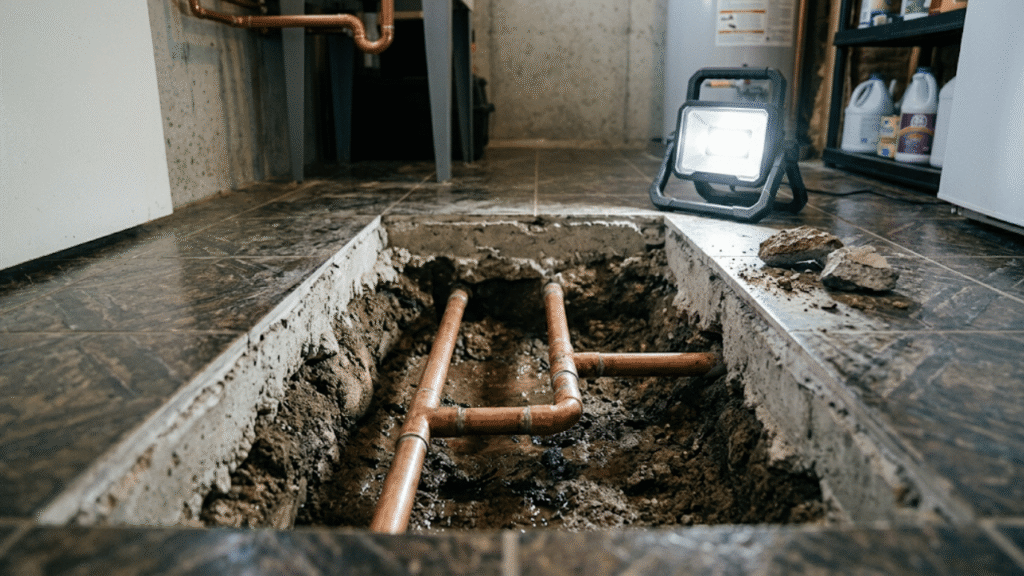
If a faucet gives you a trickle or nothing at all after a cold night, you probably have a frozen pipe. Shut off the water at the main, leave that faucet open, and start warming the line from the fixture back toward the frozen section. Do not use an open flame. In DFW the pipe is usually in the attic or an exterior wall, not a basement, which changes both where you look and what happens if it bursts.
Most national advice on this topic was written for houses that do not exist here. Here is the Texas version.
The signs your pipes are frozen
Six tells, roughly in the order you will notice them.
No water, or a thin trickle
The first and clearest sign. Water froze somewhere between the meter and that fixture.
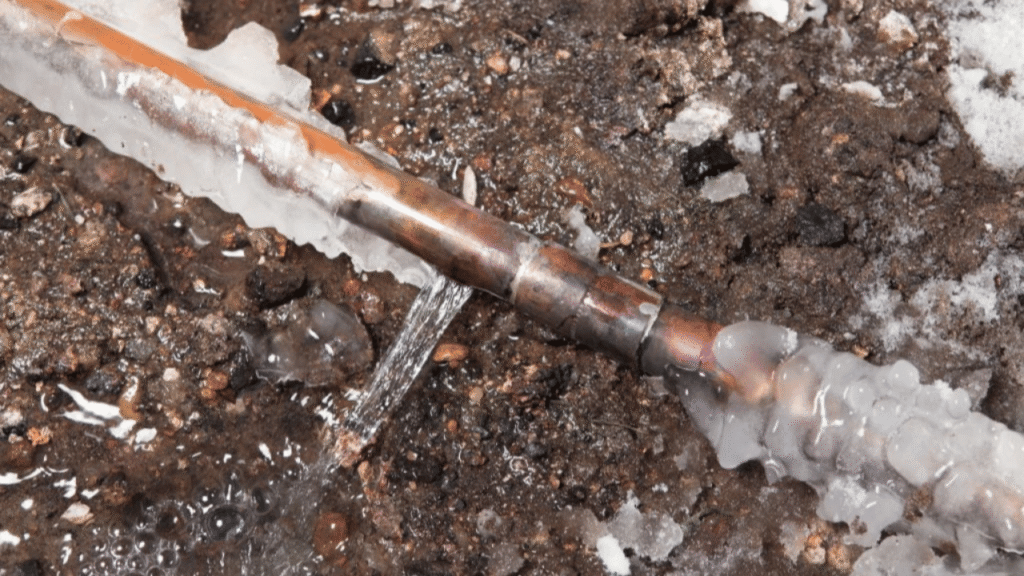
Frost or condensation on an exposed pipe
Check the attic, the garage, and under sinks on exterior walls. Frost on the outside means ice on the inside.
A section of pipe that is much colder than the rest
Run a hand along an exposed line. A distinct cold spot marks the ice.
Banging, clanking, or whistling when you open a tap
Water trying to squeeze past an ice blockage.
A sewer or drain smell that appeared with the cold
Ice in a drain or vent line traps odors that normally vent through the roof and pushes them back into the house. If you get this without a freeze, the cause is something else entirely.
A visible bulge in the pipe
Water expands about 9% when it freezes, and that pressure deforms metal before it splits it. A bulge means the pipe is already damaged and will fail.
One caution: no water at every fixture in the house can also mean the utility is working on a main. Check their outage page before you start tearing into the attic.
The temperature pipes actually freeze at in Texas
The number people quote is 20 degrees Fahrenheit, and that comes from research on uninsulated pipes in unconditioned space. It is a reasonable threshold for a house built for cold weather.
Texas houses are not. Attic runs here are frequently uninsulated or barely insulated, exterior hose bibs often have no freeze protection, and wall cavities on north-facing exterior walls get very little help from the conditioned side. In practice, pipes in DFW homes start failing at higher temperatures than that 20 degree figure suggests, and they fail after fewer hours below freezing.
Three factors matter more than the number on the thermometer:
- Duration. Six hours in the low 20s does more damage than one hour at 15.
- Wind. Wind stripping heat out of an attic or a north wall drops the pipe temperature well below the air temperature.
- Whether the heat stayed on. This is what turned a 2021 cold snap into a statewide plumbing disaster. Pipes in an attic survive a freeze largely on heat leaking up from the house below. Lose power for a day and that protection disappears.
Where Texas pipes freeze first
This is where national advice fails hardest. Almost every article on this subject tells you to check the basement. DFW homes are slab-on-grade and most of them do not have one.
Hose bibs and outdoor faucets. The single most common first failure. The valve sits outside, the pipe behind it runs through the wall, and a hose left connected over winter holds water against the bib and guarantees a freeze.
Attic supply lines. The distinctive Texas problem. Your water lines run overhead through an unconditioned attic. That location is why the damage here is worse than elsewhere: when an attic line bursts, water comes down through the ceiling drywall into living space. A basement burst floods a concrete floor. An attic burst can take a ceiling down.
Exterior wall cavities. Kitchen sinks and bathroom vanities on outside walls, particularly north-facing.
Uninsulated garage runs, and pipes serving a detached or unheated addition.
Pier-and-beam crawlspaces, which is where older stock in East Dallas and Oak Cliff differs from the suburbs.
What to do right now, in order
- Shut off the water at the main. Find it before you need it. If a pipe has already split, this single step is the difference between a repair and a restoration project.
- Open the affected faucet, both hot and cold sides. Melting ice needs somewhere to go, and an open tap relieves pressure instead of letting it build against the blockage.
- Open the cabinet doors under sinks on exterior walls so room air reaches the pipe.
- Locate the frozen section. Follow the line from the dead fixture back toward the meter, feeling for the cold spot or looking for frost.
- Warm it from the fixture end backward, never from the middle. Warming the middle first traps meltwater between two ice plugs, and the pressure has nowhere to escape.
- Check for damage as it thaws. Water appearing where it should not means the pipe already split.
How to thaw a frozen pipe safely
Use a hair dryer on low, a heat gun on its lowest setting kept moving, an electric space heater aimed at the area, or warm towels wrapped around the pipe and refreshed as they cool.
Never use a blowtorch, a propane torch, or any open flame. Attics are full of insulation, dust, and dry framing, and every winter produces house fires started by someone thawing a pipe. It also boils water inside the pipe, and steam pressure splits it faster than the ice would have.
Work slowly. A pipe that thaws in twenty minutes is more likely to fail than one that thaws in an hour, because the temperature swing stresses metal that ice has already stretched.
If the frozen section is inside a wall or buried in attic insulation and you cannot reach it, stop. Turning the heat up in the house and being patient is safer than opening drywall while the line is still under pressure.
The burst usually happens on the thaw
The counterintuitive part, and the thing most homeowners get wrong.
A pipe rarely fails at the coldest moment. Ice expands, the pipe stretches, and water pressure builds in the sealed section between the ice plug and the closed faucet. That trapped pressure is what splits the pipe, and the split often does not show until the ice melts enough to let water move again.
Which means the dangerous hour is the warm-up, not the freeze. If you were away during a hard freeze, do not turn the water back on and walk off. Turn it on, then stay in the house and walk every room, ceiling, and cabinet for twenty minutes. And if you leave town in winter, the safest setting is water off at the main with the system drained, rather than heat set low and hope.
When to call, and what it costs
Call a licensed plumber straight away if:
- You see water where it should not be, or damp or sagging drywall on a ceiling
- The pipe has a visible bulge or a split
- You cannot reach the frozen section
- Nothing has thawed after an hour of steady warming
- Multiple fixtures are dead across the house
Two honest notes about the cold-snap economics. First, during a hard freeze every plumber in the metro is booked, so shutting off the water yourself is the action that actually limits the damage while you wait. Second, once the water is off and the lines are drained, the repair can wait for a normal scheduled visit. The first steps are in what to do when a pipe bursts.
If the burst was inside a wall or above a ceiling, finding it matters as much as fixing it. Leak detection pinpoints the break rather than opening drywall to hunt for it.
Nuflow DFW is licensed by the Texas State Board of Plumbing Examiners (RMP# 46694) and serves the Dallas-Fort Worth Metroplex Monday to Friday, 9 to 6. Call (469) 701-0597.
Frequently Asked Questions
How do you know if your pipes are frozen?
The first sign is almost always no water or a thin trickle from a faucet after a cold night. Confirm it by checking exposed pipes for frost or a distinctly cold section, and listen for banging or whistling when you open a tap. A sudden drain smell can also mean ice in a vent line.
At what temperature do pipes freeze?
Twenty degrees Fahrenheit is the standard threshold for uninsulated pipes in unconditioned space. Texas homes often fail above that, because attic runs and hose bibs here have less insulation than northern construction. Hours below freezing and wind exposure matter more than the low temperature itself.
How do you unfreeze pipes?
Open the affected faucet, then warm the pipe from the fixture end back toward the frozen section using a hair dryer, space heater, or warm towels. Never use an open flame. Warming the middle first traps meltwater between two ice plugs and can burst the pipe.
Will my pipes burst if they freeze?
Not always, but the risk is real and it peaks during the thaw rather than the freeze. Pressure builds between the ice plug and a closed faucet and splits the pipe, often without showing until water starts moving again. Leaving the faucet open relieves that pressure.
Who do you call for frozen pipes?
A licensed plumber. Shut off the water at the main first, because during a regional freeze every plumber is booked and that one step limits the damage while you wait. If a pipe has already burst inside a wall or ceiling, ask specifically about leak detection.
Why do Texas pipes freeze when northern pipes do not?
Because of where they run. Northern homes bury supply lines in heated basements. DFW homes are slab-on-grade with water lines running through unconditioned attics and uninsulated exterior walls. Those pipes rely on heat leaking up from the house, which is why a power outage during a freeze causes so much damage here.
Before the next freeze
Two things worth doing while it is still warm out. Find your main shut-off valve, turn it, and confirm it actually closes, because a corroded valve that will not seat is a problem you want to discover today rather than at 3am in January. And disconnect every garden hose from every hose bib. Those two take fifteen minutes and they prevent most of what this article describes.