A sewer smell in your house comes from sewer gas entering your living space, usually through a dried-out drain trap, a failed toilet seal, or a blocked plumbing vent. That rotten-egg odor is mostly hydrogen sulfide. Most causes are cheap fixes you can handle in minutes. A few, like a cracked pipe, need a licensed plumber.
Is it sewer gas or natural gas?
Check this before you go hunting through drains, because both smell like rotten eggs and confusing them is the one mistake with real consequences.
Natural gas carries an added chemical called mercaptan that gives it a sharper, skunky edge. Sewer gas smells like raw sewage. If it is sharp and skunk-like, strongest near your furnace, water heater, or stove, or you hear hissing, stop reading. Get everyone outside, do not touch any light switches, and call your gas utility from outdoors.
Is a sewer smell in the house dangerous?
A faint, occasional whiff is more unpleasant than harmful, but risk climbs the longer and stronger it lasts. Sewer gas is mostly hydrogen sulfide, methane, and ammonia. Low-level hydrogen sulfide exposure causes headaches, dizziness, nausea, and irritated eyes. Here is a fuller answer on whether sewer gas is dangerous to breathe.
Two things make it sneaky. At higher concentrations, hydrogen sulfide numbs your sense of smell, so the odor seems to fade while the gas is still there. And methane is flammable, which matters in a closed-up room. Open windows, and if anyone feels dizzy, go outside first and diagnose second. The CDC publishes exposure data on hydrogen sulfide.
The 8 causes, and the fix for each
1. A dried-out P-trap
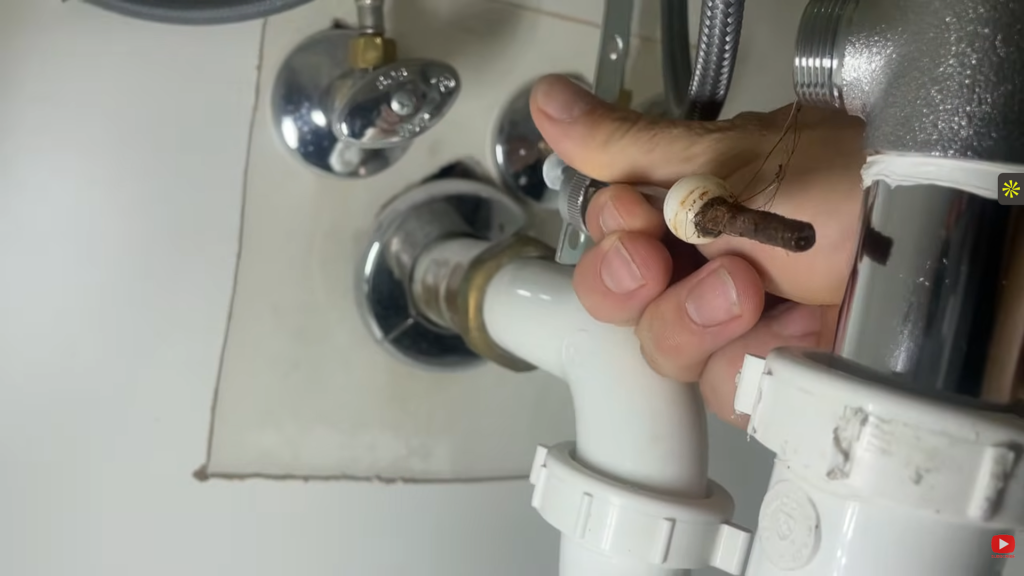
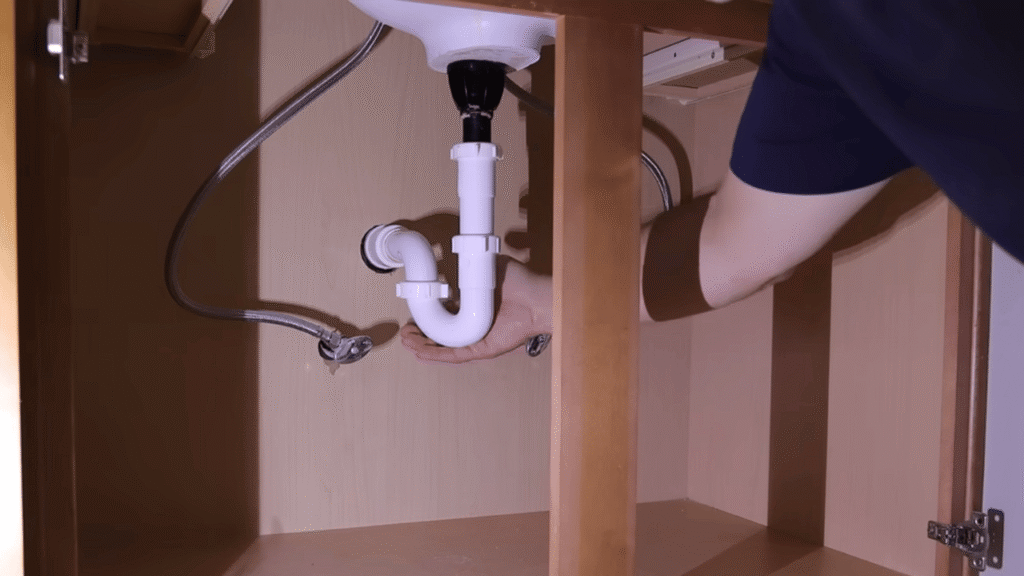
The culprit nine times out of ten. Under every sink, tub, shower, and floor drain sits a U-shaped bend holding a small pool of water. That water is the only barrier between you and the sewer gas below. Stop using the drain, it evaporates, and the smell rolls in. In North Texas, summer heat plus constant air conditioning dries a trap out in three to four weeks.
Fix: run water for 15 seconds. For drains you rarely touch, add two tablespoons of cooking oil afterward. It floats on the water and slows evaporation so you are not repeating this monthly.
2. A bad toilet wax ring
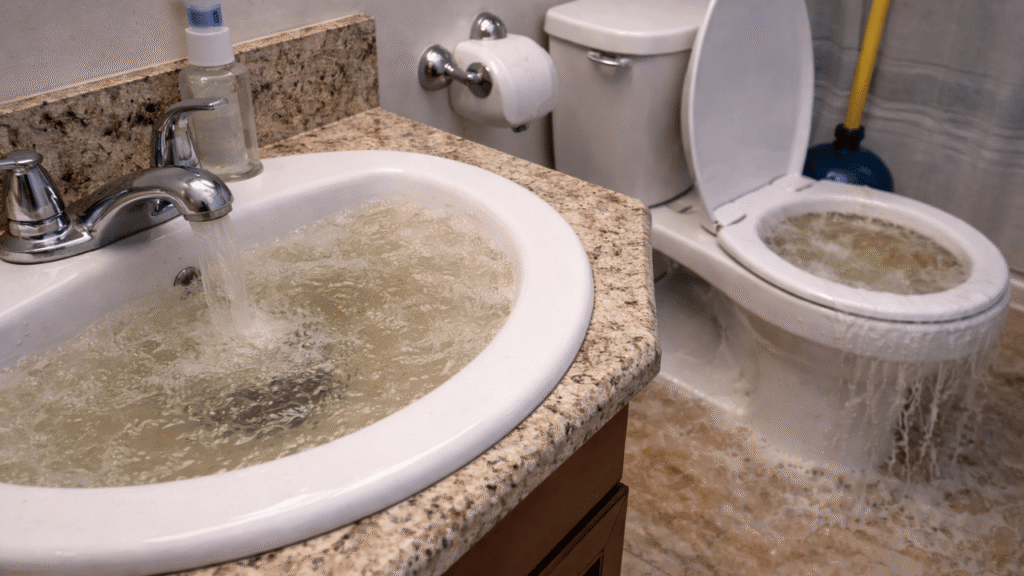
When the wax ring cracks or was installed badly, gas leaks up around the toilet base. The tells are water pooling at the base, or a toilet that rocks when you sit.
Here is the version of this we see most. A bathroom gets retiled, the new floor sits higher, and the drain flange ends up too low. Some installers stack two or three wax rings to bridge the gap, which almost never seals. The right answer is one ring, two at most, with the flange level with or barely above the finished floor.
Fix: doable for a confident DIYer, but the seal has to seat perfectly. Check this before you open a wall hunting a mystery leak.
3. A blocked plumbing vent
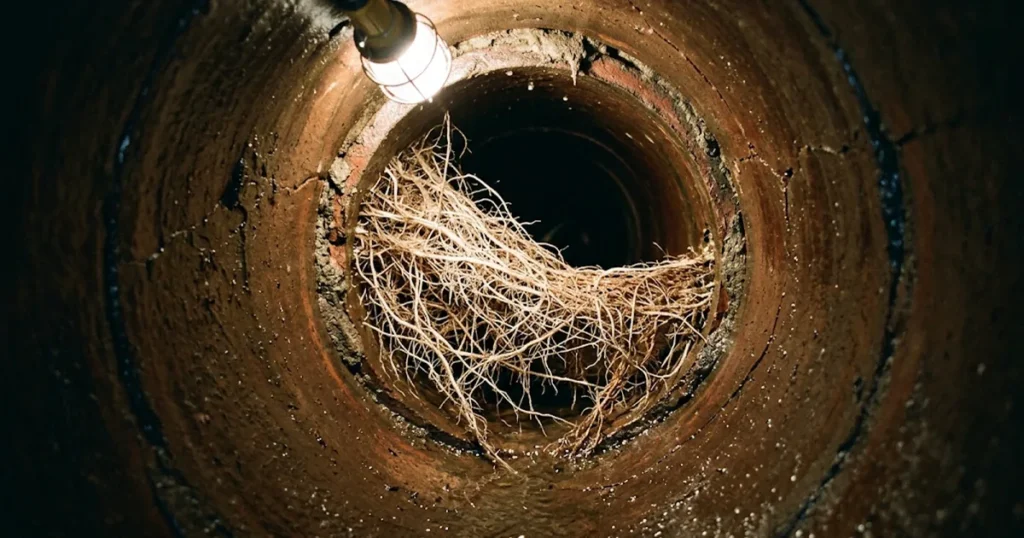
Your vent pipe runs up through the roof, letting gas escape above the house and keeping drain pressure balanced. Leaves, a bird’s nest, or debris plug it and the gas comes back down through your drains instead. The giveaway is gurgling drains alongside the smell.
Fix: clearing it means getting on the roof, which is genuinely dangerous on anything steep or wet. Hand this one to a plumber with fall protection.
4. A failed trap primer
Some floor drains in laundry rooms and garages have a small device that trickles water in automatically so the trap never dries. When it clogs, the trap dries even though you never touched the drain. This one fools people because the drain is supposed to look after itself.
Fix: pour water and a little cooking oil in as a patch. The primer itself needs a plumber, since it ties into your water supply.
5. A missing or cracked cleanout cap
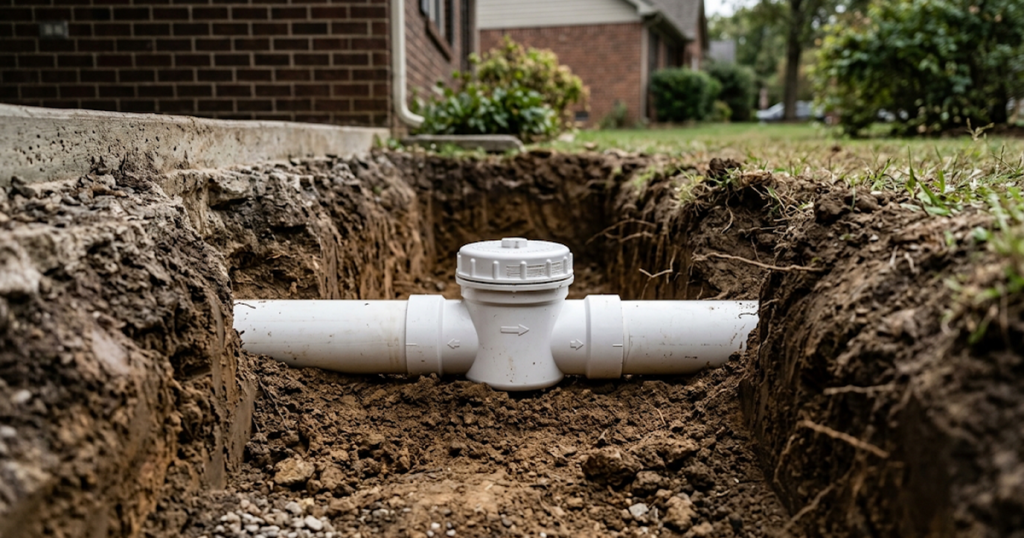
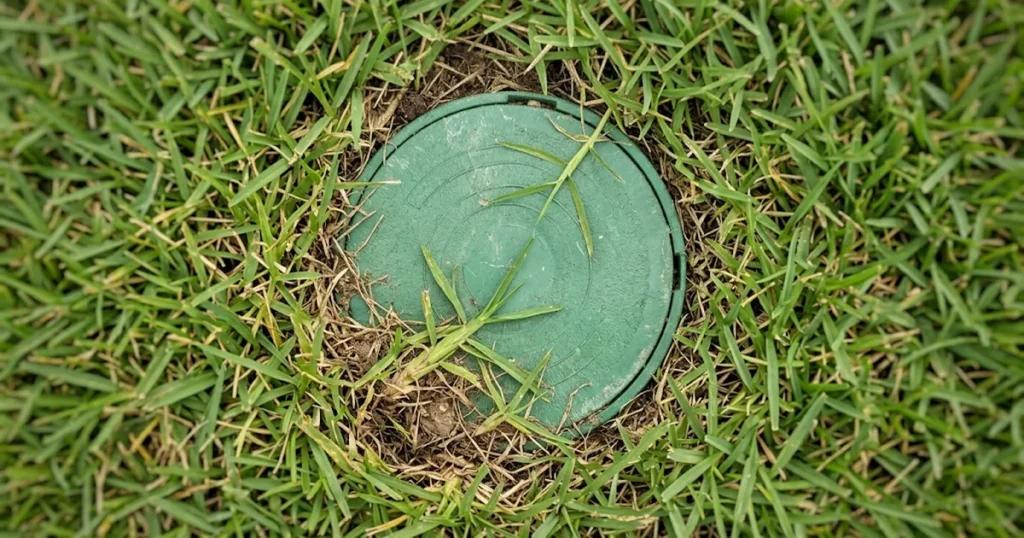
Your main line has capped access points near the foundation or in the yard. A cracked or missing cap vents raw sewer gas straight out. An indoor cleanout with a bad cap dumps odor into a garage or utility room.
Fix: the easiest one here. Find the round threaded cap, replace it from any hardware store, hand-tighten snug.
6. Your water heater, not your drains
If the rotten-egg smell only appears in hot water, your drains are fine. The magnesium anode rod reacts with sulfate-reducing bacteria in the tank and produces hydrogen sulfide. The test takes ten seconds: smell the cold tap, then the hot. If only the hot smells, stop looking at drains. Hard water across DFW accelerates this, because scale gives the bacteria more surface to colonize.
Fix: flushing the tank often clears it for a year or more. If it keeps returning, swap the magnesium rod for an aluminium-zinc rod. Do not simply remove the rod, because it is sacrificing itself so the tank does not corrode.
7. A cracked drain line
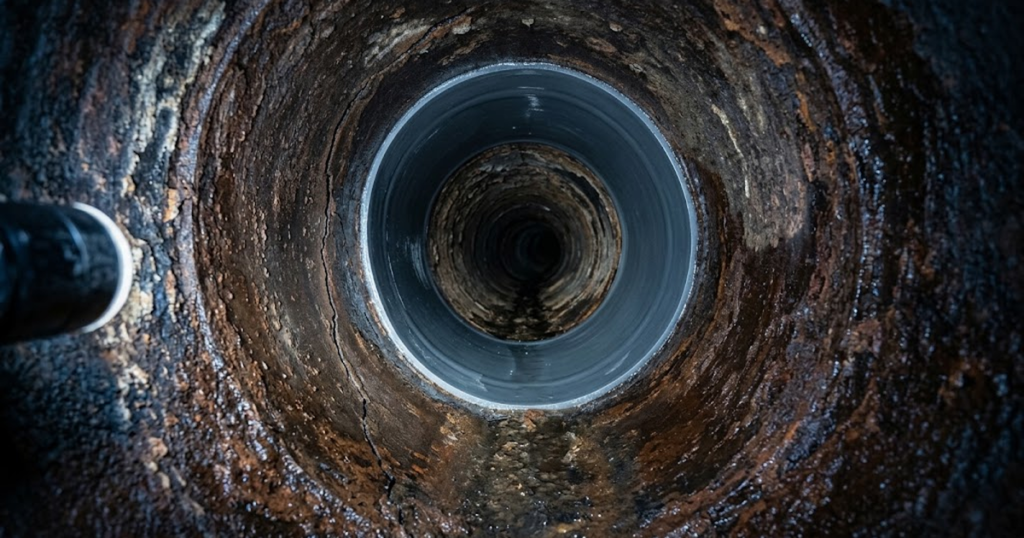
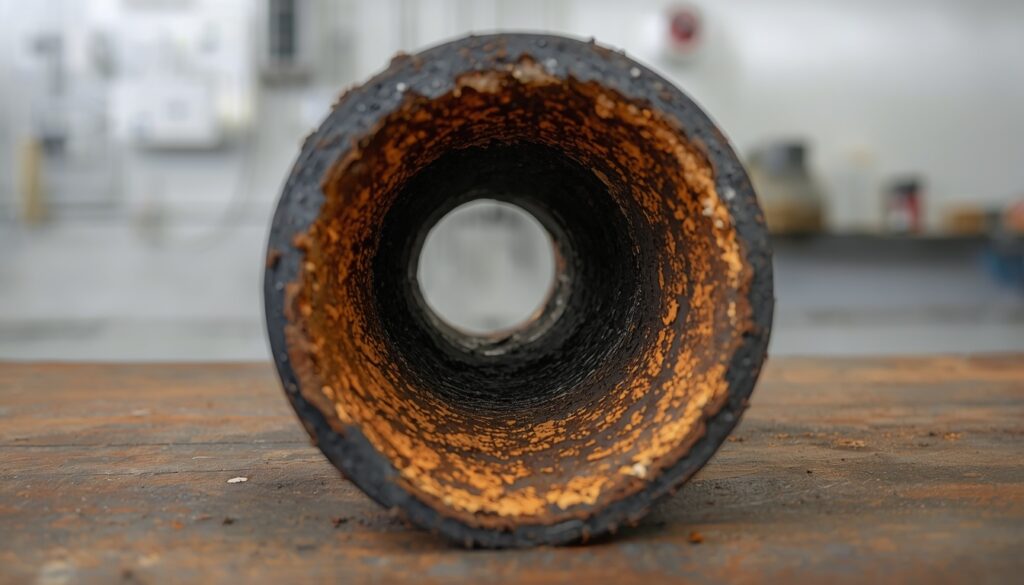
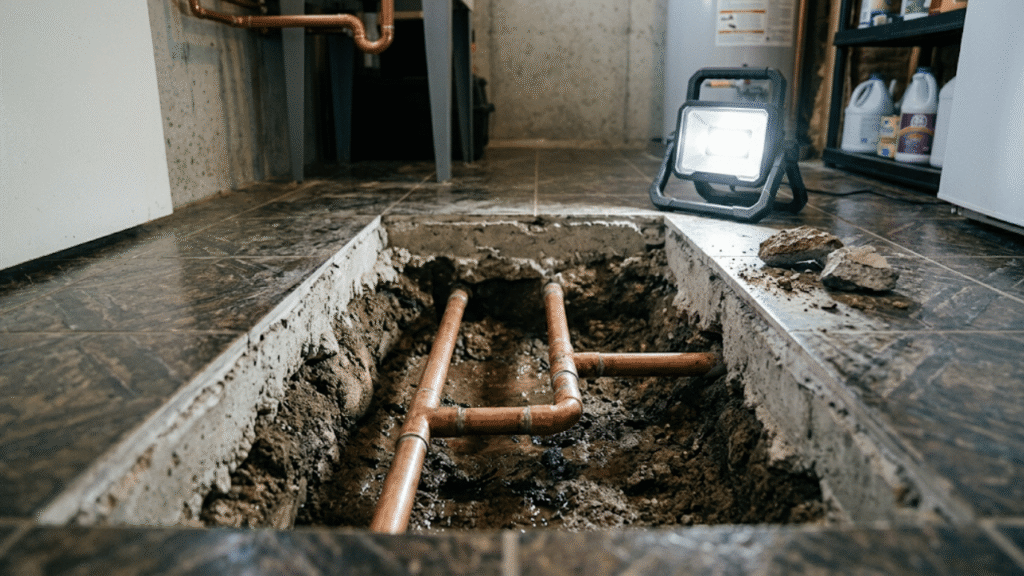
Cast iron corrodes from the inside out and typically fails between 50 and 75 years, so anything installed before 1980 is now in the window. A cracked pipe in a wall or under a slab leaks gas into the house, often with a musty edge. North Texas clay makes it worse, swelling when wet and shrinking when dry, pulling joints apart over the years.
Across 200+ trenchless jobs in DFW, Nuflow DFW has found odor complaints in pre-1980 homes frequently trace to a corroded section of cast iron rather than anything at the fixture.
Fix: a sewer camera inspection locates the exact spot, then the line gets sealed with trenchless pipe lining or excavated. Lining rebuilds the pipe from the inside without tearing up the yard, though a collapsed line still needs digging.
8. A septic tank or drain field problem
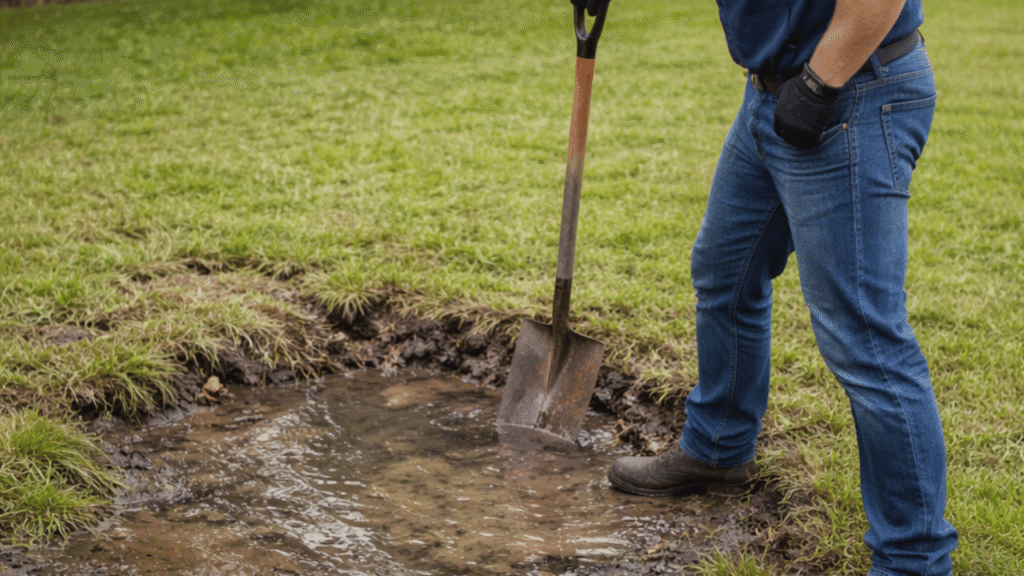
On septic, odor can mean a full tank or a struggling drain field. You usually notice it outside first. Other signs: soggy or unusually green grass over the field, slow drains throughout the house, gurgling toilets.
Fix: get the tank pumped. The EPA recommends every three to five years.
Why does my laundry room smell like a sewer?
Two causes specific to that room. Either the washing machine standpipe trap has gone dry, or the standpipe is too short and drains too fast to hold its seal.
The standpipe is the vertical pipe your washer hose empties into, and it has its own P-trap that almost nobody thinks about. A front-loader run twice a week may not push enough water through to keep it full.
The height problem is a code issue, not maintenance. Too short, and the pump siphons the trap empty on every drain cycle, so you get odor between every wash. That needs a plumber to reconfigure, and it is worth doing properly because it recurs forever otherwise. While you are in there, check for a floor drain. Laundry room floor drains are the most forgotten trap in any house.
Why does the sewage smell come and go?
Intermittent odor means a trap emptying and refilling, not a constant leak. Something drains, pulls air through the trap, breaks the seal for a few minutes, and it re-establishes next time the fixture runs.
Track what happens right before:
- After a shower, wash cycle, or flush, that is siphoning, so look at the vent
- After hot weather or a week away, that is evaporation, so refill the traps
- After heavy rain, that points at the sewer line, because a cracked pipe takes on groundwater and pushes gas back inside
That last one is the pattern worth acting on. Rain-triggered odor is the most reliable non-invasive sign of a compromised line.
Which room is it coming from?
| Where it smells worst | Most likely cause |
|---|---|
| Bathroom sink, especially a guest bath | Dried-out P-trap |
| At the toilet base | Failed wax ring |
| Only in hot water | Water heater anode rod |
| Kitchen sink | Dry trap or biofilm in the drain |
| Laundry room | Dry standpipe trap or failed primer |
| Garage or utility room | Floor drain or bad cleanout cap |
| Everywhere at once | Blocked vent or cracked main line |
That last row is the one to act on. Odor in every room at once is system-level, not fixture-level.
Call Nuflow DFW at (469) 701-0597 if the smell is in multiple rooms or returns after you have refilled every trap.
When nothing reveals itself, plumbers run a smoke test. Non-toxic UV smoke gets pumped through the roof vent while the main line is plugged, and it puffs out wherever gas is escaping: a toilet base, a wall crack, sometimes an electrical outlet if gas is traveling inside the wall cavity.
What does it cost to fix?
| Fix | Starting price (as of Q3 2026) |
|---|---|
| Refill traps, add cooking oil | $0 |
| Replacement cleanout cap | A few dollars |
| Wax ring (part only) | $30 to $50 |
| Drain cleaning | $150+ |
| Camera inspection | $250+ |
| Hydro jetting | $350+ |
| Water heater flush or anode rod | $500+ |
| Trenchless pipe lining | $3,500+ |
An honest limitation: a camera inspection finds the problem, it does not fix it. If you have not yet run water down every drain, do that first and spend nothing. We would rather you solve this with a running tap than pay for an inspection you did not need.
Actual cost depends on inspection findings, depth, and access. Free estimates after on-site inspection. Nuflow DFW is licensed by the Texas State Board of Plumbing Examiners (RMP# 46694) and runs 24/7 service across the Dallas-Fort Worth Metroplex.
Frequently Asked Questions
Why does my hot water smell like rotten eggs but my cold water does not?
That is the water heater, not your drains. The magnesium anode rod reacts with sulfate-reducing bacteria in the tank and produces hydrogen sulfide. Flushing the tank often clears it, and swapping the magnesium rod for an aluminium-zinc rod removes the reaction permanently. Never simply remove the rod, because it protects the tank from corrosion.
Why does the sewage smell in my house come and go?
Intermittent odor means a trap emptying and refilling rather than a constant leak. Track what precedes it. A shower or wash cycle points to siphoning and a vent problem. Hot weather or time away points to evaporation. Heavy rain points to a cracked sewer line taking on groundwater.
Why does my bathroom sink smell like sewer?
Almost always a dried-out P-trap, which happens when the sink sees little use and the water seal evaporates. Run the tap for 15 seconds to refill it. If the smell persists after a day, biofilm built up inside the drain is the likelier cause and needs cleaning rather than refilling.
Why does my laundry room smell like sewage?
Either the washing machine standpipe trap has gone dry from infrequent use, or the standpipe is too short and the pump siphons it empty on every drain cycle. Run water down it and wait a day. If the smell returns after the next wash, the standpipe height needs correcting.
Why does my house smell like sewer after it rains?
Odor that appears or worsens after heavy rain often means the sewer line is cracked and taking on groundwater, which disrupts drainage and pushes gas back inside. This is the most reliable non-invasive sign of a failing line, and it warrants a camera inspection, especially in areas with shifting clay soil.
Is a sewer smell in the house dangerous?
A faint, occasional smell is low risk, but strong or constant odors deserve quick attention. Sewer gas contains hydrogen sulfide, which causes headaches, dizziness, and nausea at higher levels, plus flammable methane. Ventilate the area and find the source rather than living with it.
What to do tonight
Run every tap, shower, and floor drain for 15 seconds, flush every toilet, pour water down the laundry standpipe, and check the outdoor cleanout cap. Then run the hot tap alone and smell it, which rules the water heater in or out in ten seconds. Give it twenty-four hours.
That sequence resolves most sewer odor without spending a dollar. If it comes back, the gas is entering through the pipe rather than a fixture, and you need to see inside the line before deciding anything.
Nuflow DFW runs same-day camera inspections across DFW, 24/7. Licensed Master Plumber, RMP# 46694. Call (469) 701-0597.
Related reading: why a shower drain smells like sewer, how long cast iron pipes last, and what a sewer scope inspection costs.