Fixing roots in a drain pipe takes two steps, and most homeowners only get told about the first one. A plumber cuts or jets the roots out to restore flow, then seals the crack or separated joint the roots grew through. Clearing alone brings the roots back, usually within a year or two, because the opening is still there.
That second step is the whole difference between a repair and a subscription. A line that gets cleared every spring is a line with an unsealed entry point.
How do you know roots are in the line?
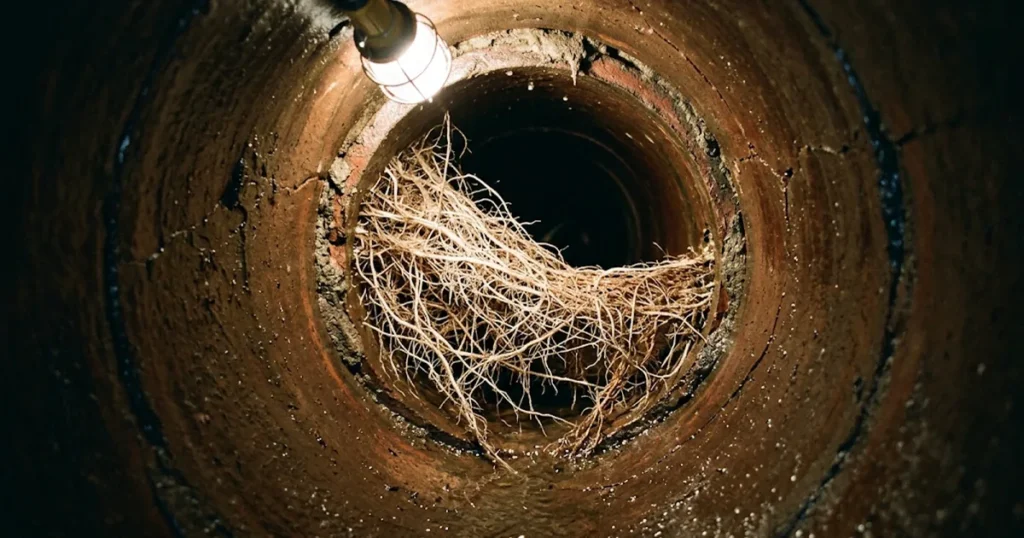
Recurrence is the giveaway. Roots produce a blockage that clears, then returns to the same spot, because the root mass regrows through an opening that never closed. A one-off clog from grease or wipes clears and stays cleared.
The symptoms that point to roots:
- A blockage in the same place, repeatedly. The strongest single indicator. If you have had the same line cleared more than once, roots or a structural defect are catching the debris.
- Slow drainage across several fixtures, which points to the main line rather than one branch.
- Gurgling from drains, meaning air is escaping past a partial blockage.
- Sewer odour indoors, from waste sitting behind the obstruction.
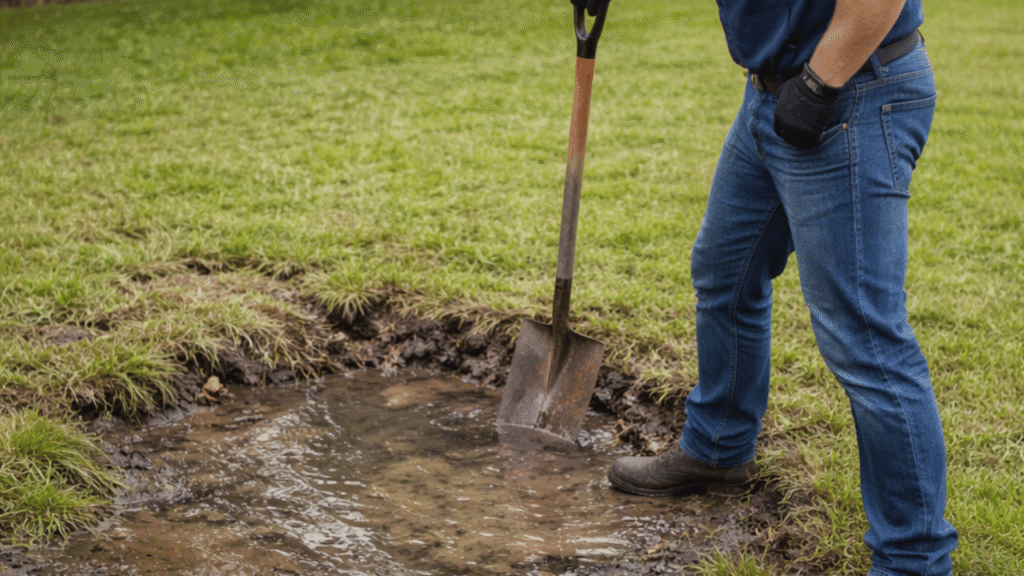
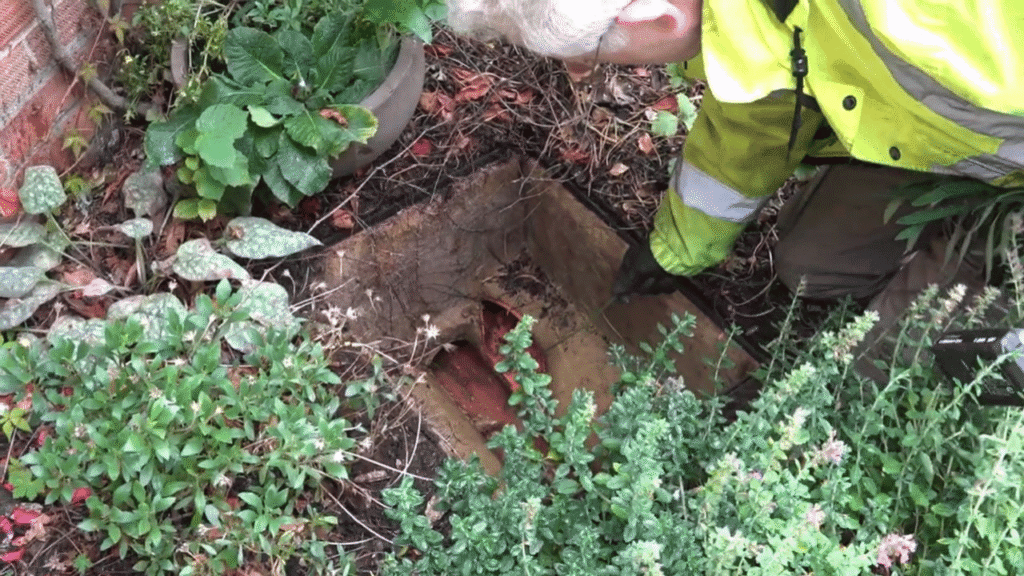
- Wet or unusually green patches in the yard above the line, where effluent is leaving the pipe through the same opening the roots entered.
One sign that gets listed on a lot of articles and does not belong: a high water bill. A sewer line is gravity-fed and carries waste out of the house. It has no pressurised supply water to lose, so root intrusion in a drain does not raise your water bill. A rising bill points to the supply line, which is a separate problem.
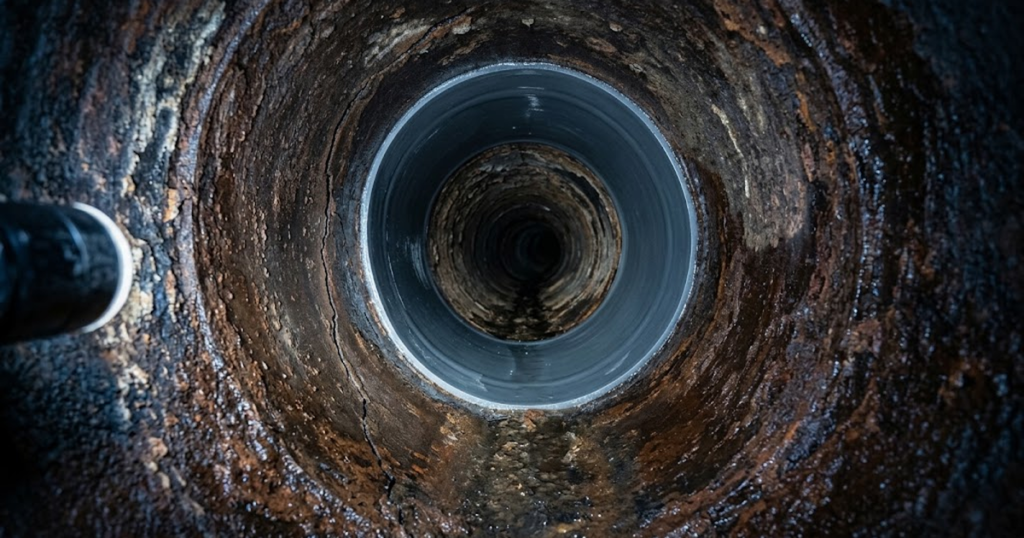
None of these confirm roots on their own. A camera inspection is what shows you root mass in the pipe and, more importantly, where it got in.
Call Nuflow DFW at (469) 701-0597 to book a camera inspection. Service is scheduled Monday to Friday, 9:00 a.m. to 6:00 p.m.
Why roots get into pipes at all
Roots do not break into sound pipe. They follow moisture to an opening that already exists, then widen it as they grow.
The opening is usually a joint. Cast iron and vitrified clay lines are rigid and jointed every few feet, and ground movement pulls those joints apart over decades. Water vapour escapes through the gap, roots find it, and a hairline separation becomes a root-packed blockage over several seasons.
This is why the crack matters more than the tree. Removing the tree does not close the joint, and the next tree over will find the same opening. Our guide on how pipe lining resolves root intrusion covers the mechanism in more detail.
How roots get removed
Two methods, chosen based on how much root is in the line and what the pipe wall can take.
Mechanical cutting runs a rotating cutter head through the line to grind the root mass out. It works on heavy intrusion and is often the first pass on a line that is fully blocked.
Hydro jetting uses high-pressure water through a specialised nozzle to cut roots and flush the debris out. It clears more completely than cabling and also removes the grease and scale that build up around a root mass. On a line that is being prepared for lining, jetting is the standard prep step because a liner will not bond to a dirty pipe wall.
Neither method touches the reason the roots are there.
Why removal alone does not last
The roots grow back through the same opening, and the timeline is measured in months to a couple of years rather than decades.
This is the part that decides whether you are spending money once or repeatedly. Clearing a root-blocked line restores flow and costs a few hundred dollars. Sealing the entry point costs more up front and ends the cycle. A homeowner paying for clearing every eighteen months is usually spending more over a decade than the permanent repair would have cost.
The permanent version is pipe lining. A cured liner forms one continuous jointless surface inside the existing pipe, which removes every joint along the run. Roots have nothing to push through, so the failure mode stops rather than pausing.
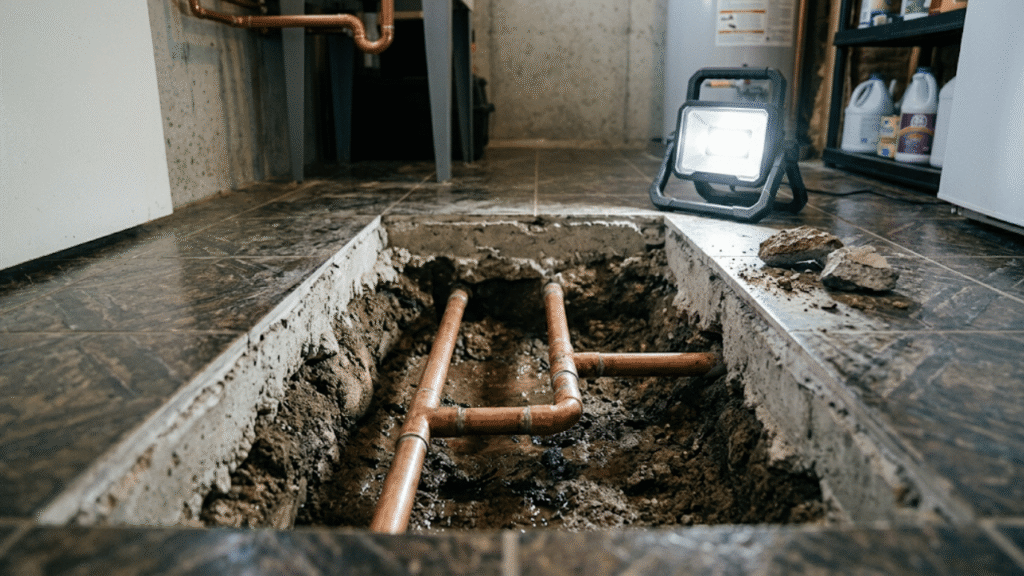
Honest limitation: lining needs enough original pipe left to bond against. If roots and corrosion have destroyed the pipe wall, or a section has collapsed, excavation and replacement is the answer instead. A camera pass tells you which.
What about chemical root killers?
Foaming root treatments kill root mass inside the pipe. They do not repair the pipe, and they are maintenance rather than a fix.
Used properly, a copper sulfate or dichlobenil foam kills what is growing in the line and slows regrowth for a season or two. That has a place on a line you are managing rather than repairing, for example while budgeting for the real work.
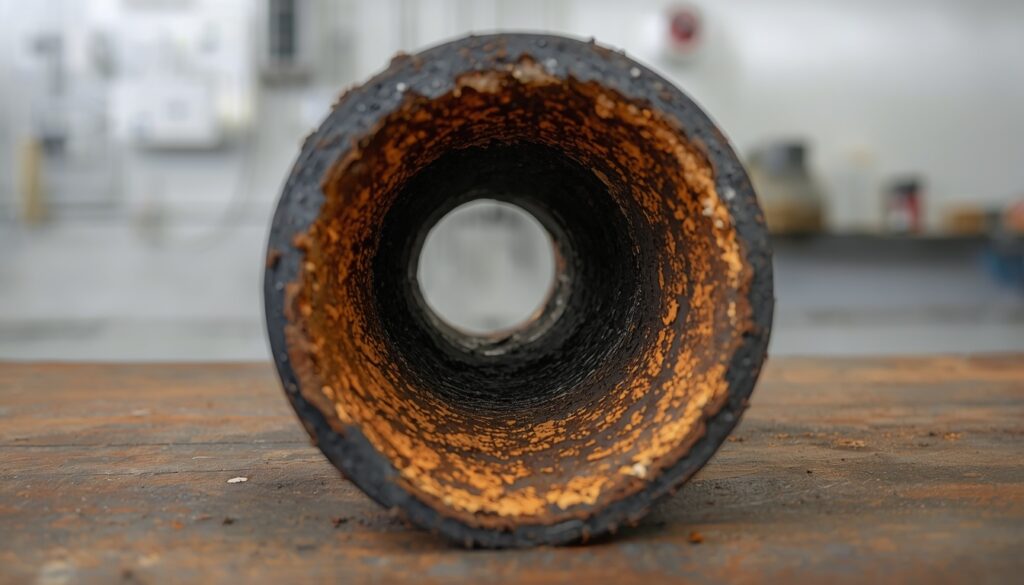
Two cautions. Products poured down a drain rarely reach a mainline blockage in useful concentration, so the supermarket version usually does nothing. And harsh chemicals accelerate deterioration in already-corroded cast iron, which is the material most likely to have roots in it. We cover the same reasoning on why bleach does not belong in drains.
Why DFW lines get roots
North Texas gives roots an unusual amount of help, and it comes down to soil and pipe age arriving together.
Expansive clay swells after rain and shrinks through a dry summer, and that seasonal movement pulls rigid pipe joints apart. Homes plumbed before roughly 1980 have cast iron or clay lines with a joint every few feet, so there are many places for a separation to open.
Then the same drought that opens the joint drives roots deeper looking for water. Oak, pecan, and cypress are common in older DFW yards and are aggressive root spreaders. The gap opens and the roots arrive in the same season.
Across 200+ trenchless jobs in the DFW Metroplex, Nuflow DFW has found cast iron in pre-1975 homes failing at an average of 58 years.
What does root removal cost in DFW?
Clearing is the cheap part. Sealing the entry point is where the real number sits (all figures as of Q3 2026).
| Service | Starting price |
|---|---|
| Camera inspection | $250+ |
| Drain cleaning | $150+ |
| Hydro jetting | $350+ |
| Trenchless pipe lining | $3,500+ |
Most residential lining jobs land between $3,500 and $15,000, set by footage, depth, access, and how much root and scale has to come out first. Actual cost depends on inspection findings, and Nuflow DFW gives a written price before any work starts.
Our hydro jetting cost in DFW guide covers what moves the clearing price specifically.
Frequently asked questions
Will hydro jetting permanently remove tree roots?
No. Jetting removes the root mass and restores flow, but it does not close the crack or separated joint the roots grew through. Roots typically return within one to two years. A permanent fix means sealing the entry point, usually with pipe lining.
How do I know if the blockage is roots or something else?
Recurrence is the clearest indicator. A blockage that returns to the same spot after being cleared is usually catching on something structural, which roots and offset joints both are. Grease and hair clogs clear and stay cleared. A camera inspection confirms it.
Can tree roots be removed without digging up my yard?
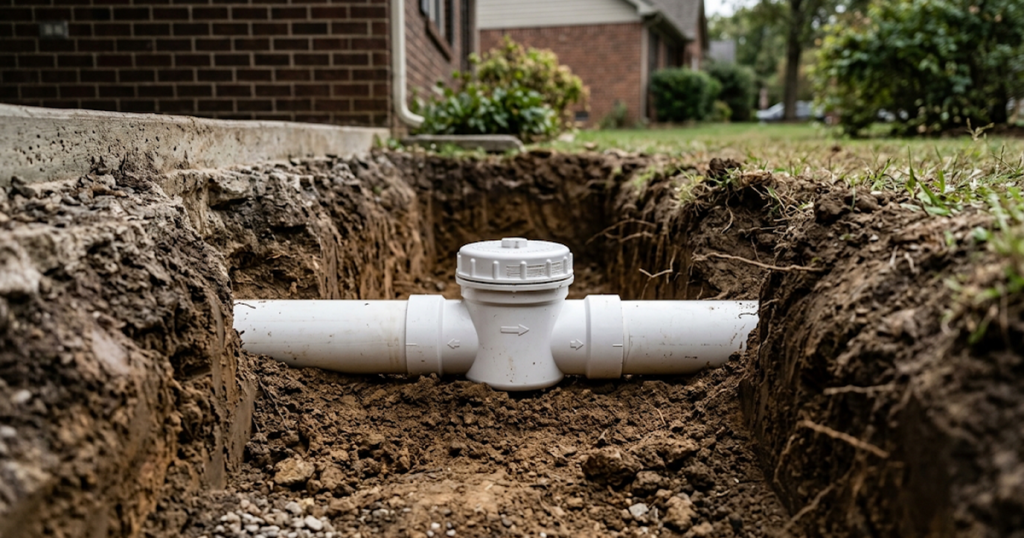
Yes. Mechanical cutting and hydro jetting both work through an existing cleanout. Sealing the opening afterward with a cured liner also works through the same access point. Excavation is only needed when the pipe wall has been destroyed or a section has collapsed.
Do I need to remove the tree?
Usually not. Roots enter through an existing opening in the pipe, so removing one tree leaves the opening for the next set of roots to find. Sealing the pipe addresses the cause. Tree removal is worth discussing only where a trunk sits directly over the line.
How much does it cost to fix roots in a sewer line in DFW?
Hydro jetting starts at $350+ and camera inspection at $250+ (as of Q3 2026). Sealing the entry point with trenchless pipe lining starts at $3,500+, with most residential jobs between $3,500 and $15,000. Footage, depth, access, and pipe condition set the final figure.
Do chemical root killers work?
Foaming treatments kill root mass inside the pipe for a season or two but repair nothing. Products poured down a household drain rarely reach a mainline blockage in useful concentration. Harsh chemicals also accelerate deterioration in corroded cast iron, which is the pipe most likely to have roots.
What to do next
If you have had the same line cleared more than once, the question is not how to clear it again. It is where the roots are getting in, and that needs footage.
Call Nuflow DFW at (469) 701-0597 or use the contact page to book a camera inspection. We quote the method after we see the line.
Ryan King holds a Texas Responsible Master Plumber license, RMP# 46694. Under Texas Occupations Code Chapter 1301, sewer line repair is licensed work in this state.