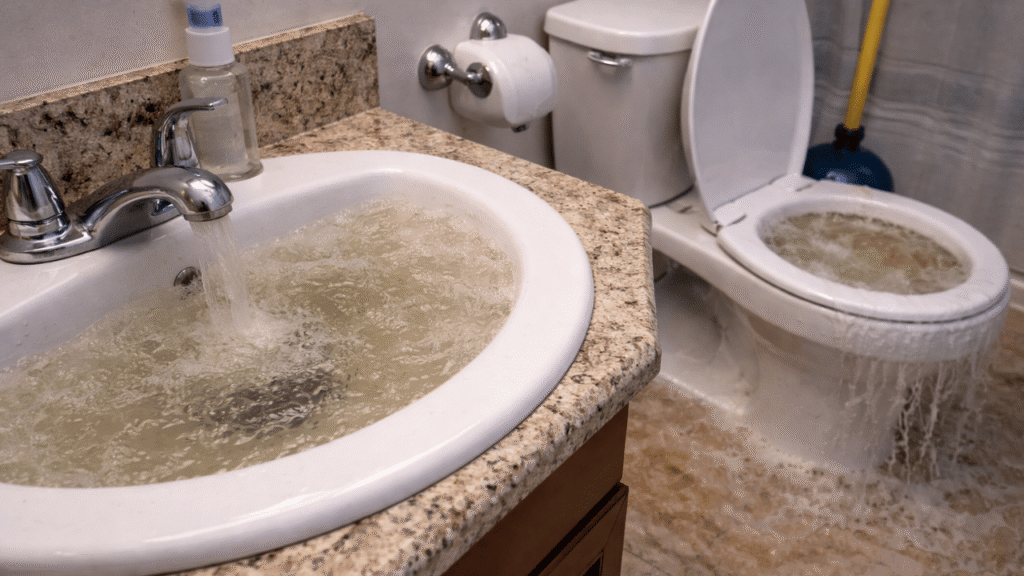
To stop a toilet from overflowing, turn the shut-off valve on the wall behind the toilet clockwise until the tank stops refilling, and do not flush again. Then wait. If the bowl drains slowly, the clog is in the toilet. If water also rises in a tub or shower, the main sewer line is blocked.
How do you stop a toilet from overflowing right now?
Shut off the water to the toilet first, then stop adding water. The steps, in order:
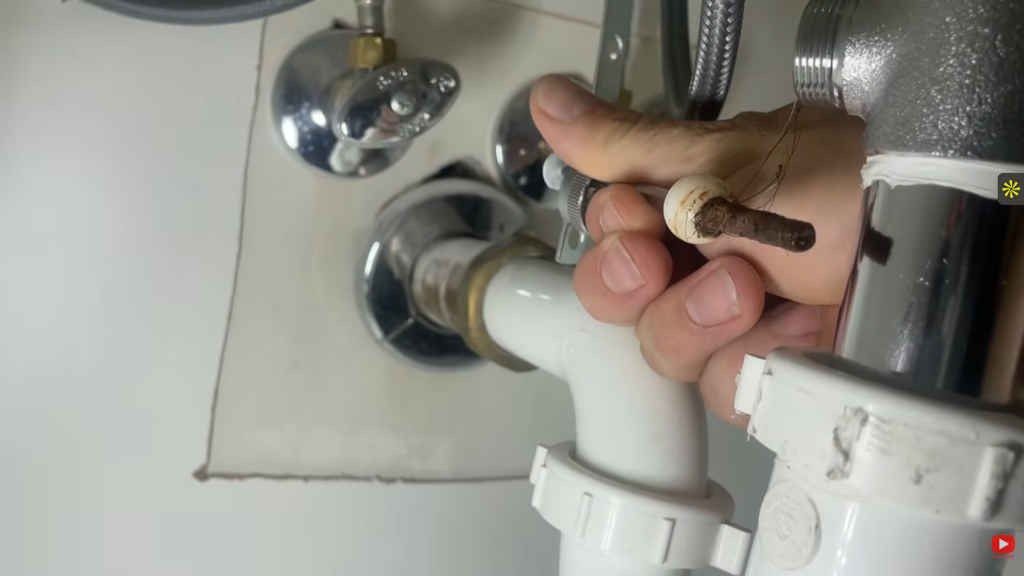
- Turn the shut-off valve clockwise. It is the small oval handle on the supply line, low on the wall behind or beside the toilet. Korky, a toilet parts maker, says to turn it “clockwise until the water stops refilling the tank.”
- If the valve will not turn, lift the tank lid and press the rubber flapper at the bottom of the tank closed with your hand. That stops more water from reaching the bowl while you deal with the valve.
- Do not flush again. Korky warns that flushing a clogged toilet “will flood your toilet bowl with more water and make the problem worse.”
- Put towels down around the base and keep children and pets out of the bathroom.
- Wait about 10 minutes. “Most clogs are not completely watertight and will slowly drain through the clog,” Korky says. Once the level drops, you can plunge.
If the valve is stuck or leaking and the flapper trick does not hold, shut off the main water to the house. Here is where the main shut-off valve is in a DFW home.
Why is my toilet overflowing?
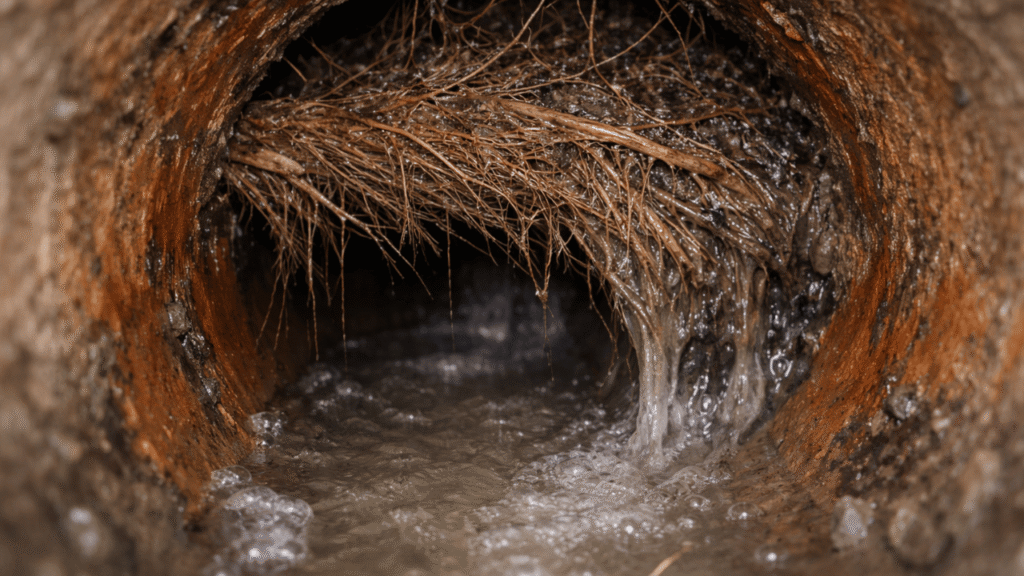
A toilet overflows for one of three reasons: the toilet is clogged, the main sewer line is blocked, or the tank is overfilling. Each one looks a little different.
| What you see | Usually | What to do |
|---|---|---|
| Bowl fills to the rim after a flush, then drains slowly | A clog in the toilet itself | Plunge it |
| Water rises in the bowl when a sink, tub or washer drains | A blocked main sewer line | Stop using water in the house |
| Water rises in a tub or shower when the toilet flushes | A blocked main sewer line | Stop using water in the house |
| Water keeps running in the tank and spills out of the tank, not the bowl | A fill valve set too high or stuck | Shut the valve, then adjust or replace the fill valve |
The City of Portland Water Bureau explains the tank problem: if the water level “is too high, it may continuously spill into the overflow tube,” and says the right level is about half an inch to an inch below the top of that tube (Portland Water Bureau). Our guide to a toilet that keeps running covers the fill valve fix.
Is it the toilet or the main sewer line?
If only the one toilet is affected, it is the toilet. If more than one drain is backing up, it is the main line. Check in two minutes:
- Run the bathroom sink for 30 seconds and watch the toilet bowl.
- Look in the lowest tub or shower in the house.
- Ask whether any other toilet or drain is slow or gurgling.
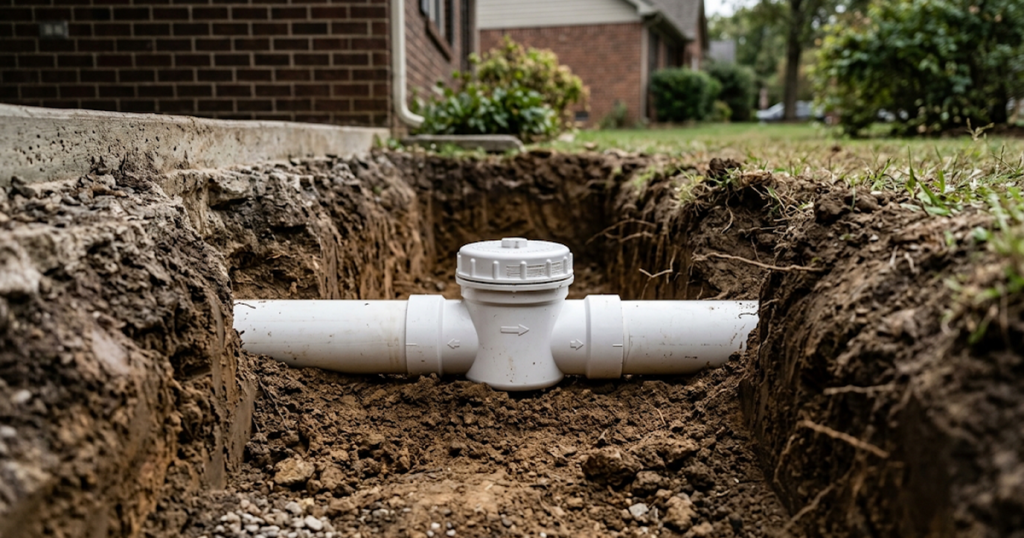
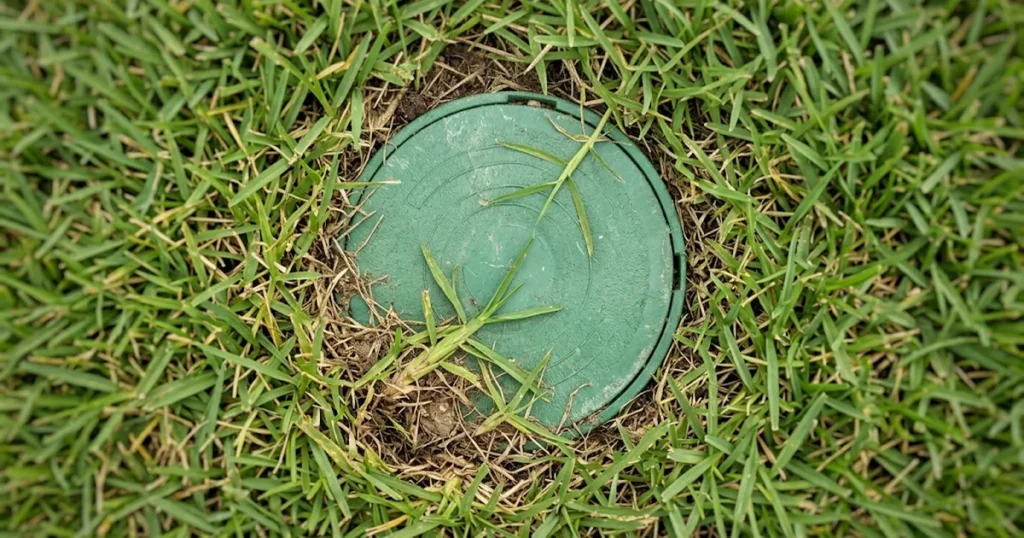
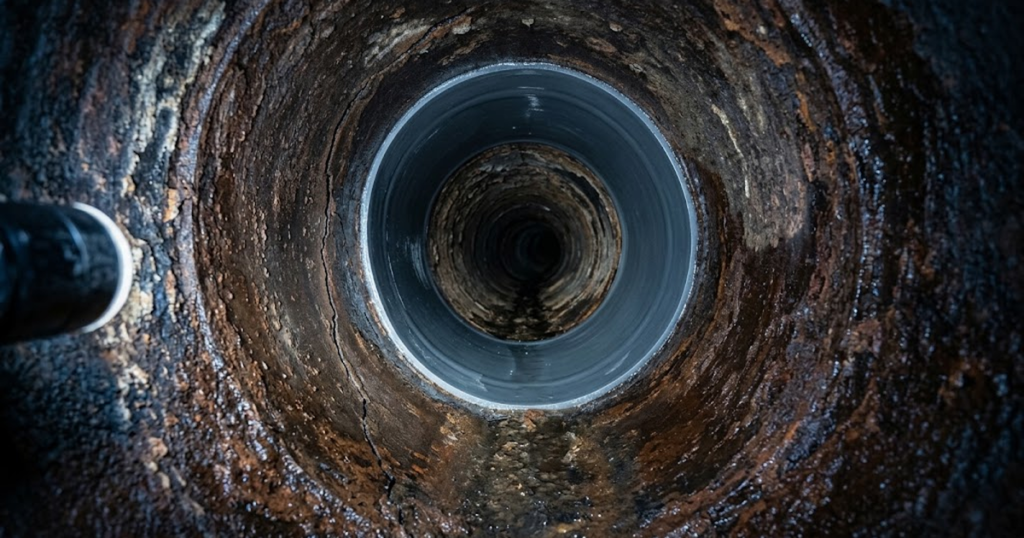
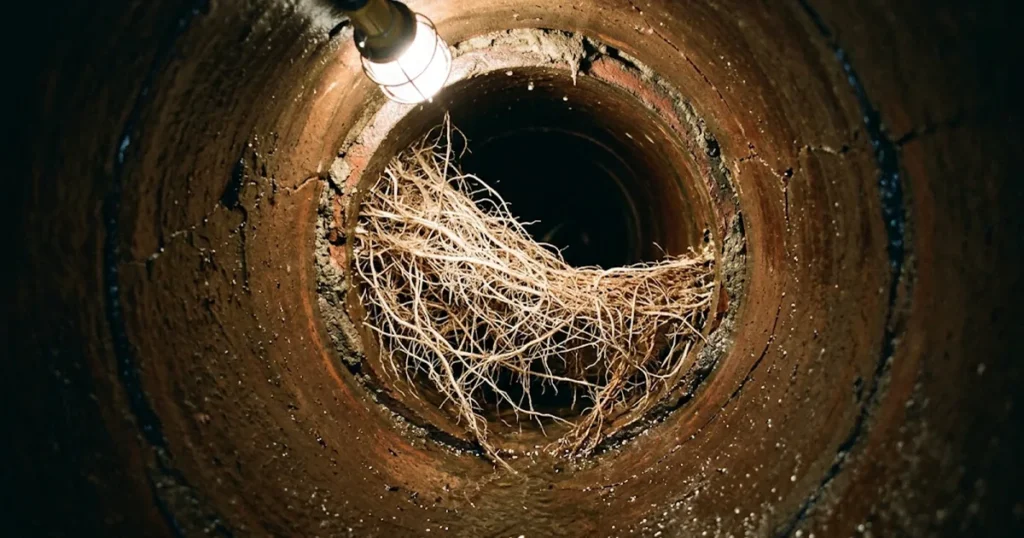
In most DFW homes, which sit on a concrete slab, the main line runs under the house to a cleanout in the yard. When that line is blocked, wastewater comes up the lowest opening first, usually a ground-floor tub or shower. If that is happening, plunging the toilet will not fix it, and every flush in the house adds to the backup. Our guide to sewage backing up into a bathtub covers that situation, and one toilet bubbling when another flushes is an early sign of the same problem.
What should you not do when a toilet overflows?
Do not flush again, do not pour chemical drain cleaner into a full bowl, and do not keep plunging if other drains are backing up.
- Flushing again sends another tank of water into a bowl that cannot drain.
- Chemical drain cleaner sits in the bowl, does little to a toilet clog, and can splash back on you when you plunge. See whether chemical drain cleaners damage pipes.
- Plunging a main line backup just pushes water back and forth. The clog is too far down for a plunger to reach.
How do you unclog the toilet once the water stops rising?
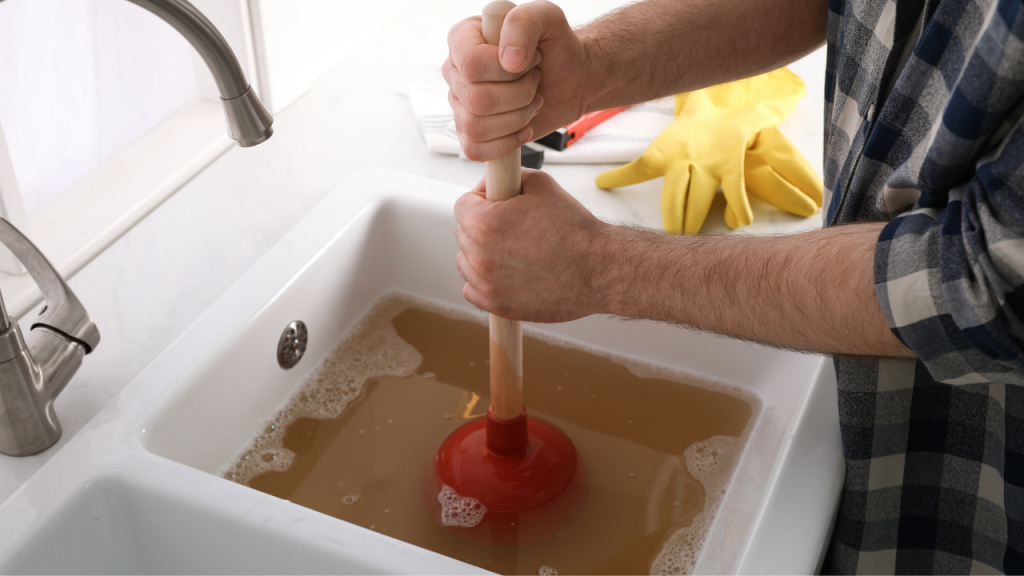
Use a flange plunger, the kind with a soft sleeve that fits into the drain hole, and pull as hard as you push. Our step-by-step guide on how to use a plunger shows the technique. With no plunger in the house, try these ways to unclog a toilet without a plunger.
Turn the shut-off valve back on (counterclockwise) only after the bowl drains normally, then do one test flush and keep your hand near the valve.
How do you clean up after a toilet overflows?
Treat the water as contaminated, wear gloves, and disinfect everything it touched. The Washington State Department of Health advises people cleaning up sewage to “wear rubber gloves and boots” and “use eye protection,” and to “keep children and pets out of the area until clean-up has been completed” (Washington State DOH). It suggests a disinfecting mix of “one tablespoon of liquid household unscented bleach to one gallon of water.”
Mop up, wash hard floors with that solution, and bag soaked towels or bath mats. Never mix bleach with ammonia or other cleaners. If the water came from the main line and reached carpet or drywall, read whether it is safe to stay in the house after a sewage backup.
How do you keep a toilet from overflowing with guests in the house?
Keep everything but toilet paper out of it. The North Texas Municipal Water District’s rule is short: “Don’t flush anything except for the 3 P’s – pee, poop, paper” (NTMWD). Wipes are the usual problem; the district notes that “unlike toilet paper, these stronger wipes don’t breakdown quickly.” The City of Frisco calls flushable wipes “the fastest growing form of blockages.”
A few more steps help on a busy holiday weekend:
- Put a lidded trash can in every bathroom.
- Put a plunger next to every toilet, so nobody has to go looking.
- Show guests where the shut-off valve is.
- Space out showers, laundry and the dishwasher so the main line is not carrying everything at once.
More ideas are in our Thanksgiving plumbing tips.
When should you call a plumber about an overflowing toilet?
Call when more than one drain backs up, when water comes up in a tub or shower, or when the same toilet overflows again after you cleared it. Those point to the main sewer line, not the toilet.
A single overflow that a plunger clears, and that does not come back, usually does not need a plumber. If it keeps happening, our guide on why a toilet keeps clogging walks through the causes.
For a main line backup, Nuflow DFW clears the line from the sewer cleanout and can run a sewer camera inspection to show what caused it.
Drain cleaning starts at $150, and a camera inspection starts at $250.
Call (469) 701-0597 or schedule online.
FAQ
Which way do you turn the water off to a toilet?
Clockwise. Turn the oval handle on the supply line behind the toilet to the right until the tank stops filling.
Will an overflowing toilet stop by itself?
The tank stops refilling once its float rises, so a clogged bowl usually stops rising after one tank of water. A toilet that keeps rising after that, or rises when other fixtures drain, has a main line problem.
Why did my toilet overflow when it was not clogged?
Usually because the main sewer line is partly blocked, so water from another fixture backs up into the bowl. A tank that keeps running can also spill water out of the tank itself.
Can a toilet overflow from the sewer line?
Yes. When the main line is blocked, water from sinks, tubs and the washer has nowhere to go and can come up through the toilet or the lowest drain in the house.