In most Dallas-Fort Worth homes, the main water shut-off valve is outside, near a hose faucet and close to the house. If you have a sprinkler system, also check near the irrigation valves by the property line. The valve inside the water meter box is the backup, and some cities ask you to call them before you use it.
Where is the main water shut-off valve in a DFW house?
The main water shut-off valve is usually outside, on the pipe where your water line comes up beside the house. Dallas Water Utilities says most homes have a private cut-off valve “near an outside faucet and close to the house.” If your house has no basement, skip the basement advice that fills most national guides and start outside.
Check these spots in order:
| Where to look | What you will see | Good to know |
|---|---|---|
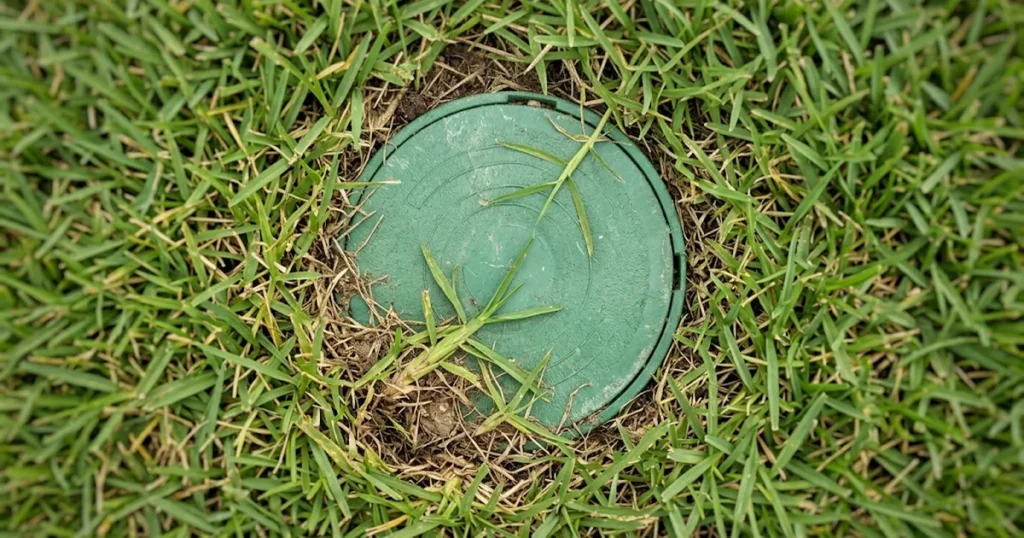
| Outside wall near a hose faucet, on the side where the water line enters | A round wheel handle or a lever on a pipe coming out of the ground, sometimes inside a small in-ground box | This is where Dallas Water Utilities says to look first |
| Near the sprinkler valves, close to the property line | A valve beside the irrigation valves | Only on homes with an in-ground sprinkler system |
| Buried in the yard (older homes) | A small iron rod shaped like an upside-down “L” sticking out of the ground | Turning the rod closes the buried valve |
| Garage, utility closet or near the water heater | A valve on the line that feeds the whole house | The valve on the cold line at the top of the water heater only shuts off the heater |
| Water meter box near the street | The meter and the utility’s valve | Use it only if your city allows it (see below) |
If you find a valve and are not sure it is the main one, close it and open a faucet inside. If every tap in the house stops, you have the right valve.
How do you turn off the main water valve?
Turn it clockwise until it stops. How far depends on the type:
- 1. Lever handle (ball valve): a quarter turn. The water is off when the lever sits across the pipe.
- 2. Round wheel handle (gate valve): several full turns clockwise until it will not turn further.
- 3. Buried valve with an L-shaped rod: turn the rod a quarter turn, the same way as a lever.
Then open a faucet inside the house to drain the pressure and confirm the water has stopped. Do not force a stuck valve with a long bar or a hammer. Older valves can crack at the stem and start leaking, which leaves you worse off than before. If it will not move by hand or with a normal wrench, call a plumber.
Can you shut off the water at the meter yourself?
It depends on your city, so check before you need to. Two examples:
- Fort Worth: Fort Worth Water says that because you cannot always wait for a crew, it “will allow you to shut off the water at the meter,” and asks you to be careful with the meter box lid so you do not damage the wires to the radio transmitter.
- Dallas: Dallas Water Utilities asks residents to call 3-1-1 (or 214-670-3111 from outside the city limits) for help turning the water off at the meter.
Meter valves often need a long-handled water key, which hardware stores sell. If you are on a different city’s water, its website or customer service line will tell you the rule. The line from the meter to your house is the homeowner’s to maintain in most of DFW, which is why a leak on the water line from the meter to the house is your repair, not the city’s.
Why find your shut-off valve before the first freeze?
When a pipe bursts, closing the main valve is what limits the damage, and you do not want to be searching for it in the dark. The City of Fort Worth’s freeze tips say to find the private shut-off valve and “Check this valve now to make sure it is working,” and to make sure everyone in the household knows where it is.
Dallas Water Utilities’ winter guide adds one more step: if the house will be empty for several days during cold weather, turn off the water at your private shut-off valve and drain the outside faucets.
A five-minute check before winter:
- 1. Find the valve and clear any dirt, grass or mulch from around it or its box.
- 2. Close it, then open a faucet inside. The flow should slow to a stop.
- 3. Open it again slowly so the pressure comes back gently.
- 4. Show everyone in the house where it is, and tie a tag on it.
- 5. If it will not turn, or the water keeps running, get it repaired now instead of during a freeze.
If a pipe does freeze, here is what to do when your pipes freeze, and what to do the moment a pipe bursts.
What if your home has no shut-off valve, or it does not work?
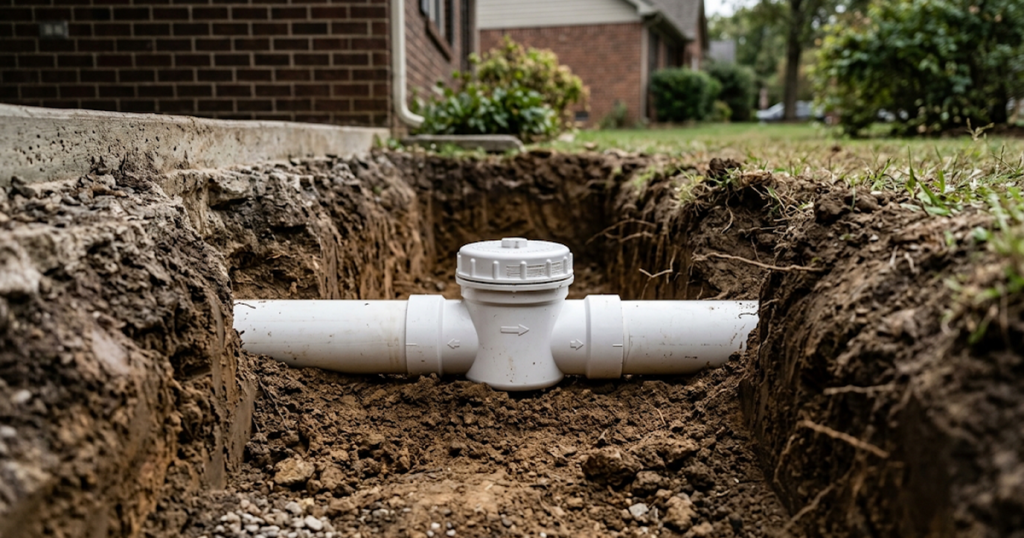
Have a main water shut-off valve installed or replaced before you need it. Dallas Water Utilities puts it plainly: “If there is not a private cut-off valve on the property, consider installing one.” A valve that turns but does not stop the water is just as much of a problem, because it fails you at the moment you need it.
Replacing a valve on the main line means working on the water supply, and many DFW cities require a permit for plumbing work that changes the supply piping. Our Texas plumbing code guide explains when a permit applies.
If your valve opens and closes cleanly, you do not need a plumber for any of this. If it is seized, leaking at the stem, buried where you cannot reach it, or missing, call (469) 701-0597, Monday to Friday, 9 to 6, or contact us online.
FAQ
Which way do you turn a water shut-off valve to close it?
Clockwise. A lever handle needs a quarter turn until it sits across the pipe. A round wheel handle needs several full turns clockwise until it stops.
Is the main shut-off valve the same as the water meter?
No. The meter measures your water use and belongs to the city. Your private shut-off valve is on your side of the meter, usually near the house, and is the one you should use first.
Should I turn off my water when I leave home in winter?
If the house will be empty for several days in freezing weather, yes. Dallas Water Utilities recommends turning the water off at your private shut-off valve and draining the outside faucets.
Where is the shut-off valve in an older DFW home?
Often buried in the yard near the house, with a small L-shaped iron rod sticking out of the ground as the handle. Turning the rod closes the valve.