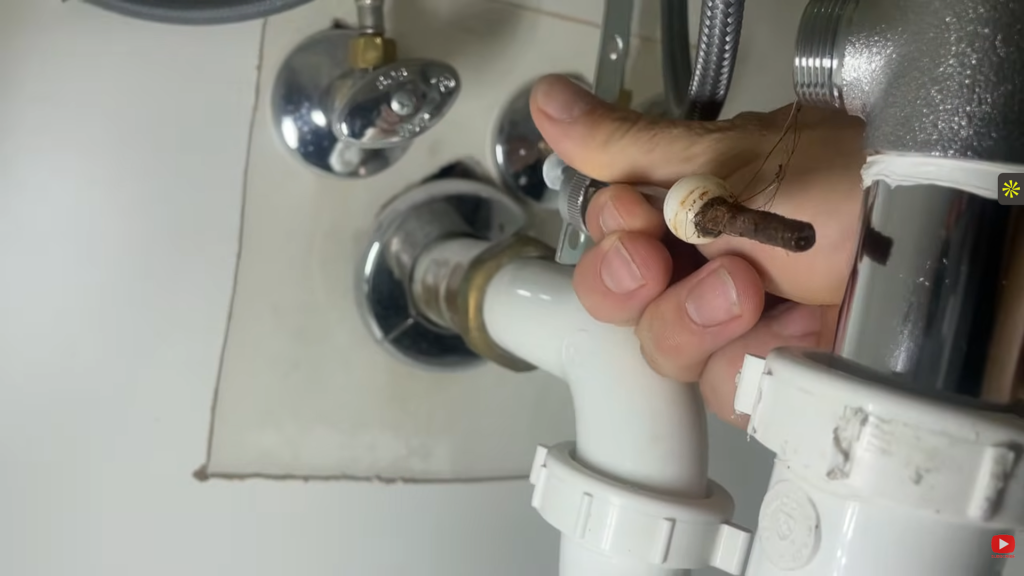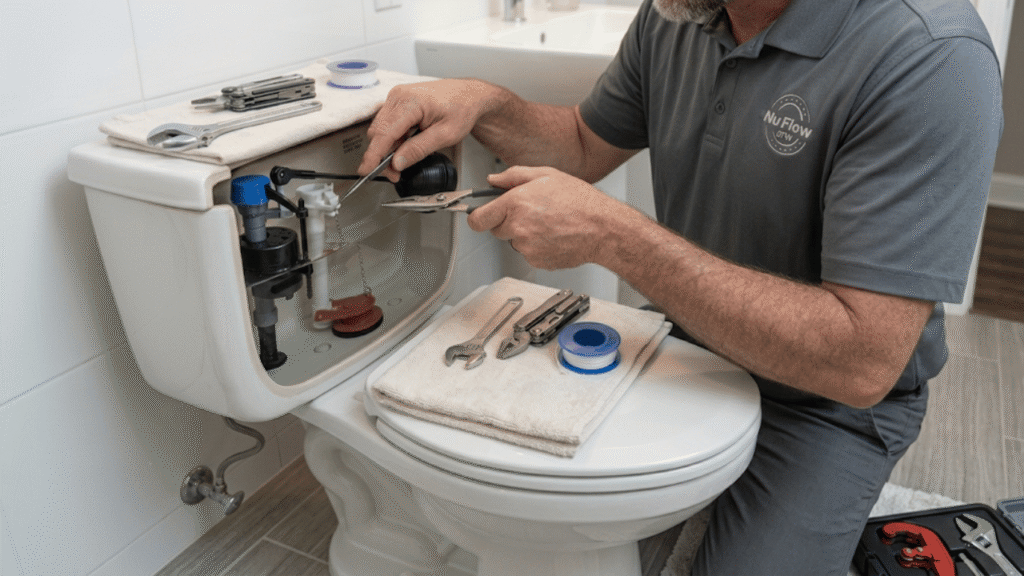
A toilet tank that will not fill usually comes down to the fill valve, the part on the left side of the tank that lets water in after a flush. Sediment clogs it, the float sits too low, or it has simply worn out. Before you touch any of that, check the shut-off valve on the wall. It costs nothing and it solves a surprising number of these.
No water at all, a thin trickle, or a long pause before the tank starts filling are all the same problem wearing three different faces. Same part, same fix.
Start here: the shut-off valve cycle test
Turn the shut-off valve behind the toilet fully counterclockwise, then flush. If the tank fills normally, you are done. Someone bumped it during cleaning or left it half closed after another repair.
Now the useful part. If it was already open, close it fully and immediately reopen it, then flush again.
If that one cycle gives you a normal fill and the next flush goes slow again, you have sediment, not a dead valve. The pressure surge from reopening the line temporarily knocks debris off the inlet screen inside the fill valve, and it settles back a few minutes later. That is a $5 cleaning job, not a $20 replacement.
If cycling the valve changes nothing, keep reading.
The four causes of a toilet tank not filling with water
Four causes account for nearly all of these, and they are worth checking in this order because that is cheapest to most involved.
The fill valve is clogged with sediment
The most common one, and the most common one people misdiagnose as a broken valve. Grit and mineral scale collect on the small screen inside the fill valve and choke the flow.
You do not need to replace anything to test this. Shut off the water, lift the cap off the top of the fill valve, hold a cup upside down over the opening, and briefly turn the water back on. The surge flushes the debris out into the cup. Cap back on, water on, flush.
The float is set too low
The float rides up with the water and tells the valve when to shut off. Set too low, the valve closes early and you get a half-full tank and a weak flush.
Modern valves adjust with a screw on top or a clip on the float cup. Small turns, then flush and watch where it stops. The water should settle about half an inch to an inch below the top of the overflow tube.
Go too far the other way and you get the opposite problem, which is a toilet that never stops running. We get called out for that one fairly often right after somebody adjusted a float.
The fill valve has worn out
Fill valves last roughly seven years on average, less on hard water. If yours is older than that and cleaning did not help, replacing it is usually the right call rather than chasing repairs.
Water pressure in the whole house
If more than one toilet is filling slowly, stop working on the toilet. A partly closed main shut-off, a failing pressure regulator, or scale narrowing the supply lines will do this, and no amount of tank adjustment fixes it.
Slow filling is a restriction, not a dead valve
Slow filling is the same list as above, with sediment at the top by a wide margin. The distinction that matters: a toilet that fills slowly but eventually reaches the line is a restriction, while a toilet that stops short of the line every time is a float or shut-off problem.
Time it. A standard tank should refill in roughly 60 to 90 seconds. Three minutes or more means something is restricting flow.
Tank full, but low water in the bowl
This is a completely different problem from a tank that will not fill, and almost nobody separates the two.
Look inside the tank for a thin flexible hose running from the fill valve over to the overflow tube, which is the tall open pipe in the middle. That hose is the refill tube, and its whole job is squirting a small stream down the overflow to refill the bowl while the tank refills. If it has popped loose, or if it is dangling below the water line instead of clipped above it, the tank fills perfectly and the bowl does not. Next flush is weak, and people go hunting for a clog that is not there.
Clip it back above the waterline. That is the entire repair.
The bucket test
If the refill tube is fine and the bowl still flushes weakly, pour a bucket of water straight into the bowl.
Drains fine? Your drain line is clear, so the problem is water delivery. On older toilets in hard water areas, scale closes up the small rim jets under the bowl rim and the siphon jet at the bottom. The bowl fills, the water just cannot get in fast enough to trigger a proper siphon. Descaler helps, though on a badly scaled 1970s bowl replacement is often the honest answer.
Bucket backs up? Then it was never the toilet. Skip to the last section.
Hard water is why this keeps happening in DFW
Hard water. Dallas Water Utilities reports average hardness around 152 mg/L, about 8.9 grains per gallon, which is squarely in the “hard” band, and several DFW suburbs on other supplies test higher still. Anything above 7 grains per gallon is hard water by the standard scale.
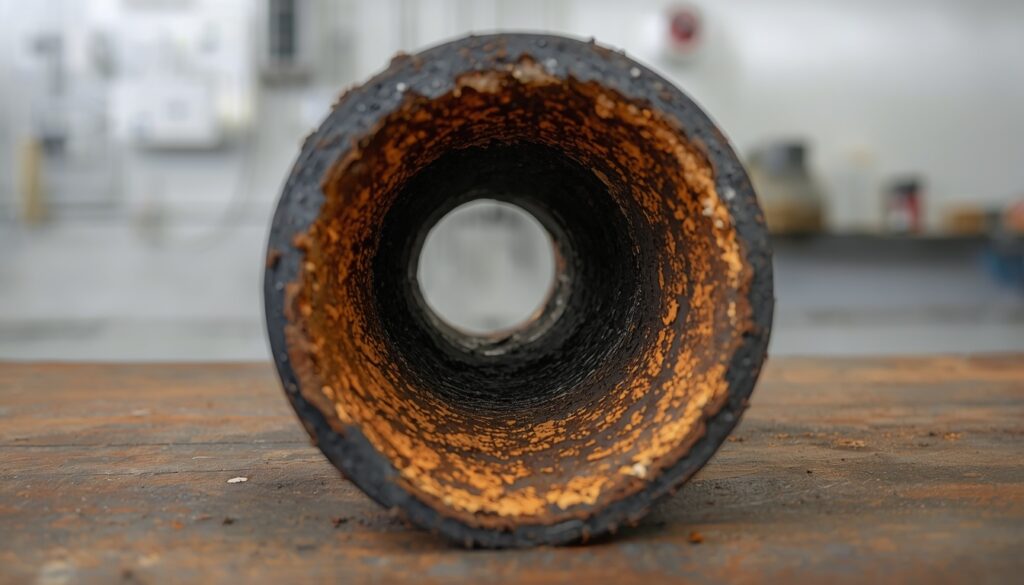
That mineral load is what fouls fill valve screens, stiffens flappers, and closes up rim jets. It is also why a fill valve that a manufacturer rates for years of service can gum up here in a fraction of that.
Two local timing patterns worth knowing. Calls cluster after the city works on a water main, because the shutdown and restart stirs sediment through the lines and it lands in the nearest small screen, which is your fill valve. And they cluster again after a hard freeze, for the same reason.
Replacing a toilet fill valve
A fill valve runs $12 to $25 (as of Q3 2026) and the swap is a beginner-level job. Shut off the water, flush to drain the tank, then sponge out the last inch in the bottom. Skip that step and it splashes everywhere when you pull the old valve.
Disconnect the supply line, unscrew the nut underneath the tank, lift the old valve out. Set the new valve’s height by twisting the base counterclockwise to extend it, matching the old one. Fit the refill tube, tighten the nut underneath, wrap the threads with Teflon tape in the direction that tightens rather than unwinds, reconnect, and turn the water on slowly while you watch for drips.
Fluidmaster publishes model-specific instructions if you want to check yours before buying, and on some models the rubber seal is sold separately for a few dollars. Worth trying the seal before the whole valve.
The new valve still won’t fill
This one catches people. You install a brand new valve and get nothing at all.
Take the cap back off, check for debris, and refit it, making sure it seats and locks properly. A cap that is sitting slightly proud will not let the valve open. It is the most common post-repair complaint on this job and it takes thirty seconds to rule out.
When it isn’t the toilet at all
Here is the part most articles skip, and it matters more than the rest of this combined.
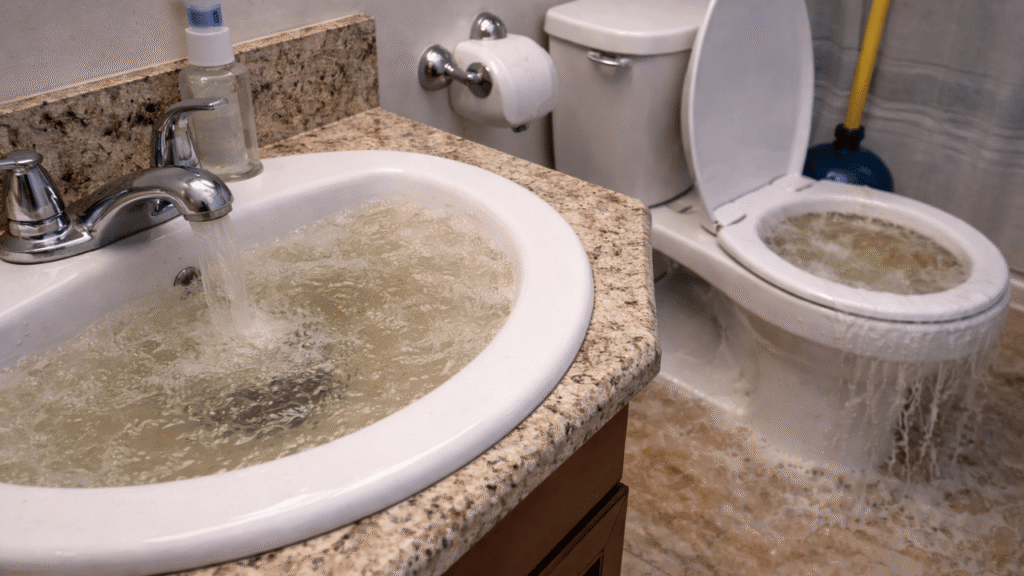
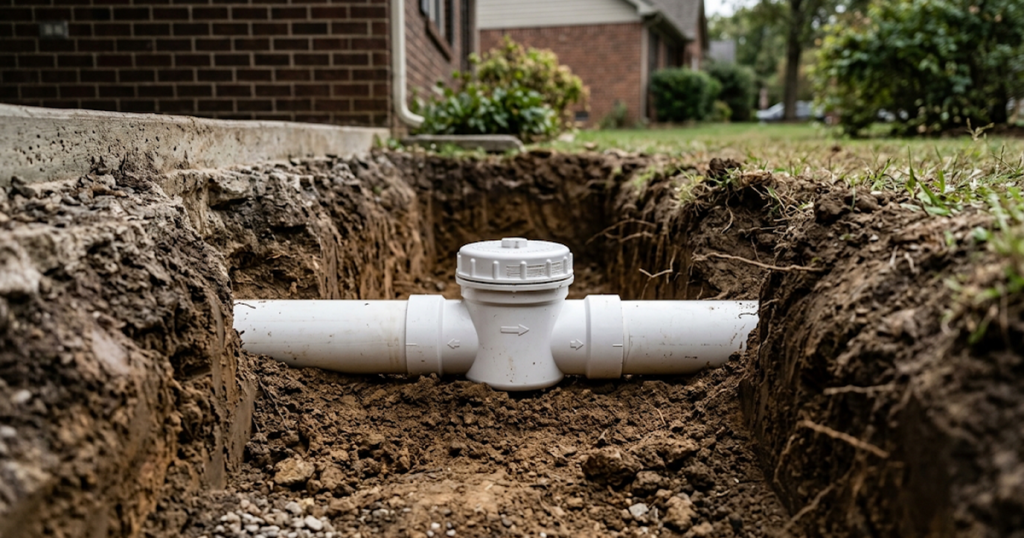
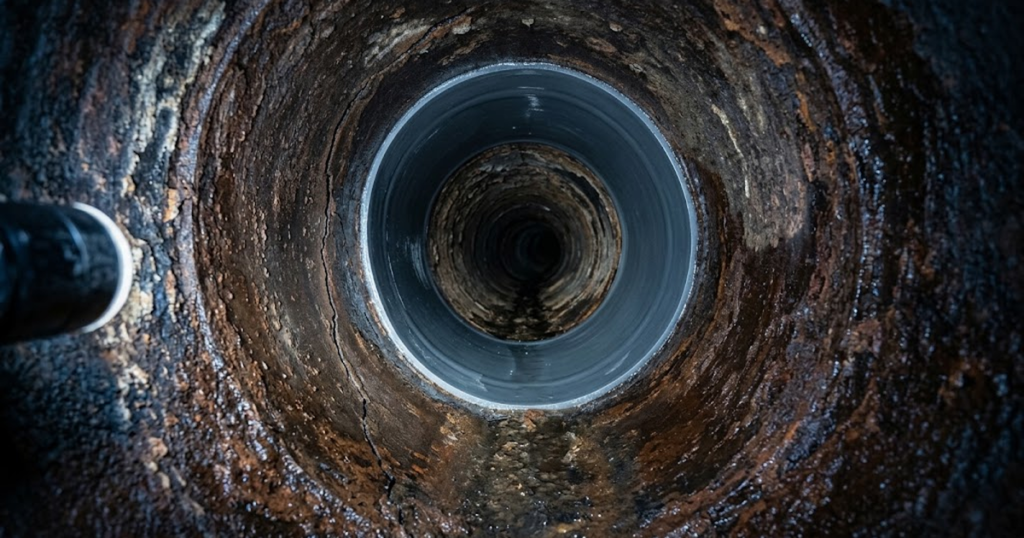
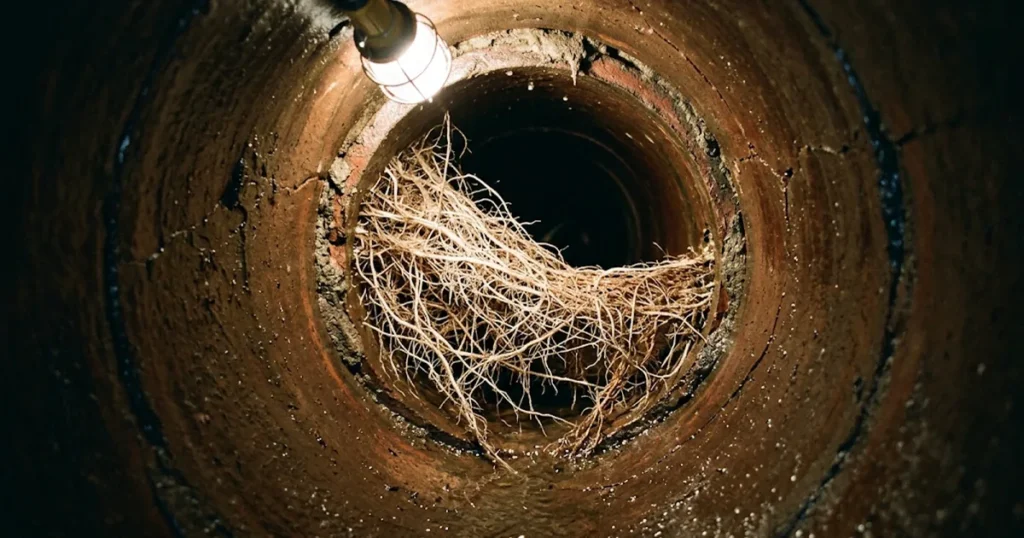
If the tank fills to the line, the refill tube is clipped correctly, and the flush is still weak or slow to clear, the toilet has done its job. The restriction is downstream, in the drain line. Roots in the main sewer line, a partial blockage, or a bellied section all produce a weak flush that looks exactly like a toilet problem.
The tell is other fixtures. If a nearby tub gurgles when you flush, or more than one drain in the house runs slow, stop replacing toilet parts. That needs a camera inspection to see what is actually going on in the line.
Being straight about this: a camera inspection diagnoses, it does not repair. If you have not tried the cycle test and checked the refill tube yet, do those first and spend nothing.
What this costs
| Fix | Cost (as of Q3 2026) |
|---|---|
| Cycle the shut-off valve, clean the fill valve | $0 |
| Fill valve seal (part only) | $5 to $10 |
| Fill valve (part only) | $12 to $25 |
| Professional toilet repair | $250+ |
| Camera inspection, when the line is suspect | $250+ |
Yes, we are telling you the part costs twenty dollars. Most of this is genuinely DIY, and we would rather you fix it yourself than pay for a call you did not need. Where it is worth phoning someone: multiple fixtures affected, a cracked tank or bowl, standing water at the base, or a weak flush that survives everything above.
Actual pricing depends on findings and access. Call for a current quote.
Frequently Asked Questions
Why won’t my toilet tank fill after flushing?
Check the shut-off valve behind the toilet first, then the fill valve. Sediment on the fill valve inlet screen is the most common cause, followed by a float set too low. Close and reopen the shut-off valve, then flush. If that gives you one good fill, you have debris rather than a failed part.
How long should a toilet tank take to fill?
A standard tank refills in roughly 60 to 90 seconds. Anything past three minutes means something is restricting flow, almost always sediment in the fill valve. Time it with your phone before assuming the valve is dead, because a cleaning fixes most slow fills and costs nothing.
Why is my toilet tank full but the bowl water low?
The refill tube has come loose or dropped below the water line. It is the thin hose running from the fill valve to the tall overflow tube, and it refills the bowl while the tank refills. Clip it back above the waterline. That is usually the whole repair.
Can I clean a toilet fill valve instead of replacing it?
Yes, and it works often enough to try first. Shut off the water, lift the cap off the fill valve, hold a cup upside down over the opening, and briefly turn the water on so the surge flushes debris out. On many models the rubber seal is also sold separately for a few dollars.
I replaced the fill valve and it still won’t fill. Why?
Usually the cap is not seated properly. Remove it, check for debris underneath, and refit it until it locks. A cap sitting slightly proud stops the valve opening at all. Also confirm the shut-off valve is fully open and the supply line is not kinked behind the toilet.
When should a toilet problem make me suspect the sewer line?
When the tank fills to the line and the flush is still weak, or when other fixtures act up at the same time. A tub that gurgles on flush, or several slow drains at once, points at a restriction in the main line rather than the toilet. Roots are the usual cause in older DFW neighborhoods.
Try this before you buy anything
Cycle the shut-off valve, then flush. Check whether the refill tube is clipped above the waterline. Time how long the tank takes. Three checks, about two minutes, no parts, and between them they explain most of the toilets we get called out to.
If the flush is still weak after all of that, the toilet is not your problem and no amount of new fill valves will change it. That is the point to have someone look at the line.
Nuflow DFW is a licensed Master Plumber (RMP# 46694) running 24/7 service across the Dallas-Fort Worth Metroplex. Call (469) 701-0597.