Sewer repair without digging restores a failing pipe from the inside, through existing cleanouts and access points, with no trench through your yard, floor, or parking lot. A resin-saturated liner is pulled into the old pipe, inflated against the wall, and cured into a new structural pipe. On a UV-cured system the curing takes minutes. Nuflow DFW recently did exactly this at a Plano school without breaking a single slab.
Below is what the job actually looks like, where it fits, and the situations where digging is still the right answer.
A Plano school, relined with zero excavation
Ryan King and the Nuflow DFW crew relined aging sewer and drain lines at a Plano school where digging was never on the table. You cannot trench through a hallway, a cafeteria floor, or a courtyard with students in it. You also cannot take the restrooms out of service for a week while crews excavate and backfill.
The crew pulled a structural liner into position through existing access points. No excavation anywhere on the campus. Once the liner sat correctly, a UV light train cured it in minutes rather than the hours steam or hot water curing takes. The finished liner is structural grade and rated well beyond 30 years. The campus stayed open the whole time.
That combination, no digging, fast cure, long-lived result, is why institutional buildings reach for lining when their original pipes reach end of life. The same logic applies to a house, just at smaller scale.
What no-dig repair actually means
No-dig repair, also called trenchless, covers several methods that share one thing: the work happens inside the pipe rather than around it. Technicians reach the line through cleanouts or small access points instead of opening a trench along its length.
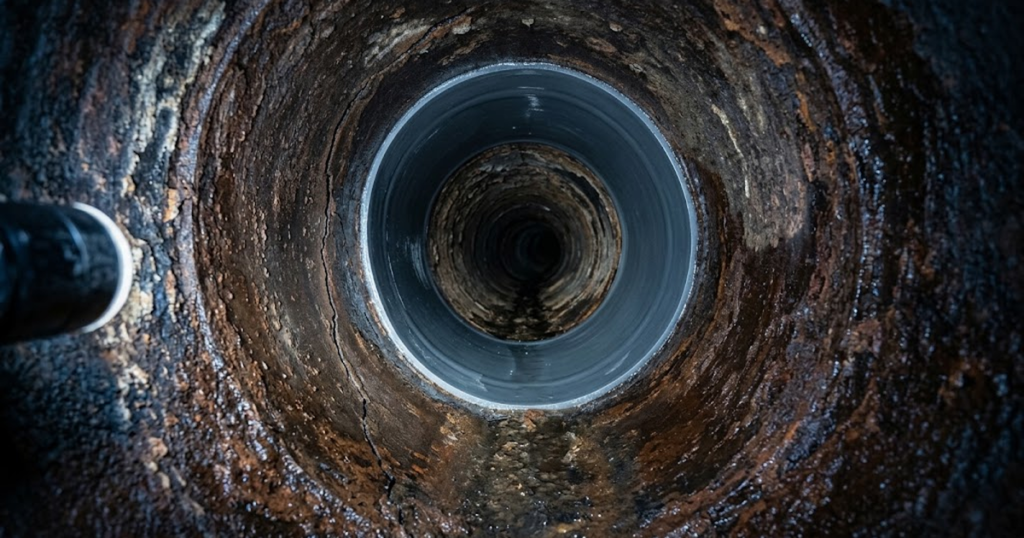
CIPP lining is the method that fits most jobs. A liner saturated with resin goes into the host pipe, gets inflated so it presses against the old wall, and cures into a jointless new pipe inside the old one. Pipe bursting, spray coating and slip lining each solve narrower problems, and our breakdown of the different types of trenchless technology covers when each one is the right call.
The choice is not yours to make from a website. A camera has to see the line first, which is the point of the next section.
How UV-cured pull-in-place lining works
UV curing is a specific form of CIPP, and it is the fastest one. The steps on a real job:
- Clean and camera-inspect the line to confirm it can host a liner
- Pull the resin-saturated liner into position through an existing access point
- Inflate the liner so it conforms tightly to the old pipe wall
- Run a UV light train through the liner to cure it in minutes
- Re-inspect with the camera to confirm a continuous, seamless finish
Older CIPP cures with steam or hot water and can take hours. UV finishes in minutes, which is the whole reason a school or a restaurant can return the line to service the same day. Glass-reinforced UV liners also cure to a predictable structural result rather than one that varies with ambient temperature. NASSCO, the industry authority on pipe rehabilitation, treats this as creating a new seamless pipe inside the deteriorated one, not a coating over it.
What structural grade means, and why it matters
A structural liner does not coat the old pipe. It becomes a standalone pipe that carries load on its own, even if the host pipe keeps deteriorating around it. That distinction separates a real repair from a temporary patch, and it is the difference between lining and spray coating.
These liners install to recognized standards. ASTM F2019 covers pulled-in-place glass-reinforced UV-cured CIPP, and liners built to it are designed for service life well past 30 years.
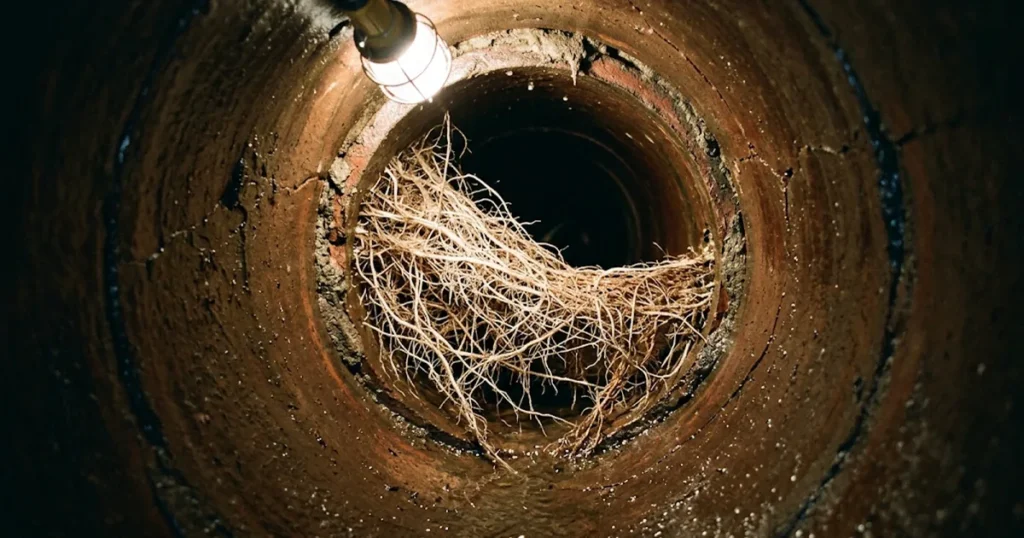
The practical result for a building owner is that the new pipe is jointless and watertight along its full run. Cracked joints and root entry points, which is where the old pipe was failing, no longer exist.
Where no-dig repair fits in DFW
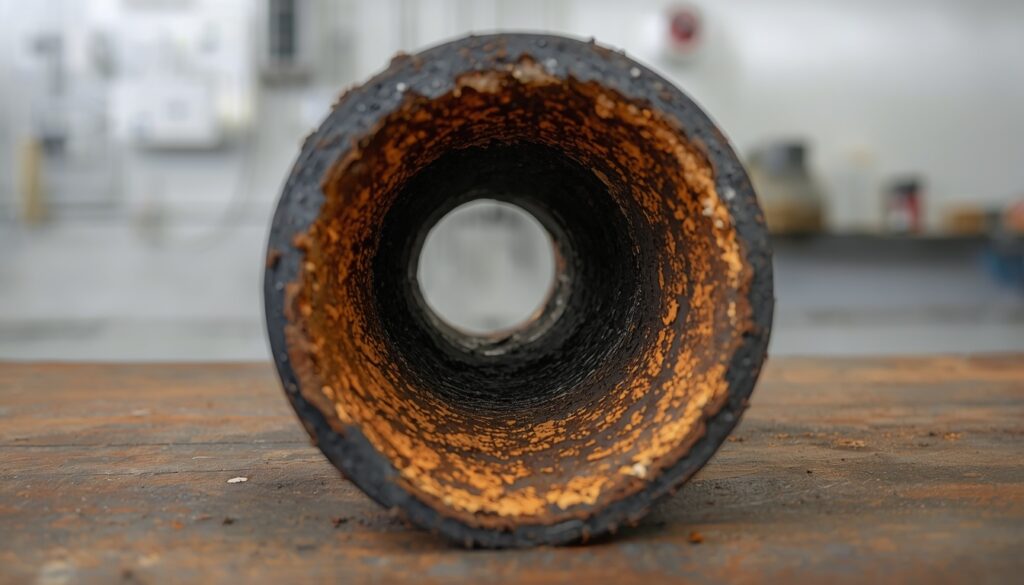
The DFW metro runs on a lot of old clay and cast iron. Older suburbs and established neighborhoods across Irving, Garland, Richardson, and Denton were plumbed with materials that corrode, crack, and separate at the joints as the ground moves. North Texas clay swells when wet and shrinks when dry, and that seasonal cycle works pipe joints apart over decades.
On the residential side, lining fits a house with a cracked or root-invaded line under a slab, a driveway, mature trees, or landscaping worth more than the repair. On the commercial and institutional side, it fits buildings that cannot close:
- Schools and university buildings with lines under occupied floors
- Churches and community centers that cannot shut for excavation
- Offices, retail, and restaurants where downtime is lost revenue
- Apartment and multifamily properties with shared sewer lines
- Medical and senior facilities where dust and disruption are unacceptable
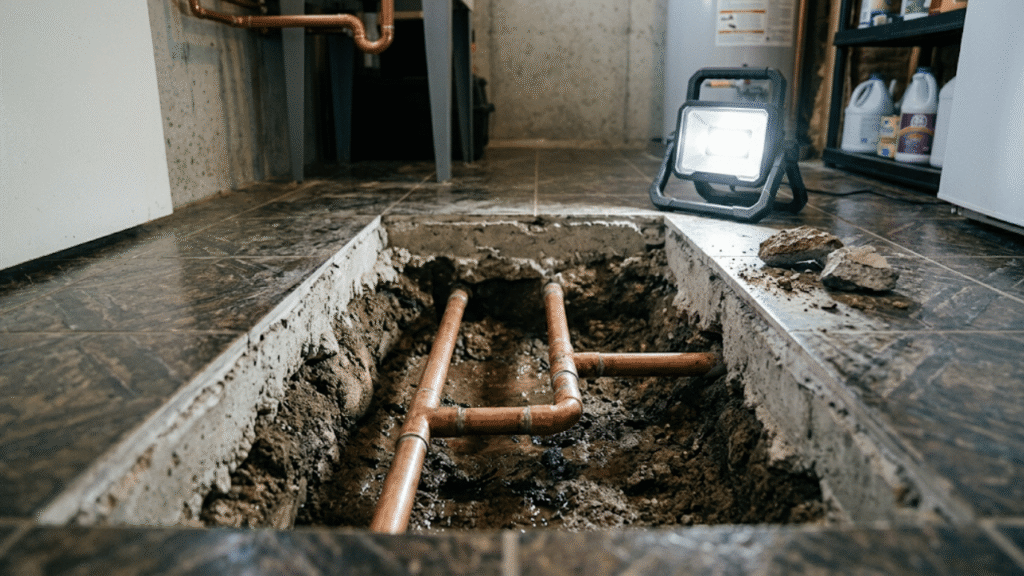
The common thread is a building that needs its pipes fixed and cannot afford to be torn open. For a facility manager the arithmetic is simple: excavation adds demolition, restoration, and downtime on top of the pipe work itself, and on a commercial building those three can exceed the repair. That is the case commercial pipe lining exists to solve.
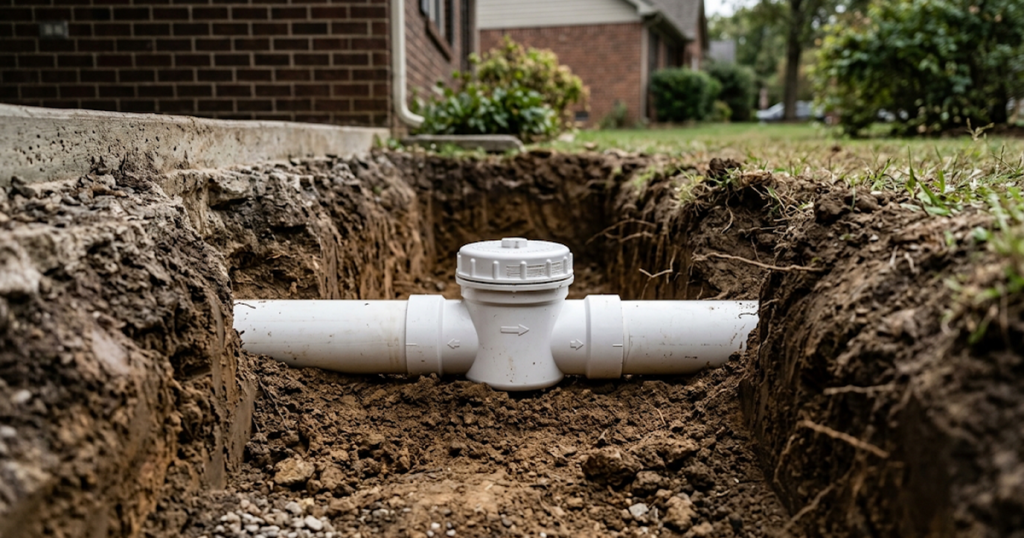
Where digging is still the right answer
This is the section most trenchless companies leave out, so here it is plainly.
Lining cannot fix a collapsed pipe
If a section has crushed flat or separated badly, there is no host pipe left to line, and that section needs excavating. A camera tells you which case you have, and no honest quote happens before that.
Severe back-pitch stays severe
Lining restores the pipe wall, not the slope. If a line was installed with a belly or has settled into one, a liner follows the same wrong grade. That is a re-lay, not a lining job.
Upfront cost is often higher
Lining frequently costs more per foot than digging does, and it wins on the total once restoration and downtime are counted. On a short run through open dirt with nothing above it, digging can genuinely be the cheaper answer. We will say so.
Not every pipe qualifies
Diameter transitions, heavy scale, and certain fitting configurations can rule lining out. Again, the camera decides.If a company quotes you a lining job without putting a camera in the line first, that is a quote for a method rather than a solution to your problem.
What happens first
Every job starts the same way, residential or commercial: a camera inspection of the existing line. It confirms the material, finds the failure, measures how far out it sits, and determines whether the pipe can host a liner at all.
Being straight about the cost: an inspection is a real expense and it produces a diagnosis, not a repair. It is also the only thing standing between you and a quote built on guesswork.
Nuflow DFW is licensed by the Texas State Board of Plumbing Examiners (RMP# 46694), serves residential, commercial, and institutional clients across the DFW Metroplex, Monday to Friday, 9 to 6.
Frequently Asked Questions
How long does trenchless lining take in a commercial building?
Most commercial lining jobs finish far faster than excavation, often a single day for a given run, because there is no digging and no restoration afterward. UV curing itself takes minutes rather than the hours steam or water curing needs. The exact timeline depends on length and number of lines, which the camera inspection determines first. For homes, see how long a sewer line repair takes.
Can a school stay open during trenchless pipe lining?
In most cases yes. The work happens through existing access points with no excavation, so the building stays usable and disruption stays local to the access point. That is the main reason schools, churches, and medical facilities choose lining over digging, which would close occupied space for days.
How long does a UV-cured liner last?
A structural UV-cured CIPP liner is designed for service life beyond 30 years, and many are rated to 50. The liner forms a jointless pipe inside the old one, removing the cracked joints and corrosion points where the original was failing. A camera inspection after curing confirms the finished result.
Is no-dig repair cheaper than digging?
Often, once the full cost is counted. Excavation adds demolition, restoration, and downtime on top of the pipe repair, and on a commercial building those can exceed the pipe work itself. On a short run through open ground with nothing above it, digging can genuinely be cheaper. Only a camera inspection and written quote settle it.
What pipe materials can be lined?
CIPP lining works in cast iron, clay, concrete, PVC, and other common materials, which covers most homes and commercial buildings in DFW. The pipe needs to be intact enough to host a liner. A fully collapsed section needs spot excavation instead, and the camera inspection confirms which case applies before anything is quoted. Concrete has its own failure pattern, covered in whether concrete sewer pipe can be lined.
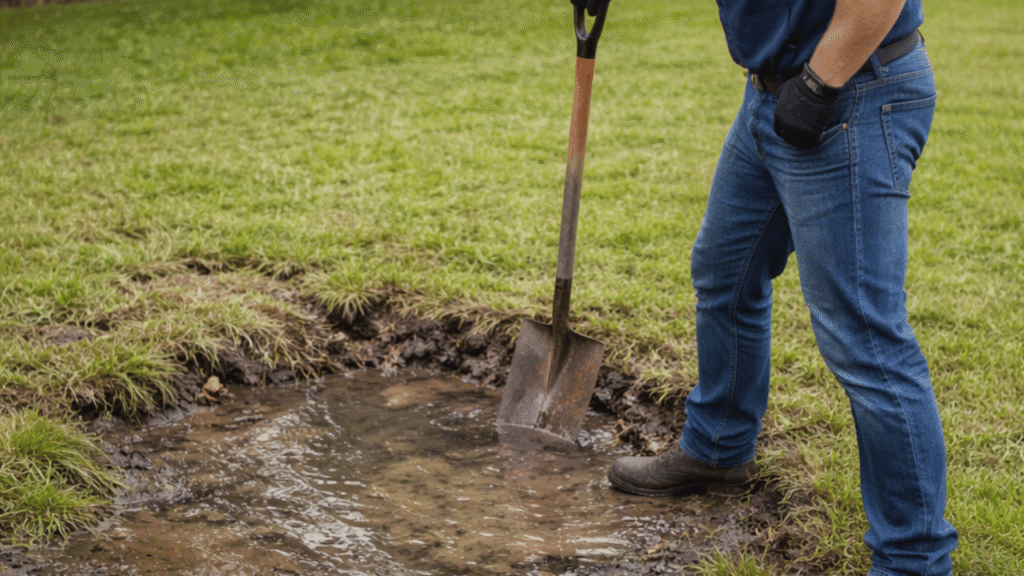
Can a sewer line be repaired without digging up the yard?
Yes, in most cases. Lining reaches the pipe through existing cleanouts, so landscaping, driveways, and patios stay intact. The exceptions are a collapsed section, which needs excavating, and a line with severe back-pitch, where the slope rather than the pipe wall is the problem.
Planning a pipe repair in DFW
If your home, school, church, or commercial building has aging sewer or drain lines, lining can usually fix them without closing the building or opening the ground. Start with a camera inspection so the scope and the quote match what is actually in the line, not what someone assumed.
We will quote the right method after we see the line, not before. If that turns out to be excavation, we will tell you that too.
Nuflow DFW. Licensed Master Plumber, RMP# 46694. Call (469) 701-0597.