Slab leak repair in Garland typically costs $1,500 to $4,500 once detection and the fix are both included, with detection alone running $250 to $750 (as of Q2 2026). A slab leak is a water or drain line leak under your home’s concrete foundation, and in Garland it usually comes down to one of two things: aging copper pipe embedded in an older slab, or a newer slab shifting on the area’s expansive clay. Nuflow DFW (RMP# 46694) detects and repairs slab leaks across Garland, from the older homes near South Garland to the newer construction around Firewheel.
If you searched this because your water bill jumped, a floor feels warm for no reason, or you are just trying to understand what a slab leak actually is, this covers all of it. What a slab leak is, how serious it really is, how it gets found without tearing up your house, what drives the cost, and the actual step-by-step process from the first call to the finished repair.
What Is a Slab Leak, Exactly?
A slab leak is a leak in the water supply or drain line that runs underneath your home’s concrete foundation rather than through a wall or attic. Because that pipe is poured directly into or under the slab, you cannot see it, and the first sign is almost always something happening above it: a warm patch on the floor, unexplained moisture, or a water bill that climbs with no obvious cause.
How Serious Is a Slab Leak?
A slab leak is serious, but it is a problem you can act on rather than panic about, as long as you address it while it is still just a plumbing issue. Left alone, water escaping under the foundation saturates the soil beneath it, and in Garland’s clay-heavy ground that saturation causes the soil to swell and shift. That shift is what turns a leak into a structural problem, with foundation cracks, uneven floors, and settling that costs far more than the original leak. Water damage repair alone typically runs 5 to 10 times the cost of fixing the leak itself, and the EPA notes that even small household leaks waste thousands of gallons a year when left unaddressed. A leak caught early, while it is still just a pipe, is the cheapest version of this problem you will ever face.
Signs of a Slab Leak
The most common signs, in order of how often we see them, are a noticeably higher water bill with no change in usage, a warm spot on the floor (a sign of a hot water line leak), the sound of running water when every fixture in the house is off, damp carpet or warped flooring in one spot, and new cracks in the floor or walls. Mold or a musty smell in a specific room is a later sign, meaning the leak has been active for a while.
Any one of these alone is worth a look. Two or more together, especially a warm floor spot paired with a rising bill, is a strong signal.
Why Garland Homes See This Often
Garland’s slab leaks trace to two different housing patterns, and knowing which one describes your home tells you what to expect.
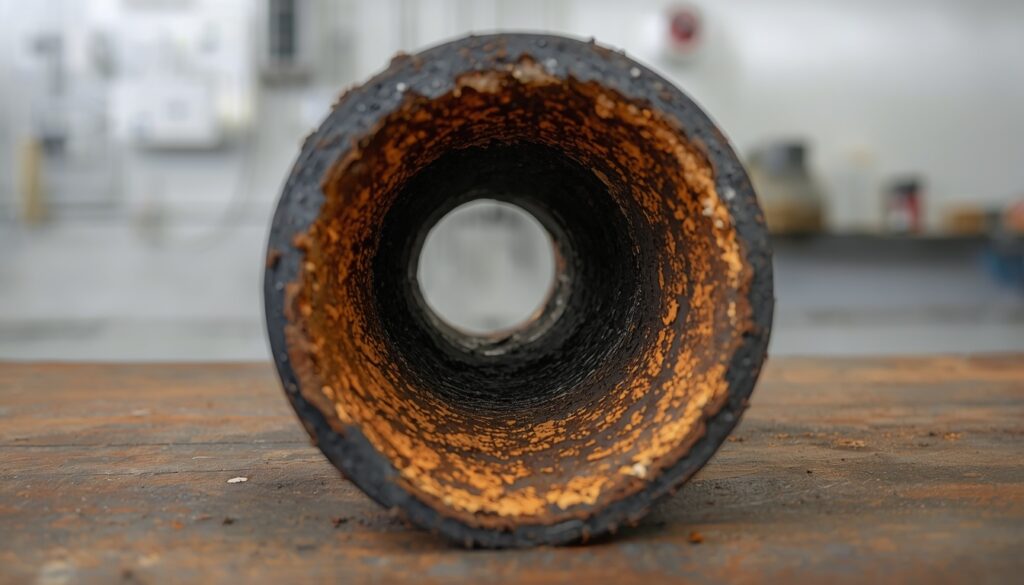
In the city’s older, established neighborhoods, homes built through the 1960s, 70s, and 80s commonly have copper supply lines run directly through the original slab. Copper fatigues with age, and after 40 to 60 years in the ground, pinhole leaks in that embedded copper are common. This is the leak we see most in Garland’s older housing stock.
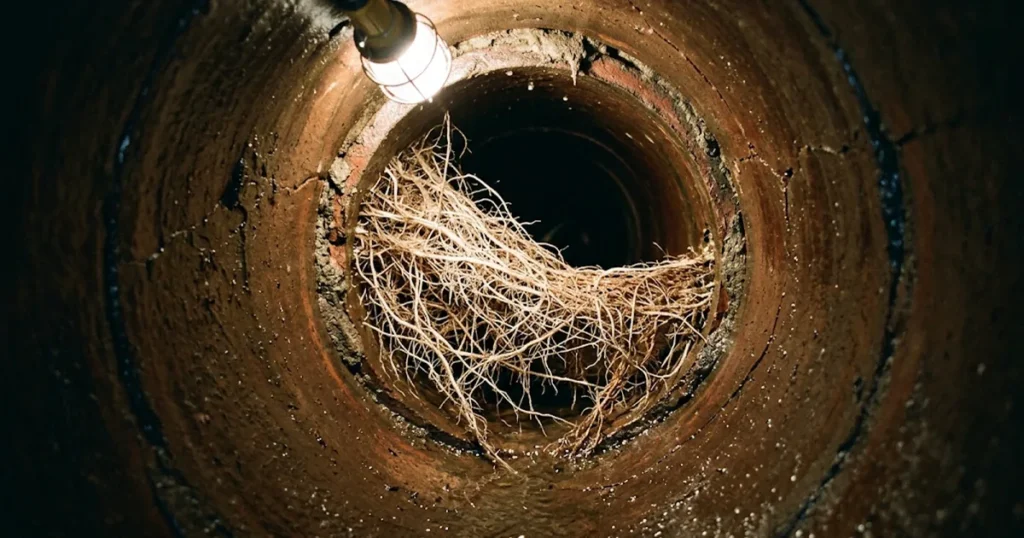
In Garland’s newer construction, built from the 1980s onward on concrete slab foundations, the driver is different: North Texas sits on expansive Blackland Prairie clay that swells when wet and shrinks when dry. Soils with this expandable clay mineral content can exert real pressure against a structure as they absorb water, and that constant movement stresses the pipe joints under a slab. Over enough wet-dry cycles, a joint or a section of pipe gives way. Mature trees near the foundation add to this, since root systems pull moisture unevenly from the soil and accelerate the shifting.
How Slab Leak Detection Works
Detection is what makes modern slab leak repair far less invasive than it used to be, and it is not a guess. A professional slab leak detection visit typically combines a few methods to confirm the exact location before anyone touches the concrete.
Acoustic listening equipment and ground microphones amplify the sound of water escaping a pressurized line, and different pipe materials produce distinct sound signatures that a trained ear can read. Thermal imaging picks up the temperature difference a hot water leak leaves on the surface above it, non-contact and non-invasive. Pressure isolation testing isolates individual lines, hot, cold, or drain, to confirm which one is actually losing pressure before any other method is used. Camera inspection lets a technician see the inside of an accessible line directly. Combined, these methods typically confirm a leak’s location within one to three hours, which is what lets a repair target one opening instead of an exploratory search across the floor.
Repair Options: Spot Repair vs. Full Reroute
Once the leak is located, there are two realistic paths, and the honest answer is that the right one depends on your pipe’s age and history, not on which one costs more.
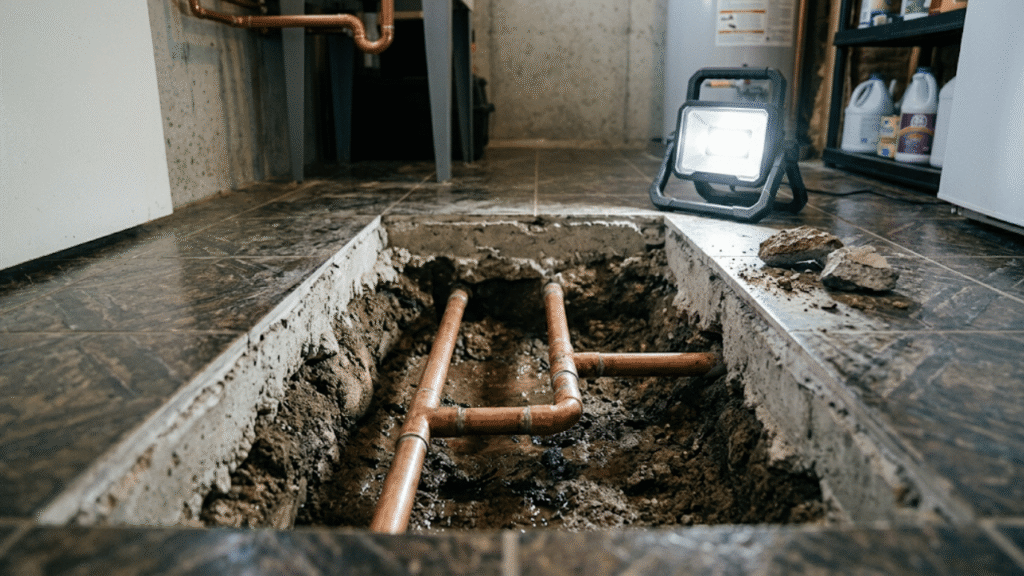
Spot repair opens a single, targeted section of the slab at the confirmed leak location, repairs or replaces that section of pipe, and patches the opening. It is the less invasive and less expensive option, and it makes sense for a first leak in a line that is otherwise sound.
Full reroute abandons the old pipe in place and runs new supply lines through the attic or an alternate path outside the slab entirely, so no line runs through the foundation going forward. It costs more upfront, but if your home has already had more than one slab leak, or you have original 1960s-80s copper throughout the slab, a reroute removes the entire category of risk rather than fixing one instance of it. For a home with recurring leaks, this is usually the more honest recommendation, even though it is the pricier one.
What Slab Leak Repair Costs in Garland
For most Garland homes, total slab leak repair, detection plus the fix, runs $1,500 to $4,500 (as of Q2 2026), with severe or hard-to-reach cases running higher. Detection alone starts at $750+ through Nuflow DFW, in line with the $250 to $750 range typical across the industry.
Spot repair generally runs $500 to $4,000 depending on depth and access. A full reroute runs $2,000 to $15,000, since it involves more pipe, more labor, and running new lines through the attic or an alternate path. If the leak has already caused foundation movement, that repair is separate and estimated independently. Final cost always depends on inspection findings, so a firm number comes after the leak is located.
The Repair Process, Step by Step
Here is what the process actually looks like, start to finish, since this is the part most guides skip.
Step 1: Diagnosis. A technician runs the detection methods above to confirm the leak’s exact location and, often, which type of leak it is. This typically takes one to three hours.
Step 2: The estimate. With the location confirmed, you get a written quote for spot repair or reroute, based on what was found. Real options and trade-offs get explained here, not assumed.
Step 3: Access. For a spot repair, this means opening a targeted section of slab at the confirmed point, usually a single opening rather than an exploratory search. For a reroute, this means running new line through the attic or an alternate path, which does not require opening the slab at all.
Step 4: The repair. The damaged section is repaired or replaced, or, for a reroute, the new line is connected and the old line is capped off and abandoned in place.
Step 5: Testing and closing up. The repaired line is pressure tested before anything is closed. For spot repair, the slab opening is patched. Flooring restoration, if needed, is typically a separate line item.
Spot repair is often completed within a single day once the leak is located. A full reroute usually takes longer, since more pipe and more access points are involved.
When to Treat It as an Emergency
Most slab leaks give you time to get an estimate and decide between repair options. A few situations do not. If you see active water pooling, a sudden drop in water pressure throughout the house, or a rapidly growing wet area, treat it as urgent and call 24/7 emergency plumbing rather than waiting for a scheduled visit. Standing water accelerates the soil movement that turns a plumbing repair into a foundation repair.
Frequently Asked Questions About Slab Leak Repair in Garland
What’s the best way to fix a slab leak?
The right fix depends on your pipe’s age and history. Spot repair, opening a single section at the confirmed leak, works well for a first leak in an otherwise sound line. A full reroute through the attic is the better fix for homes with recurring leaks or old copper throughout the slab, since it removes the risk entirely rather than fixing one leak at a time.
How serious is a slab leak?
It is serious but manageable if caught early. Left alone, the escaping water saturates the soil under the foundation, and in Garland’s clay-heavy ground, that soil then swells and shifts, leading to foundation cracks and settling. Water damage from a slab leak typically costs 5 to 10 times more to repair than the leak itself, so early detection is what keeps this a plumbing problem rather than a structural one.
What exactly is a slab leak?
A slab leak is a leak in a water supply or drain line running underneath your home’s concrete foundation, rather than through a wall or attic. Because the pipe is embedded in or under the slab, the leak is invisible directly, and shows up instead as a warm floor spot, a rising water bill, or the sound of running water with everything off.
How much does slab leak detection cost in Garland?
Slab leak detection alone typically costs $250 to $750 (as of Q2 2026), depending on the methods needed and how quickly the leak is confirmed. Most locations are confirmed within one to three hours using acoustic, thermal, and pressure-testing methods. Detection is the step that lets the repair target one spot instead of guessing.
Is spot repair or a full reroute better for an older Garland home?
For a home built in the 1960s through 1980s with original copper embedded in the slab, a full reroute is often the better long-term choice, since it eliminates all of the aging pipe rather than fixing one leak and leaving the rest to fail later. A single, isolated leak in an otherwise sound line usually does not need a full reroute.
Do I need to call a plumber right away for a slab leak?
Not always. A warm floor spot or a rising bill gives you time to schedule detection and get an estimate. Active water pooling, a sudden drop in water pressure, or a rapidly growing wet area is different and should be treated as an emergency, since standing water accelerates the foundation movement a slab leak can cause.
The Bottom Line
A slab leak in Garland is common enough that it has two clear patterns behind it: aging copper in an older slab, or a newer foundation moving on the area’s clay soil. Either way, detection is what makes the repair targeted instead of a guess, and the real decision is not whether to fix it, but whether a spot repair or a full reroute is the honest long-term answer for your specific pipe.
Nuflow DFW is licensed by the Texas State Board of Plumbing Examiners (RMP# 46694) and detects and repairs slab leaks across Garland and the surrounding DFW Metroplex. Call (469) 701-0597 for a slab leak diagnosis and a written estimate before any work begins.