Gurgling sounds from drains mean air is being forced through water in your pipes when it should be moving freely. The most common cause is a blocked or restricted plumbing vent (the pipe that runs up through your roof), followed by a partial clog further down the line or a dry P-trap under an unused fixture. Most gurgles are fixable in under an hour with simple tools. The exception is when multiple drains gurgle at once or you smell sewage, which points to a main sewer line problem and needs a plumber.
You turn on the kitchen faucet and the bathroom sink upstairs starts going gloop gloop gloop. Or you flush the toilet and the tub burps back at you. Or, in the middle of the night, a drain decides to make sounds that are honestly a little unsettling.
It’s not haunted plumbing. It’s air, and there’s a specific reason it’s behaving that way. Once you understand the cause, fixing it is usually pretty simple. Here’s what every kind of drain gurgle actually means, and how to handle it without overpaying a plumber for something you can sort out in twenty minutes.
What Gurgling Actually Means (The Simple Version)
Here’s a clean way to picture it. Pick up a milk jug full of water, turn it upside down, and watch what happens. The water comes out in slow, lurching glugs because air can’t get back into the jug fast enough to replace the water leaving it. Now poke a hole in the bottom of that jug. Suddenly the water pours out smoothly because air can flow in to balance the pressure.
Your home’s drain system works exactly the same way. Every drain in your house is connected to a vent pipe that runs straight up through your roof. As water flows down a drain, air flows in through the vent to keep the pressure balanced. Block the air, and the system starts “glugging.” That gurgle you hear is air being forced backward through whatever water seal is nearest, usually a P-trap under a sink or shower.
So the question with any gurgling drain is really one of two things: is the air being blocked from getting in (a vent problem), or is something partially blocking the drain itself (a clog)? Almost every cause below falls into one of those two buckets.
Where Is the Sound Coming From?
Pinning down which drain is doing the gurgling narrows the cause quickly.
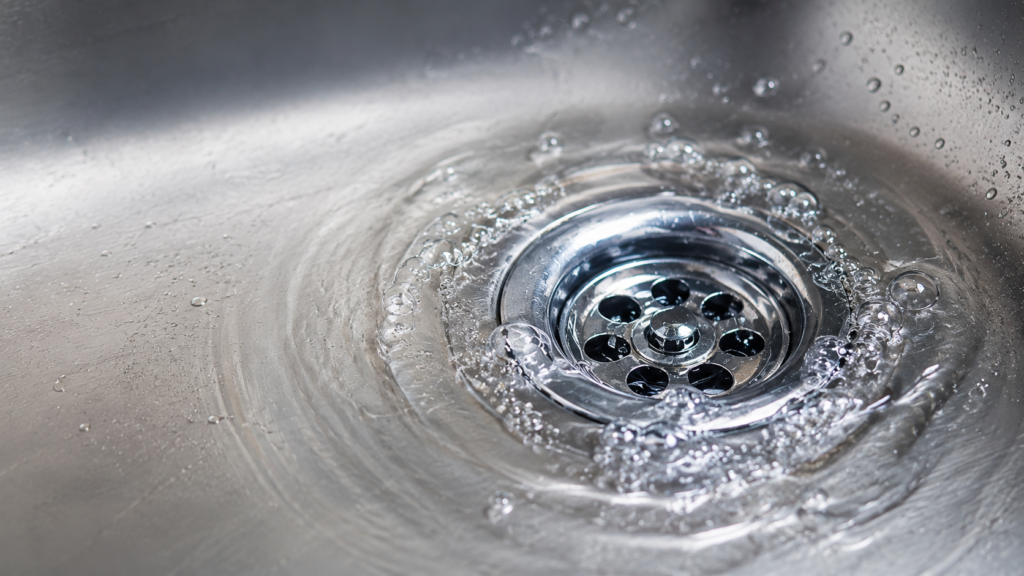
Bathroom sink gurgling is usually a partial clog right at the drain (hair and soap scum are the classic culprits) or a vent issue affecting that bathroom.
Kitchen sink gurgling is most often a grease and food-debris clog in the trap or the line leading away from it.
Shower or bathtub gurgling, especially when someone flushes a nearby toilet or runs the sink, points to a shared vent or branch line issue. The tub and toilet usually share a drain line, and pressure changes show up at the fixture with the weakest water seal.
Floor drain gurgling in a laundry room or basement usually means the P-trap underneath has dried out from disuse.
Multiple drains gurgling at the same time is the one to take more seriously. When the symptom shows up at sinks, tubs, and showers throughout the house, the problem is downstream of all of them, often in the main vent stack or the main sewer line.
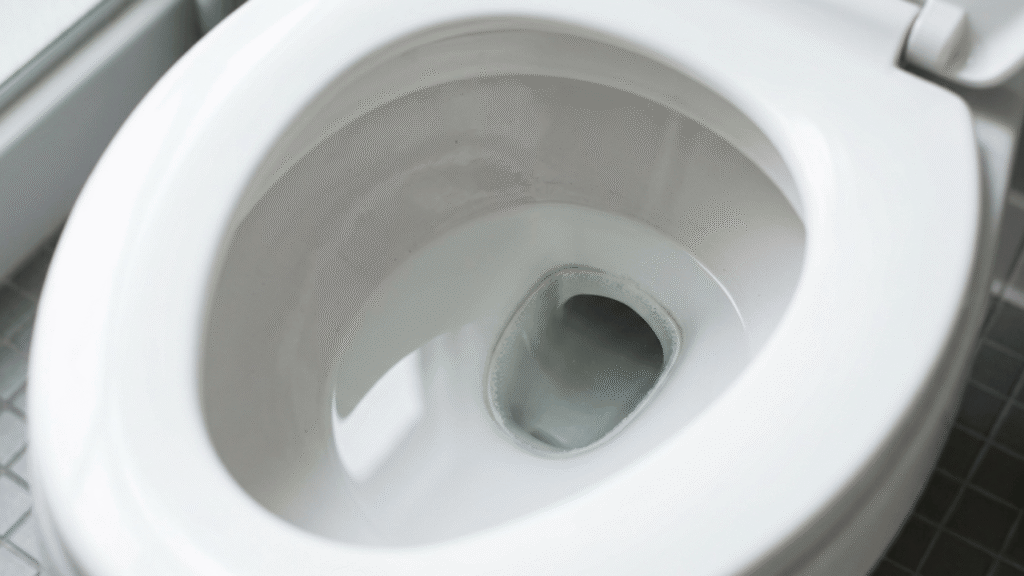
Toilet gurgling is a slightly different problem with overlapping causes. If your issue is specifically a bubbling toilet rather than other fixtures, we cover that in detail in why does my toilet bubble when I flush.
The 7 Real Causes of Gurgling Drains
1. A Blocked or Restricted Plumbing Vent (The Most Common Cause)
Vent issues are the number one reason drains gurgle, and the one most homeowners overlook because they’re thinking about what’s inside the drain, not what’s above the roof.
That vent pipe sticking up out of your roof can get blocked by surprisingly weird things. Leaves and twigs are common. Bird nests are common. One particularly memorable case involved a woodpecker stashing nearly three-quarters of a five-gallon bucket’s worth of acorns into a homeowner’s vent. Squirrel nests, ice in winter, and even thick snow can all cut off airflow.
Fix it: If you’re comfortable on the roof and conditions are safe, take a garden hose up there, have someone turn it on, and feed it down the vent to flush out debris. Heavier blockages may need a drain snake fed from above. If your home has had this problem since day one, the original plumbing may have been built without enough vents, which is a separate fix that needs a plumber.
2. A Partial Clog in the Drain Itself
This is what most people assume first, and it’s the second-most common cause. Hair, soap scum, grease, food debris, and gunk slowly narrow the inside of the pipe. Water can still get through, but the restriction creates the same airflow chaos as a blocked vent.
Fix it: Start simple. Pour a kettle of hot tap water down the drain (not boiling, as that can damage PVC seals on modern pipes). If that doesn’t clear it, try half a cup of baking soda followed by half a cup of white vinegar. Let it fizz for fifteen minutes, then flush with more hot water. For stubborn clogs, a drain snake or zip tool ($5 to $20 at any hardware store) usually does the job.
Skip the chemical drain cleaners. They damage pipes, especially older ones, and they rarely fix the actual problem.
3. A Dry P-Trap
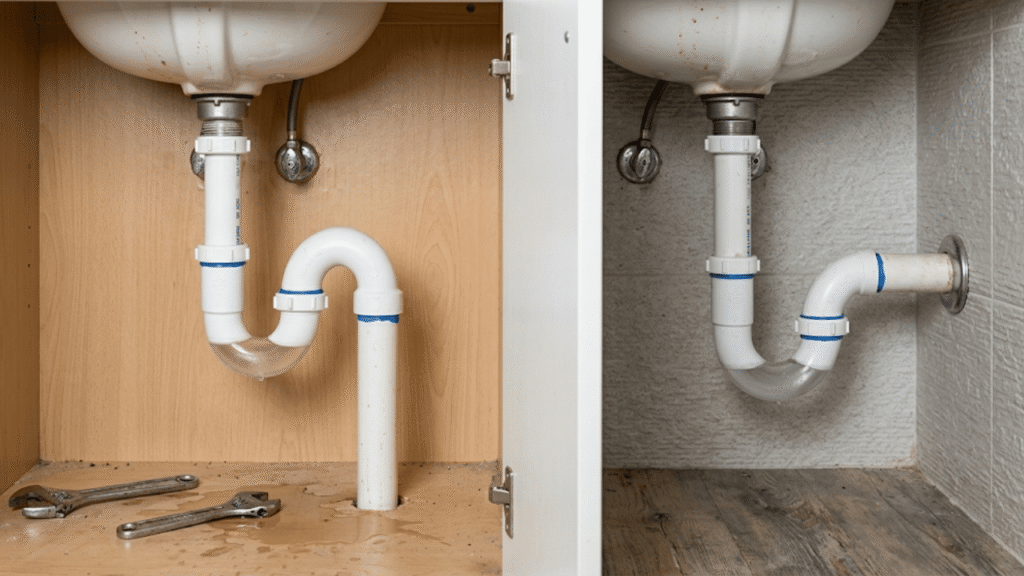
Every drain in your house has a P-trap underneath it, the U-shaped bend of pipe that holds a small pool of water. That water is the only thing standing between you and sewer gas backing up into your living space. When a fixture goes unused for a while, that water evaporates and the seal disappears, which produces the gurgle (plus, often, a sewer smell).
Most common culprits are guest bathrooms, basement floor drains, and laundry-area drains. In Texas, hot summers speed up evaporation, so traps dry out faster here than in cooler climates.
Fix it: Run water down the suspect drain for ten to fifteen seconds. Done. For drains you rarely use, pour a couple of tablespoons of cooking oil in afterward. It floats on top of the water and slows evaporation way down.
4. Tree Root Intrusion
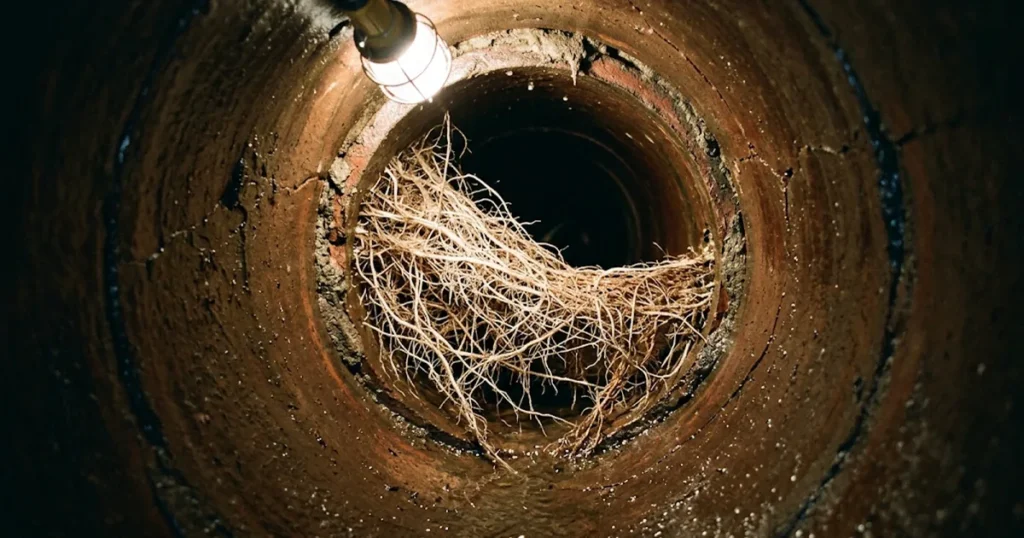
Older sewer lines, especially clay or cast iron, develop tiny cracks at the joints over time. Tree roots find those cracks and push in, hunting for the moisture and nutrients inside. Once a root gets in, it grows quickly and creates a partial blockage that catches debris, restricts flow, and creates exactly the airflow issue that produces gurgling.
This is a common cause in older DFW neighborhoods like Lakewood, East Dallas, and Oak Cliff, where mature oaks, pecans, and crepe myrtles sit right over decades-old sewer lines. Expansive North Texas clay soil makes it worse by stressing the pipe joints as it shifts with moisture changes.
Fix it: Tree roots aren’t a DIY fix. A plumber runs a sewer camera to confirm, then either hydro-jets the line to clear roots or, if the damage is significant, reseals the pipe from the inside using trenchless lining.
5. A Cracked or Damaged Drain Pipe
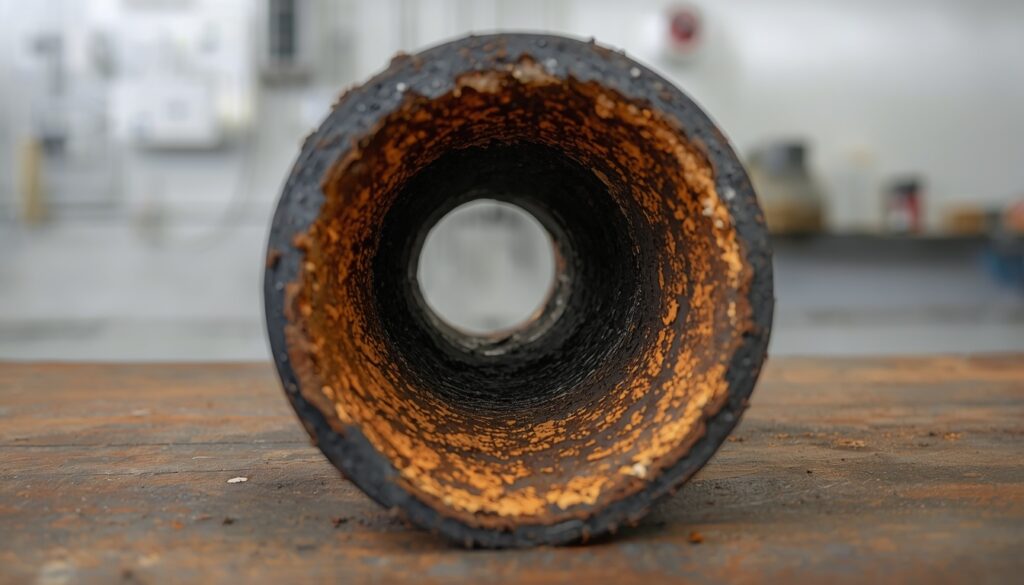
Cast iron sewer lines have roughly a thirty-year service life and decay from the inside out. A cracked pipe pulls air in where it shouldn’t, which disrupts the pressure balance and creates gurgles, often combined with a damp spot at the base of a wall, a musty smell, or visible mold growth. Mold from a long-term plumbing leak can aggravate allergies and respiratory problems, so it’s not something to leave alone.
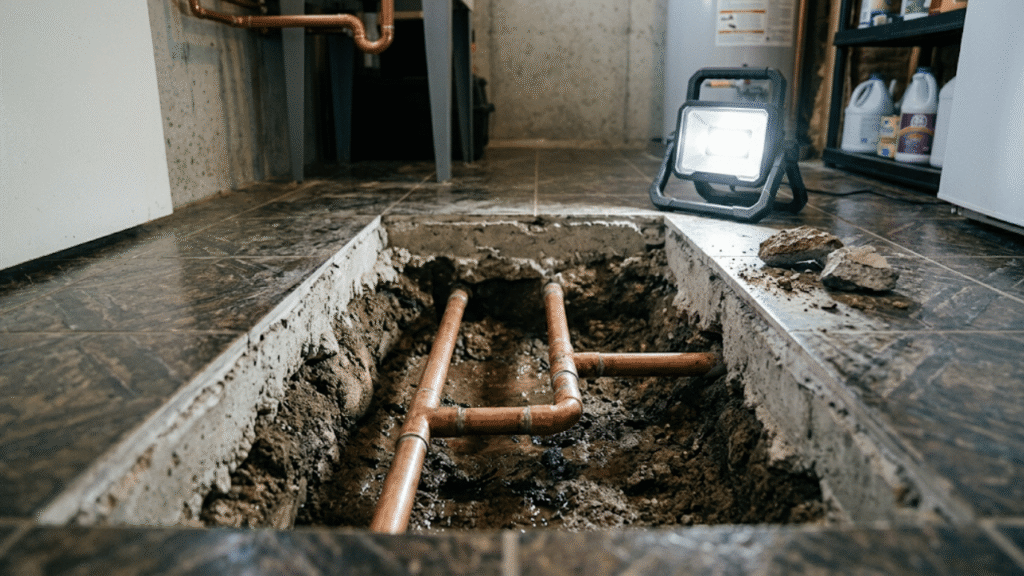
Fix it: A plumber needs to pinpoint the crack with a camera and decide between spot repair, pipe lining, or replacement of the affected section. This isn’t DIY territory, but catching it early is way cheaper than waiting for it to flood the wall.
6. A Partial Blockage in the Main Sewer Line
When the problem is in the main line carrying everything out of the house, the gurgling shows up at multiple drains at once, often combined with slow drainage everywhere and sometimes a sewage smell. This is the cause where you should stop running water in the house and call a plumber, because continuing to flush eventually leads to backups through the lowest drains.
Causes of main-line blockage include tree roots, grease buildup, collapsed pipe, or, in some DFW homes, pipe damage from clay soil shifting underground.
Fix it: A sewer camera locates the blockage, and depending on what’s there, a plumber clears it with a professional drain cleaning service, hydro-jetting, or, for damaged pipe, trenchless repair.
7. Plumbing That Wasn’t Designed Right
Sometimes the gurgle isn’t a blockage at all. Sometimes the original plumber didn’t install enough vents, or placed the drain too far from a vent (which violates standard plumbing code). Houses with botched DIY remodels or older homes plumbed before modern code can show gurgling that no amount of snaking and clearing will ever fix, because the cause is in how it was built.
Fix it: This needs a licensed plumber to inspect the layout and add or reconfigure venting. It’s not exciting work, but it’s the only permanent solution. Don’t waste money on repeated drain cleanings if the design is wrong.
“But My Drain Is Still Draining Fine”
This is one of the most common questions about gurgling, and the answer is important: yes, you can absolutely have a gurgle while water still drains normally.
What that combination tells you is that the blockage isn’t complete. Either the vent is restricted but not fully clogged (so air still trickles through, just not enough), or there’s a partial clog further down that water can still squeeze past. In other words, the system is working, but it’s working against resistance, and that’s what’s making the sound.
The mistake is treating “still draining” as “no big deal.” Partial vent blockages tend to get worse, not better, because the same debris that started the problem keeps building up. Partial drain clogs grow the same way. A gurgle is the system warning you early. Sort it now and it’s a twenty-minute job; ignore it for six months and it’s often a backup or a service call.
Is a Gurgling Drain Dangerous?
A faint, occasional gurgle from one drain isn’t an emergency. But there are specific situations where it’s telling you to act fast:
- Multiple drains gurgling at once points to a main line issue. Stop running water and call a plumber.
- A gurgle accompanied by a sewage smell means sewer gas is escaping into the house. Hydrogen sulfide in sewer gas can cause headaches, dizziness, and irritation at higher concentrations, so don’t shrug it off.
- Water backing up into a tub, shower, or sink when you use another fixture means the main line is partially blocked. Same deal.
- A gurgle that started after heavy rain can mean a cracked sewer line is taking on groundwater.
Outside of those signals, a gurgle is more annoying than dangerous, but it’s still worth handling before it grows.
When to Stop DIY-ing and Call a Plumber
Most gurgling problems are simple to fix yourself. Try the easy stuff first: refill traps, snake the drain, flush the vent. Call in a pro when:
- The gurgle is showing up at multiple drains at once
- You smell sewage indoors or outdoors near a sewer cleanout
- The problem keeps coming back within days of being cleared
- You see damp spots or stains on walls, ceilings, or floors
- The gurgle started right after a storm and isn’t clearing up
A camera inspection will find the source quickly. If you’re in the DFW area, you can contact a licensed plumber for diagnostic work, though any licensed local plumber with proper drain equipment can handle it.
How to Prevent Gurgling Drains in the Future
Once the immediate gurgle is gone, a few habits keep it from coming back:
- Run water down unused drains every couple of weeks so the P-traps don’t dry out. A splash of cooking oil afterward slows evaporation in rarely-used floor drains.
- Flush only the basics: pee, poop, and toilet paper. “Flushable” wipes are not actually flushable. Grease should never go down the kitchen sink; it solidifies further in the line.
- Install a vent screen on the roof ($10 to $20). It keeps leaves, debris, and curious squirrels out of the vent pipe. Inspect once a year, especially after autumn storms.
- Run a monthly enzyme drain cleaner like BioClean or Green Gobbler. These use bacteria to digest organic buildup. They’re safe for pipes and septic systems, unlike chemical cleaners that just buy you a couple of weeks while damaging your plumbing.
- Have older sewer lines camera-inspected once. If your home is over forty years old and the line has never been scoped, it’s worth doing once to catch developing cracks or root intrusion early.
Frequently Asked Questions
Why does my drain gurgle?
Drains gurgle when air can’t move freely through the system, usually because of a blocked plumbing vent, a partial clog inside the pipe, or a dry P-trap that’s lost its water seal. The gurgling sound is trapped air being forced backward through the nearest water seal as new water flows down.
Is a gurgling drain dangerous?
A single, occasional gurgle isn’t dangerous, but it’s a warning that shouldn’t be ignored. Multiple drains gurgling at once, a sewage smell, or water backing up into other fixtures are all signs of a more serious issue, and sewer gas exposure at higher concentrations can cause headaches and dizziness.
My sink gurgles but drains fine. What does that mean?
It means the blockage or vent restriction isn’t complete: water can still get through, but it’s fighting resistance, which creates the sound. It’s not an emergency, but partial blockages tend to grow into full ones. Fixing it while it’s still small is far cheaper than waiting.
Why does my sink gurgle when I flush the toilet?
Your sink and toilet usually share a vent or a branch drain line. When the toilet flushes, the surge of water pulls air from the line, and if the vent is restricted, that air gets pulled from the easiest available water seal, which is your sink’s P-trap. That’s the gurgle you hear.
How do I fix a gurgling shower drain?
Start by clearing any hair or soap scum from the drain opening. If the gurgling continues, try hot water followed by baking soda and vinegar. For stubborn cases, snake the drain with a $10 zip tool. If it persists, the cause is usually a blocked roof vent or a deeper line issue.
Can I fix a gurgling drain myself?
Most of the time, yes. Simple causes like a dry P-trap, a partial drain clog, or a partially blocked vent are all DIY-fixable in under an hour. The exceptions are tree root intrusion, cracked pipes, main sewer line blockages, and improperly designed plumbing, all of which need a licensed plumber.
Why are all the drains in my house gurgling?
Multiple drains gurgling at once almost always means the problem is in your main vent stack or main sewer line, both of which are downstream of every fixture in the house. Stop running water and call a plumber, because continuing to use the system risks a backup.
How much does it cost to fix a gurgling drain?
DIY fixes (hot water, baking soda, a plunger or snake) cost under $20. A professional drain cleaning typically runs from $150 to $400 depending on the location and severity of the clog. Camera inspections, hydro-jetting, and main-line repairs cost more and vary widely based on the work needed.
Bottom Line
Gurgling drains sound alarming but they’re almost always telling you something simple: air can’t move through the system the way it should. Most of the time you can fix it yourself in under an hour: refill a dry trap, snake a drain, or flush the roof vent. The handful of cases that need a plumber are easy to recognize: multiple drains acting up at once, a sewer smell, water backing up, or a gurgle that keeps coming back no matter what you try.
Don’t ignore it because the drain “still works.” Gurgling is the early-warning system. Take care of it now and it costs you twenty minutes. Wait six months and it costs you a service call.