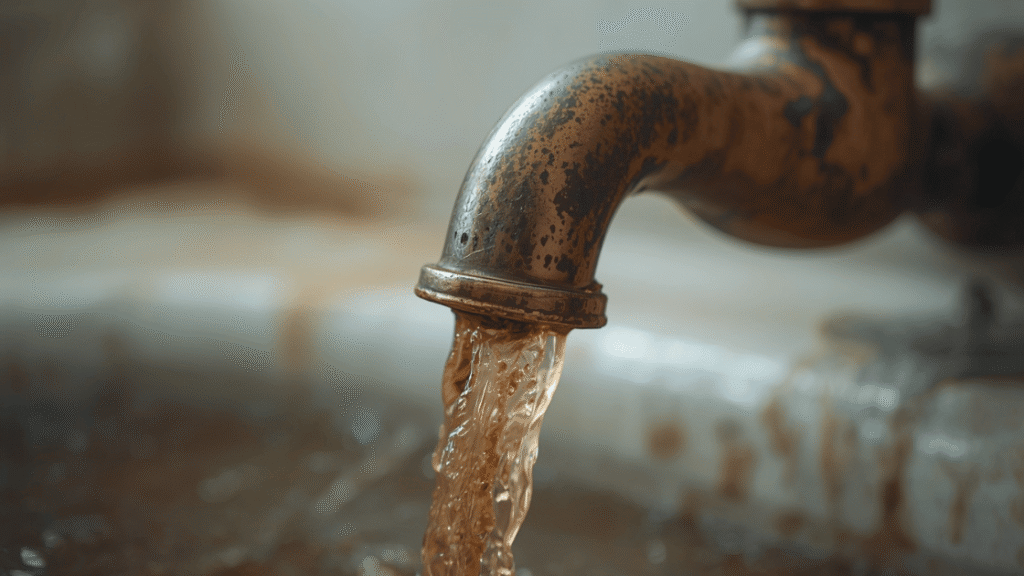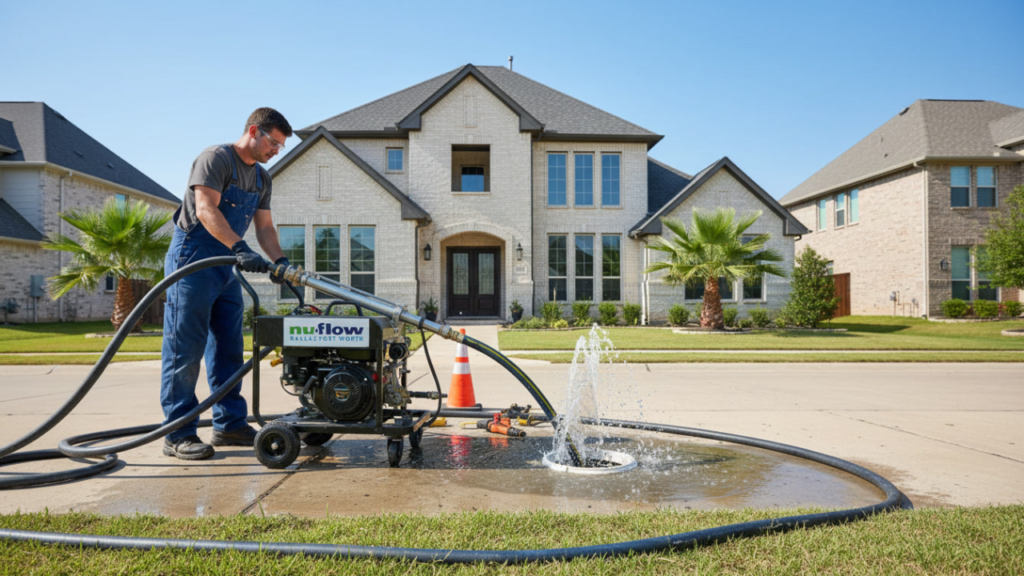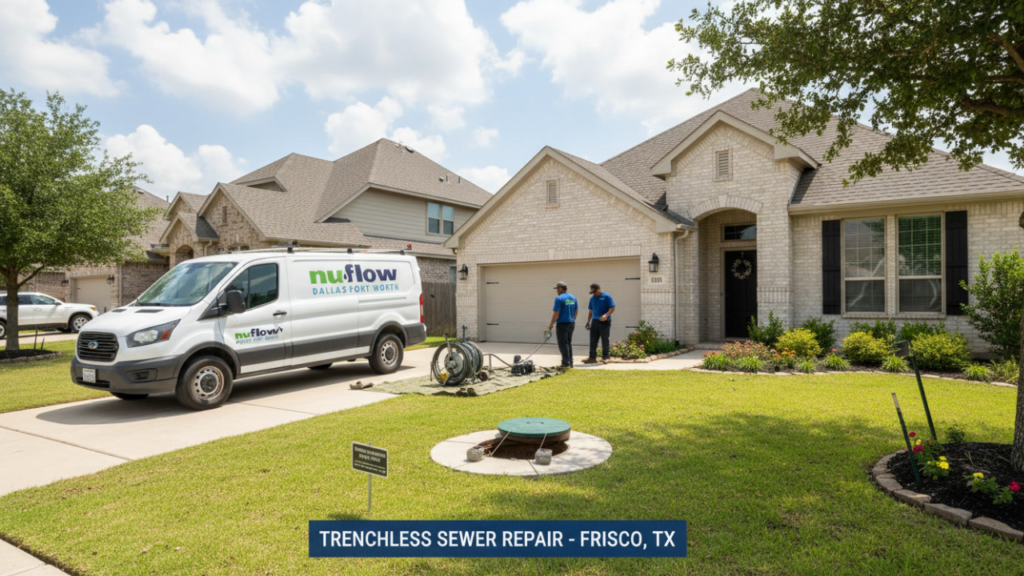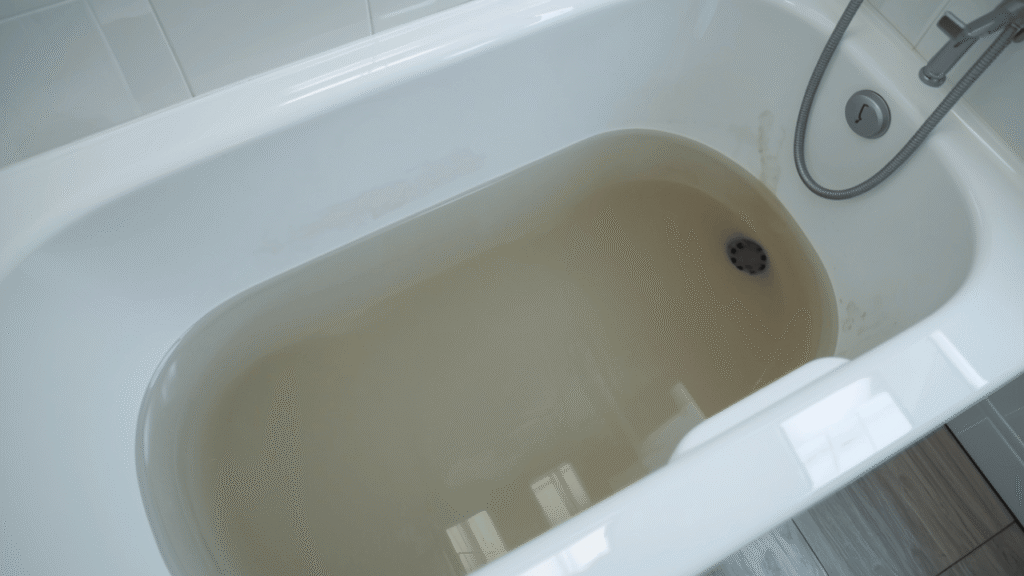
A sewer smell in the house is usually caused by a dried-out drain trap, a clogged drain, or a blocked vent pipe. The quickest fix is to run water down any drain that has not been used in a while, which refills the trap and reseals the gas. If the smell returns after that, the cause is deeper, often a cracked sewer line or vent problem that needs a camera inspection.
That covers the common fixes. Below, this guide walks through every cause of a sewer odor indoors, the DIY steps that actually work, how to tell a minor smell from a serious one, and when to call a plumber. Across sewer service calls in the Dallas-Fort Worth Metroplex, Nuflow DFW (RMP# 46694) finds that a recurring sewer smell, one that comes back days after cleaning, is rarely a dirty drain. It usually traces to a dry trap in a rarely-used room or a venting issue, and in older DFW homes, to cracked cast iron under the slab.
Why a Sewer Smell Happens and Why Not to Ignore It
Sewer gas escapes into your home when something that should seal it off has failed. Your plumbing is designed to keep that gas in the pipes and vent it out the roof. When a drain trap dries up, a vent gets blocked, or a pipe cracks, that seal breaks and the smell comes inside.
Do not ignore it. Beyond the unpleasant odor, sewer gas contains hydrogen sulfide and methane, and a persistent smell is a signal that part of your plumbing is not sealing or venting correctly. A mild odor today can point to a cracked line that turns into a backup or costly repair later. The smell is the early warning, not the whole problem.
Common Causes of a Sewer Smell in the House
A sewer odor rarely comes from one thing. Here are the usual causes, from simplest to most serious.
Dry or Empty P-Trap
The P-trap is the curved pipe under every sink, tub, and floor drain. It holds a small pool of water that blocks sewer gas from rising into the room. If a drain goes unused for weeks, that water evaporates and the gas flows straight in. This is the single most common cause, and it shows up most in guest bathrooms, basement or garage floor drains, and laundry sinks that rarely run.
Clogged or Dirty Drain
Grease, soap, hair, and food waste coat the inside of pipes and start to smell as they break down. A dirty-drain smell stays close to one fixture and is sharpest right at the drain opening. A true sewer smell is stronger, more sulfuric, and spreads through the room. That difference tells you whether the problem is local or deeper.
Cracked or Leaking Sewer Pipe
Underground sewer pipes crack from age, shifting Texas clay soil, or tree root intrusion. When that happens, gas escapes and the smell keeps returning no matter how often you clean the drains. In older DFW homes with cast iron or clay pipe, this is a frequent cause of a smell that simply won’t quit.
Blocked or Damaged Vent Pipe
Vent pipes carry sewer gas up and out through the roof. When a vent gets blocked by a bird nest, leaves, or debris, or cracks inside a wall, the gas has nowhere to go but back into the house. A vent problem often produces a smell with no obvious drain source.
Simple DIY Ways to Get Rid of a Sewer Smell
When the cause is minor, these steps often clear it. They work when the plumbing itself is sound.
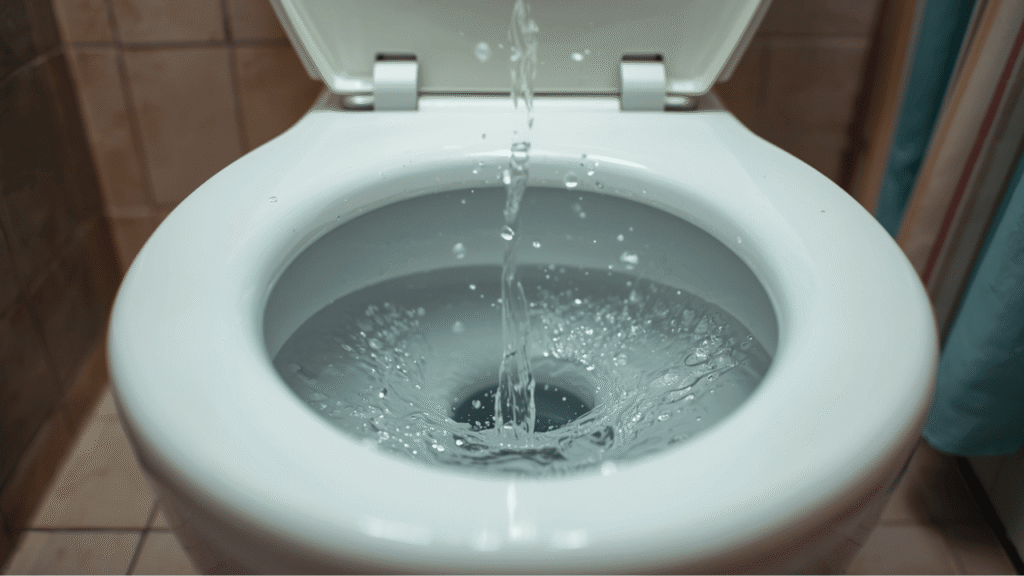
Run water in unused drains. Pour a few cups of water down any drain you have not used recently, including floor drains. This refills the P-trap and reseals the gas in seconds. Add a tablespoon of cooking oil to a rarely-used drain to slow future evaporation.
Clean the drain with hot water and natural cleaners. Flush the drain with near-boiling water to loosen buildup, then pour in half a cup of baking soda followed by a cup of white vinegar, wait 15 minutes, and flush again. This handles light drain odors, not deep sewer problems.
Clean drain covers and overflow openings. Hair and slime collect under drain covers and inside sink overflow holes. Remove the cover, scrub it, and clean the overflow channel, since these hidden spots smell even when the drain itself looks clean.
Improve airflow while you work. Run the exhaust fan or open a window in the affected bathroom or laundry room. This clears lingering odor while you fix the source, but on its own it only masks the smell.
When a Sewer Smell Means a Bigger Problem
DIY steps fix surface causes. These signs mean the problem is structural and a plumber is the right call:
- The smell returns within days of cleaning the drains
- A strong odor appears right after flushing a toilet or running water
- Gurgling sounds come from drains, which points to a venting or main line pressure problem
- Multiple drains are slow at the same time, which suggests a main line blockage rather than one fixture
- The smell is stronger outside near the foundation, a sign of a cracked underground pipe
When a sewer smell shows up alongside backups or damp spots, it is no longer a cleaning issue. These point to a cracked line, a failed vent, or a main line blockage that needs to be located before it can be fixed.
How a Camera Inspection Finds the Real Cause
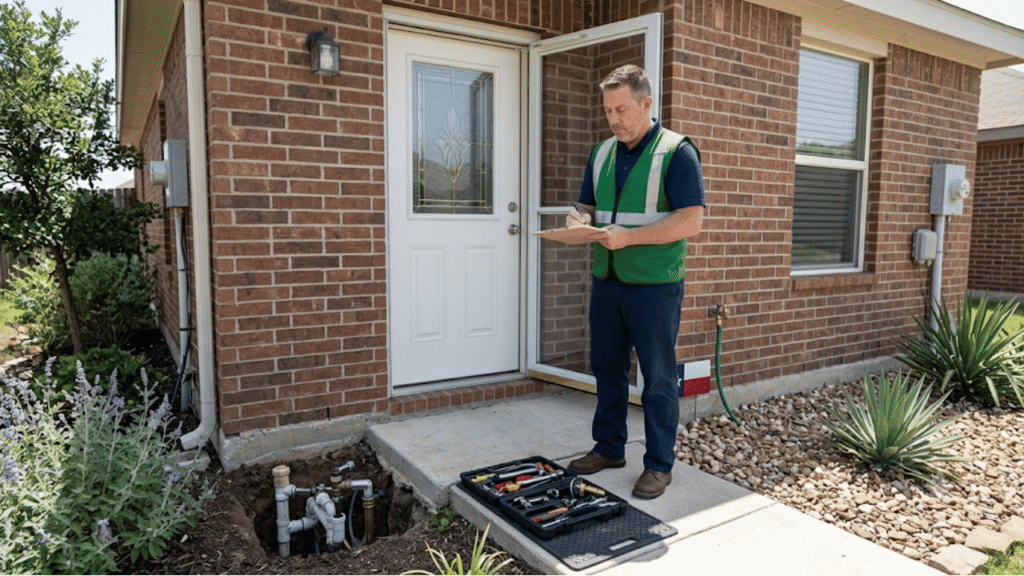
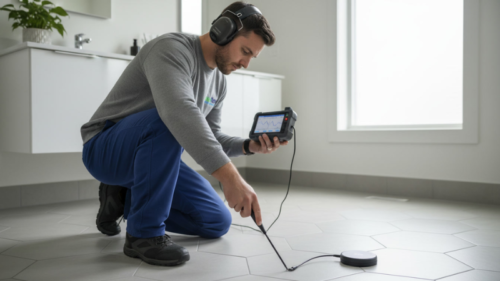
A sewer smell will not truly stop until the source is found and sealed. A sewer camera inspection is how a plumber sees inside the line without digging, locating the exact crack, root intrusion, blockage, or vent fault that cleaning cannot reach. Instead of guessing, the cause is pinpointed.
Once the problem is located, the fix depends on what the camera shows. A blockage may only need a thorough cleaning. A cracked pipe is where trenchless pipe lining comes in: a cured-in-place liner seals the damaged pipe from the inside, stopping gas from escaping, without tearing up the yard. Honest tradeoff: a camera inspection adds cost upfront, starting around $250+ (as of Q2 2026), but it prevents the far larger expense of repeatedly treating a smell that keeps coming back, or excavating blindly. Final cost depends on inspection findings.
Frequently Asked Questions
Why does my house smell like sewer?
A sewer smell in the house is most often caused by a dried-out drain trap that has let gas through, a dirty or clogged drain, or a blocked vent pipe. Running water down unused drains refills the trap and often fixes it. If the smell returns, the cause is likely a cracked pipe or vent issue. Call Nuflow DFW (RMP# 46694) at (469) 701-0597.
How do I get rid of a sewer smell in my house?
Start by running water down every drain, including floor drains, to refill dried-out P-traps. Clean drains with hot water, baking soda, and vinegar, and scrub drain covers and overflow openings. If the smell comes back within days, the cause is deeper and needs a camera inspection. Nuflow DFW serves the DFW Metroplex at (469) 701-0597.
Is a sewer smell in the house dangerous?
A sewer smell signals that gas, which contains hydrogen sulfide and methane, is entering your home instead of venting outside. Low levels are mainly an irritant, but a strong or persistent smell should be addressed quickly because it points to a plumbing fault that can worsen. Have it inspected. Nuflow DFW (RMP# 46694) offers 24/7 service at (469) 701-0597.
Why does the sewer smell keep coming back after I clean the drains?
A smell that returns within days usually is not a dirty drain. It points to a dried trap in a rarely-used room, a blocked vent pipe, or a cracked sewer line, common in older DFW homes with cast iron. Cleaning cannot fix those. A camera inspection finds the real source. Call Nuflow DFW (RMP# 46694) at (469) 701-0597.
Why does my house smell like sewer after flushing the toilet?
A sewer smell right after flushing usually means a venting problem or a partial main line blockage, where pressure pushes gas back through traps instead of out the roof vent. Gurgling sounds with the smell strengthen that diagnosis. This needs professional inspection, not just drain cleaning. Nuflow DFW serves Dallas, Garland, and Plano at (469) 701-0597.
Can a dry P-trap really cause a sewer smell?
Yes, a dry P-trap is the most common cause of a sewer smell. The trap holds water that blocks gas from rising into the room, and when a drain sits unused, that water evaporates. Simply running water down the drain for a few seconds refills it and stops the smell. If that does not work, call Nuflow DFW (RMP# 46694) at (469) 701-0597.
Stop the Smell at Its Source
If running water in your drains does not fix the smell, or it keeps returning, the cause is deeper than cleaning can reach. Rather than mask it, get a camera inspection that shows exactly where the gas is escaping, then seal it properly. Nuflow DFW is a licensed Texas master plumber (RMP# 46694) serving Dallas, Garland, Plano, and the wider DFW Metroplex, with 24/7 emergency service. You can verify the license through the Texas State Board of Plumbing Examiners. Call (469) 701-0597 to schedule an inspection.