Touchless bathroom faucets are worth it for most homes if you value hygiene and water savings, and you have a power source under the sink. They cut germ spread by removing the handle you touch with dirty hands, reduce water use by 10 to 15%, and last for years. The tradeoff: they cost more upfront and depend on batteries or wiring. For a typical home setup, the convenience and cleanliness usually justify the price.
That is the short answer. Below covers the real pros and cons, what a touchless faucet actually costs to buy and install in a DFW home, how they compare to standard faucets, and whether the same logic applies to kitchen faucets. Across faucet installations in the Dallas-Fort Worth Metroplex, Nuflow DFW (RMP# 46694) finds the most common regret is not the faucet itself, it is people buying a bargain unit with a weak sensor that misfires, so the model matters more than the technology.
Thinking about an install? Call Nuflow DFW at (469) 701-0597 for service across the DFW Metroplex.
What Is a Touchless Faucet and How Does It Work
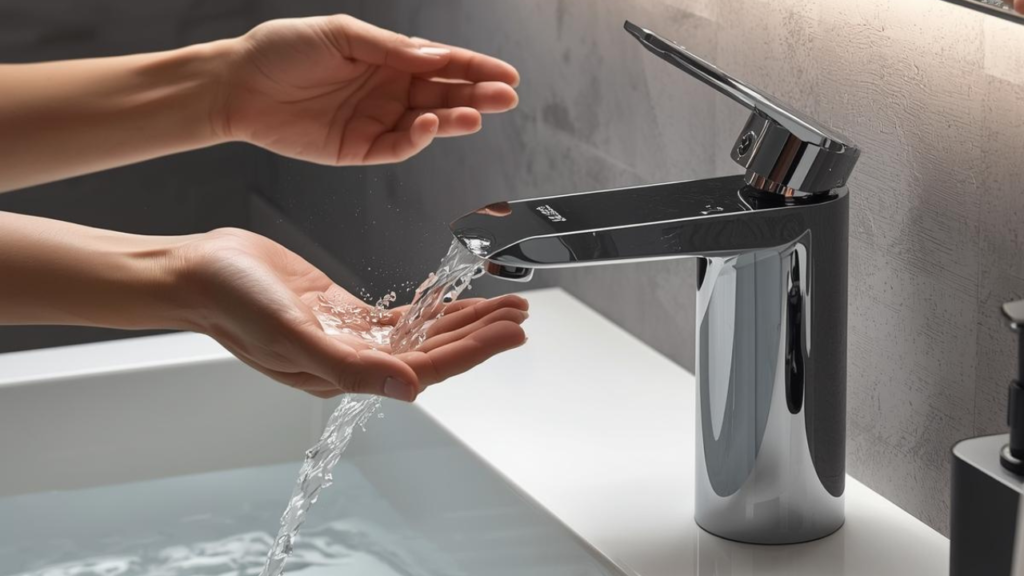
A touchless faucet uses a motion sensor, usually infrared, to start and stop water flow when it detects your hands. There is no handle to turn. Most home models run on batteries (typically 4 AA, lasting 1 to 2 years) or a low-voltage adapter plugged into an outlet under the sink. Water temperature is set with a small mixing valve under the basin, or a manual lever on hybrid models.
The sensor sits at the base or neck of the faucet. When your hands enter its range, the solenoid valve opens; when they leave, it closes after a short delay. That single mechanical change, removing the handle, is the source of every benefit and every drawback below.
Benefits of a Touchless Bathroom Faucet
These are the reasons most DFW homeowners install them.
Hygiene is the biggest one. You touch a standard faucet handle with dirty hands to turn it on, then again with clean hands to turn it off, recontaminating them. A touchless faucet removes that contact entirely, which matters in a bathroom shared by a whole family or used by guests.
Water savings come next. Because the water shuts off the instant your hands leave the sensor, it does not run while you scrub or brush. Real-world savings land around 10 to 15% of bathroom sink use, which adds up over a year on a DFW water bill.
Convenience helps in everyday moments: hands full, hands messy from cooking or gardening, or a child who cannot reach a handle. The water is just there when needed.
Less wear on the faucet is a quieter benefit. No handle means no washer or cartridge wearing out from constant turning, so the common drip-from-a-worn-handle failure simply does not happen.
Cons of a Touchless Bathroom Faucet
An honest answer has to include the drawbacks, since searchers asking “pros and cons” deserve both sides.
Higher upfront cost is the main one. A decent touchless faucet costs more than a comparable manual model, and the gap is real.
Power dependence is the practical catch. Battery models need new batteries every 1 to 2 years, and if they die, the faucet stops working until you replace them. Hardwired models avoid that but need an outlet under the sink, which older DFW homes may not have.
Sensor quirks frustrate people who buy cheap units. A weak or poorly placed sensor can misfire, turning on when you reach for soap or failing to detect dark sleeves. This is the single most common complaint, and it is almost always a function of buying a low-quality model, not the technology itself.
Cleaning needs a small habit change. The sensor window must stay clean to read your hands correctly, so it needs a quick wipe during normal counter cleaning. That is the honest answer to the “pros cons cleaning” question: maintenance is easy, but it is not zero.
Touchless vs Standard Faucet: Quick Comparison
| Factor | Touchless | Standard Manual |
|---|---|---|
| Hygiene | No-touch operation | Handle touched dirty and clean |
| Water use | 10 to 15% less | Runs while handle is open |
| Upfront cost | Higher | Lower |
| Power needed | Batteries or adapter | None |
| Failure points | Sensor, solenoid, battery | Washer, cartridge |
| Best for | Shared baths, hygiene focus | Budget, simplicity |
How Much Does a Touchless Bathroom Faucet Cost in DFW?
A touchless bathroom faucet itself runs roughly $150 to $400+ for a quality residential model, with commercial-grade units higher (as of Q2 2026). Professional installation in a DFW home typically adds a standard faucet labor charge, with bathroom plumbing work starting at $150+ depending on whether the existing supply lines, valve, and under-sink power need any changes. Final cost depends on the faucet model and your sink’s existing setup.
The biggest cost variable is power. If there is already an outlet under the sink, a hardwired model installs cleanly. If not, you either choose a battery model or add an outlet, which raises the price. A plumber can tell you which path fits your sink during the estimate.
Are Touchless Kitchen Faucets Worth It Too?
The same logic applies, and the case is arguably stronger in the kitchen. You handle raw meat, crack eggs, and touch packaging, then need water without spreading that to the faucet handle. Touchless kitchen plumbing fixtures also tend to get heavier daily use, so the hygiene and convenience payoff is larger. The tradeoff is the same: better models cost more and need power. For a busy family kitchen, most homeowners who install one keep it.
When a Standard Faucet Is the Better Choice
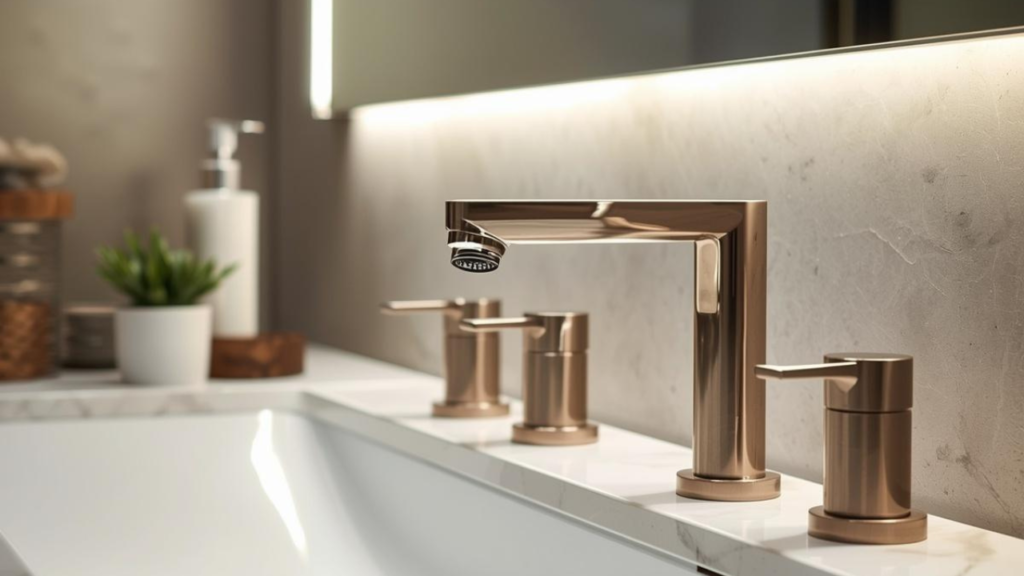
Touchless is not automatically the right answer for every home. If your budget is tight, a quality manual faucet does the same core job for less and has fewer failure points. If your sink has no under-sink power and adding an outlet is not practical, a battery model means ongoing battery changes you may not want. And if a household member finds sensors confusing, a simple lever is the kinder choice. The honest position: touchless wins on hygiene and water savings, manual wins on cost and simplicity, and the right pick depends on which you value more.
Frequently Asked Questions
Are touchless bathroom faucets worth it for the home?
For most homes, yes. Touchless bathroom faucets improve hygiene by removing the handle you touch with dirty hands, save 10 to 15% on water, and reduce faucet wear. The tradeoffs are a higher upfront cost and a dependence on batteries or wiring. For a typical home setup, the hygiene and savings usually justify the price. Nuflow DFW (RMP# 46694) installs them across the DFW Metroplex at (469) 701-0597.
What are the pros and cons of a touchless bathroom faucet?
Pros: no-touch hygiene, 10 to 15% water savings, convenience with full or messy hands, and less mechanical wear. Cons: higher upfront cost, dependence on batteries or an under-sink outlet, possible sensor misfires on cheap models, and a sensor window that needs occasional wiping. Choose a quality model to avoid most cons. Call Nuflow DFW at (469) 701-0597.
Do touchless faucets require special cleaning?
No special products are needed, just keep the sensor window clean. A quick wipe during normal counter cleaning keeps the infrared sensor reading your hands correctly. A dirty or smudged sensor is the most common cause of misfires. Otherwise, touchless faucets are cleaned like any other faucet. Nuflow DFW (RMP# 46694) can advise on the right model during an estimate at (469) 701-0597.
How long do the batteries in a touchless faucet last?
Most battery-powered touchless faucets use 4 AA batteries that last 1 to 2 years under normal household use. When they run low, the faucet usually gives a warning, slower response or a blinking indicator, before stopping. Hardwired models avoid batteries entirely but need an under-sink outlet. Nuflow DFW serves the DFW Metroplex at (469) 701-0597.
Are touchless kitchen faucets worth it?
Yes, often more so than bathroom models. Kitchens involve handling raw food and packaging, so no-touch operation prevents spreading germs to the faucet, and heavier daily use means a bigger convenience payoff. The tradeoff is the same higher cost and power dependence. For busy family kitchens, most owners are glad they installed one. Call Nuflow DFW (RMP# 46694) at (469) 701-0597.
Is a touchless faucet worth it for a typical home setup?
For a typical home with a power source under the sink, yes. The hygiene benefit, water savings, and convenience outweigh the higher upfront cost for most families, especially in shared or guest bathrooms. If your budget is tight or the sink has no power access, a quality manual faucet remains a reasonable choice. Nuflow DFW (RMP# 46694) can assess your setup at (469) 701-0597.
Deciding If It Is Right for Your Home
If hygiene and water savings matter to you and your sink has power access, a touchless bathroom faucet is worth it, just buy a quality model so the sensor performs. If budget or power access is the constraint, a good manual faucet is a fair alternative. Either way, a proper install protects against leaks and sensor placement problems. Nuflow DFW is a licensed Texas master plumber (RMP# 46694) offering plumbing services across Dallas, Garland, Plano, and the wider DFW Metroplex, with 24/7 service. You can verify the license through the Texas State Board of Plumbing Examiners. Call (469) 701-0597 to discuss the right faucet for your home.