Brown water from your faucet is almost always rust or sediment stirred up in the water, not a health emergency. The fastest way to find the cause is to check three things: is it hot water, cold water, or both, is it one faucet or the whole house, and did it start suddenly. Those three answers point straight to whether the problem is your water heater, your pipes, or the city’s line. Nuflow DFW (RMP# 46694) diagnoses brown water across the DFW Metroplex by tracing it to the exact source.
It is unsettling to turn on the tap and get muddy brown water. The good news is that in most cases the water is discolored, not dangerous, and the cause is specific and fixable. This walks through what brown water is, how to pinpoint where it comes from, whether it is safe, and when it needs a plumber versus clearing on its own.
What Brown Water Actually Is
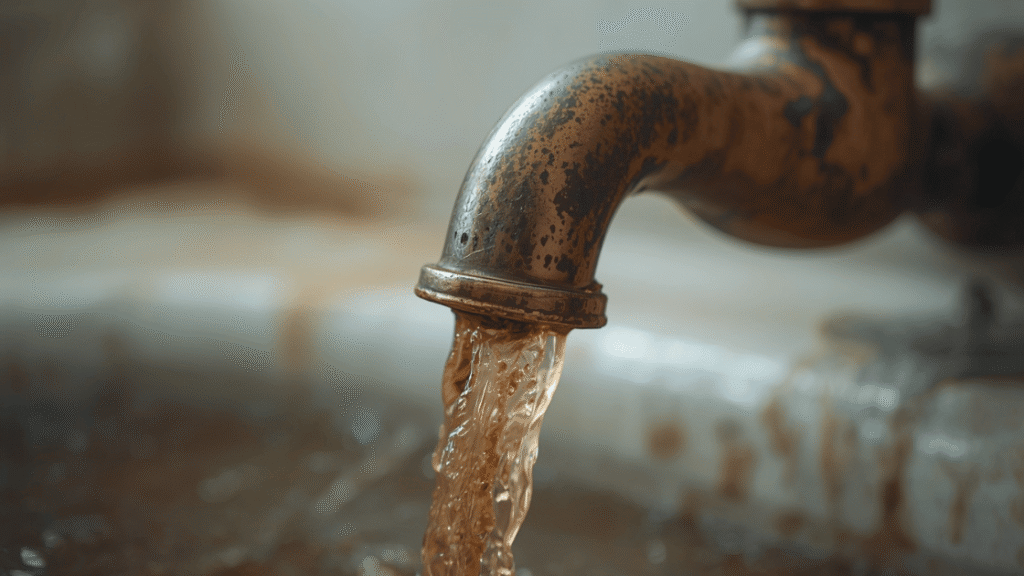
Brown or rust-colored water is caused by iron oxide, which is rust, or sediment suspended in the water. Iron and manganese occur naturally in water at tiny levels and settle as sediment inside pipes and tanks over time. When something changes the water flow, a pressure shift, a burst of speed, or corrosion breaking loose, that settled sediment lifts back into the water and comes out your tap looking brown.
That is why brown water often appears suddenly and why it sometimes clears on its own. The EPA classifies iron and manganese as secondary contaminants, meaning they affect color, taste, and staining rather than health, and sets the level where iron becomes visible at 0.3 milligrams per liter. So the color is a nuisance in most cases, but it still tells you something in your system needs attention.
The Three-Question Test to Find the Source
Before anything else, run this quick check. It narrows the cause faster than any list of guesses.
Is it hot, cold, or both? Run only the hot water at one faucet, then only the cold. If just the hot is brown, the problem is almost certainly your water heater. If just the cold is brown, it is on the supply side, meaning your pipes or the city line. If both are brown, it points to the main supply into the house or the city.
Is it one faucet or the whole house? Check several faucets. Brown water at one fixture means a corroded pipe in that one branch line. Brown water everywhere means a whole-house source: the main supply line, the service line from the street, or aging pipes throughout.
Did it start suddenly, and are neighbors affected? If it appeared all at once at every faucet and your neighbors have it too, the cause is the city, a main break or hydrant flushing. If it is only your house, the problem is inside your property.
A quick tip for single-handle faucets, where you cannot easily separate hot from cold: turn the handle all the way to hot, then all the way to cold, testing each extreme separately. That isolates which side is carrying the brown water.
The Most Common Causes in DFW Homes
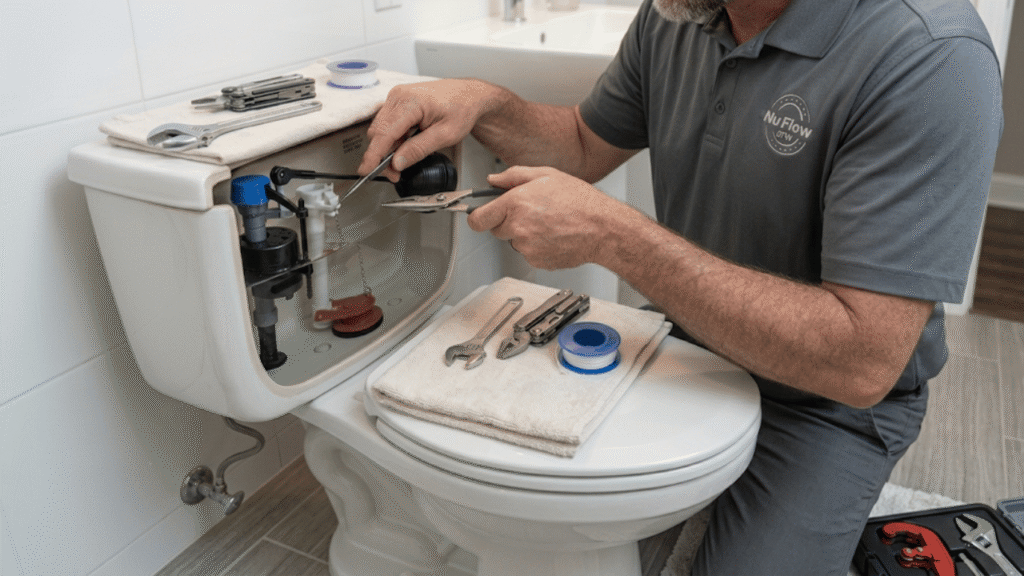
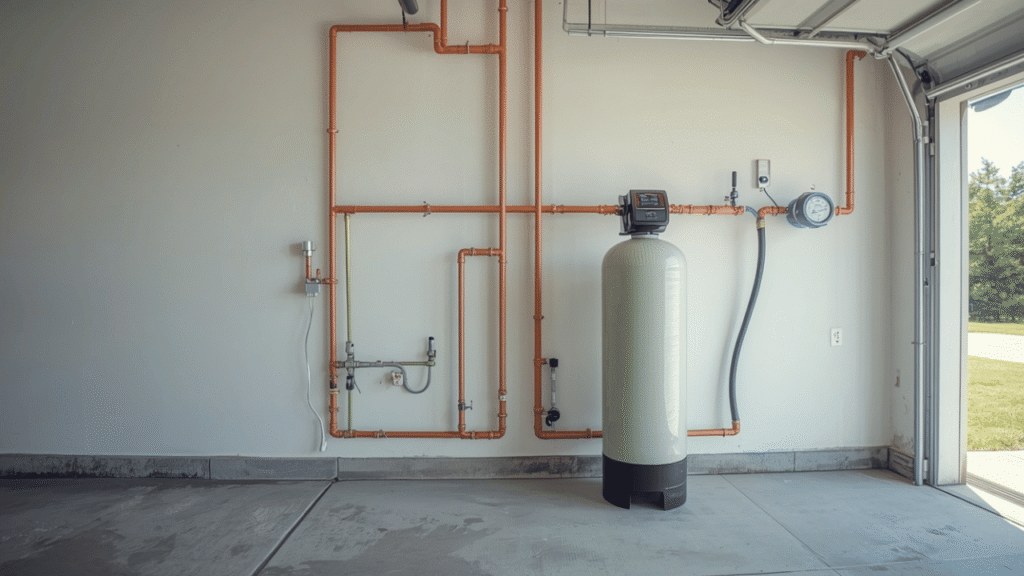
Water heater sediment or corrosion. If only the hot water is brown, this is the usual answer. Sediment builds up at the bottom of the tank, and a corroding tank or a spent anode rod adds rust to the hot supply. This is extremely common in DFW because the area’s hard water accelerates sediment buildup. Flushing the tank clears loose sediment, and replacing the anode rod helps, but if the tank itself has rusted through, it needs replacing. Our guide to water heater repair covers the warning signs.
A rusting expansion tank or galvanized fittings. This one gets missed a lot. On many water heaters, a small expansion tank and galvanized fittings sit on the hot-water side, and cheap steel there rusts, especially with hot water constantly sitting in it. The tell is hot water that runs clear for a few seconds, turns brown for three or four seconds, then clears. The fix is swapping rust-prone galvanized parts for brass, which does not rust, and ideally moving the expansion tank to the cold side so hot water is not sitting in it.
Corroded pipes inside the home. Homes built before the mid-1980s often have galvanized steel supply lines that rust from the inside over 40 to 50 years. This produces brown water at both hot and cold taps, worst first thing in the morning after water has sat overnight. It shows up most in DFW’s older neighborhoods, like the pre-1940s homes across older Dallas neighborhoods such as the M Streets and Lakewood, where original galvanized and cast iron lines are now well past their lifespan. The long-term fix is repiping the corroded lines.
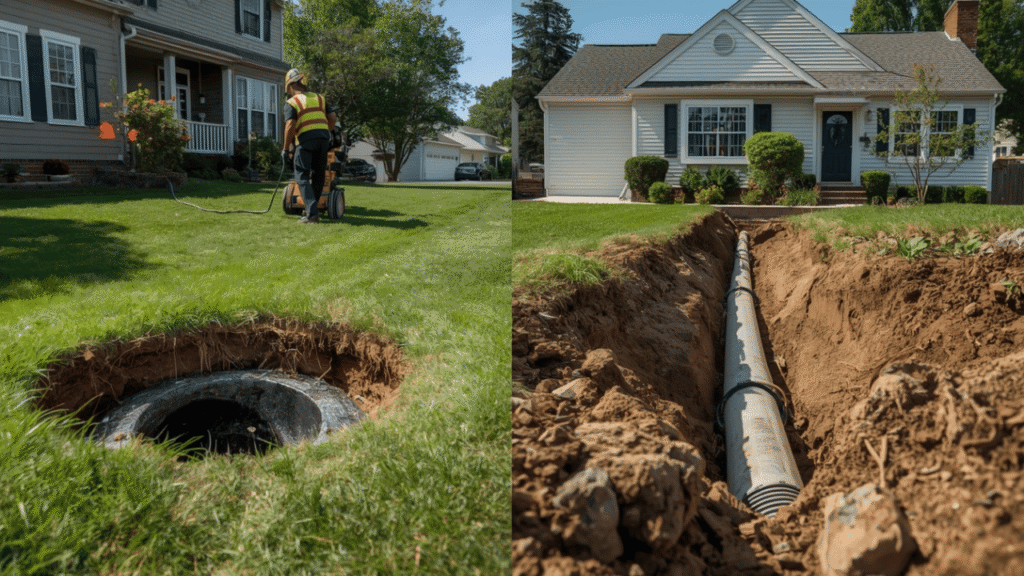
A corroded service line. The line connecting the city main to your house can corrode, and since all your water passes through it, it discolors every fixture. Unlike a city event, this does not clear on its own and usually needs the line replaced.
City water main breaks or hydrant flushing. If it hit suddenly at every tap and neighbors have it too, this is temporary. Water departments flush hydrants and repair mains, which stirs up sediment. It normally clears within a few hours.
What to Do Right Now
Start with the cold tap. Run cold water at your lowest faucet for 10 to 15 minutes. If the cause is city flushing or a main break, this flushes the sediment through and the water clears. Hold off on hot water while you do this, so you do not pull discolored water into your heater.
Do not run the washing machine or dishwasher while the water is brown. Iron stains fabric and, combined with detergent or bleach, sets the stain permanently. Avoid drinking or cooking with it until it clears, more out of caution than proven danger. If the water does not clear after 15 minutes of running the cold tap, the problem is on your side of the meter, not the city’s, and it is time to look closer or call a plumber.
Is Brown Water Safe?
For the most common cause, iron and manganese, brown water is generally not a health hazard at typical levels, only a nuisance that stains and tastes metallic. A few situations do carry real risk. Brown water from older lead service lines or lead solder, found in some homes built before 1986, can carry lead, which the CDC notes has no safe level of exposure for children. Brown water from a private well after heavy rain can mean surface contamination and needs testing. And any brown water that lasts more than a day, comes with low pressure, or has a strong metallic smell deserves a professional look. If someone in the home is medically vulnerable, use bottled water until the cause is confirmed. This is general information, not a substitute for testing your specific water.
When to Call a Plumber
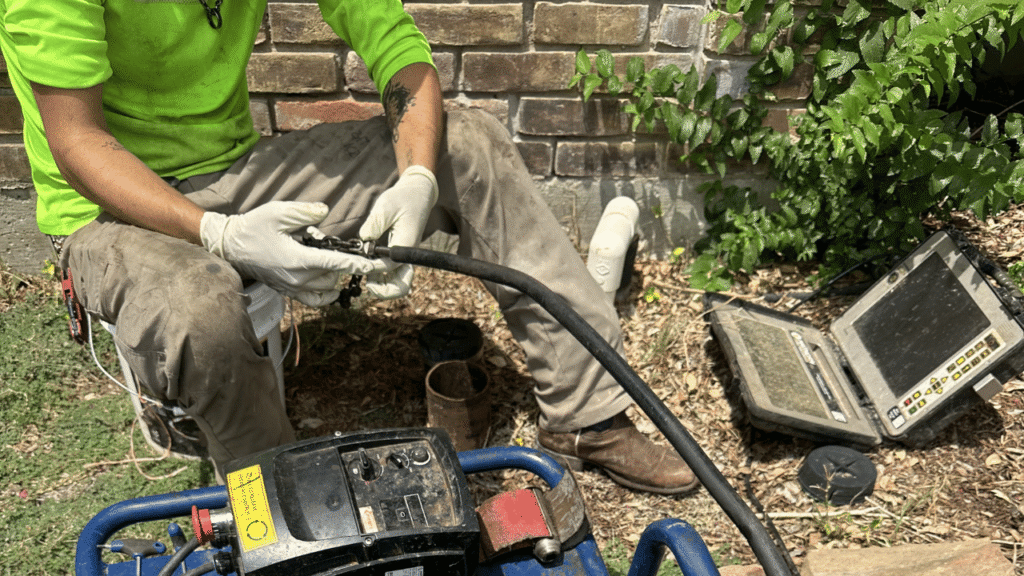
Some brown water clears itself; some does not. Call a plumber when the water is brown at every fixture and does not clear after flushing the cold tap, when only the hot water is brown and flushing the heater does not fix it, when a single faucet stays brown, or when brown water keeps returning. These point to corrosion in a pipe, tank, or service line that will not resolve on its own and gets worse over time. Because the discolored water can travel and surface far from the actual corroded section, tracing it reliably often takes professional leak and pipe diagnosis. A plumber can test hot versus cold, inspect the pipe material, and pinpoint the corroded component rather than guessing.
Frequently Asked Questions About Brown Water From a Faucet
Why is my water brown all of a sudden?
Sudden brown water is usually stirred-up sediment, most often from a city water main break or fire hydrant flushing, especially if it hit every faucet at once and your neighbors have it too. This type clears within a few hours. Run your cold tap for 10 to 15 minutes to flush it through.
Why is only my hot water brown?
Brown hot water with clear cold water points to your water heater in most cases. Sediment at the bottom of the tank, a corroding tank, a spent anode rod, or rusting galvanized fittings on the hot side add rust to the hot supply. Flushing the tank and checking the anode rod usually helps.
Is brown water from the faucet safe to drink?
Brown water from iron and manganese is generally a nuisance, not a health hazard, at typical levels. But brown water from lead pipes, or from a well after heavy rain, can be unsafe. If it persists over 24 hours, smells strongly metallic, or comes with low pressure, avoid drinking it and have the water tested.
How do I fix brown water coming from my faucet?
First, run the cold tap 10 to 15 minutes to rule out a temporary city issue. Then test hot versus cold and check multiple faucets to find the source. Hot only means flush the water heater. Cold or all faucets, persistent, means a pipe or service line issue that needs a plumber.
Why does my water run brown for a few seconds then clear?
Water sitting against corroded pipe or fitting walls overnight absorbs rust, so the first few seconds of flow push that discolored water out before fresh water follows. This first-draw pattern signals early-stage corrosion. It tends to worsen over time, so it is worth monitoring and having inspected if it grows.