Sewer line inspection warning signs in DFW homes usually show up as slow drains, gurgling toilets, sewer odor, recurring backups, soggy lawn patches, foundation movement, and pests you cannot trace. Any one of these means it is time to scope the line. A homeowner in West Plano called us last spring about a kitchen sink that drained slower every week. By the time we scoped the line, the camera found the break 18 feet out, at a joint wrapped tight with oak roots. The slow sink was the only sign she noticed. The pipe had been failing for months. That is the pattern with sewer lines: the warning is small, the problem underneath is not.
In this blog post we will walk you through the seven signs we see most often on DFW jobs, what each one actually means underground, what a camera inspection costs, and when a problem can wait versus when it cannot.
When Your Sewer Line Is Trying to Tell You Something
A sewer line in trouble sends signals long before it collapses. The most reliable warning is more than one fixture acting up at once: when a toilet, a shower, and a sink all slow down together, the problem sits in the main line, not the individual drain. Across 200+ trenchless jobs in DFW, Nuflow DFW found the earliest symptom was a slow drain in roughly one of every three failing cast iron lines.
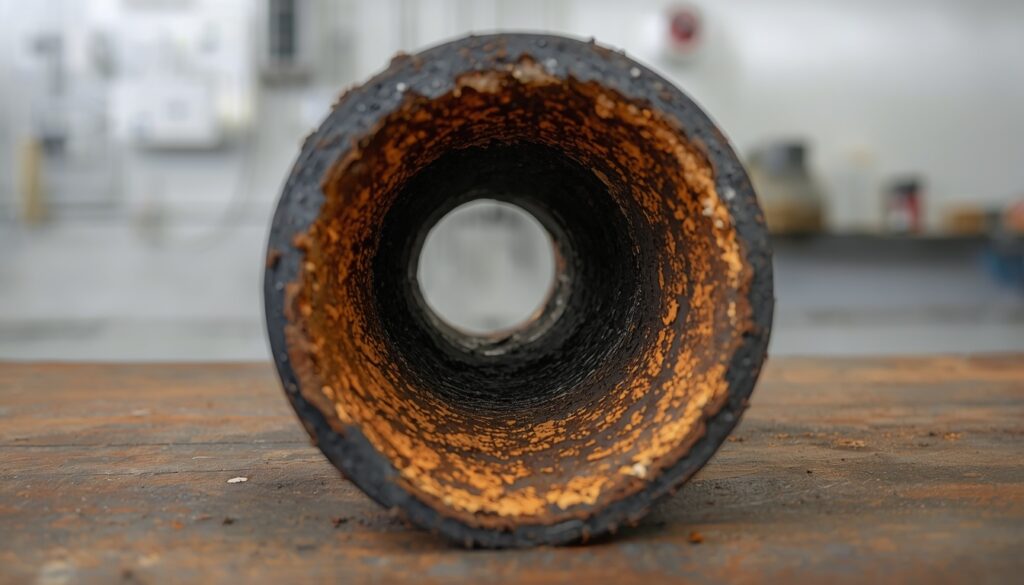
The reason these signs matter is timing. Sewer damage is progressive. A hairline crack lets in roots, roots widen the crack, the crack catches debris, and debris turns into a backup. Catching it at the crack stage means a sewer camera inspection and a trenchless liner. Catching it at the backup stage can mean excavation and sewage cleanup.
The 7 Warning Signs Your Sewer Line Needs Inspection
Most sewer problems announce themselves before they fail, but the signals are easy to miss or write off as minor. A drain that runs slow, a faint odor, a patch of lawn that stays green too long: each one points to something happening in the line you cannot see. Across our DFW jobs, the homeowners who caught a problem early almost always noticed one of these seven signs first and acted on it.
Here is what to watch for and what each sign means underground:
1. Multiple Drains Running Slow at the Same Time
One slow drain is a local clog. A slow drain is hair in the bathroom sink or grease in the kitchen line, and a plunger or a snake usually clears it. The picture changes when several fixtures slow down together. When the kitchen sink, the tub, and the toilet all drain sluggishly, the blockage sits in the main sewer line that carries everything to the street.
Here is the test we run on site: fill the tub, then flush the toilet. If the tub water dips or the toilet bubbles, the two fixtures are fighting over a main line that cannot keep up. On a 1970s home in Lakewood Dallas, that single test pointed us to a root mass 22 feet down the line before we ever pulled out the camera. A whole-house slowdown is the clearest early case for a sewer line inspection.
2. Gurgling Sounds From Toilets and Drains
Gurgling is trapped air finding its way out. Your drain system vents air through a pipe to the roof so water can flow freely. When a clog or a cracked pipe blocks the line, water displaces air with nowhere to go, and it pushes back up as a gurgle or a bubble. You will often hear it from one fixture while you run water at another, like a toilet that burps when the washing machine drains.
The location tells us a lot. Gurgling at a single drain points to a local vent or trap issue. Gurgling that moves around the house, a toilet here, a shower there, points to the main line. We treat a wandering gurgle as a partial blockage that has not failed yet, which is the best possible time to scope it. Catch it now and you are looking at a cleaning or a liner, not a backup.
3. Sewer Smell Inside the House or in the Yard
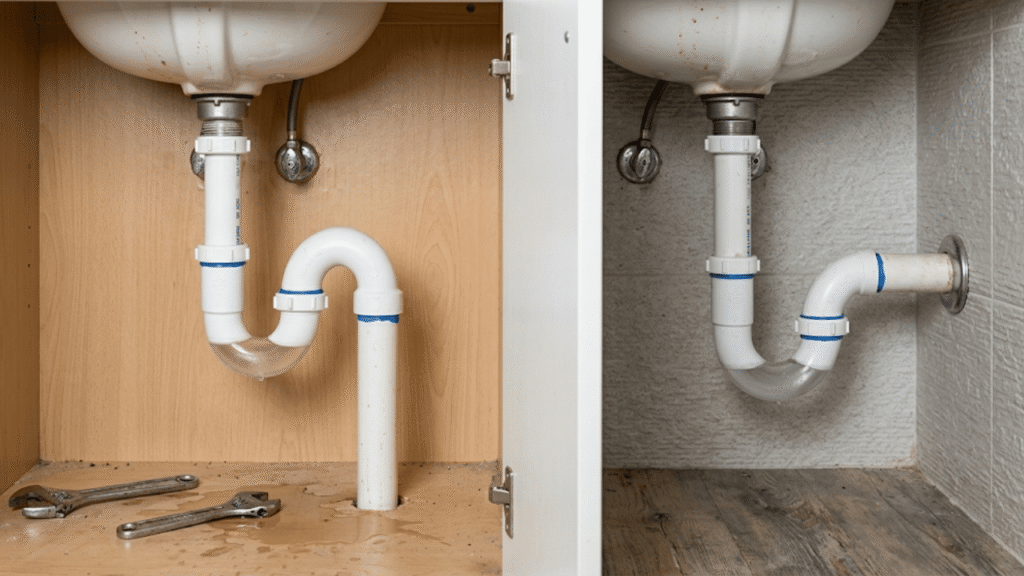
A sewer smell is never normal. A properly sealed drain system keeps sewer gas out of your living space entirely, so a persistent rotten-egg or sulfur odor means gas is escaping where it should not. Inside the home, that usually traces to a dried-out P-trap or a cracked pipe behind a wall. Outside, a sewer smell over the yard often sits right above a break in the buried line.
We pay attention to where the smell is strongest, because it tends to mark the source. On one Richardson job, the odor was sharpest along a strip of the side yard, and the camera confirmed a cracked clay joint directly under that spot. If air fresheners and cleaning do not touch the smell, the problem is structural, and a camera inspection will show exactly where. Search volume tells us thousands of DFW homeowners look up “sewer smell in house” every month, and a cracked line is one of the more serious answers.
4. Sewage Backing Up Into Tubs, Showers, or Floor Drains
Sewage coming back up is the most serious sign on this list, and it is the one that should never wait. When wastewater cannot move forward through a blocked or collapsed main line, it backs up to the lowest opening in the house, usually a first-floor tub, a shower, or a basement floor drain. Dirty water rising where clean water should drain is a line that has already failed somewhere.
This is a health issue, not just a plumbing one. Raw sewage carries bacteria, and standing water ruins flooring and drywall fast. We treat backups as emergencies and run the camera the same day to find whether the cause is a clog we can clear with hydro jetting or a collapse that needs repair. Trenchless lining isn’t right for fully collapsed pipes; severe damage requires excavation, and an inspection is the only way to tell the two apart.
5. Soggy Spots or Unusually Green Patches in the Lawn
Your yard can flag a buried leak before anything happens indoors. When a sewer line cracks underground, wastewater seeps into the soil around it. That water keeps the ground soggy even through a dry stretch, and the nutrients act like fertilizer, so the grass directly over the line grows faster, greener, and taller than the rest of the lawn.
Watch for the shape. A leak follows the path of the pipe, so the wet or extra-green strip often runs in a line from the house toward the street rather than spreading in a circle. Sunken or spongy patches are a related warning, since escaping water washes soil away beneath the surface. In DFW’s clay soil, that washout also feeds foundation movement, which leads to the next sign.
6. Foundation Cracks, Sinking Soil, or Sticking Doors
DFW sits on expansive clay soil that swells when wet and shrinks when dry, and a leaking sewer line under the slab feeds that cycle directly. Water from a cracked pipe saturates the clay in one spot, the soil shifts, and the slab moves with it. The signs show up as new cracks in the foundation or walls, doors and windows that start sticking, or floors that feel uneven underfoot.
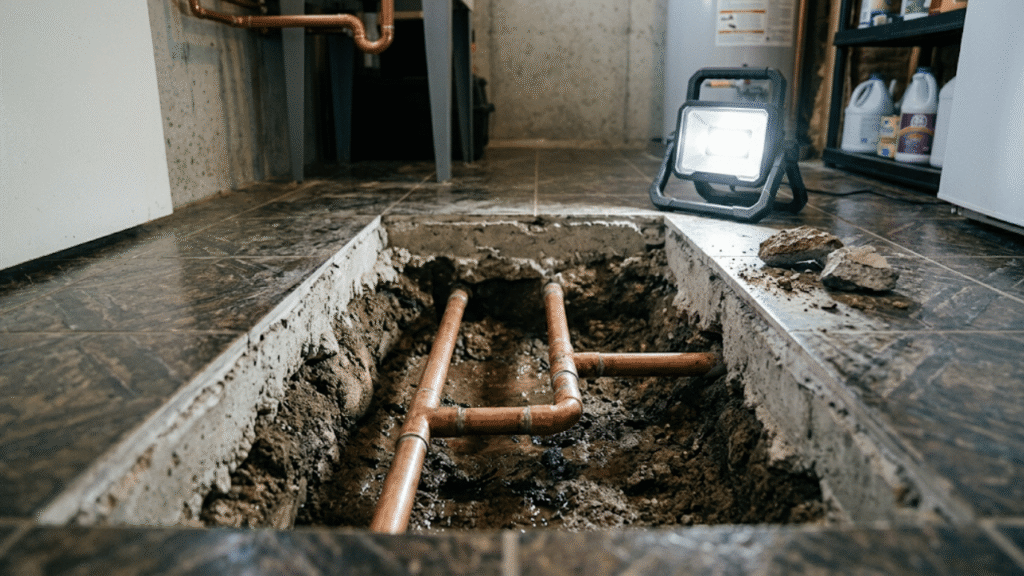
Not every foundation crack is plumbing, and we are honest about that on every job. But when foundation movement shows up alongside any drain symptom from this list, a sewer line under the slab moves to the top of the suspect list. Cured-in-place pipe (CIPP) is a trenchless method that rebuilds the pipe from the inside without breaking the slab, which is why catching an under-slab leak early matters so much. The repair stays small when the inspection comes first.
7. Repeated Clogs or Pests and Mold You Cannot Trace
A drain that clogs again weeks after you cleared it is telling you the real problem is still there. Roots that grow back, a low spot in the line that catches debris, or a crack that snags everything passing through will all produce a clog that returns on a schedule. Reaching for chemical drain cleaner every month is a symptom, not a fix, and those cleaners damage pipe over time. A recurring clog is a case for professional drain cleaning and a scope, not another bottle.
Pests and mold are the quieter version of the same warning. A cracked sewer line gives rodents and drain flies a way in, and the constant humidity from a hidden leak feeds mold around bathroom and kitchen walls. When pests or mold show up next to recurring drain trouble, the underground line is worth scoping. The Plumbing-Heating-Cooling Contractors Association recommends a camera inspection for any recurring drain issue, and that matches what we see in the field.
Request a free written estimate before any work begins. Call Nuflow DFW at (469) 701-0597.
How a Sewer Camera Inspection Actually Works
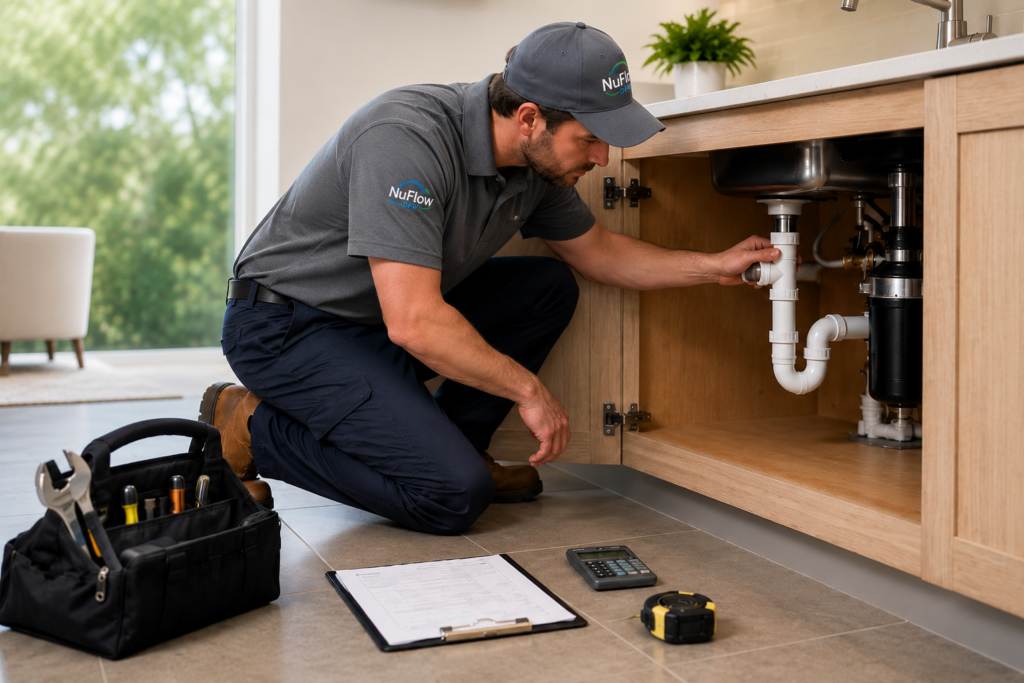
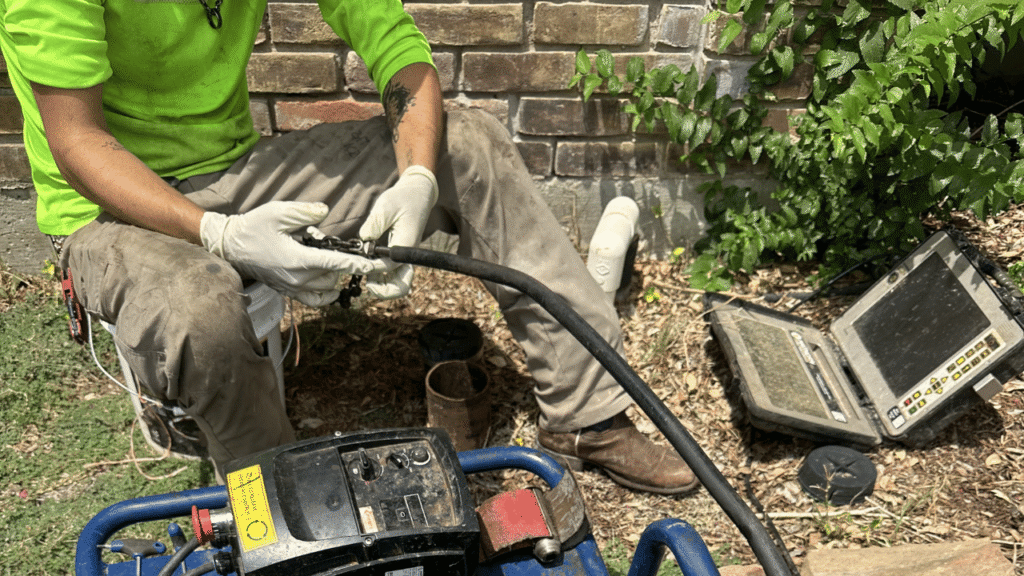
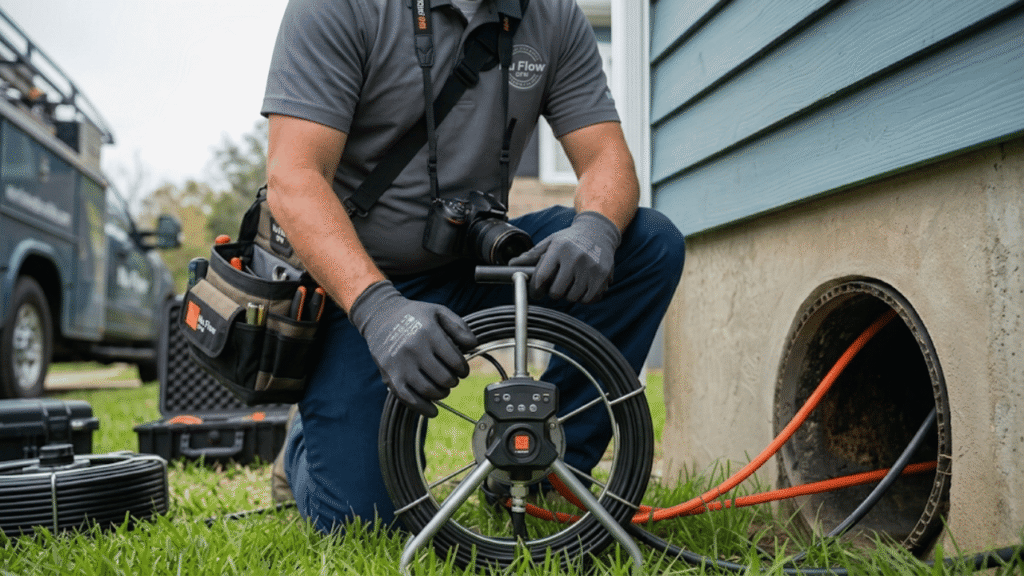
A sewer camera inspection sends a waterproof, high-definition camera on a flexible cable into your sewer line through an access point called a cleanout. The camera feeds live video as it travels the pipe, so the plumber sees cracks, root intrusion, blockages, and pipe material in real time, and a locator marks the exact depth and distance of any problem from the surface.
The process is non-invasive, which is the whole point. No digging happens during the inspection itself. A typical residential scope takes 30 minutes to a couple of hours depending on line length and access. You get a recording of the run, which means you can see the condition of the pipe for yourself rather than taking anyone’s word for it. That video is also what tells us whether a line needs cleaning, lining, or full replacement.
How Much Does a Sewer Line Inspection Cost in DFW?
Camera Inspection starts at $250+ (as of Q2 2026) for a standard residential sewer line scope in the DFW Metroplex. That fee covers running the camera, locating any problem, and giving you the recorded footage. Final cost depends on inspection findings, line length, and how accessible the cleanout is.
The inspection is the cheap part of the equation, and that is the case for getting one early. A scope that catches a cracked joint protects you from a backup that floods a finished room. For context on repair pricing, Trenchless Pipe Lining starts at $3,500+ and Hydro Jetting starts at $350+ (as of Q2 2026). Actual price varies by job complexity, depth, and access, so call (469) 701-0597 for a current quote on your specific line.
Sewer Line Issues We See Most in DFW Homes
Home age drives most of what we find. Houses built before 1975 across DFW typically have cast iron sewer lines that are now 50+ years old and reaching the end of their service life. Cast iron installed pre-1980 commonly fails at 50 to 75 years, while the PVC used in newer construction carries a typical lifespan of 75 to 100 years. The older the line, the more a routine inspection earns its cost.
Trees and soil do the rest. Mature oaks and elms common in established DFW neighborhoods send fine feeder roots toward any moisture, and a slightly leaking joint is an open invitation. The Department of EPA notes that root intrusion is among the most common causes of buried line failure. DFW’s expansive clay soil compounds the problem by shifting with every wet-dry cycle, stressing joints and opening the hairline cracks that roots then exploit. A home with an older line, mature trees, and clay soil carries all three risk factors at once.
Trenchless Repair vs Excavation: What Happens After the Inspection
Once the camera shows the problem, the inspection results point to one of two repair paths. Most accessible failures suit trenchless CIPP pipe lining, which creates a new pipe inside the old one with minimal yard damage. Severe collapses and fully crushed pipes need traditional excavation. Being honest about which one a line needs is the entire value of inspecting before repairing.
| Factor | Trenchless CIPP | Traditional Excavation |
| Lawn damage | Minimal | Significant |
| Time | 1 day typically | 3 to 7 days |
| Cost | $3,500 to $15,000 | $5,000 to $25,000 |
| Warranty | 50+ years | 25 to 50 years |
| Best for | Most accessible failures | Severe collapses, full replacements |
When to Call a Plumber vs When You Can Wait
Some signs allow a short window, and some do not. A single slow drain or an occasional gurgle gives you time to schedule an inspection on your own terms. Sewage backing up into the house, a strong sewer smell that will not clear, or standing water in the yard are different. Those mean a line has already failed, and waiting risks property damage and a health hazard.
The honest middle ground is the recurring problem. A clog that returns, a smell that comes and goes, or a green patch that keeps spreading will not heal on its own, because sewer damage only moves one direction. Scoping the line while the symptom is still minor is what keeps a $250+ inspection from turning into a five-figure excavation. At Nuflow DFW we run 24/7 emergency plumbing across the DFW service area for the signs that cannot wait.
Frequently Asked Questions About Sewer Line Inspection
How much does a sewer line inspection cost in DFW?
A sewer camera inspection in DFW starts at $250+ (as of Q2 2026), which includes running the camera, locating any problem, and the recorded video. Final cost depends on line length and cleanout access. Call (469) 701-0597 for a current quote on your specific line.
How often should I get my sewer line inspected?
Homes with sewer lines over 20 years old benefit from an inspection every few years, and pre-1975 homes with cast iron lines should be scoped sooner. Also inspect before buying a home and after any warning sign appears. Older lines and mature trees raise the priority.
Can I inspect my sewer line myself?
You can watch for the warning signs yourself, like slow drains, gurgling, odor, and soggy lawn spots, but a real inspection needs a professional sewer camera and a locator. The camera shows cracks, roots, and pipe conditions that no surface symptom can reveal, which is why a scope is diagnostic.
Does a slow drain always mean a sewer line problem?
No. A single slow drain is usually a local clog from hair or grease and clears with a plunger or snake. The sewer line becomes the suspect when several fixtures slow down together, since that points to the main line carrying everything to the street rather than one fixture.
How long does a sewer camera inspection take?
A standard residential sewer camera inspection takes 30 minutes to a couple of hours. Line length, the number of access points, and how much problem footage needs recording all affect the time. Harder-to-reach lines with complex layouts sit at the longer end of that range.
Is a sewer smell in the house dangerous?
A persistent sewer smell indoors means sewer gas is escaping a dried-out trap or a cracked pipe, and it should be taken seriously. The gas is unpleasant and can be a health concern over time, and the crack behind it can worsen. A camera inspection locates the source. This is a sensitive issue, so call (469) 701-0597 if it persists.
Do you serve my city in the DFW Metroplex?
Nuflow DFW serves 25 cities across the Dallas-Fort Worth Metroplex, including Dallas, Fort Worth, Plano, Frisco, McKinney, Arlington, Irving, Richardson, and more. We provide 24/7 emergency plumbing throughout the service area. Call (469) 701-0597 to confirm coverage for your address.
Get a Sewer Camera Inspection From Nuflow DFW
If you recognize two or three of these signs in your own home, the next step is a camera inspection that shows you exactly what is happening underground, on video, before you commit to any repair. That recording is what separates a cleaning from a liner from a replacement, and it is the difference between a planned fix and an emergency.
Nuflow DFW is licensed by the Texas State Board of Plumbing Examiners (RMP# 46694), bonded, and available 24/7 across the DFW Metroplex. You can read what local homeowners say in our customer reviews. Free estimates are provided after an on-site inspection, and written quotes include all parts, labor, and applicable taxes. Contact Nuflow DFW or call (469) 701-0597 to schedule a same-day sewer camera inspection.