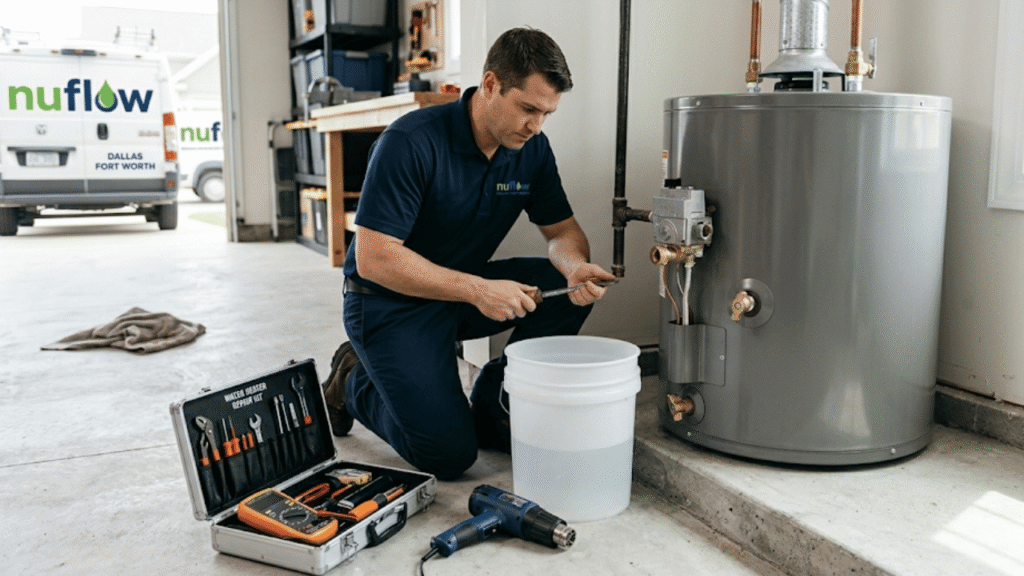
To flush a water heater, turn off the power or gas, shut the cold water supply, connect a garden hose to the drain valve, open a hot faucet in the house, and drain the tank until the water runs clear. Most tank water heaters need this once a year, and more often in hard water areas like Dallas-Fort Worth.
That is the short version. The full job takes 60 to 90 minutes, costs almost nothing in materials, and can add years to a water heater’s life. Below is the complete process for gas and electric tank heaters, a gentler quick-flush option, what to do about tankless units, and one important warning about older tanks that most guides skip.
Why Flushing a Water Heater Matters in DFW
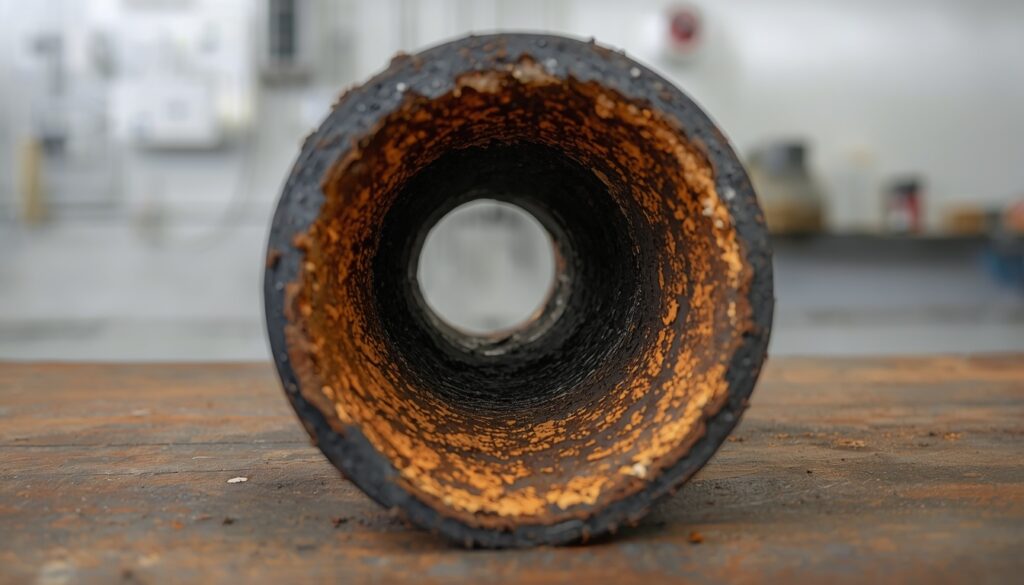
Every water supply carries dissolved minerals, mostly calcium and magnesium. When water is heated, those minerals settle out and collect at the bottom of the tank as sediment. North Texas sits on limestone, so water across the Dallas-Fort Worth area runs hard, and tanks here build sediment faster than in most of the country.
That sediment layer causes real problems. It forces a gas burner to heat through a blanket of scale, which wastes energy and creates the rumbling or popping sound many homeowners notice. On electric models it buries and burns out the lower heating element. It also clogs the drain valve, eats into the tank lining, and shortens the unit’s life. The Department of Energy’s maintenance guidance for storage water heaters recommends regular flushing, T&P valve checks every six months, and anode rod inspection every three to four years.
One Warning Before You Start: Old Tanks That Have Never Been Flushed
Here is the honest part most articles leave out. If your water heater is more than 5 or 6 years old and has never been flushed, draining it now can backfire. Years of compacted sediment can actually be sealing microscopic cracks and weak points in the tank. Stir all of that up and flush it out, and a tank that was not leaking on Monday can start leaking on Tuesday.
If that describes your heater, you have three reasonable options. Leave it alone and budget for replacement when it fails. Try the gentler quick flush described below instead of a full drain. Or have a plumber look at it first. A flush is cheap maintenance for a tank that has been maintained; it is a gamble on a tank that has been neglected for a decade.
Tools and Materials You Need
- A garden hose long enough to reach a floor drain, driveway, or yard
- A flathead screwdriver (many drain valves need one to open)
- A bucket, for checking what is coming out of the tank
- Old towels and rubber gloves
- A wet/dry shop vacuum (optional, for a clogged drain valve)
Total cost if you already own a hose: roughly $0. Even buying everything new runs under $30 (as of Q2 2026).
How to Flush a Tank Water Heater Step by Step
This is the full drain-and-flush method, the deeper clean of the two options.
- Turn off the heat source. For an electric heater, switch off its breaker at the panel (usually a double-pole 220V breaker) so the elements cannot fire in an empty tank and burn out. For a gas heater, turn the control dial to “pilot” or “vacation” so the burner cannot light during the flush.
- Let the water cool if you can. Tank water sits at 120 degrees or hotter. Turning the heater off a few hours ahead, or running hot water in a shower or tub first, lowers the scald risk.
- Shut off the cold water supply. Find the valve on the cold inlet line above the heater. The cold pipe is the one that feels cool to the touch, and most are marked. Turn a ball valve a quarter turn, or a round handle clockwise until it stops.
- Connect the garden hose to the drain valve. The drain valve sits near the bottom of the tank. Run the hose to a floor drain, or outside away from the foundation and plants. The first water out will be hot, so keep kids and pets clear.
- Open one hot water faucet in the house. Pick a faucet near the heater and leave the hot side fully open. This breaks the vacuum inside the tank, the same way lifting your finger off a straw lets it drain. Skip this and the tank drains painfully slowly.
- Open the drain valve and let the tank empty. Run the first minute into the bucket so you can see the sediment. A 40 to 50 gallon tank typically takes 20 to 40 minutes to drain fully.
- Flush in bursts. With the tank empty and the drain valve still open, open the cold supply for about 20 seconds, then let it drain out. Repeat 4 or 5 times. The incoming rush of water stirs the remaining sediment off the bottom and pushes it out the hose.
- Check that the water runs clear. Fill a glass from the hose and let it sit a couple of minutes. If sediment settles or the water looks tinted, keep flushing. If it stays clear, you are done.
- Close the drain valve and refill. Shut the valve snugly, disconnect the hose, and open the cold supply. Leave the hot faucet open while the tank fills; it will sputter as trapped air purges, then run steady, usually within a few minutes.
- Restore power or relight. Flip the breaker back on, or turn the gas dial from pilot back to on, and reset the temperature. Hot water returns in 15 to 30 minutes depending on tank size.
The Gentler Option: A Quick Pressure Flush
You do not always need a full drain. Many plumbers prefer flushing with the cold supply left on, using city water pressure to push sediment out while the tank stays full. Shut off the heat, connect the hose, open the drain valve, and let pressurized water run through for 5 to 10 minutes until it comes out clean.
This method skips the long drain time, avoids the thermal stress of fully emptying and refilling a tank, and is the safer choice for older heaters. The tradeoff is that it removes loose sediment well but does not clear heavy, compacted buildup the way a full drain with burst-flushing does.
If the Drain Valve Will Not Drain
Sediment loves to clog the drain valve, since it sits at the lowest point of the tank. Three fixes, from easiest to last resort:
- Poke it. Close the valve, remove the hose, then open it again and work a straightened wire coat hanger gently into the opening to break up the blockage. Keep a towel ready.
- Pull it. Hook a wet/dry vacuum to the valve opening and suck the blockage out.
- Bypass it. If the valve itself is damaged or keeps dripping after the flush, it can be replaced with a better full-port valve, or capped with an inexpensive hose cap from the hardware store until it is replaced.
If none of that gets water moving, stop there. Forcing a corroded valve on a full 50 gallon tank is how small jobs turn into flooded garages.
Tankless Water Heaters Are a Different Job
Tankless units have no tank to drain, but hard water scales up their heat exchanger instead, and DFW water is exactly the kind that does it. The fix is descaling: a kit with a small circulation pump, hoses, and a cleaning solution (often food-grade vinegar) that cycles through the unit for about 45 minutes. The Department of Energy’s tankless water heater guidance notes that periodic maintenance significantly extends unit life.
Descaling is more involved than a tank flush, with isolation valves, service mode settings that vary by model, and a pump to manage. Mechanically inclined homeowners handle it; plenty of others hand it to a plumber once a year and call it done.
How Often Should You Flush a Water Heater?
Once a year is the standard answer, and it is the right minimum for most DFW homes. With especially hard water, or if you hear rumbling and popping from the tank, every six months is better. The Department of Energy goes further for peak efficiency, suggesting a quart drained from the tank every three months to keep sediment from settling in at all.
The pattern matters more than the exact interval. A tank flushed every year from new will rarely surprise you. A tank flushed never will.
DIY vs Professional Cost
Doing it yourself costs almost nothing beyond an hour or so of your time. A plumber typically charges $250 to $500 for a proper flush visit (as of Q2 2026), which usually includes things a hose cannot do: checking the T&P relief valve, inspecting the anode rod, testing the thermostat, and catching early rust or leaks before they become a flooded utility closet.
A fair way to think about it: flush it yourself in between, and have it professionally serviced when the heater is due for an anode rod check anyway, or when anything about it seems off.
When to Call a Plumber Instead
Some situations are past the point of DIY maintenance:
- The tank or its fittings are already leaking, or you see rust streaks running down the tank
- Hot water comes out rusty or brown at the faucets even after flushing
- The drain valve will not open, will not stop dripping, or the tank will not drain at all
- The heater is 10 or more years old and producing noise, lukewarm water, or higher bills
- The T&P relief valve is dripping or has never been tested
Nuflow DFW is a licensed Texas Master Plumber (RMP# 46694) serving the Dallas-Fort Worth area 24/7. A leaking tank often shows up first as a mystery puddle or a warm spot, and our water leak detection service pinpoints the source without tearing anything open. For water heater problems, maintenance, and every other plumbing service we handle, call (469) 701-0597 or contact Nuflow DFW for a free estimate after on-site inspection.
Frequently Asked Questions
How often should you flush a water heater?
Flush a tank water heater at least once a year. In hard water areas like Dallas-Fort Worth, every six months is better because sediment builds faster. The Department of Energy also suggests draining a quart from the tank every three months as light ongoing maintenance between full flushes.
What happens if you never flush your water heater?
Sediment builds up at the bottom of the tank, which lowers efficiency, raises energy bills, causes rumbling and popping sounds, burns out electric heating elements, clogs the drain valve, and shortens the tank’s life. Heavy buildup can take years off a water heater that should last 10 to 15.
Should I flush a water heater that has never been flushed?
Be careful. On a tank 5 or more years old that has never been flushed, compacted sediment may be sealing small weak points, and a full drain can trigger leaks. Use a gentle pressure flush instead, or have a plumber inspect it first before deciding.
How long does it take to flush a water heater?
Plan on 60 to 90 minutes for a full drain and flush. Draining a 40 to 50 gallon tank takes 20 to 40 minutes, burst-flushing takes another 10 to 15, and refilling takes only a few minutes. A quick pressure flush without draining takes about 20 to 30 minutes total.
How much does it cost to have a water heater flushed?
A plumber typically charges $250 to $500 for a water heater flush and service visit (as of Q2 2026), which usually includes inspecting the anode rod, T&P valve, and thermostat. Doing the flush yourself costs almost nothing if you already own a garden hose.
Can flushing a water heater cause it to leak?
It can on older, neglected tanks. Sediment sometimes plugs tiny weak spots, and removing it exposes them. This mainly applies to tanks 5+ years old with no flush history. A regularly maintained heater is very unlikely to leak because of a flush.
Do tankless water heaters need to be flushed?
Tankless heaters have no tank to drain, but their heat exchanger needs descaling, usually once a year in hard water areas. Descaling circulates a cleaning solution through the unit with a small pump for about 45 minutes, using a kit sold at most hardware stores.