Your sewer line just failed and your plumber hands you a quote for $12,000. Now you’re staring at your homeowners insurance policy, hoping it’ll save you. Here’s the hard truth. Most Texas homeowners assume their policy covers sewer line repair. It usually doesn’t.
A Nationwide survey found that nearly 1 in 3 homeowners wrongly believe their standard policy covers underground service lines. It’s one of the most expensive assumptions you can make as a Texas homeowner.
So does homeowners insurance cover sewer line repair in Texas? The answer depends on how the damage happened, what endorsements you have, and a single phrase buried in your policy that most people miss.
In this blog post, we’ll walk you through exactly when your Texas policy will pay, when it won’t, and what coverage you need to add so you’re not stuck with a five-figure bill.
Does Homeowners Insurance Cover Sewer Line Repair in Texas?
Most standard Texas homeowners insurance policies do not cover sewer line repair. They only pay out when the damage is sudden and accidental, things like a tree falling on your line, a vehicle hitting it, or a fire or explosion cracking the pipe.
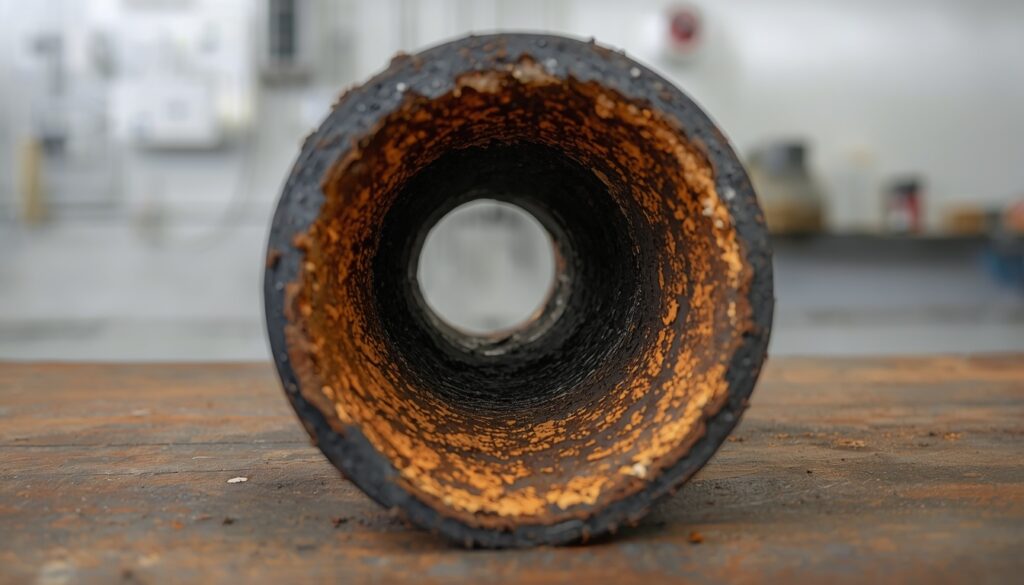
The stuff that actually breaks most sewer lines in Texas? Tree roots, shifting clay soil, aging pipes, and slow corrosion. None of that is covered by a standard policy.
If you want real protection, you’ll need to add a service line endorsement or a water backup endorsement. I’ll break down both in a minute.
When Texas Homeowners Insurance DOES Cover Sewer Line Repair
Now for the good news. Your standard Texas policy isn’t completely useless when it comes to sewer lines. There are specific situations where your insurance will step in and cover the repair.
The rule is simple. If the damage is sudden, accidental, and caused by something outside your control, you’ve got a real shot at coverage.
Here’s when your policy usually pays out:
- Fire, lightning, or explosion: If a gas line explosion or lightning strike cracks your sewer line, the damage is almost always covered.
- Vehicle or heavy equipment impact: A car crashing into your yard or a construction vehicle damaging the line during a project falls under covered perils.
- Vandalism: If someone intentionally damages your sewer line, your policy should cover the repair.
- Falling objects: A tree branch, a collapsed structure, or anything that falls and cracks the line typically qualifies.
- Sudden sinkholes or ground collapse: Unexpected earth movement that breaks your pipe can be covered under some Texas policies, though this varies by insurer.
The Sudden and Accidental Rule And Why It Decides Every Claim
If you only remember one thing from this guide, make it this “sudden and accidental” is the phrase that decides every sewer line claim in Texas. It’s the quiet rule buried in your policy. Your insurance company uses it to approve coverage, and they also use it to deny it.
Here’s what it actually means:
Sudden means the damage happened fast. Not over months or years. Something broke your pipe in a specific moment, a tree fell, a car crashed, a pipe burst from an explosion. Accidental means you didn’t cause it. No neglect. No skipped maintenance. No warning signs you ignored for two years. If both boxes are checked, your claim has a real shot. If either one is missing, the claim usually gets denied.
Look at these two Texas examples that make this crystal clear:
Covered scenario: A thunderstorm drops a massive oak tree onto your front yard. The impact cracks your sewer line in one shot. That’s sudden. That’s accidental. Your policy should pay.
Denied scenario: The same oak tree’s roots slowly grow into your sewer line over ten years. The pipe finally collapses after years of pressure. That’s gradual. That’s preventable. Your claim gets denied even though the tree caused both problems.
See the difference? The tree isn’t the issue. How the damage happened is the issue.
This one rule explains why so many Texas homeowners feel blindsided by their insurance. The damage feels sudden to them. But if the cause builds up slowly, the insurer sees it as wear and tear and wear and tear is never covered.
Why Texas Homes Face More Sewer Line Problems Than Most States
Sewer line issues aren’t just bad luck in Texas. They’re baked into the geography, the climate, and the age of our cities. If you own a home here, you’re already playing on hard mode when it comes to your sewer system.
Here’s why Texas is especially rough on underground pipes:
Expansive clay soil:
Most of Texas sits on clay that swells when it rains and shrinks during dry spells. That constant movement puts massive pressure on your sewer line, twisting and cracking pipes that would last decades in other parts of the country. Homeowners in DFW and Houston know this cycle well — one wet season followed by a brutal drought, and suddenly you’ve got a leak.
Aging infrastructure in major Texas cities:
Dallas, Fort Worth, Houston, Austin, and San Antonio all have neighborhoods with sewer lines that are 50, 70, even 100 years old. Much of that old pipe is cast iron, clay, or Orangeburg materials that were never built to handle modern demands. If your home was built before 1980, there’s a real chance your line is near the end of its lifespan.
Mature trees with aggressive root systems:
Texas is full of old oaks, pecans, and magnolias. They’re beautiful above ground, and brutal below it. Their roots chase moisture, and your sewer line is basically an underground water source. Once roots find a tiny crack, they grow into the pipe, expand, and eventually crush or clog it.
Extreme heat cycles:
Texas summers regularly hit triple digits, and the heat doesn’t stop at the surface. It bakes the soil, stresses old cast iron pipes, and accelerates corrosion. Combine that with cold snaps in winter (yes, even here), and you’ve got pipes expanding and contracting year-round.
Shifting foundations:
This one’s brutal for Texas homeowners. When clay soil moves, your slab moves with it. And when your slab shifts, it can pull, crack, or completely separate the sewer line running underneath. Foundation issues and sewer line issues are deeply connected in Texas. Fix one without checking the other, and you’ll be back to square one.
How to File a Sewer Line Insurance Claim in Texas?
Filing a sewer line claim in Texas isn’t hard. But doing it right is what separates a smooth payout from a frustrating denial.
Most homeowners mess up one of the first three steps and hurt their own case. Don’t be one of them. Follow this process, and you’ll give yourself the best shot at getting covered.
Document Everything
The moment you spot the problem, start documenting. Take photos and videos of the damage, the affected area, and any water or sewage backup inside your home. Write down the date, the time, and what you noticed first: a smell, a soggy spot, a slow drain. Insurance adjusters work off evidence. The more you have, the stronger your claim.
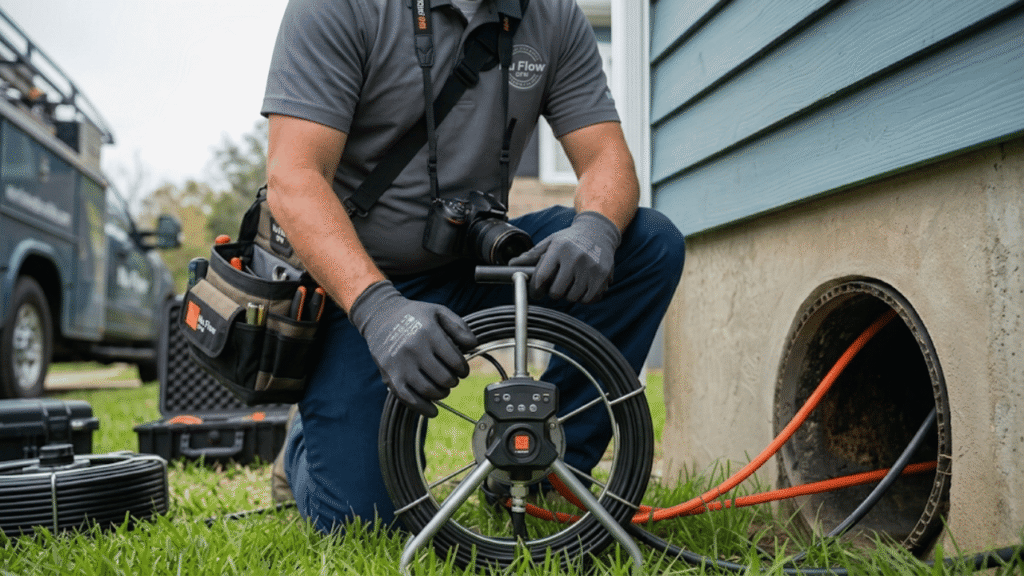
Call a Licensed Plumber for a Camera Inspection
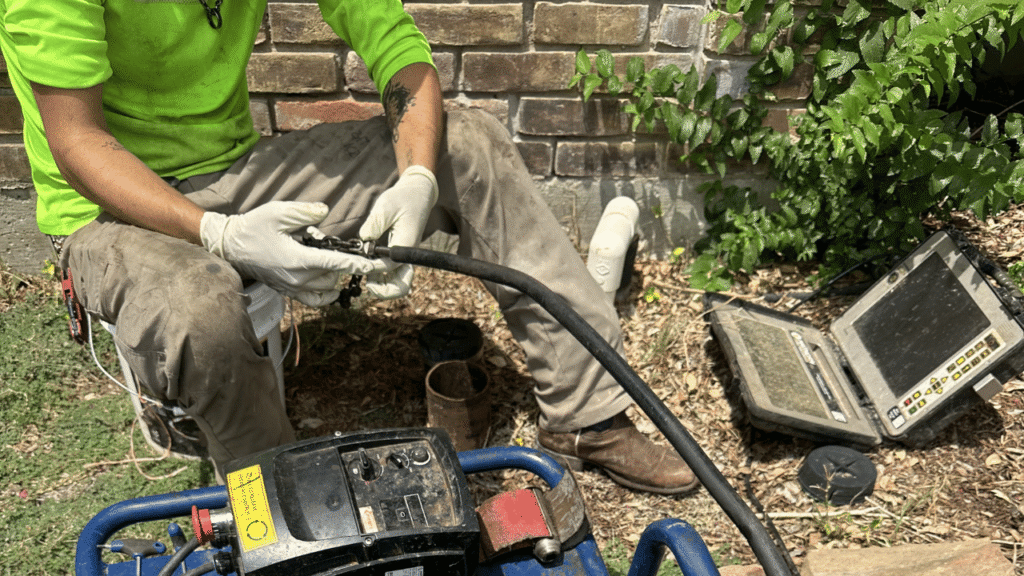
Before you call your insurance company, call a plumber. A licensed plumber can run a camera inspection through the line, pinpoint the damage, and give you a written report that explains what happened and why. This report is the single most important document in your claim. It’s what proves the damage was sudden, not gradual.
Contact Your Insurance Agent and Ask About Coverage First
Here’s a pro move most homeowners skip. Call your agent and ask about coverage before you formally file. Ask specifically whether your policy covers this type of damage, what endorsements you have, and what deductible applies. Sometimes just asking the question gets logged as a claim, so be careful how you phrase it. A good agent will help you figure out if filing even makes sense.
File the Claim With Detailed Documentation
Once you know coverage is likely, file the claim. Include your plumber’s report, your photos and videos, the timeline of events, and any receipts for emergency repairs or cleanup. The more organized your submission, the faster your claim moves. Sloppy paperwork slows everything down.
Meet With the Claims Adjuster On-Site
Your insurance company will send an adjuster to inspect the damage in person. Be there. Walk them through the timeline. Show them the plumber’s report. This is your chance to advocate for yourself. Adjusters aren’t your enemy, but they’re also not going to overpay you. Know your case and make it clearly.
Review the Settlement Carefully Before Accepting
This is where many Texas homeowners leave money on the table. Before you sign anything, read the settlement offer line by line. Does it cover the full repair? The excavation costs? The landscaping afterward? If the offer feels low or something’s missing, push back. You can negotiate, request a re-evaluation, or even hire a public adjuster if the numbers don’t add up.
What to Do When Insurance Won’t Cover Your Sewer Line Repair
Let’s be real. For most Texas homeowners, the insurance company isn’t riding in to save the day. Tree roots, aging pipes, and clay soil damage are almost never covered and that leaves you holding the bill. But a denied claim doesn’t mean you’re stuck paying $15,000 to tear up your yard. You’ve got better options than most people realize.
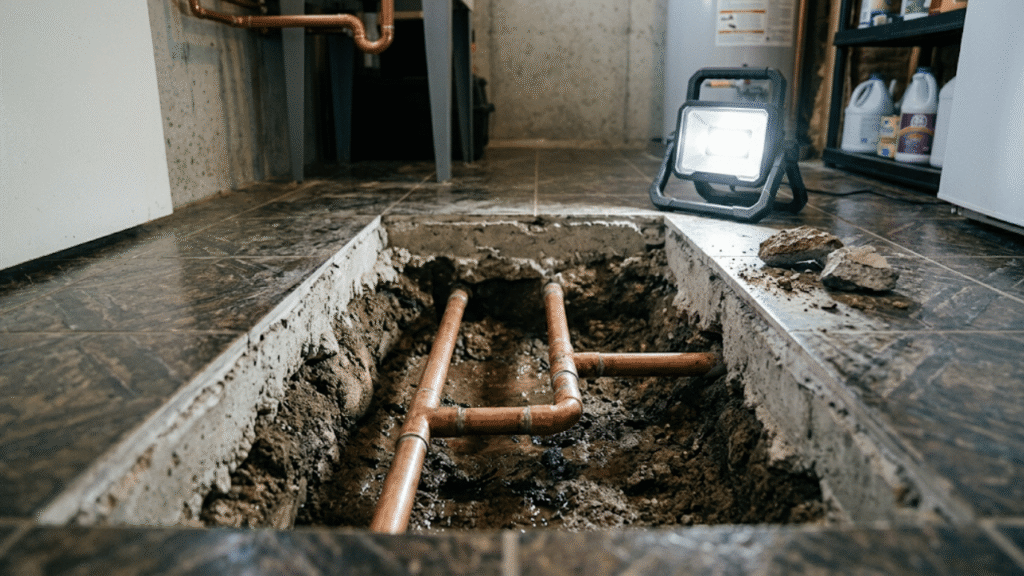
Instead of digging a massive trench across your property, a trenchless specialist can replace your old sewer line through two small access pits. No wrecked landscaping. No destroyed driveway. No week-long project. And because you’re skipping all the restoration costs, the total bill usually comes in 30 to 40 percent lower than traditional excavation.
That’s where NuFlow DFW comes in. We’re a trenchless sewer repair company serving homeowners across the Dallas-Fort Worth area. When insurance won’t cover your repair, we help you get it fixed without draining your savings. Pipe bursting, CIPP lining, camera inspections we handle it all, and we do it without tearing your property apart.
If your Texas homeowners insurance won’t cover your sewer line repair, don’t panic. And don’t let a plumber talk you into a traditional dig-and-replace that costs twice as much. Call NuFlow DFW today for a free camera inspection and a trenchless repair quote. Let’s get your sewer line fixed the smart way without wrecking your property or your budget.